Single Leg Bridge
Single Leg Bridge is a floor-based unilateral bridge that asks one hip to do the lifting while the other leg stays long and quiet. It is useful for building glute strength, hamstring support, and better control of pelvic position without needing any equipment. Because only one foot is on the floor, the exercise quickly exposes side-to-side differences, low-back compensation, and a weak brace.
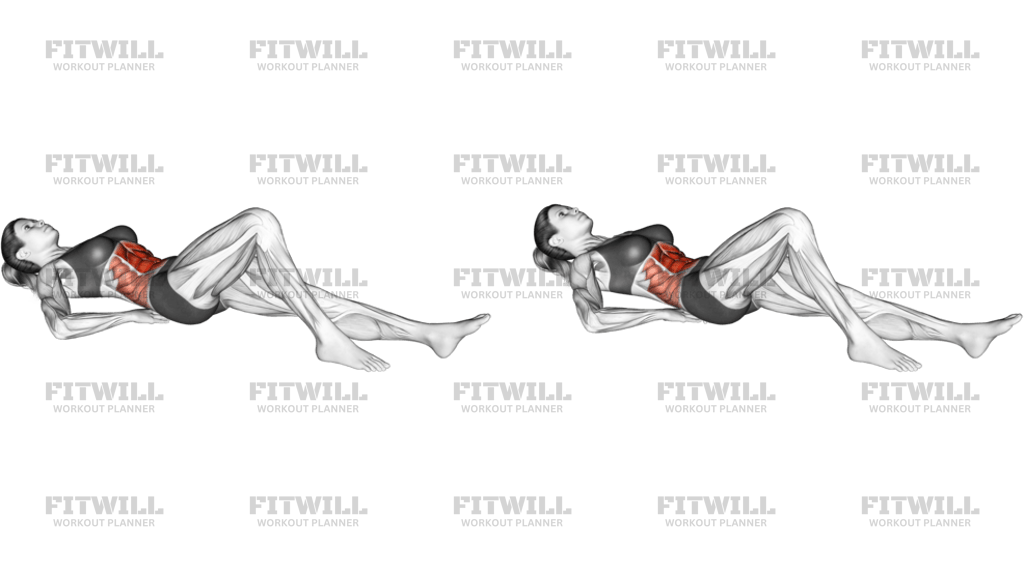
Start on your back with one knee bent and the foot planted close to the working-side glute. Keep the other leg straight and relaxed, then brace your ribs down and drive through the planted heel until your hips rise into a straight line from shoulder to knee. The lift should come from the working glute, not from arching the lower back or pushing the ribs upward.
At the top, keep both hip bones level and pause long enough to feel the glute finish the rep. Lower under control until your hips are just above the floor, then reset without losing tension in the planted leg. If the hamstring takes over, bring the foot a little closer and keep pressure through the heel instead of the toes. If the pelvis twists, shorten the range and keep the pelvis square to the ceiling.
Single Leg Bridge fits well in warmups, accessory glute work, core circuits, and rehabilitation-style training when the goal is to restore single-leg stability before heavier bridges, thrusts, or deadlift variations. Beginners can use it as a bodyweight patterning drill, while experienced lifters can slow the lowering phase, add a pause, or raise the working-side challenge only if the pelvis stays level. If the lower back feels it more than the glutes, reduce the range and recheck the setup before adding reps.
[ Workout Log & Planner ]
Put your next workout in Fitwill
Keep your plan and training log ready when you are.


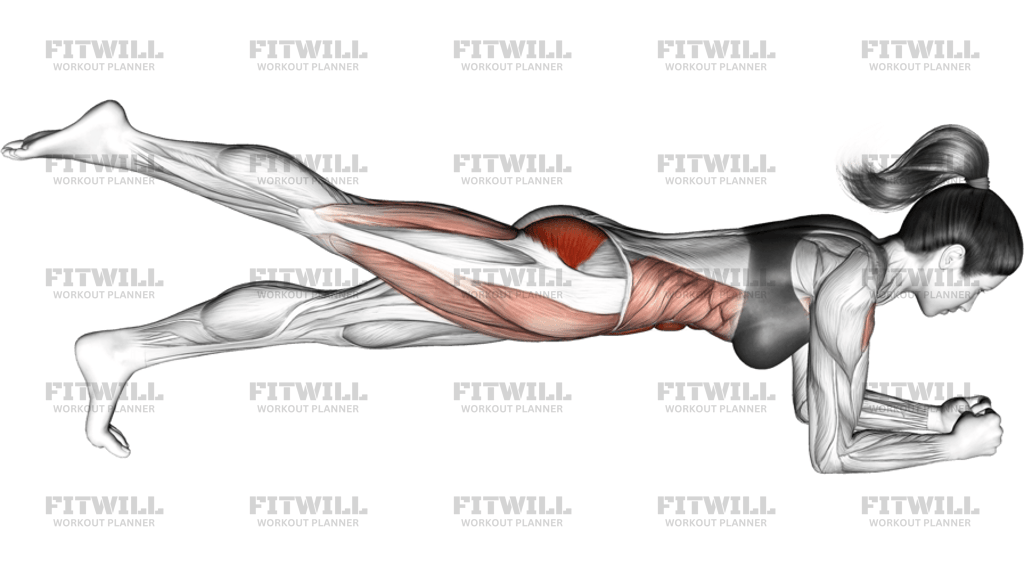
Instructions
- Lie on your back with one knee bent and the foot planted near the glute on that side.
- Keep the other leg straight and long, with the thighs roughly level before you start the lift.
- Place your arms on the floor for balance and keep both hip bones pointed toward the ceiling.
- Brace your ribs down, flatten the low back slightly, and press through the planted heel.
- Lift your hips until your shoulder, hip, and planted knee form a straight line.
- Squeeze the glute at the top without letting the ribs flare or the pelvis rotate.
- Lower your hips slowly until they hover just above the floor, keeping tension in the planted leg.
- Complete all reps on one side, then reset and switch legs.
Tips & Tricks
- If your hamstring cramps, bring the planted foot a little closer to your glute before trying again.
- Keep pressure through the heel and outer edge of the foot; pushing through the toes usually shifts the work away from the glute.
- A smaller lift with a square pelvis is better than a higher bridge that twists the hips.
- Think about tucking the ribs toward the pelvis before each rep so the low back does not take over.
- Hold the top position for one second if you want more glute tension without adding load.
- Keep the raised leg in line with the trunk instead of letting it drift across the body.
- If the planted foot slides, move it slightly closer and reduce speed on the lowering phase.
- Stop the set when the pelvis starts dropping to one side or the lower back starts feeling the work.
Frequently Asked Questions
What does Single Leg Bridge work most?
It mainly targets the glutes on the working side, with hamstrings and core muscles helping keep the pelvis stable.
Is Single Leg Bridge different from a regular glute bridge?
Yes. One leg does all the lifting, so the exercise adds more hip stability and anti-rotation demand than a two-leg bridge.
How do I know if my foot is in the right place?
At the top, the planted shin should feel fairly vertical. If the hamstring cramps or the glute is hard to find, move the heel slightly closer.
Should my hips stay level during Single Leg Bridge?
Yes. Keep both hip bones facing up; if one side drops or turns, shorten the range and clean up the brace.
Can beginners do Single Leg Bridge?
Yes, but it is usually best to start with short ranges, slow reps, and a brief pause before trying longer holds or extra load.
Why do I feel Single Leg Bridge in my lower back?
That usually means the ribs are flaring or the hips are rising too high. Lower the bridge a little and keep the rib cage stacked over the pelvis.
Can I make Single Leg Bridge harder without weights?
Yes. Use a slower lowering phase, a longer pause at the top, or more reps on the side that needs extra work.
What can I do if Single Leg Bridge is too hard?
Use a standard two-leg bridge first, or keep the non-working toe lightly on the floor for balance while you learn the pattern.