Sled 45° Calf Press
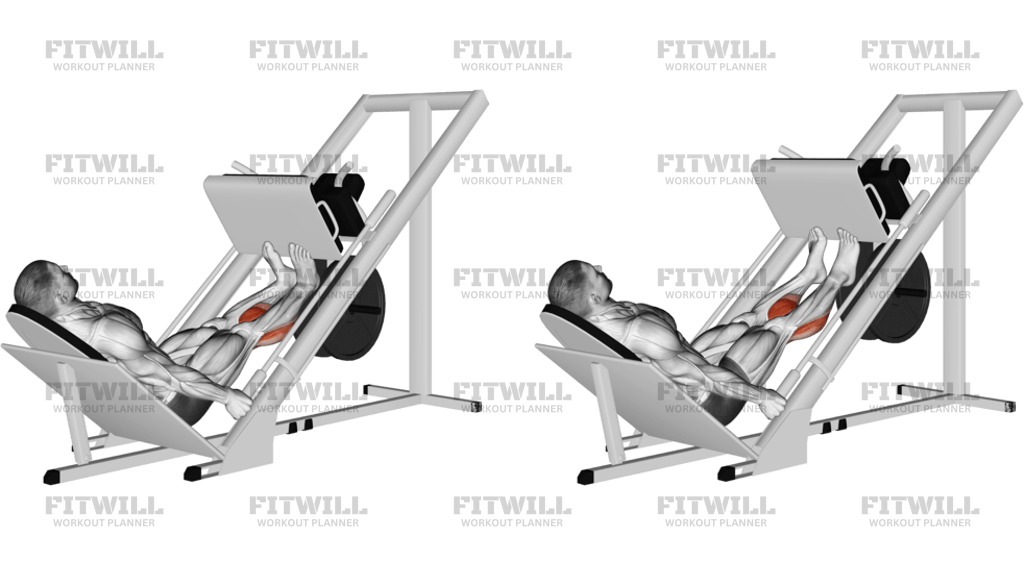
Sled 45° Calf Press is a machine calf exercise performed on a 45-degree sled or leg press. It trains the calves through loaded ankle plantar flexion while the torso stays supported, so you can focus on the lower leg without balancing the whole body.
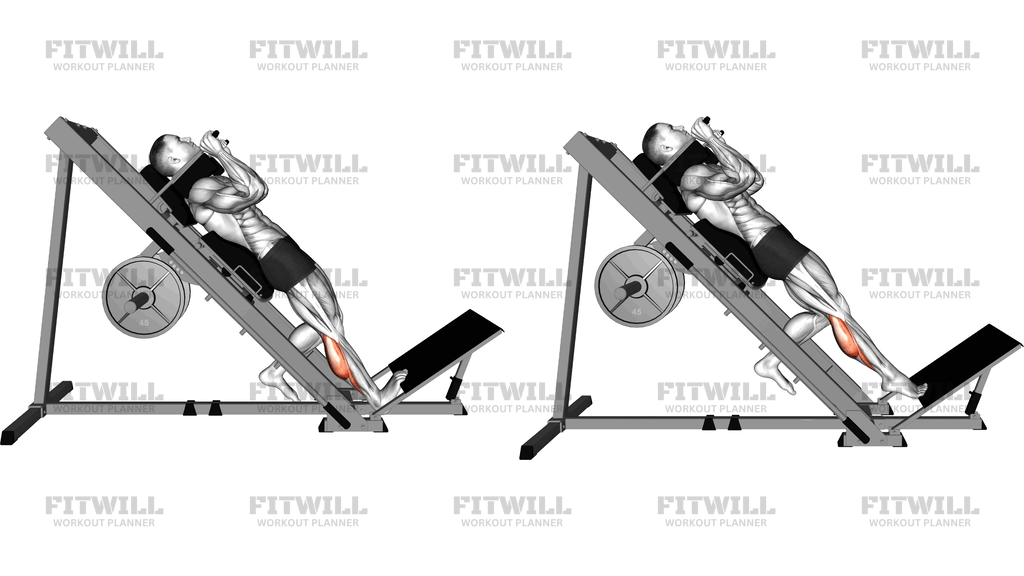
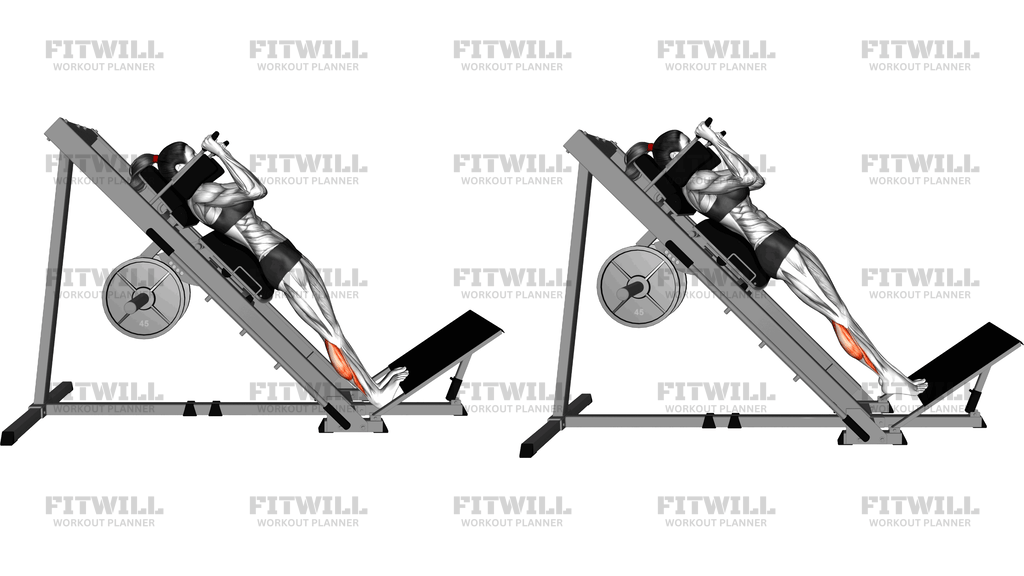
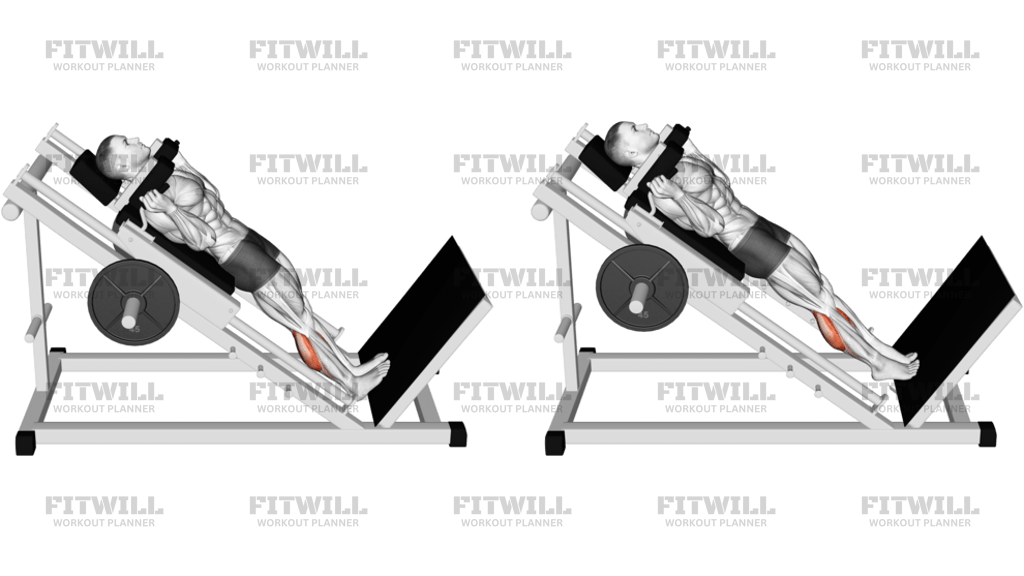
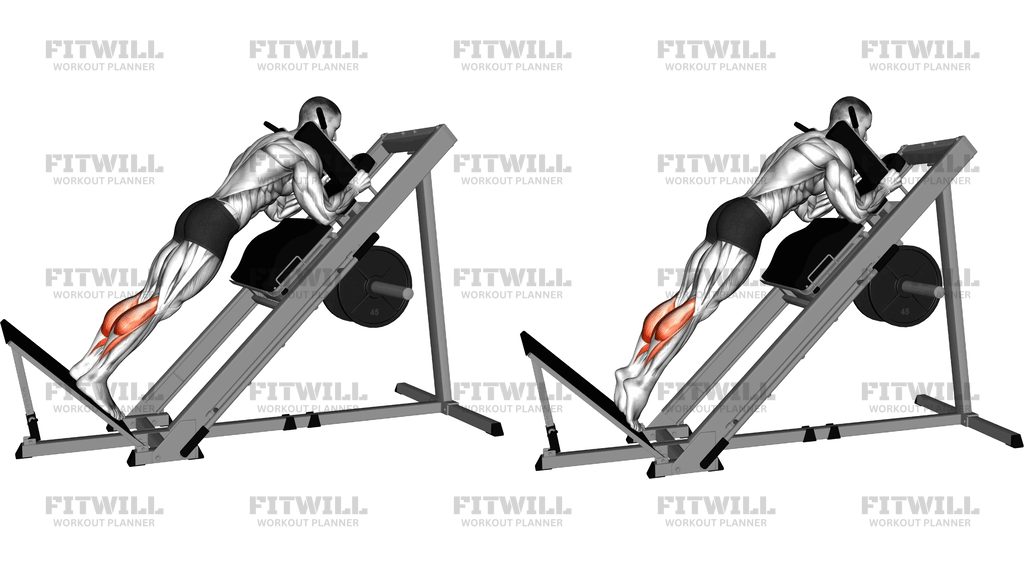
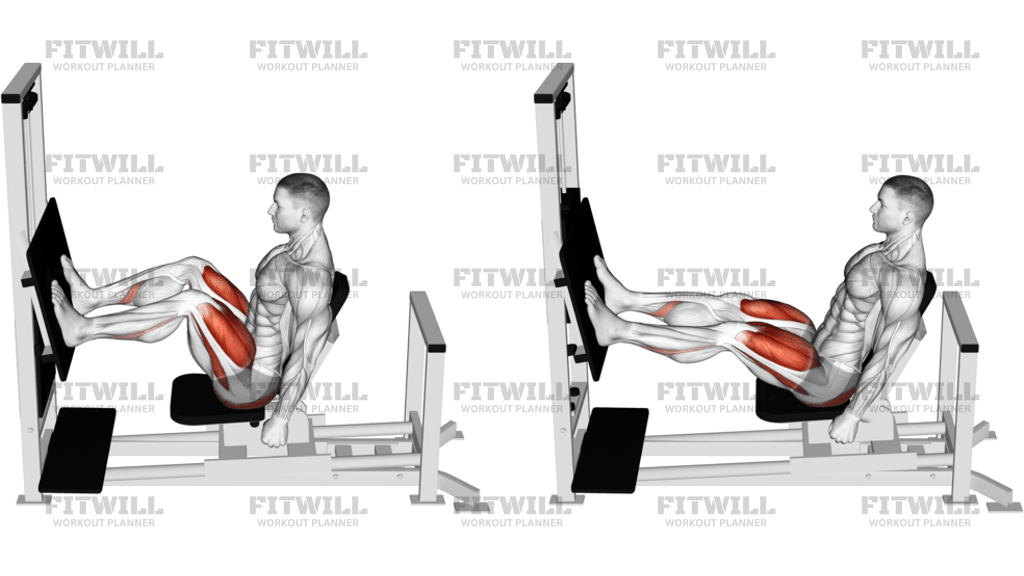
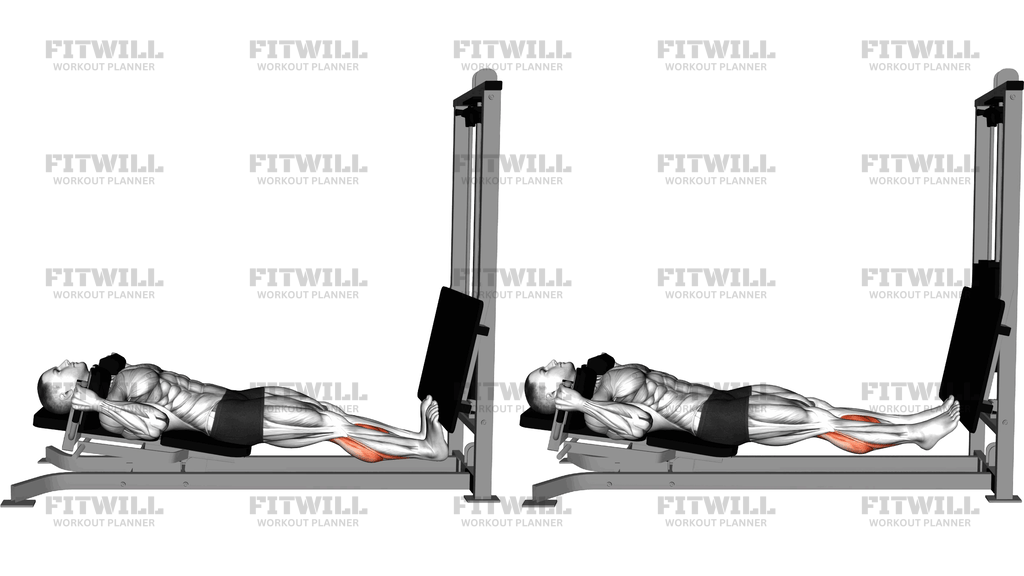
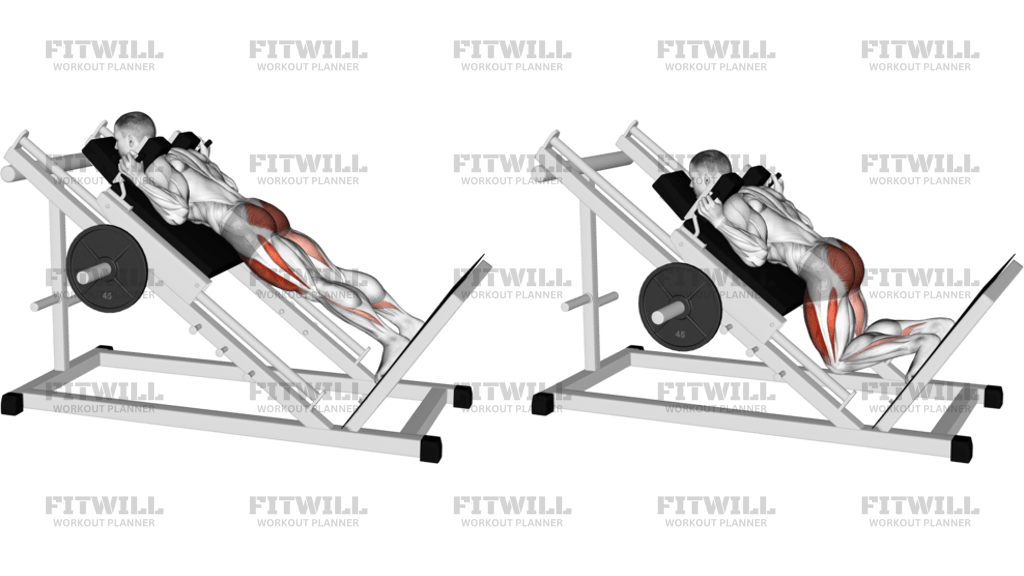
The setup matters because the foot position changes both the stretch and the line of force. In the image, both feet are placed on the platform with the calves highlighted, which points to a double-leg calf press pattern where the heels are allowed to travel and the ankles do most of the work. A stable back and hip position keeps the press from turning into a partial leg press and helps the calves stay under tension from the bottom to the top of each rep.
Use a controlled lowering phase to let the heels drop and the calves lengthen, then press through the forefoot to rise smoothly. The best reps finish with a short squeeze at the top and no bounce at the bottom. If the knees snap straight, the hips shift, or the feet slide on the platform, the load is too heavy or the setup is too loose.
This movement is useful for calf strength, size, and ankle control, especially after bigger lower-body lifts when the calves can be trained directly. It also works well in higher-rep accessory blocks because the sled gives you a consistent resistance path. Keep the range pain-free, keep the tempo honest, and choose a load that lets you drop into a clean stretch and press up without losing foot pressure or posture.
[ Workout Log & Planner ]
Put your next workout in Fitwill
Keep your plan and training log ready when you are.


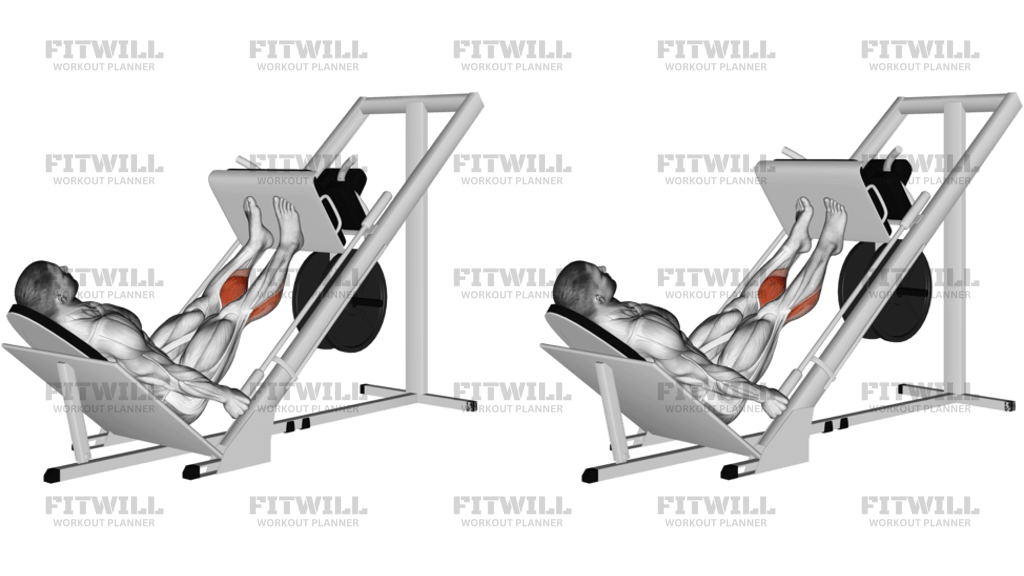
Instructions
- Sit in the sled machine with your back and hips fully supported, and place the balls of both feet on the lower part of the platform so the heels can move freely.
- Set your feet about hip-width apart with the toes pointed mostly forward, and keep even pressure across the big toe, little toe, and heel line.
- Unrack or position the sled with a soft bend in the knees and the ankles already in a lengthened starting position.
- Brace your trunk lightly, keep the knees tracking over the second toe, and let the heels lower until you feel a strong calf stretch without losing your back position.
- Press the sled by driving through the forefoot and straightening the ankles, not by snapping the knees or hips.
- Finish each rep with the ankles fully pointed and a brief squeeze in the calves while the feet stay planted on the platform.
- Lower the sled slowly until the heels drop back into the stretch and the calves lengthen again.
- Keep breathing steady through the set and stop if the feet slide, the hips shift, or the stretch becomes sharp.
Tips & Tricks
- Let the heels travel below the platform edge; if the setup cuts that off, the range will be too short to train the calves well.
- Keep pressure through the big-toe mound and second toe so the ankles do not roll outward at the top.
- Treat the knees as fixed support and let the ankles create the visible motion.
- A slower lowering phase usually builds more calf tension than adding extra weight and bouncing.
- If the sled feels unstable on your feet, reduce the load and reset the stance before continuing.
- Stop the descent when you feel a strong calf stretch, not when the Achilles area starts to feel jammed.
- Use a short pause at the top only if you can keep the feet quiet and the calves fully contracted.
- A firm-soled shoe is usually easier to control on the platform than a soft running shoe.
Frequently Asked Questions
What muscle does Sled 45° Calf Press target most?
It primarily targets the calves, especially the gastrocnemius and soleus.
Where should my feet go on the sled platform?
Place the balls of both feet on the lower part of the platform so the heels can drop below the edge.
Should my knees stay bent or straight?
Keep a small, soft bend in the knees and avoid turning the rep into a knee press.
How far should I lower the sled?
Lower until you feel a strong calf stretch and can still keep the feet planted and the hips still.
Can I do this with both feet at once?
Yes. The standard version uses both feet together so the sled stays stable and the calves load evenly.
What is the most common mistake?
The biggest mistake is using too much weight and shortening the range so the calves never reach a real stretch.
Is this exercise good for beginners?
Yes, if the load is light and the tempo is controlled. Beginners should learn to keep the feet quiet before adding weight.
How can I make it harder without just adding weight?
Slow the lowering phase, add a brief pause in the stretched position, or use higher reps with the same clean foot placement.