Sled One Leg Calf Press On Leg Press
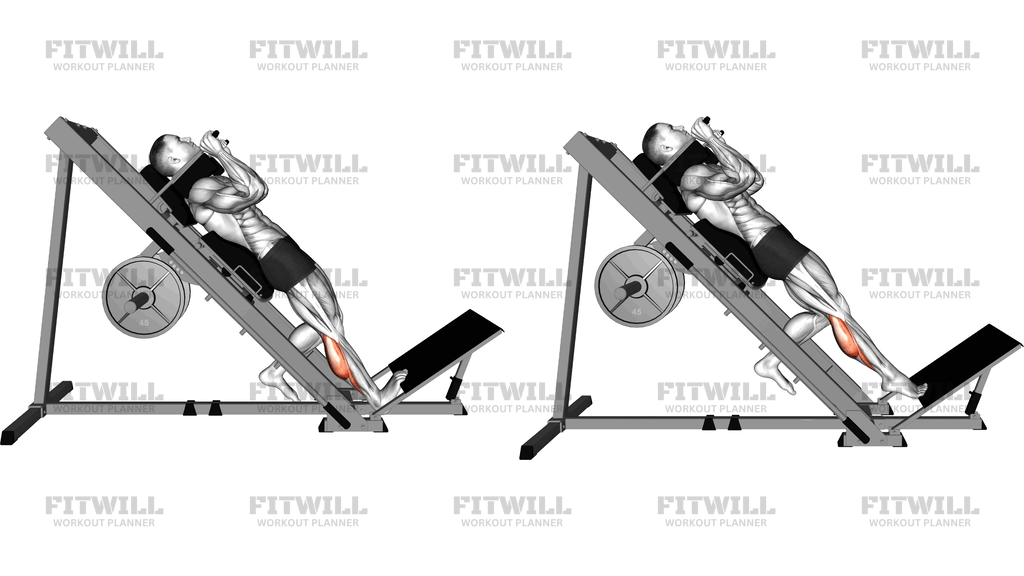
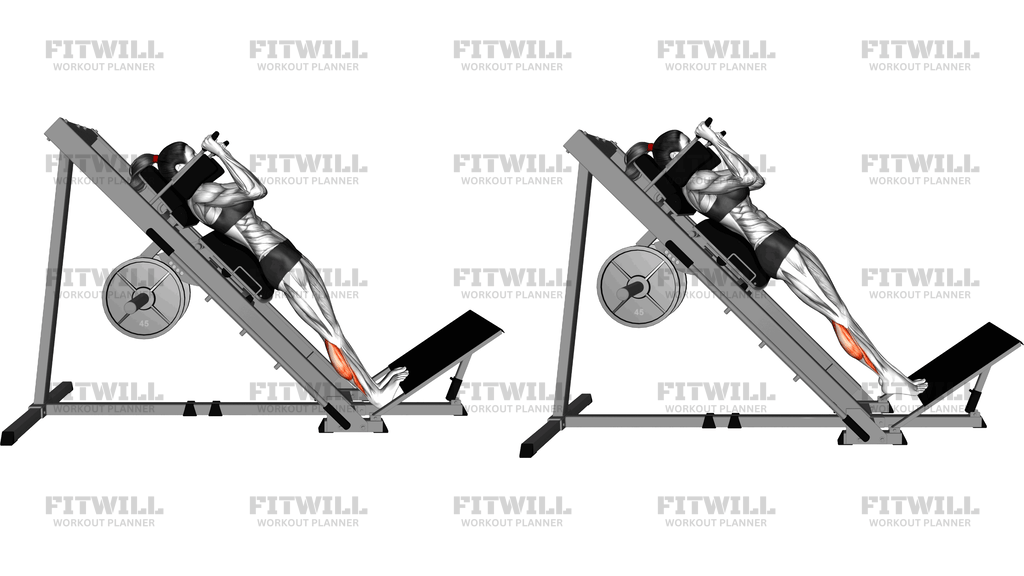
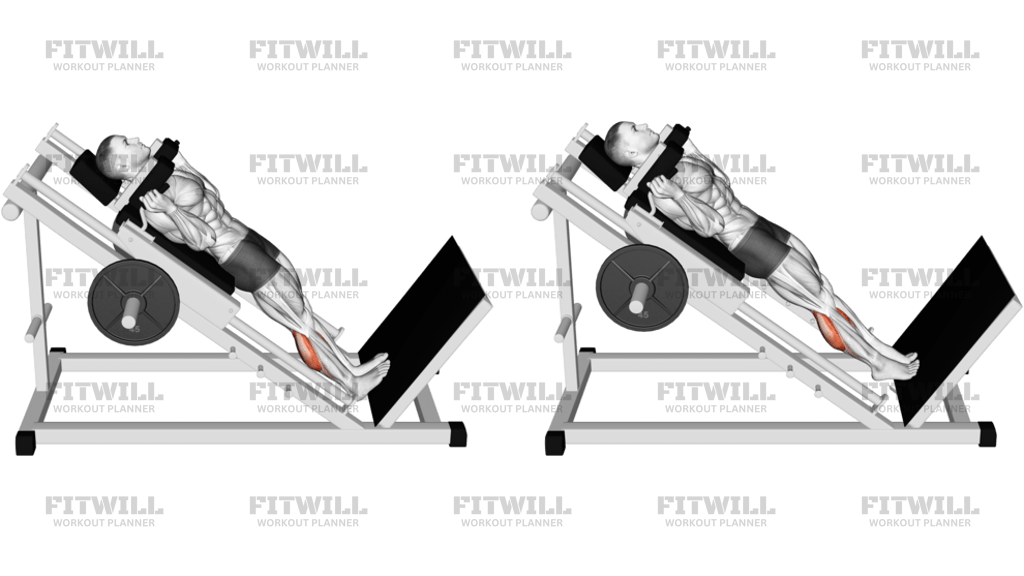
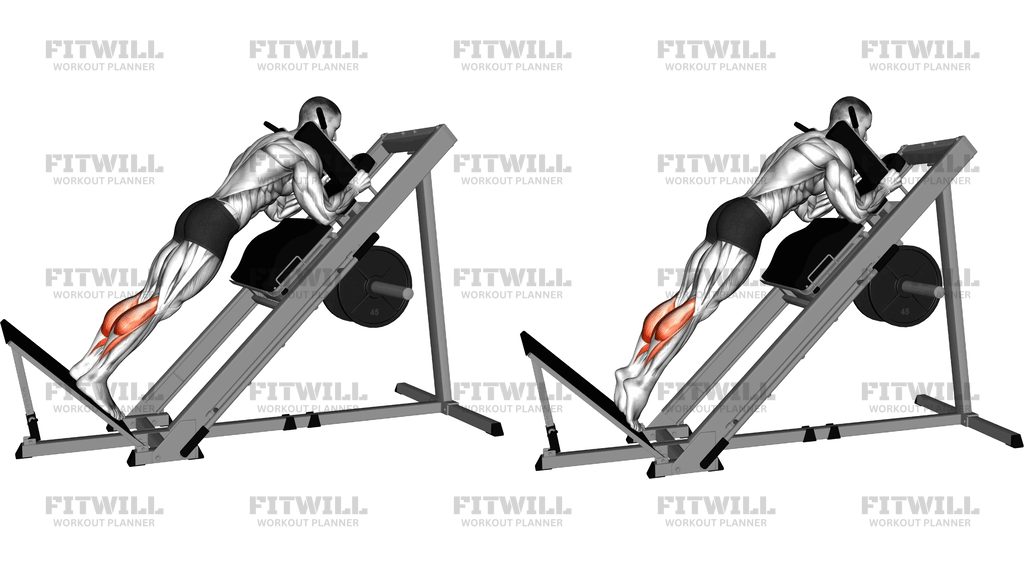
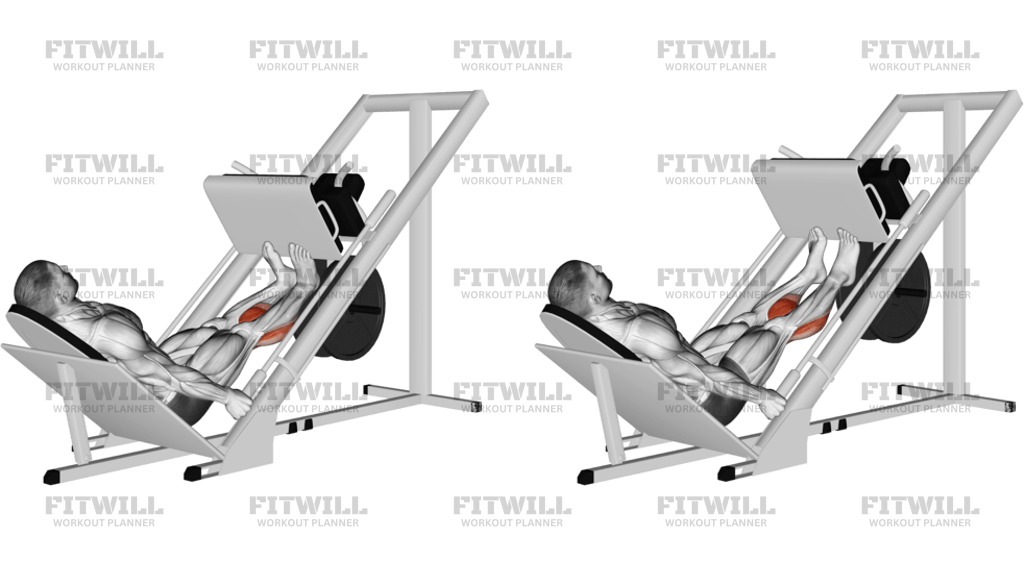
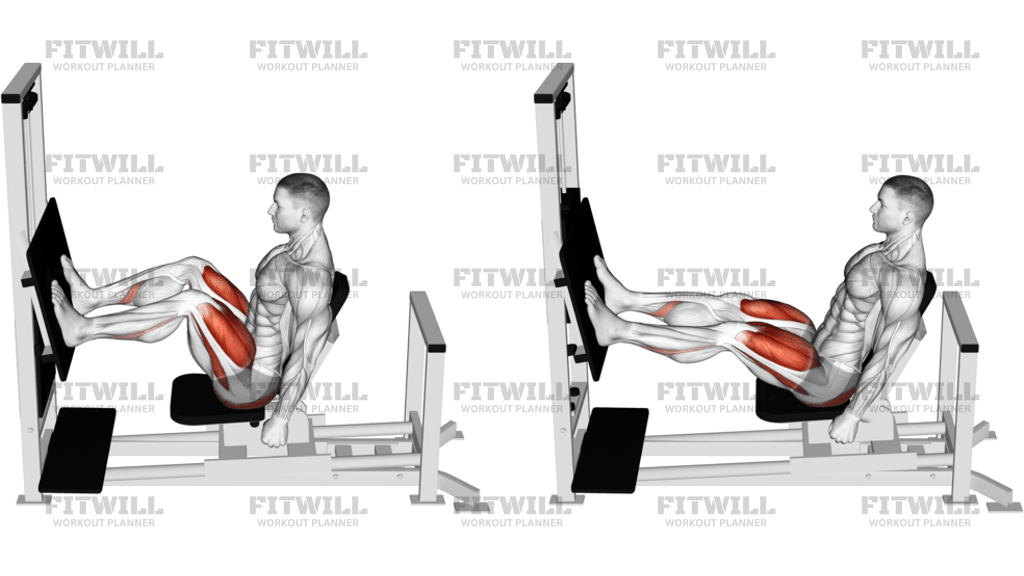
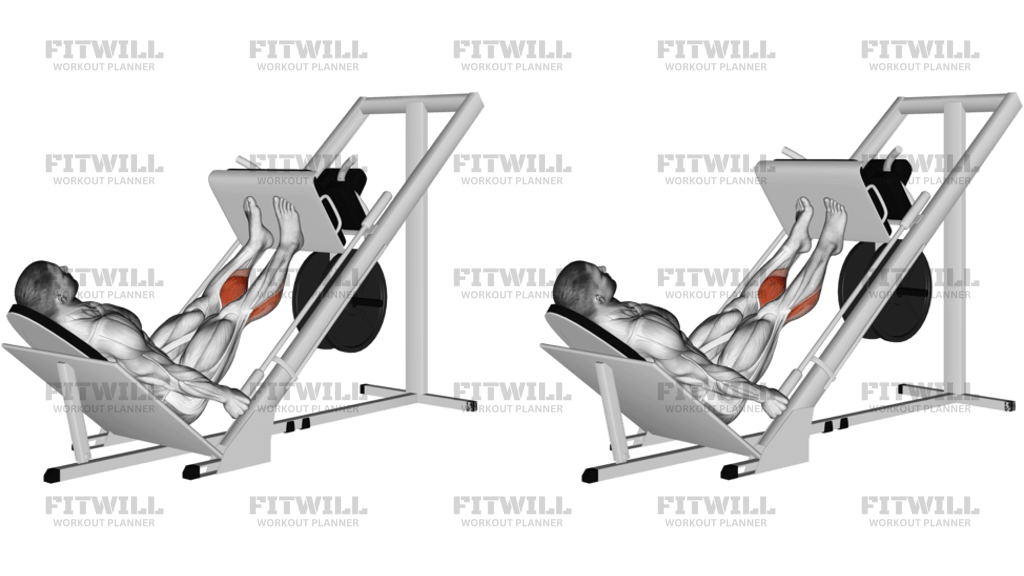
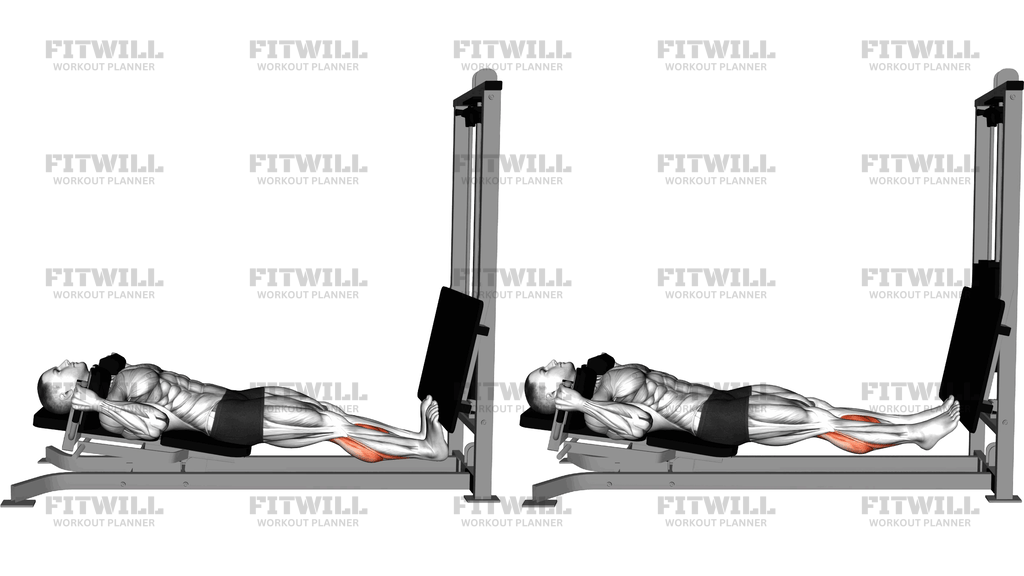
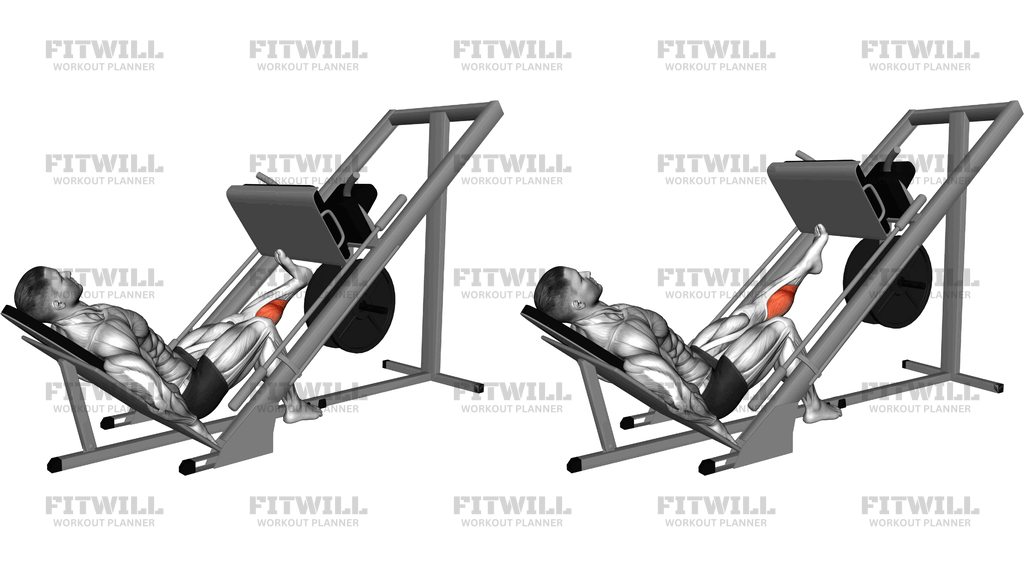
Sled One Leg Calf Press On Leg Press is a single-leg calf exercise performed on a sled-style leg press. One foot drives the footplate while the other leg stays relaxed, which makes it easier to isolate each calf, compare side-to-side strength, and keep the working ankle honest through the full range of motion.
The main demand is on the calves, especially the gastrocnemius and soleus, while the ankle, foot, and hip on the working side stabilize the sled. Because the machine controls the path, the goal is to press smoothly through the ball of the foot, not to bounce the sled or turn the rep into a knee-dominant leg press.
Set the seat so the knee starts with a soft bend and the working foot can sit firmly on the platform with the heel free to drop below the toes. Keep the nonworking leg out of the way and hold the side handles if that helps you stay steady. The rep starts from a deep calf stretch, but only as deep as the ankle can control without the heel rolling or the arch collapsing.
Press by driving through the big toe and second toe while the heel rises toward full plantarflexion. At the top, pause briefly and squeeze the calf without locking the knee or shifting your hips. Lower the platform slowly until you feel the calf lengthen again, then repeat with the same rhythm and foot pressure on every rep.
This movement is useful for hypertrophy, calf-strength work, and fixing left-right imbalances because each side has to do its own work. It also works well as a controlled accessory after squats, deadlifts, or running sessions. Keep the load honest: if the sled is moving faster than your ankle can control, the set is too heavy. The best reps look smooth, symmetrical, and quiet from start to finish.
[ Workout Log & Planner ]
Put your next workout in Fitwill
Keep your plan and training log ready when you are.


Instructions
- Set the sled seat so you can place one forefoot high on the platform with the heel free to drop below the toes.
- Place the working foot on the platform and keep the other leg relaxed and clear of the sled.
- Hold the side handles or seat edges so your hips stay pinned and your pelvis does not twist.
- Start with the ankle lowered into a controlled calf stretch, keeping the arch lifted and the knee softly bent.
- Press the platform away by driving through the big toe and second toe until the heel rises high.
- Pause briefly at the top and finish the calf squeeze without locking the knee.
- Lower the platform slowly until you feel the calf lengthen again, keeping the foot flat and stable on the pad.
- Repeat for the planned reps, then switch sides and match the same range, tempo, and setup.
Tips & Tricks
- Keep the ball of the foot fixed on the platform so the heel can move freely without sliding.
- Let the ankle travel into a real stretch at the bottom, but stop before the arch collapses inward.
- Drive through the big toe if you want the calf to finish the rep instead of the hip.
- Do not bounce out of the bottom; the lower phase should be slower than the press.
- Use a knee angle that stays slightly bent so the rep stays calf-dominant instead of turning into a locked-out press.
- If one side cramps early, reduce the load and shorten the set rather than cutting the range short.
- Keep the nonworking leg relaxed instead of helping by pushing off the sled or seat.
- Match both sides rep for rep so you can spot strength or control differences immediately.
Frequently Asked Questions
What muscle does Sled One Leg Calf Press On Leg Press target most?
The calves do the main work, especially the gastrocnemius and soleus on the working side.
Can beginners perform this exercise?
Yes. Beginners usually do best with a light sled load and a shorter range until they can keep the heel path smooth.
Where should my foot sit on the leg press platform?
Place the ball of the foot high enough that the heel can drop, but keep the foot stable and avoid letting it drift off the pad.
Should I lock out my knee at the top?
No. Finish the calf squeeze with the knee softly bent so the work stays on the ankle and calf instead of the joint.
Why do one leg at a time instead of both?
Single-leg work exposes side-to-side differences and lets you focus on the exact ankle path and foot pressure on each calf.
What if I feel this more in my arch or toes than my calf?
The load is likely too heavy or the foot is too far forward. Reset the foot and reduce the resistance so the calf can finish the press.
Is this better as a heavy strength exercise or a controlled accessory?
It usually works best as a controlled accessory, especially when you want clean calf tension and a full stretch.
What is the most common form mistake?
Bouncing the sled with the ankle, which shortens the range and turns the set into momentum instead of calf work.