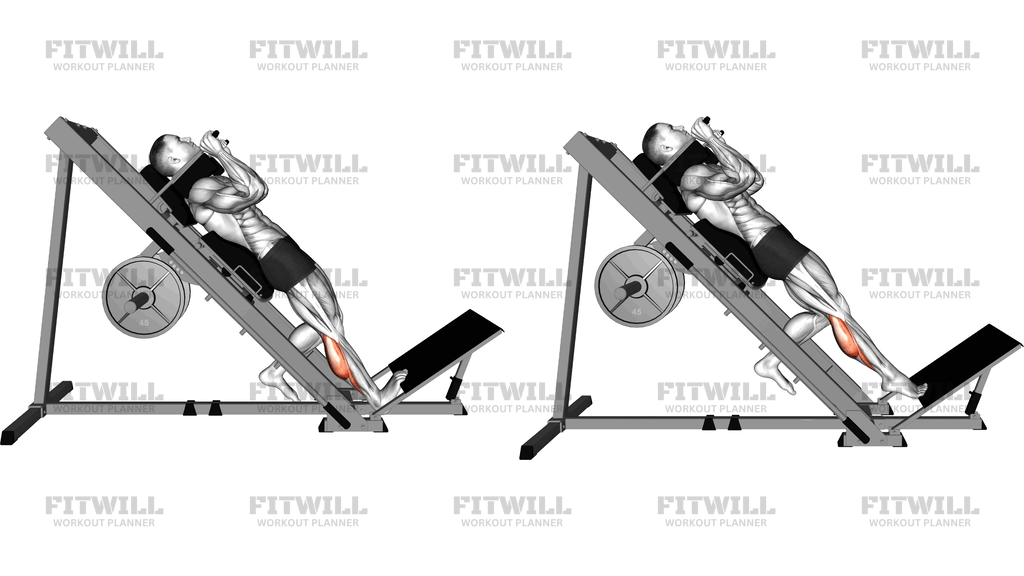
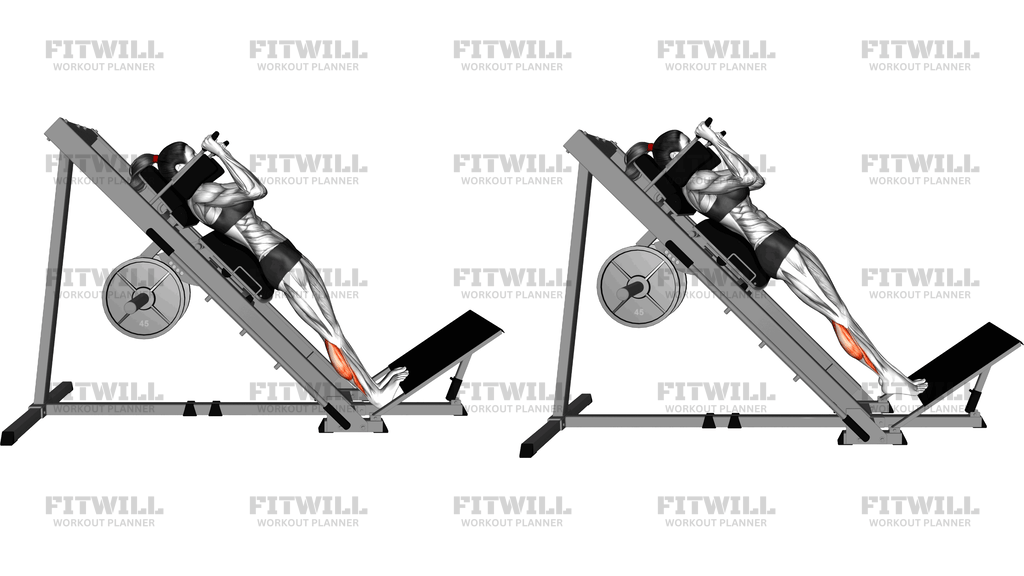
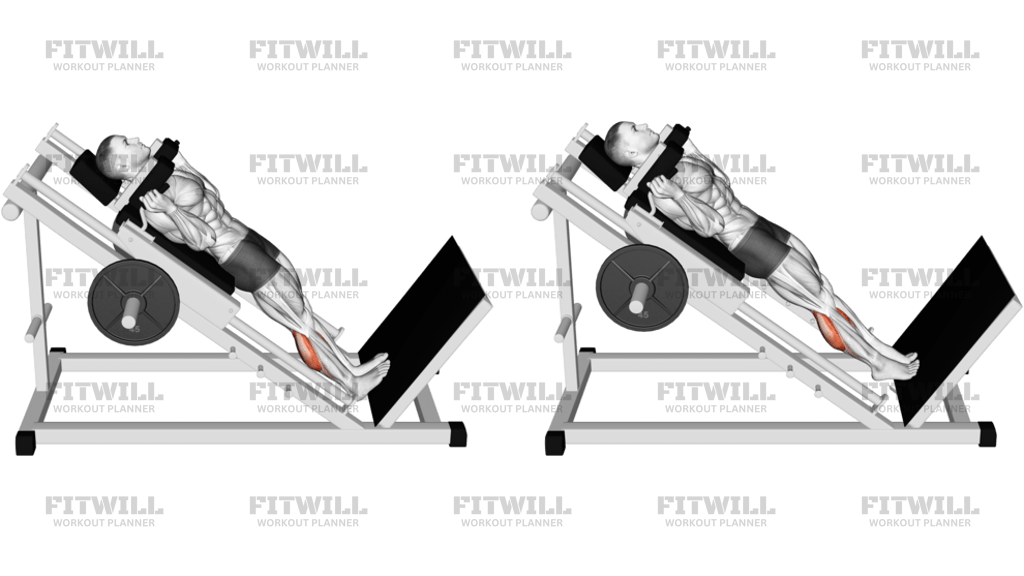
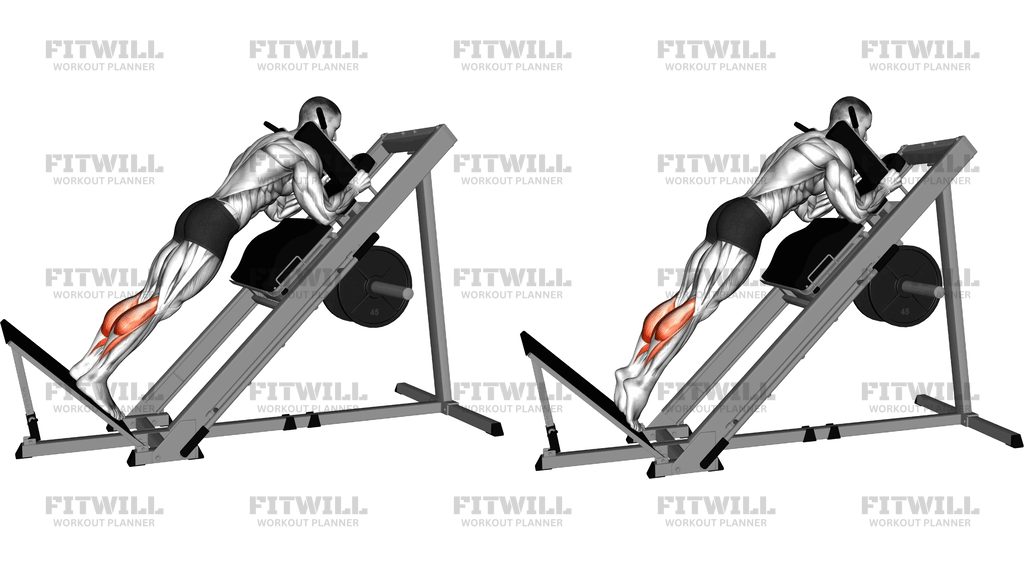
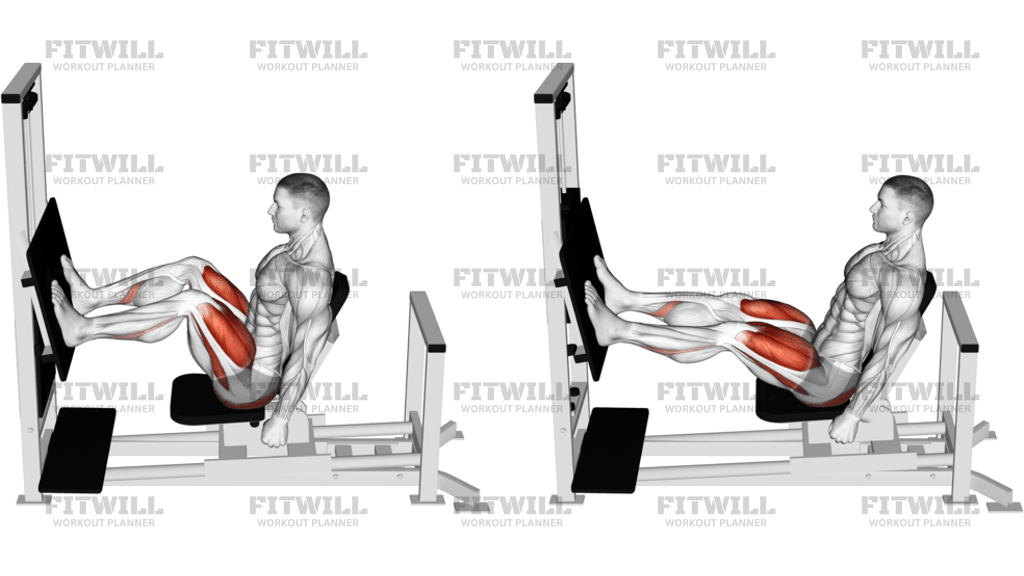
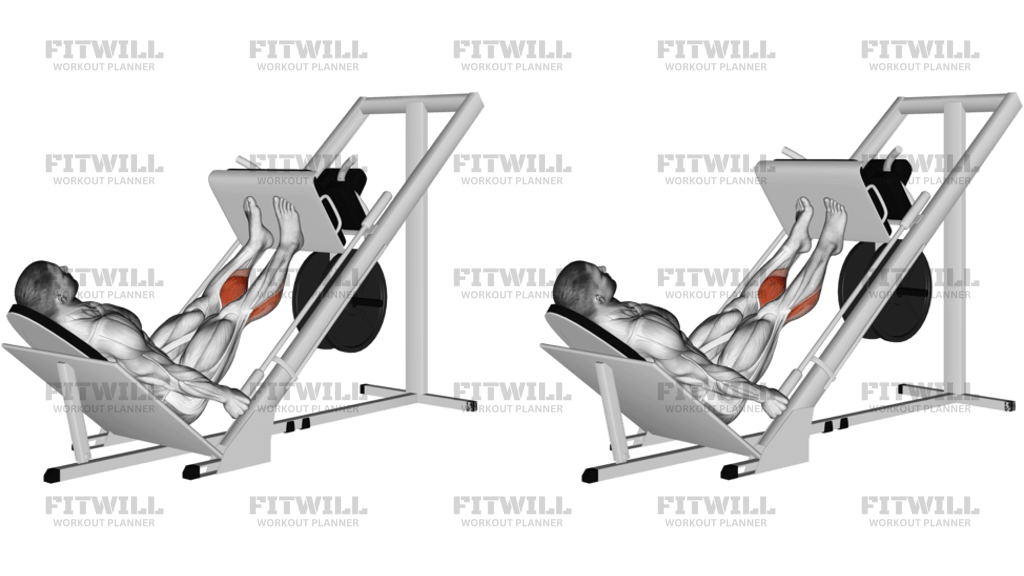
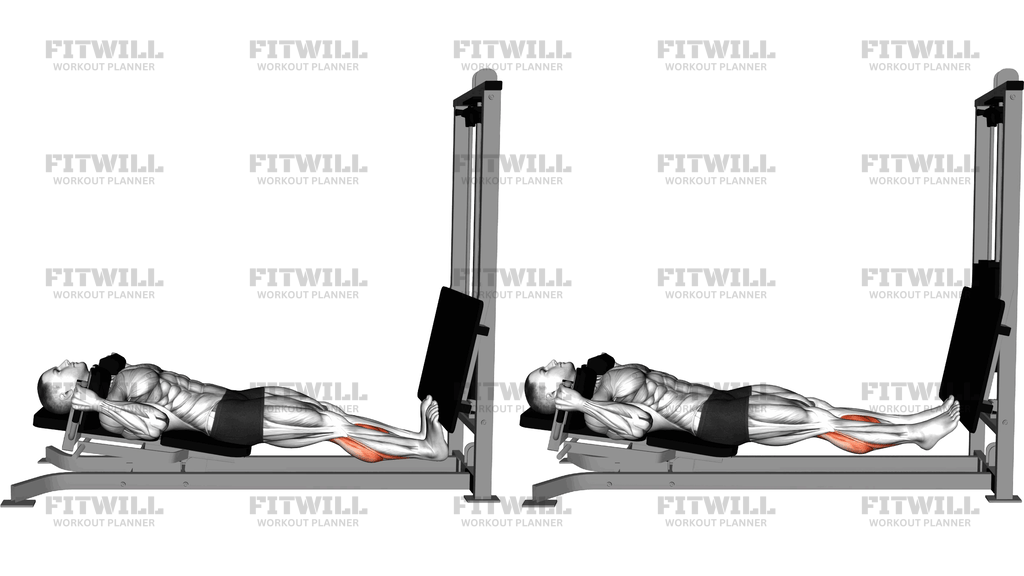
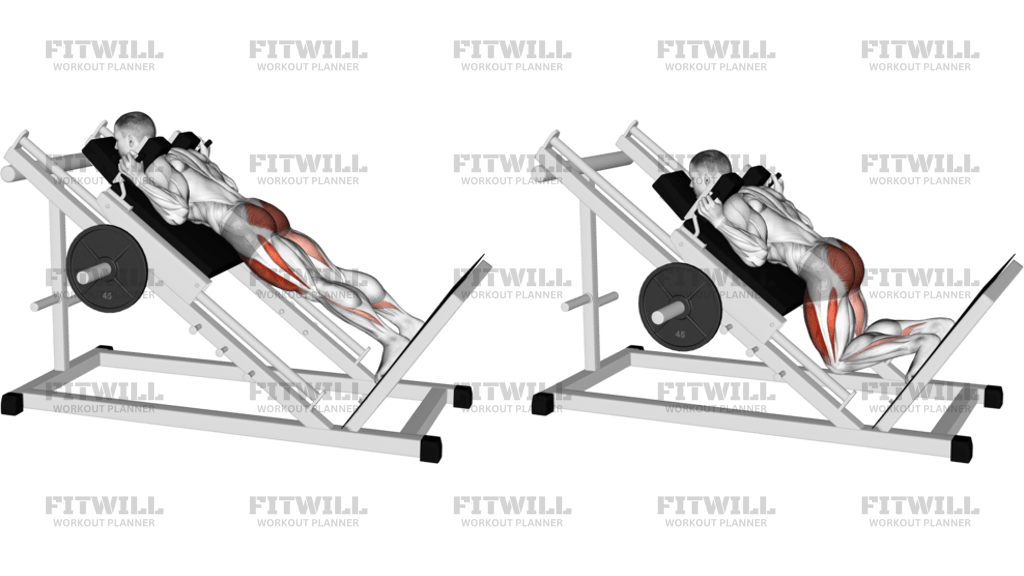
Sled Calf Press On Leg Press
Sled Calf Press On Leg Press is a machine-based calf exercise that trains ankle plantarflexion against a fixed sled. The feet stay on the leg press platform while the knees hold a mostly consistent bend and the heels travel through a long, controlled arc. That makes the movement useful for building calf strength, size, and endurance without needing to balance a free weight.
The setup matters because the machine does not create the movement for you. You want the balls of the feet on the lower part of the platform, the heels free to drop, and the pelvis and low back anchored to the pad. If the feet are too high or too low, the range changes and the load can shift away from the calves. A stable torso lets the ankles do the work instead of the hips or knees taking over.
In each rep, the legs should stay organized while the ankles move. Press the sled up by driving through the forefoot, then lower the heels slowly to get a strong calf stretch. At the top, finish with a hard but controlled toe point rather than bouncing against the stops. The best version of this exercise feels smooth through the full ankle range, with no hip pop, knee lockout, or foot slipping on the platform.
This is a strong accessory lift for lower-body days, calf specialization blocks, and athletes who need better ankle strength for jumping, sprinting, or change of direction. It can also be used as a higher-rep hypertrophy movement because the machine path keeps tension on the calves and makes it easy to repeat clean reps. The tradeoff is that short, sloppy reps usually happen when the load gets too heavy, so the target should be control first and resistance second.
Use a range you can own on every rep, especially at the bottom where the calves lengthen and the Achilles tendon is most loaded. If your heels cannot lower without the feet shifting, reduce the load or shorten the range until the pattern is stable. The exercise should challenge the calves through the whole set while the seat, back pad, and foot placement stay fixed.
[ Workout Log & Planner ]
Put your next workout in Fitwill
Keep your plan and training log ready when you are.


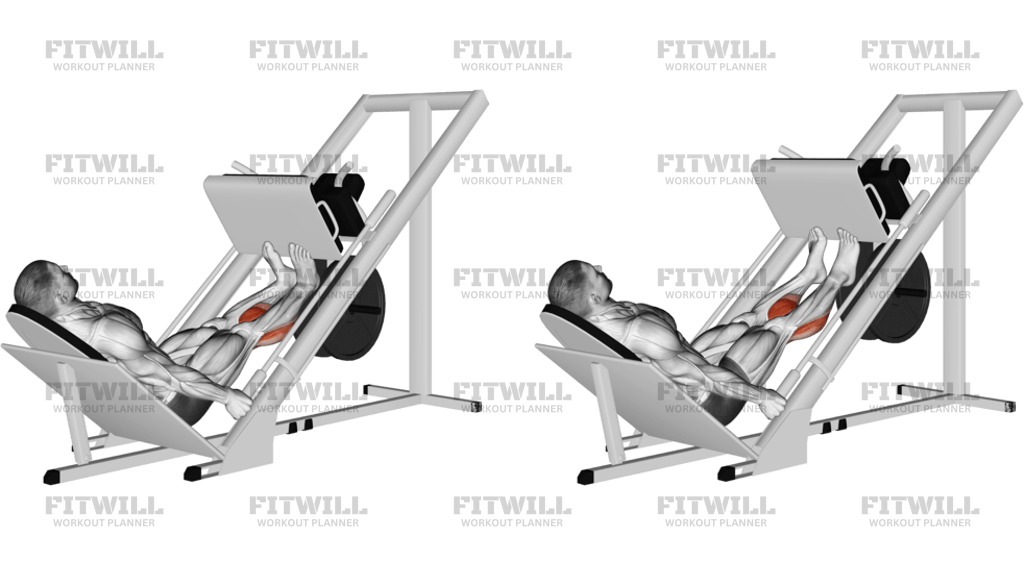
Instructions
- Sit on the leg press with your hips and lower back planted against the pad, and place only the balls of your feet on the lower portion of the platform so your heels can drop freely.
- Keep your knees slightly bent and your feet hip-width apart, with the toes pointing straight ahead or only slightly turned out.
- Release the sled enough to start with the heels lowered and the calves stretched, but keep the foot contact stable on the platform.
- Brace your torso and press through the forefoot to raise the sled by pointing the ankles, not by changing the knee angle.
- Finish the top position with the calves fully contracted and the heels as high as you can control without bouncing.
- Lower the sled slowly by letting the heels sink back down until you feel a clear calf stretch.
- Keep the knees quiet and the hips pinned to the seat while the ankles move through the rep.
- Breathe out as you press up, then inhale on the controlled lowering phase.
- Repeat for the planned reps, then re-rack the sled with the feet still secure on the platform.
Tips & Tricks
- Keep the balls of the feet on the platform and let the heels hang free; if the arches collapse or the feet slide, the setup is too unstable.
- Use a knee angle that stays nearly fixed. If the knees are pumping in and out, the set has turned into a leg press instead of a calf press.
- Lower slowly enough to feel the calves lengthen, but stop before the heels crash into the end of the machine path.
- Press through the big toe and second toe to keep pressure centered on the forefoot instead of rolling onto the outer edge of the foot.
- Pause for a brief squeeze at the top so the calves finish the rep instead of rebounding off momentum.
- Choose a lighter load than you would for a leg press set; calf work usually needs cleaner foot control and a longer range.
- Keep the hips glued to the pad. If the pelvis lifts, the load is probably too heavy or the seat position is too cramped.
- For more soleus emphasis, keep the knees softly bent and avoid locking them out at the top.
- For more gastrocnemius stretch, let the heels travel a little deeper at the bottom as long as the Achilles stays comfortable.
Frequently Asked Questions
What muscle does Sled Calf Press On Leg Press target most?
It primarily targets the calf muscles, especially the gastrocnemius and soleus through ankle plantarflexion.
Can beginners perform this exercise?
Yes. Beginners usually do best with a light sled load and a small, controlled range until they can keep the feet planted and the knees steady.
Where should my feet go on the leg press platform?
Place the balls of the feet on the lower part of the platform so the heels can drop and rise freely without the toes slipping.
Should my knees move during the rep?
Only a little. The knees should stay mostly fixed while the ankles do the work, otherwise the movement turns into a leg press.
How deep should I lower the heels?
Lower until you feel a strong calf stretch, but stop before the feet shift or the Achilles feels pinched.
Is this better for the soleus or the gastrocnemius?
Both work. A softly bent knee biases the soleus a bit more, while a straighter knee usually increases the gastrocnemius contribution.
What is the most common mistake on this machine?
Using too much weight and bouncing through short reps instead of controlling the heel drop and toe press.
How should I breathe during the set?
Exhale as you press the sled up and inhale as you lower the heels under control.