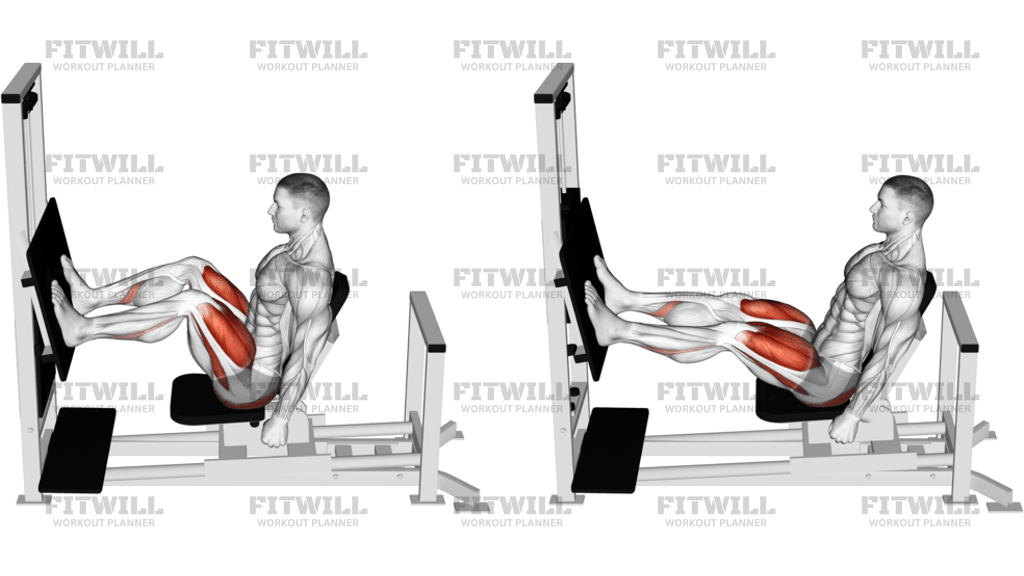
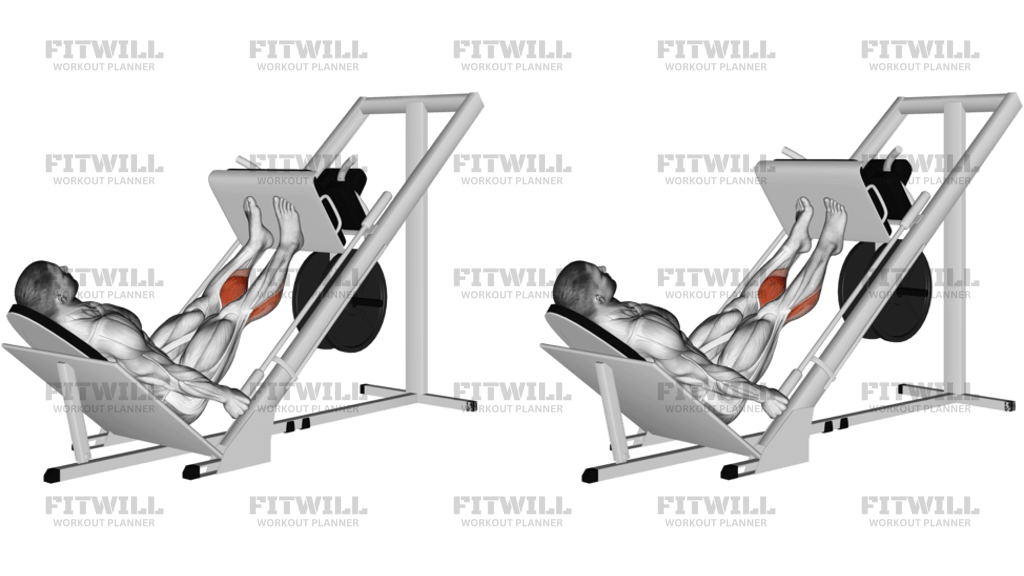
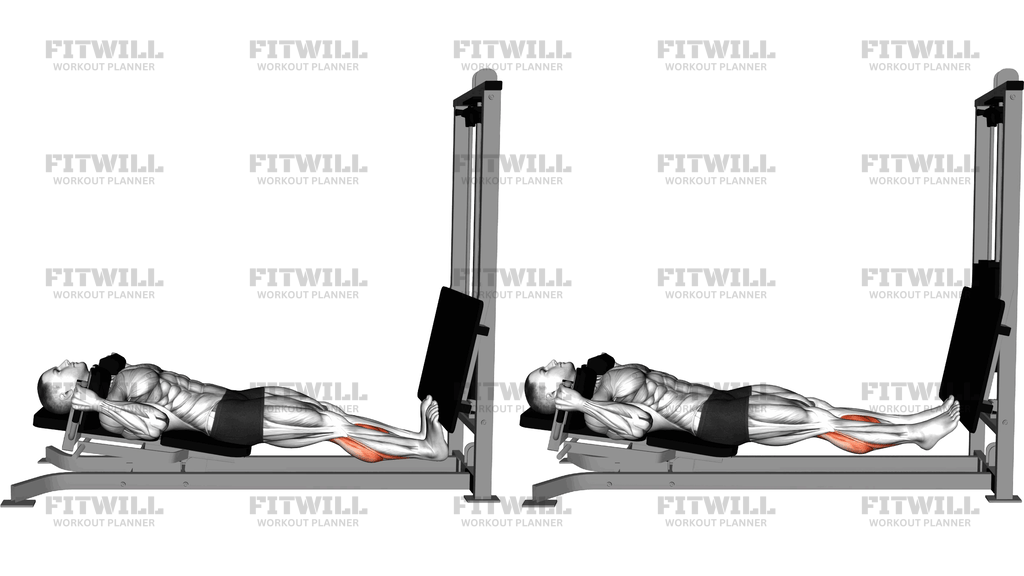
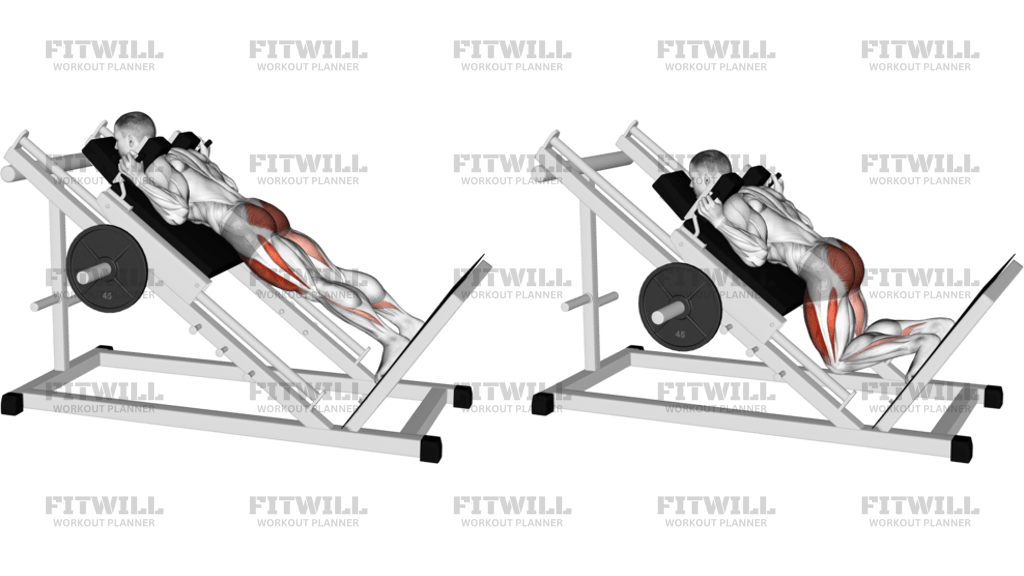
Sled Forward Angled Calf Raise
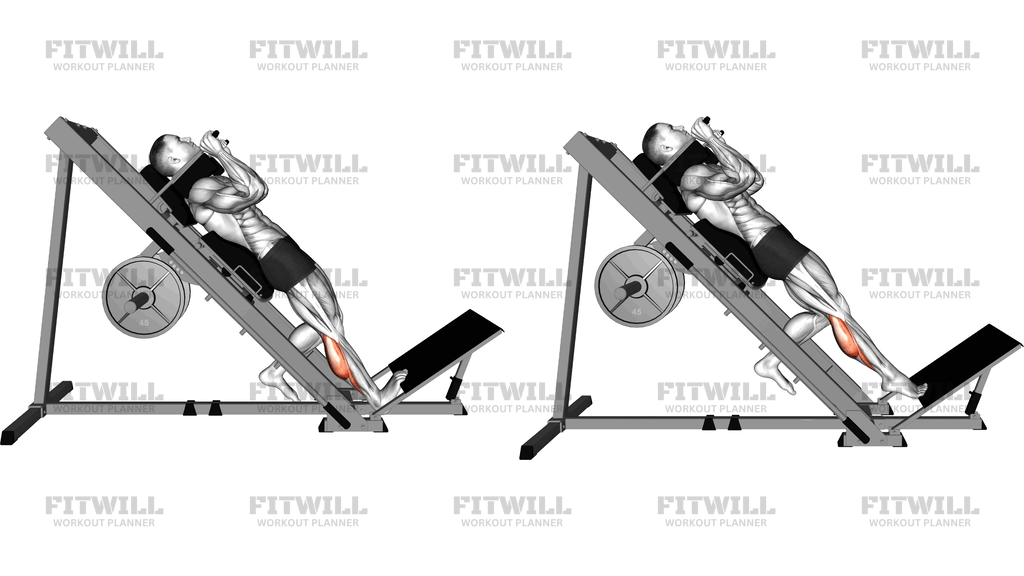
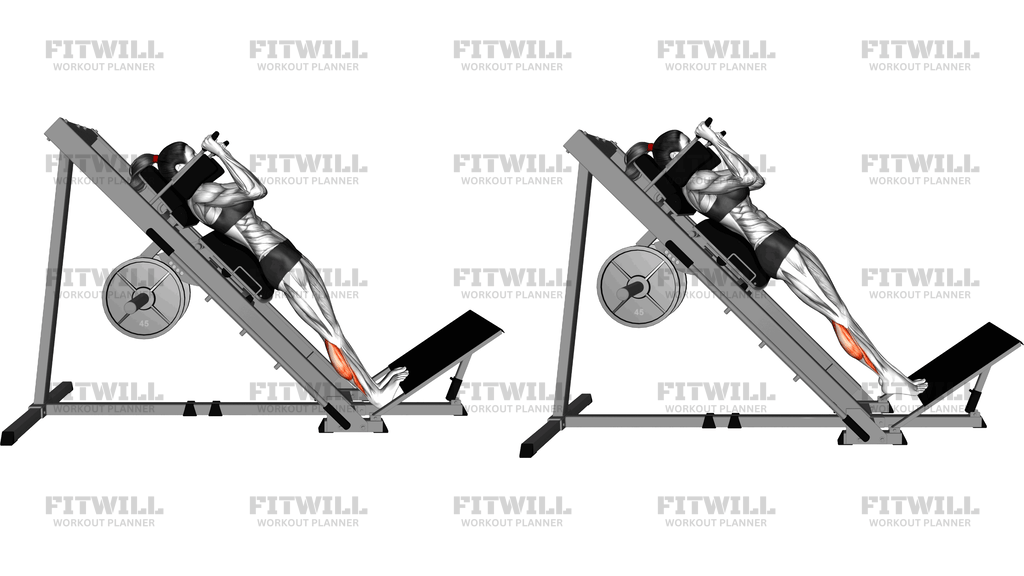
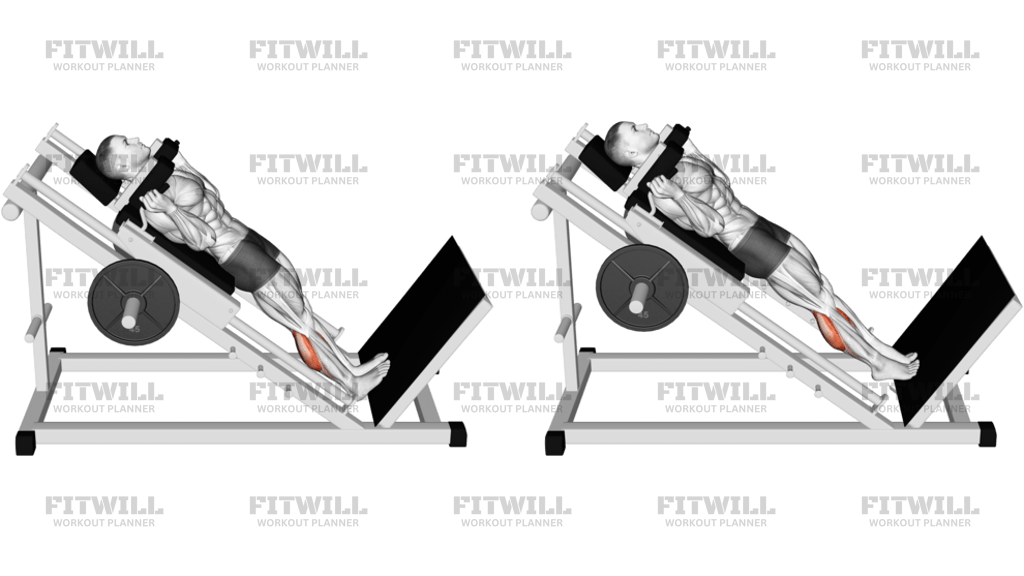
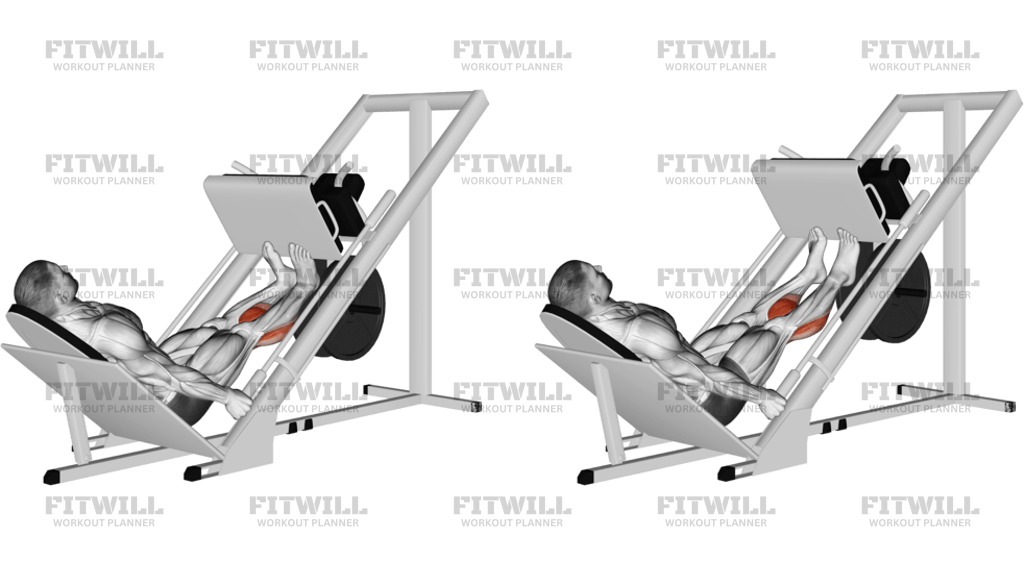
Sled Forward Angled Calf Raise is a machine-based calf exercise performed on an angled sled with the shoulders and torso braced against the upper pad and the balls of the feet planted on the lower foot platform. The setup fixes the body in a forward lean so the ankles do the work instead of the hips, knees, or back. That makes it a focused way to train plantarflexion through a controlled, supported line of force.
The movement is simple, but the details matter. From the image, the heel starts dropped so the calves are lengthened, then the sled is driven by pressing through the forefoot until the ankles finish in a strong toe-pointed position. Because the knees stay mostly straight, the gastrocnemius takes a larger role, while the soleus and foot stabilizers help control the path. Good reps should look smooth, quiet, and repeatable rather than bouncy.
The angled machine position changes how the calves feel compared with a standing calf raise. The forward lean and fixed pad reduce body sway and make it easier to keep tension on the lower leg through the entire rep. That is useful when you want to isolate the calf complex, build strength through a large range of motion, or add high-quality accessory volume without loading the spine heavily.
Start with the feet centered and stable on the platform, then lower the heels slowly until you feel a clear calf stretch. From there, drive the sled forward by raising the heels and pushing through the big toe and second toe area. Pause briefly at the top, then lower under control to the same depth each time. If the platform or foot angle causes the heel to bounce, shorten the range slightly and keep every rep deliberate.
This exercise works well as a calf-focused accessory after compound leg work, or as a standalone lower-leg movement when you want strict tension and a machine-supported setup. Use a load that lets you keep the torso pinned into the pad, the ankles moving cleanly, and the heel drop controlled. The goal is not to force the sled higher by shifting the hips, but to let the calves produce the entire rep with consistent pressure and clean mechanics.
[ Workout Log & Planner ]
Put your next workout in Fitwill
Keep your plan and training log ready when you are.


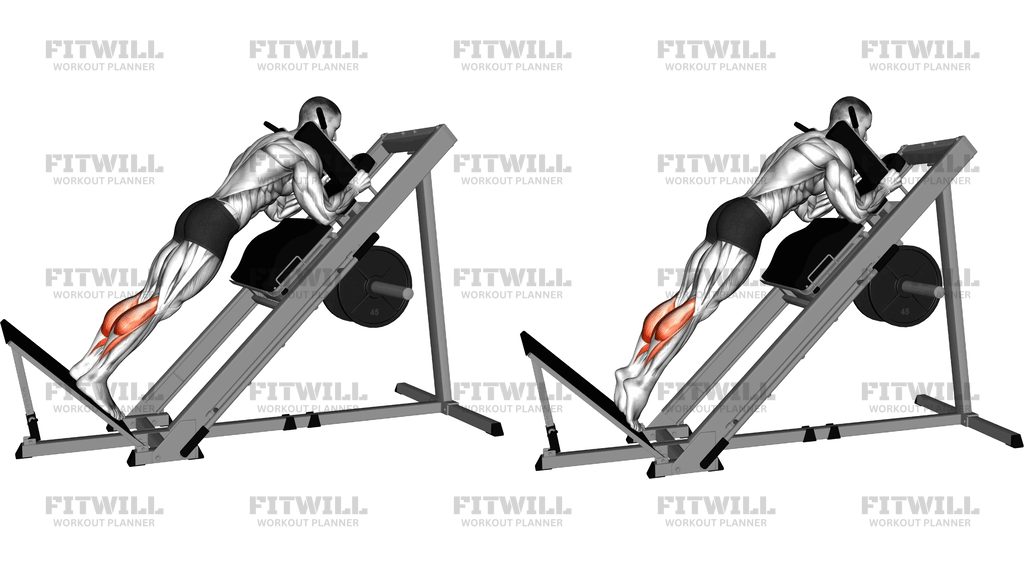
Instructions
- Set the sled machine so your chest and shoulders can press firmly into the angled pad, and place the balls of your feet on the lower platform with your heels hanging free.
- Keep your knees mostly straight but not locked, feet about hip-width apart, and your toes pointing in the same direction as the sled.
- Brace your midsection and keep your torso pinned to the pad before you start the first rep.
- Let your heels drop under control until you feel a clear stretch through the calves.
- Drive through the big toe and second toe area to press the sled forward and lift the heels as high as you can without shifting your body.
- Squeeze the calves hard at the top for a brief pause while keeping the ankles stacked and the pressure on the forefoot.
- Lower the sled slowly until the heels reach the same stretched position you started from.
- Keep the motion smooth and rhythmic, breathing out on the press and in on the return.
Tips & Tricks
- Keep the heels free to travel below the foot platform so the calves work through a real stretch, not a half rep.
- Press through the forefoot, but keep the weight centered over the big toe and second toe instead of rolling outward onto the outer edge of the foot.
- Do not unlock the knees aggressively; a soft, stable knee angle keeps the load on the calves instead of turning the rep into a leg press.
- Pause at the top for a moment on each rep so the calf contraction is visible and not just a bounce off the bottom.
- Lower slowly enough that the sled never slams into the stretched position or loses tension at the ankle.
- Keep your chest and shoulders glued to the pad so the torso does not slide forward when the load gets heavy.
- If the Achilles tendon or lower calf feels irritated, shorten the bottom position slightly and stop before the stretch becomes sharp.
- Use a load that lets you keep the same foot pressure and heel path on every rep instead of forcing range by rocking your body.
Frequently Asked Questions
What muscle does Sled Forward Angled Calf Raise target most?
It primarily targets the calves, with the gastrocnemius doing most of the work because the knees stay mostly straight.
How should my feet sit on the sled platform?
Place the balls of your feet on the lower platform with the heels hanging off so they can drop into a stretch at the bottom of the rep.
Should my knees be bent during this calf raise?
Keep them mostly straight but not locked. A small amount of bend is fine, but too much knee movement turns the exercise into something less calf-focused.
How far should I lower my heels?
Lower only until you feel a strong calf stretch and can still control the sled. If the bottom position bounces or pinches, shorten the range slightly.
Can I use this as a warm-up exercise?
Yes. Light sets work well for warming up the calves and ankles before heavier lower-body work.
What is the biggest form mistake on this machine?
The most common mistake is bouncing out of the bottom or using body sway to lift the sled instead of letting the ankles do the work.
Is this more of a strength or size exercise?
It can support both. Heavier controlled sets build strength, while moderate and higher-rep sets are useful for calf hypertrophy and local endurance.
What should I do if the load makes me lose foot pressure?
Reduce the weight and keep the pressure centered through the forefoot. If your heels stop dropping or your toes start sliding, the load is too heavy.