Spider Crawl Push-Up
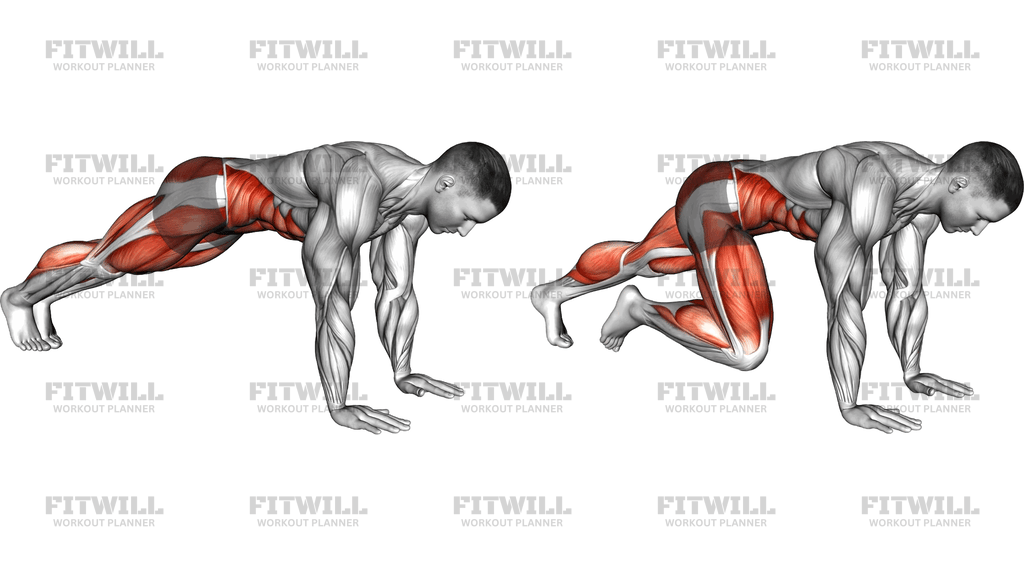
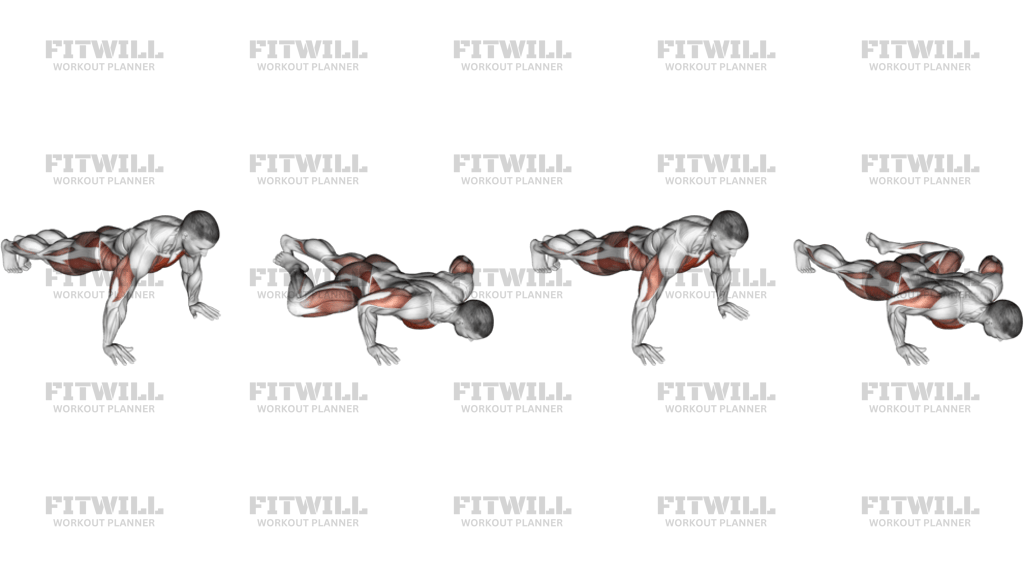
Spider Crawl Push-Up is a bodyweight plank-and-push-up variation that adds a knee-to-elbow crawl on each rep. It is a useful way to train pressing strength while forcing the trunk to resist twisting, the pelvis to stay level, and the hips to coordinate with the upper body.
The main emphasis stays on the abs, especially the rectus abdominis, but the movement also asks a lot from the obliques, hip flexors, shoulders, chest, and triceps. Because one knee leaves the floor and travels outside the body while you lower and press, this exercise rewards control far more than speed. A narrow base or rushed tempo quickly shows up as hip sway, sagging in the low back, or a shortened push-up.
Set the hands under the shoulders, step the feet back into a solid high plank, and brace before the first rep. The shoulders should stay square to the floor as the knee crawls toward the same-side elbow. The chest should lower between the hands with a smooth path, then press back to plank without losing tension through the torso. The crawl should feel deliberate, not snappy.
This exercise works well in warm-ups, accessory blocks, core circuits, or conditioning sessions when you want pressing work with extra trunk demand. It is also a good regression or progression tool depending on how you change the base of support, tempo, and range of motion. If the hips keep rotating or the shoulders feel overloaded, use a higher incline, shorten the range, or slow the crawl until every rep looks clean.
Spider Crawl Push-Up is safest when the neck stays long, the ribs stay tucked, and the movement finishes before the low back starts to arch. The goal is not to touch knee to elbow at all costs; the goal is to keep the push-up strong while the leg action challenges balance and anti-rotation control. When that stays consistent, the exercise becomes a demanding but very practical core-and-upper-body drill.
[ Workout Log & Planner ]
Put your next workout in Fitwill
Keep your plan and training log ready when you are.


Instructions
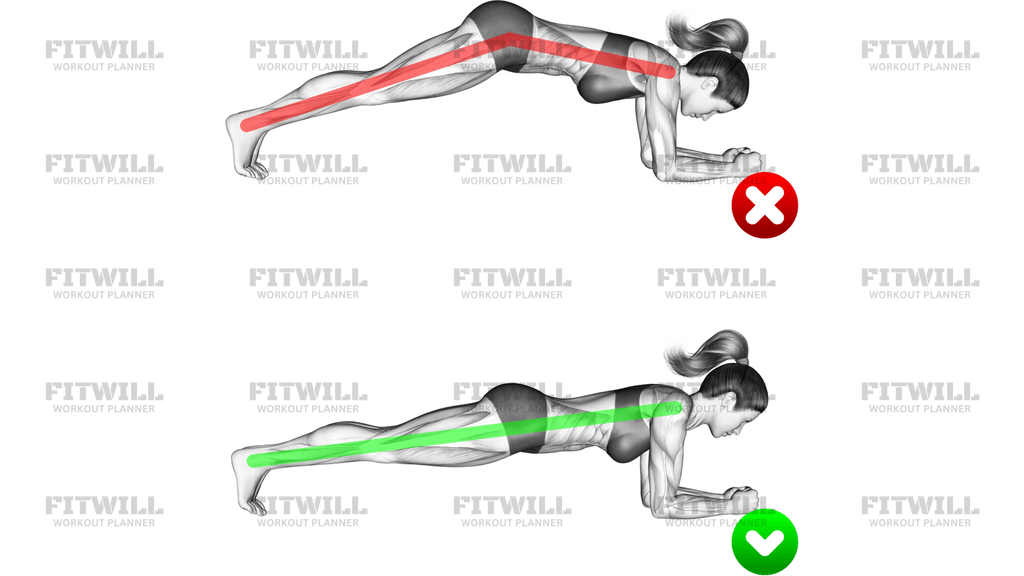
- Start in a high plank with your hands under your shoulders, arms straight, and feet back far enough that your body forms a long line from head to heels.
- Set your feet a little wider than hip-width so you have room to crawl one knee outward without losing balance.
- Grip the floor, tuck your ribs, and squeeze your glutes before you move.
- Crawl one knee out toward the same-side elbow while keeping the opposite leg long and steady.
- Lower your chest between your hands as the knee travels forward, keeping your shoulders square to the floor.
- Press the floor away to return to the top of the push-up without letting your hips rise or twist.
- Step the crawled leg back to plank, then repeat the same crawl on the other side.
- Breathe in on the lower and crawl, then exhale as you press back to plank.
- Finish each rep in a braced plank before starting the next one.
Tips & Tricks
- If your hips rock side to side, widen your feet slightly and slow the crawl before lowering into the push-up.
- Think about bringing the knee outside the elbow, not just straight forward under the torso.
- Keep the chest moving between the hands instead of dropping the head first.
- Do not let the low back sag when the leg leaves the floor; shorten the range if you cannot keep the ribs tucked.
- Use a small pause in the plank at the top of each rep to reset the brace and keep the next crawl clean.
- Keep your elbows at a comfortable angle on the descent, usually about 30 to 45 degrees from the torso.
- A slower lowering phase increases the trunk demand without needing to add extra reps.
- Elevate the hands on a bench or box if the crawl pattern is solid but the push-up range is still too hard to control.
- Stop the set when the knee starts slipping inward or the shoulders begin turning with the hips.
Frequently Asked Questions
What does Spider Crawl Push-Up train?
It trains push-up strength plus anti-rotation core control. You should feel the chest, triceps, shoulders, abs, obliques, and hip flexors working together.
What makes this different from a regular push-up?
Each rep adds a knee-to-elbow crawl, which makes the torso resist twisting while you press. That extra leg action is what turns it into a core-heavy variation.
Do I need to touch my knee to my elbow?
No. Bring the knee toward the same-side elbow as far as you can without twisting your hips or collapsing the plank.
Can beginners do this exercise?
Yes, but the best beginner version is usually an incline on a bench or box. That keeps the crawl pattern intact while making the push-up easier to control.
What is the most common mistake?
Letting the pelvis rotate or the low back sag while the knee comes forward is the biggest problem. If that happens, reduce the range or widen the stance.
Should the push-up be full depth?
Use the deepest range you can control without losing a tight plank. A smaller, cleaner rep is better than forcing depth and twisting through the lower back.
How can I make Spider Crawl Push-Up harder?
Slow the lowering phase, keep the feet narrower, or add a brief pause at the top of each rep. A lower hand position also increases the challenge.
How should I breathe during the rep?
Inhale as you crawl and lower, then exhale as you press back to plank. Reset your brace at the top before starting the next side.