Sumo Squat
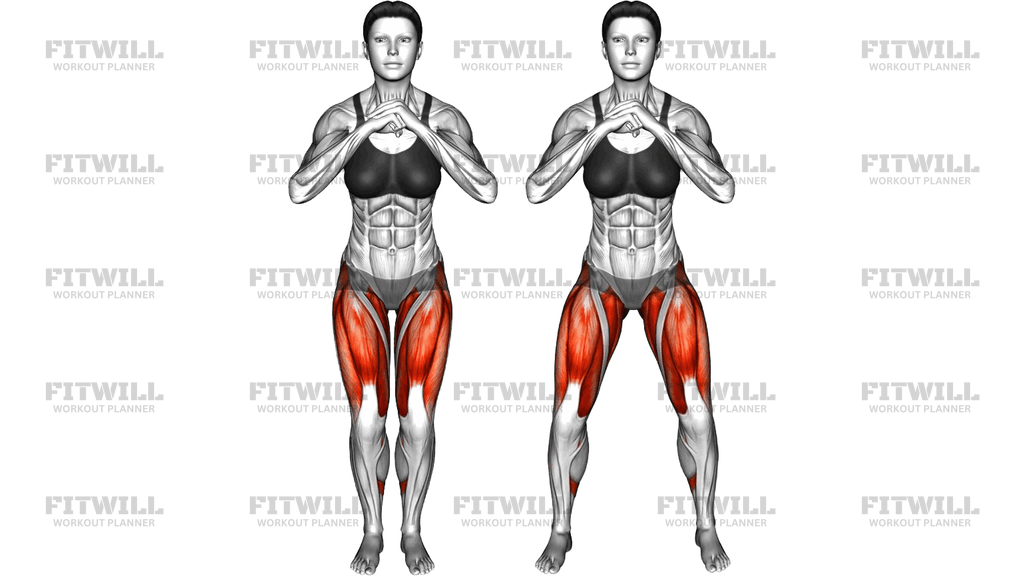
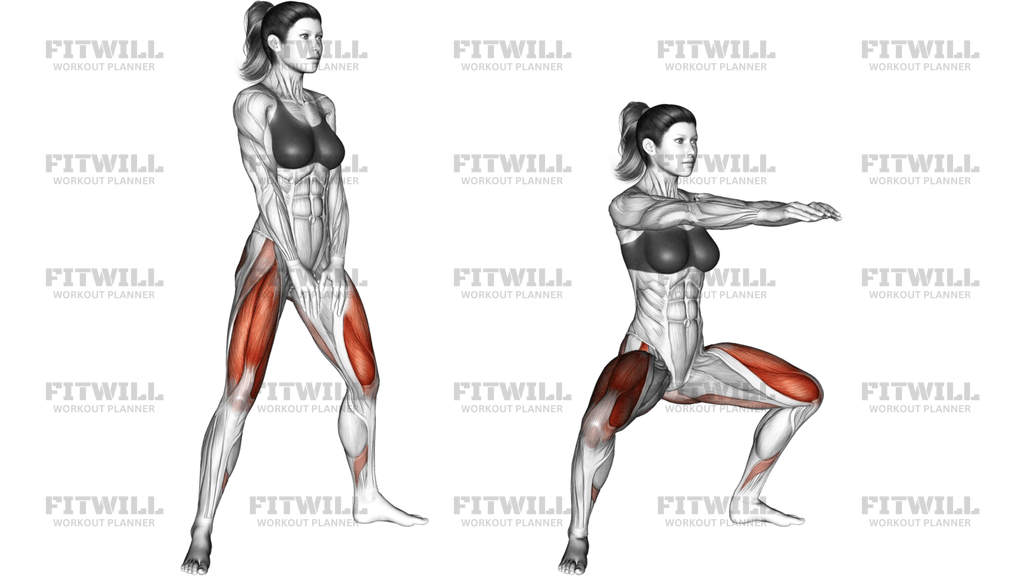
Sumo Squat is a wide-stance bodyweight squat that shifts a lot of the work toward the glutes and inner thighs while still demanding strong knee and trunk control. The broader stance and turned-out feet change the line of force compared with a narrow squat, so the rep is less about simply dropping straight down and more about sitting the hips between the heels with the knees tracking cleanly over the toes.
The setup matters more here than people often expect. A stance that is too narrow turns the movement into a regular squat, while a stance that is too wide can force the hips, knees, and ankles into awkward positions. A good Sumo Squat starts with the feet wider than shoulder width, toes angled out, the ribs stacked over the pelvis, and the arms held in front for balance so the torso can stay tall instead of folding forward.
As you descend, think about lowering the hips straight down while gently pushing the knees outward in the same direction as the toes. Keep the whole foot rooted, especially the heel and the base of the big toe, and stop when you reach a depth you can control without the lower back rounding or the arches collapsing. On the way up, drive the floor apart, exhale through the effort, and stand by squeezing the glutes rather than bouncing out of the bottom.
This exercise is useful as a bodyweight strength drill, a warm-up for lower-body training, or a higher-rep accessory movement when you want to build capacity in the hips and thighs without equipment. It also works well for beginners who need a squat pattern that feels a little more upright and stable, as long as the stance is adjusted to match their hip and ankle mobility.
Quality matters more than depth on Sumo Squat. If the knees cave inward, the heels lift, or the torso tips forward, shorten the range and clean up the stance before adding volume or load. With consistent practice, it becomes a reliable way to train the glutes, quads, and adductors while teaching better control through the bottom of the squat.
[ Workout Log & Planner ]
Put your next workout in Fitwill
Keep your plan and training log ready when you are.


Instructions
- Stand with your feet wider than shoulder width, turn your toes out about 20 to 40 degrees, and keep your weight balanced across the heel, big toe, and little toe on each foot.
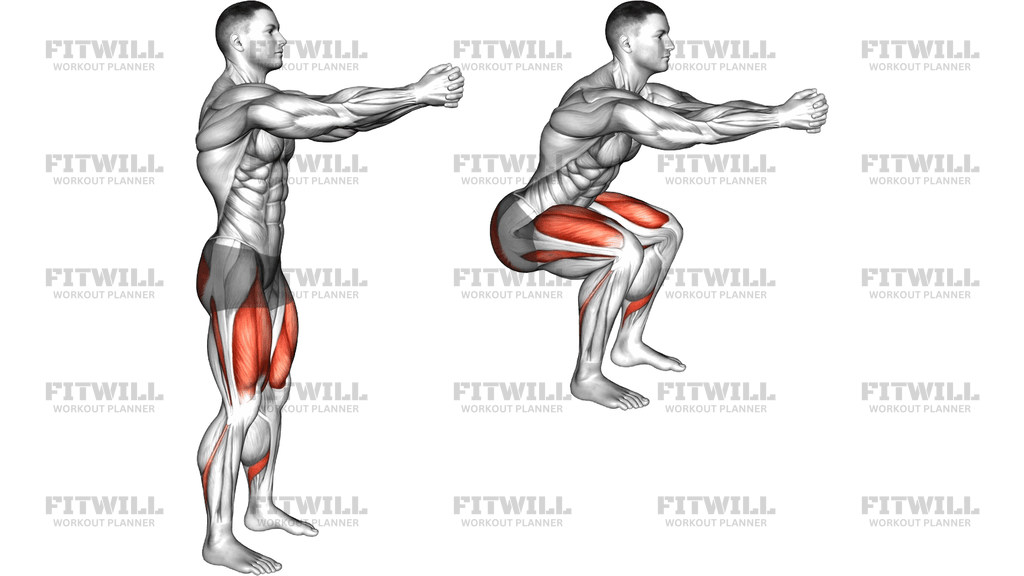
- Let your arms hang in front of your body or clasp your hands at chest height so you have a small counterbalance without leaning forward.
- Stack your ribs over your pelvis, tighten your midsection, and keep your chest tall before you begin the first descent.
- Inhale and send your hips straight down between your heels while bending your knees in line with your toes.
- Lower until your thighs are as deep as you can control without your heels lifting, your arches collapsing, or your lower back rounding.
- Press the floor apart and drive back up through your midfoot and heels, keeping your knees tracking outward as you stand.
- Exhale as you pass through the hardest part of the ascent and finish by squeezing your glutes at the top without overextending your lower back.
- Reset your stance before the next rep and repeat for the planned set with the same foot angle, depth, and tempo.
Tips & Tricks
- If your knees drift inward, think about spreading the floor apart as you stand and keep the kneecaps lined up with the second and third toes.
- A slightly shorter stance is better than a forced wide stance if your hips or ankles feel pinched at the bottom.
- Keep the pressure tripod-style on each foot; if your toes lift or your heels rock, your weight is shifting too far forward.
- Hold your arms in front of your chest if the torso wants to collapse forward, especially on higher reps.
- Pause for one second in the bottom position to remove the bounce and make the glutes do the work.
- Stop the descent when your pelvis starts to tuck under instead of chasing extra depth.
- Use a slow, controlled lowering phase so your knees and hips have time to track cleanly over the feet.
- Add a goblet hold, dumbbell, or kettlebell only after bodyweight reps look identical from the first repetition to the last.
Frequently Asked Questions
What muscle does Sumo Squat target most?
The glutes are the main target, with the inner thighs and quads doing a lot of supporting work.
Can beginners perform this exercise?
Yes. Sumo Squat is beginner-friendly when you start with bodyweight, a moderate stance, and a depth you can control without your heels lifting.
How wide should my feet be in Sumo Squat?
Go wider than shoulder width, but not so wide that your knees cave in or your hips feel forced forward. The right stance lets you sit between your heels and keep the torso fairly upright.
Should my toes point out during Sumo Squat?
Yes, usually about 20 to 40 degrees. That angle helps your knees track over the toes instead of twisting inward.
How low should I go in Sumo Squat?
Lower only as far as you can keep your heels down, your knees aligned, and your lower back from rounding. Depth should come from control, not from forcing the bottom position.
Why do my knees cave inward on Sumo Squat?
The stance is often too narrow, the arches are collapsing, or the glutes are losing position near the bottom. Shorten the stance slightly and think about pushing the knees out in line with the toes.
Is Sumo Squat easier on the back than a regular squat?
It can be, because the more upright torso may reduce forward lean for some people. If you still round your lower back, shorten the range and adjust the stance before adding reps.
Can I add weight to Sumo Squat later?
Yes. A goblet kettlebell, dumbbell, or plate held at chest height is a good progression once bodyweight reps are stable and consistent.