Suspended Split Squat
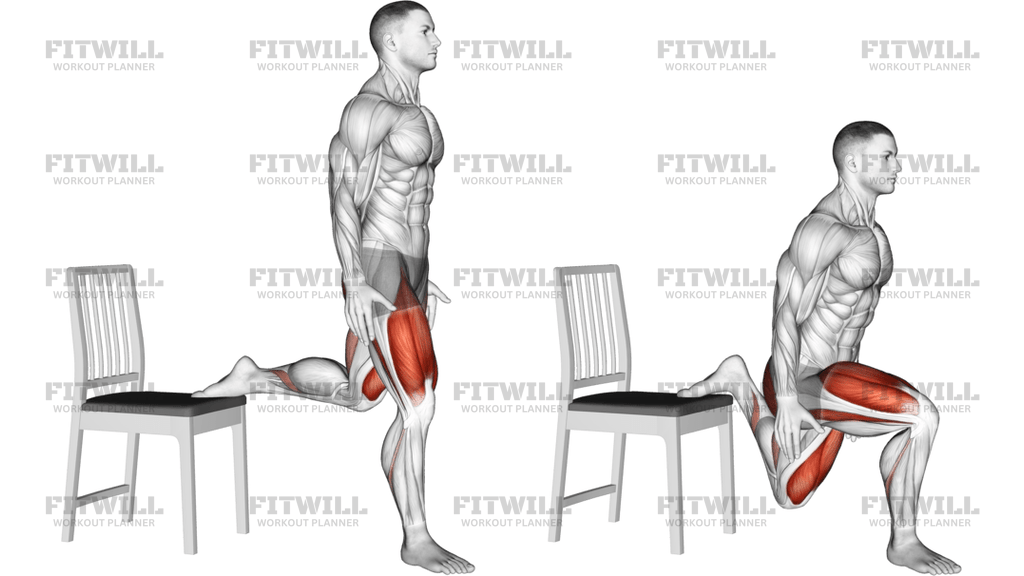
Suspended Split Squat is a unilateral lower-body exercise performed with the rear foot supported in a suspension strap and the front foot planted on the floor. The setup turns a split squat into a balance and stability challenge, which makes the working leg do most of the driving while the suspended back leg adds control without taking over the rep.
The movement is especially useful for building single-leg strength through the glutes and thighs. In this variation, the front leg produces the main force, while the hamstrings, core, and lower back help keep the torso stacked and the pelvis steady. That makes Suspended Split Squat a practical choice for athletes and lifters who want leg work that also exposes side-to-side weakness, knee tracking issues, or poor balance.
The setup matters more here than in a standard split squat because the strap can pull you out of position if your stance is too short or too narrow. Plant the front foot firmly, keep the back foot relaxed in the sling, and set your torso tall enough to stay controlled without leaning forward excessively. The front heel should stay grounded and the front knee should travel in line with the toes as you descend.
Each rep should look smooth and deliberate. Lower under control until the front thigh approaches parallel or the back knee nears the floor, then drive through the whole front foot to stand back up. Keep the ribs down, the hips square, and the movement centered over the front leg so the suspension straps do not swing or twist your position.
This exercise fits well in lower-body strength sessions, accessory work, or any program that needs more single-leg loading without a barbell. It is also a useful regression from heavier split-squat variations when you want support from the suspended rear foot, or a progression when basic bodyweight work no longer challenges your balance. Stop the set if the front heel lifts, the front knee caves inward, or the back leg starts swinging the rep for you.
[ Workout Log & Planner ]
Put your next workout in Fitwill
Keep your plan and training log ready when you are.


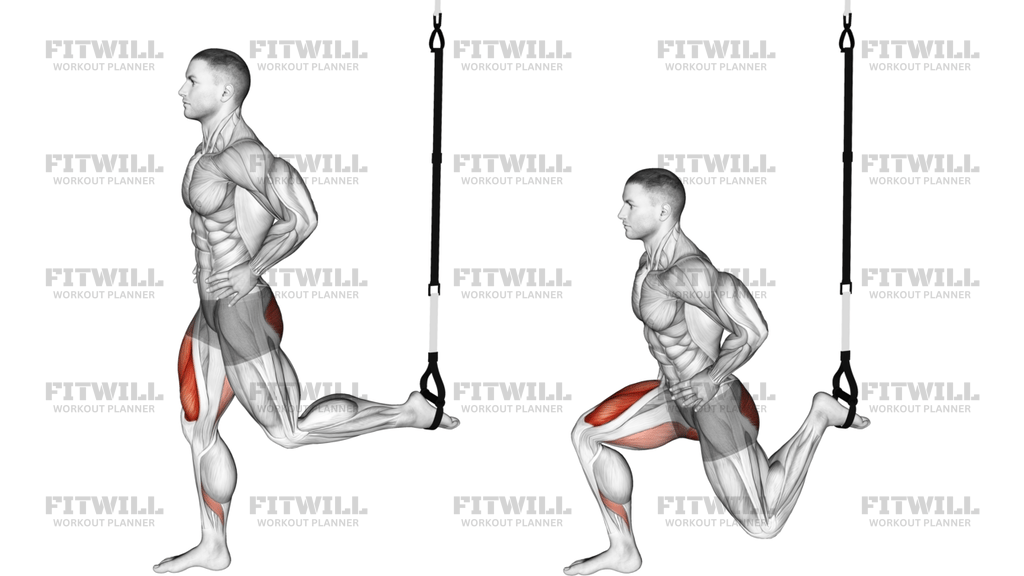
Instructions
- Set the front foot flat on the floor and place the rear foot in the suspension strap behind you so you can stand in a split stance without losing balance.
- Square your hips and torso forward, keep your front foot far enough ahead that the heel stays down, and let the back knee hang with light tension in the strap.
- Brace your midsection, stack your ribs over your pelvis, and keep your hands on your hips or at your sides before you start the first rep.
- Lower straight down by bending both knees, letting the front knee travel over the toes while the back knee drops toward the floor.
- Keep most of your weight over the front leg and let the strap support the rear foot without pulling your torso backward.
- Descend until the front thigh is near parallel or your comfortable depth is reached while the front heel stays planted.
- Drive through the whole front foot to stand back up, squeezing the front glute and thigh as you return to the top position.
- Keep the movement smooth and centered, then reset your stance before the next rep if the strap swings or your balance shifts.
Tips & Tricks
- Use a longer split stance if your front heel lifts at the bottom; the extra distance usually gives you better balance and knee tracking.
- Let the rear foot stay quiet in the strap. If it starts to push hard, you are turning the movement into a bouncing split squat instead of a controlled single-leg pattern.
- Keep the front knee tracking in line with the second or third toe so the leg does not collapse inward as you rise.
- A slight forward torso lean is fine, but the chest should stay proud and the pelvis should not tip forward aggressively.
- Lower slowly for 2-3 seconds if you want more glute and thigh tension without adding load.
- If the straps sway, pause at the top and re-center before the next rep instead of rushing through the set.
- Keep the front heel heavy; shifting onto the toes usually shortens the glute drive and makes the rep unstable.
- Stop a rep short of the deepest position if the rear knee pinches or the strap forces your hips to twist.
Frequently Asked Questions
What muscles does Suspended Split Squat work most?
It mainly targets the front leg’s glutes and thighs, with the hamstrings and core helping keep the split stance steady.
Is the rear foot supposed to push hard in the strap?
No. The rear foot should stay supported, but the front leg should do most of the work. If you feel yourself bouncing off the strap, shorten the range and slow the rep down.
How far apart should my feet be in Suspended Split Squat?
Set the front foot far enough forward that the heel stays down and the front knee can bend freely. If the stance is too short, the knee shoots too far forward and the balance gets messy.
Can beginners use Suspended Split Squat?
Yes, but start with a short range and slow tempo so you can control the strap and keep the torso stacked over the front leg.
Why does my front knee cave inward during this exercise?
That usually means the front foot is losing pressure or the stance is too narrow. Press the whole foot into the floor and keep the knee tracking over the toes as you rise.
Can I make Suspended Split Squat harder without adding weight?
Yes. Slow the lowering phase, pause briefly near the bottom, or use a deeper split stance while keeping the front heel planted.
What should I do if the suspension strap swings a lot?
Reset between reps, reduce your speed, and keep your torso centered over the front leg. Excess swinging usually means the stance is too rushed or too narrow.
What is a good substitute for Suspended Split Squat?
A rear-foot-elevated split squat, a standard split squat, or a reverse lunge can all fill a similar role if you do not have suspension straps.