Twin Handle Parallel Grip Lat Pulldown
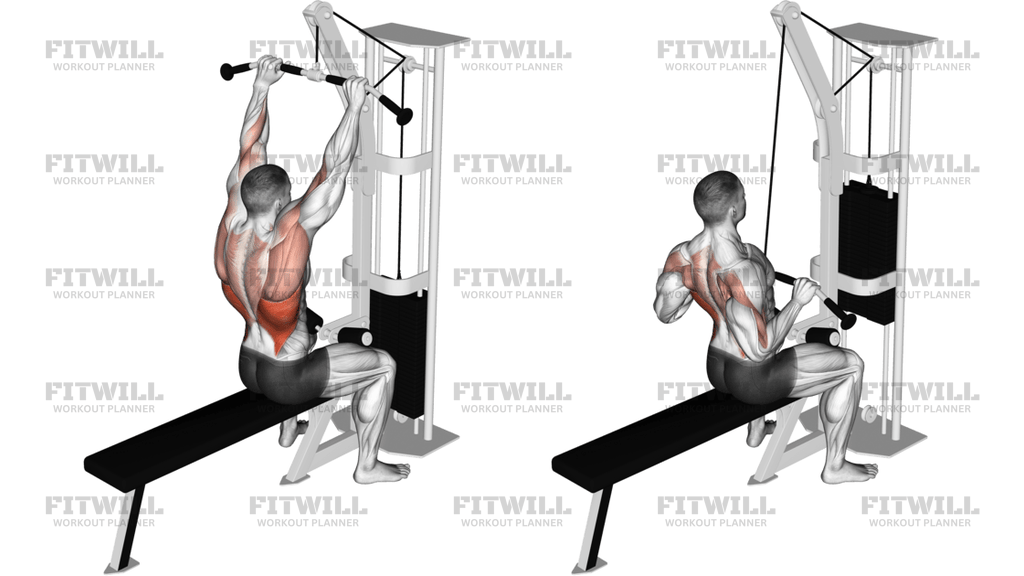
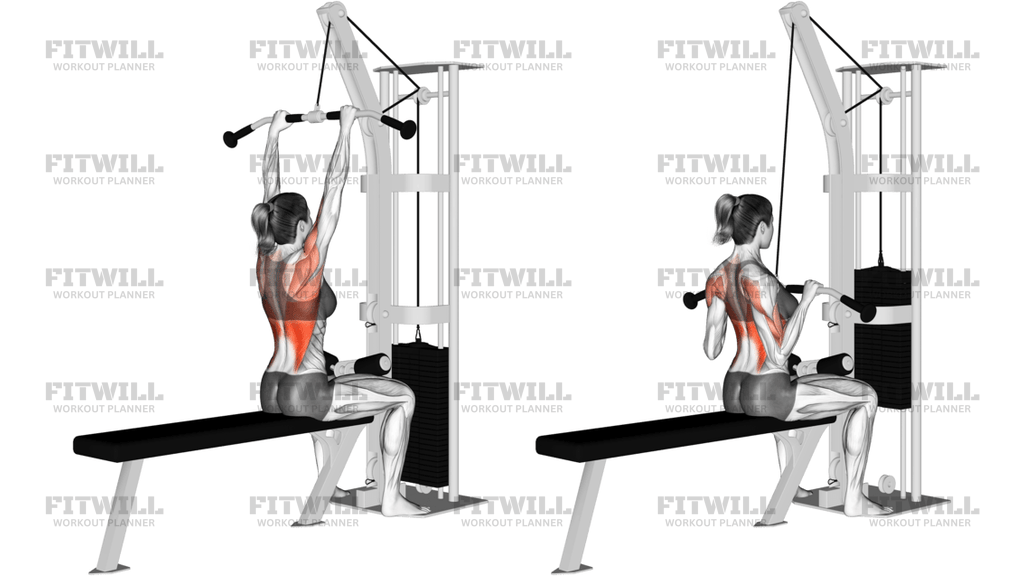
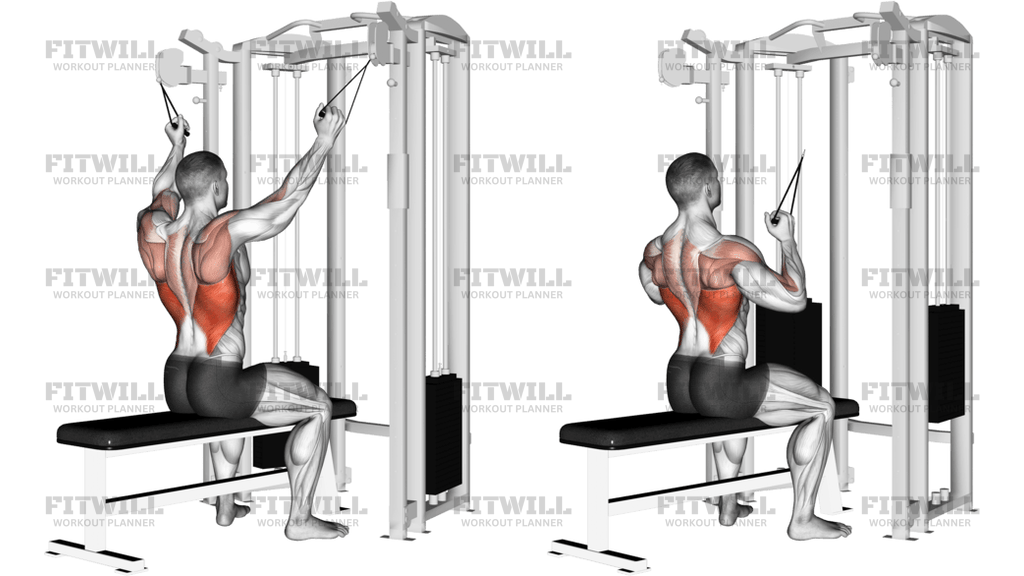
Twin Handle Parallel Grip Lat Pulldown is a seated cable back exercise that uses two independent handles for a neutral, parallel-grip pull. The setup shown here places you on a bench facing the tower with the handles starting overhead, which lets you train each side through a matched pulling path while keeping the wrists and elbows in a natural position.
The main training emphasis is on the lats, with the upper back, rear shoulder, biceps, and forearms helping stabilize the pull. In anatomy terms, the latissimus dorsi drives the movement, while the rhomboids, middle and lower trapezius, biceps brachii, and forearm flexors help control the descent and finish the rep. That makes this variation useful when you want back work without forcing a wide-pronated grip.
Setup matters because this exercise rewards a tall torso and a clean shoulder position. Sit far enough under the cables that the handles line up overhead without you having to shrug or lean excessively. Keep the chest lifted, ribs stacked, and feet planted so the pull starts from the upper back and not from body swing. A slight lean back is fine, but the torso should stay still once the rep begins.
Each rep should travel from a long overhead reach to the upper chest or collarbone area, with the elbows driving down and slightly back while the shoulders stay away from the ears. The handles should come down under control rather than being yanked, and the return should be slow enough that you feel the lats lengthen without losing posture. Breathing should stay rhythmic, with a solid exhale through the pull and an easy inhale on the way back up.
This movement fits well on back-focused days, upper-body splits, or accessory work when you want to build pulling strength, posture, and scapular control. It is beginner-friendly if the load is kept honest and the rep path stays strict. It is also a good choice for lifters who need a joint-friendlier alternative to a straight bar pulldown, as long as they avoid shrugging, overleaning, or shortening the return phase.
[ Workout Log & Planner ]
Put your next workout in Fitwill
Keep your plan and training log ready when you are.


Instructions
- Adjust the bench or seat so you can sit centered under the overhead cables with the twin handles starting above and slightly in front of your shoulders.
- Sit tall on the bench with your feet flat, chest lifted, ribs stacked, and a neutral spine; grip each handle with a neutral palm-facing grip.
- Let your arms reach up without shrugging, then set your shoulders down away from your ears before the first pull.
- Brace your torso and begin the rep by pulling both handles down at the same time.
- Drive your elbows down and slightly back, bringing the handles toward the upper chest or collarbone area.
- Keep your torso mostly still and avoid swinging or rocking to finish the pull.
- Pause briefly when the handles reach the bottom position and the lats are fully engaged.
- Return the handles overhead under control until your arms are long again, then repeat for the planned reps.
Tips & Tricks
- Keep the handles moving in the same path on both sides; if one side finishes early, the bench position or grip is off.
- Think about driving your elbows toward your back pockets instead of simply pulling with your hands.
- Do not shrug at the start of the rep; keep the shoulders packed down so the lats stay in control.
- A small lean back is acceptable, but if your torso turns into a curl, the load is too heavy.
- Lower the handles until they reach the upper chest only as far as your shoulder position stays smooth and pain-free.
- Let the cables stretch your arms overhead on the way up, but do not lose rib position or arch hard through the lower back.
- Use a slower return than pull if you want more lat tension and less momentum.
- Choose a grip width and bench position that let your wrists stay neutral instead of bent backward.
Frequently Asked Questions
What muscle does Twin Handle Parallel Grip Lat Pulldown target most?
The lats are the main target, with the upper back, biceps, rear shoulders, and forearms assisting.
Can beginners perform this exercise?
Yes. The neutral grip is usually beginner-friendly, as long as the load is light enough to keep the torso still and the return controlled.
Where should the handles finish on each rep?
For most lifters, the handles should come down to the upper chest or collarbone area without forcing the shoulders forward.
What is the most common mistake on this pulldown?
Shrugging, leaning back too far, and turning the rep into a body swing are the biggest technique leaks.
Why use the twin-handle neutral grip instead of a straight bar?
The parallel grip often feels easier on the wrists and shoulders while still letting you train the lats hard.
Should my torso stay perfectly upright?
A slight lean is fine, but the torso should stay steady throughout the rep rather than rocking or jerking.
What if I only feel my arms working?
Lower the load, start by pulling the elbows down, and keep the shoulders depressed so the lats can take over.
How do I make this exercise more challenging without cheating?
Use a slower return, cleaner pauses at the bottom, or a small load increase while keeping the same strict path.