Twist Side Bridge
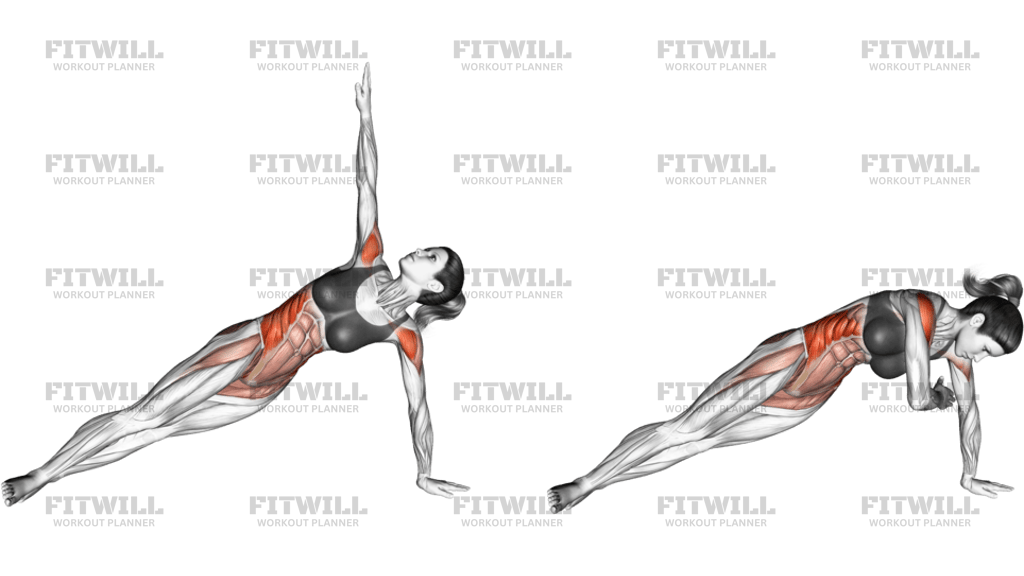
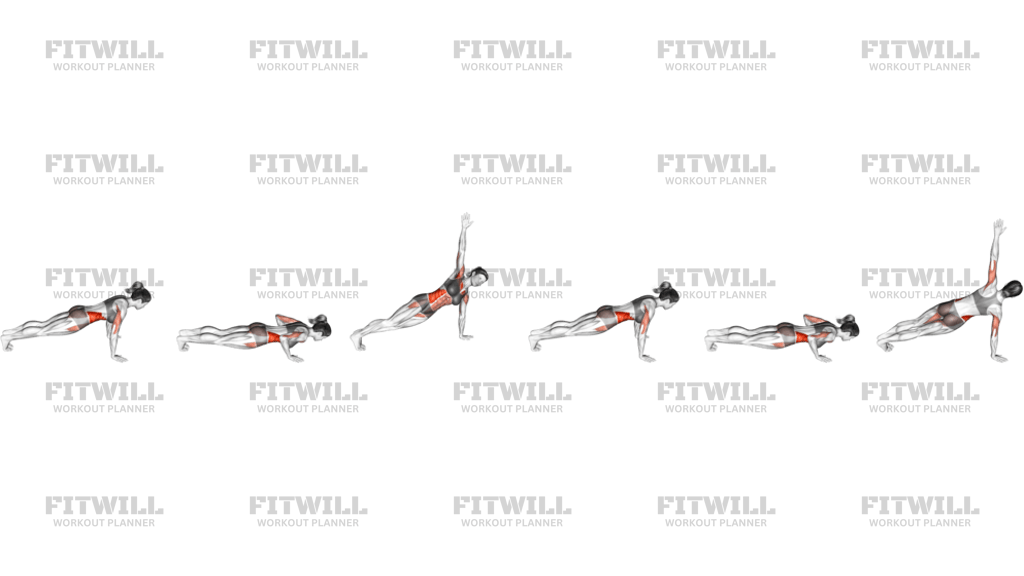
Twist Side Bridge is a bodyweight core and shoulder-stability exercise performed from a side-plank position with a controlled torso rotation. The supporting hand stays planted under the shoulder while the body forms a long line from head to heels, making the movement a demanding test of oblique strength, scapular control, and hip stability rather than a fast dynamic crunch. It is especially useful when you want rotational core work that still teaches the body to resist collapse through the trunk and shoulder.
The main emphasis is on the obliques, with the abs, deep core, glutes, and supporting shoulder helping keep the side bridge lifted and aligned. In anatomy terms, the external obliques do most of the twisting work, while the rectus abdominis, transversus abdominis, and spinal stabilizers help control the return and keep the pelvis from sagging. Because the torso is held off the floor on one arm, the supporting shoulder also has to stay active and packed instead of sinking into the joint.
The setup matters. Stack the feet for a harder version or stagger them slightly if you need more balance, then place the lower hand directly under the shoulder with the arm straight. Lift the hips high before you begin the twist so the body starts in a clean side plank, not a collapsed lean. From there, rotate the chest under control as the top arm threads across the body, then unwind back to the open side-plank position without losing the line from ribs to hips.
Use slow, precise repetitions and keep the range honest. The goal is not to touch the floor at all costs; the goal is to maintain height through the hips, control through the rib cage, and a stable base through the planted hand and feet. That makes Twist Side Bridge a strong option for core training, warmups, accessory work, and rotational stability blocks. Beginners can scale it with staggered feet, a bent lower leg, or a shorter twist range before progressing to a full stacked-foot side bridge.
[ Workout Log & Planner ]
Put your next workout in Fitwill
Keep your plan and training log ready when you are.


Instructions
- Lie on one side and place the lower hand flat on the floor directly under the shoulder.
- Stack the feet or stagger them slightly, then press through the planted hand to lift into a straight side plank.
- Keep the body in one line from head to heels with the hips lifted and the top shoulder stacked over the lower shoulder.
- Reach the free arm straight up so the chest is open and the rib cage stays tall.
- Brace the abs and glutes before you start the twist.
- Rotate the torso under control, threading the free arm across the body toward the floor in front of your chest.
- Stop the twist before the supporting shoulder collapses or the hips drop.
- Reverse the motion and reopen the chest until the top arm points toward the ceiling again.
- Breathe out as you rotate and inhale as you return.
- Complete all repetitions on one side, then switch sides and repeat.
Tips & Tricks
- Keep the supporting wrist under the shoulder so the joint can stack instead of taking unnecessary strain.
- Press the floor away with the planted hand to keep the shoulder blade active during the whole rep.
- If the hips start drifting backward or forward, shorten the twist until the side plank stays clean.
- Let the chest rotate from the ribs, not from shrugging the shoulder or yanking the arm.
- Stacking the feet makes the exercise harder; stagger them slightly if balance is limiting the trunk work.
- Keep the neck long and follow the moving hand with your eyes so the head does not crank upward.
- Slow the return phase so the obliques have to control both the twist and the re-open.
- If you feel the low back taking over, raise the hips higher and reduce the rotation range.
- Stop each set when the support shoulder starts to sink or the torso can no longer stay level.
Frequently Asked Questions
What muscle does Twist Side Bridge target most?
The obliques do most of the work, especially during the twisting phase.
Can beginners perform this exercise?
Yes. Beginners can start with staggered feet or a smaller twist until they can hold the side plank without the hips dropping.
Where should my supporting hand be?
Place the hand directly under the shoulder so the wrist, elbow, and shoulder stay stacked while you hold the side bridge.
What should the top arm do?
It should reach straight up in the open position and then thread across the chest as you rotate under the body.
Should my feet be stacked or staggered?
Stacked feet make the side bridge more demanding; staggered feet give you a wider base and are better if balance is limiting the twist.
Why is my shoulder getting tired?
The support shoulder has to hold the body up the entire set, so some shoulder fatigue is normal as long as the joint stays packed and stable.
How many reps work well for this exercise?
Use controlled reps for each side, usually enough to keep the torso stable and the rotation precise rather than rushed.
What is the most common form mistake?
Letting the hips drop while the arm twists is the biggest mistake; the side plank should stay lifted the whole time.
Can I use this as a core finisher?
Yes. It fits well at the end of a workout as long as the support shoulder and torso can still stay aligned under fatigue.