Diagonal Punch
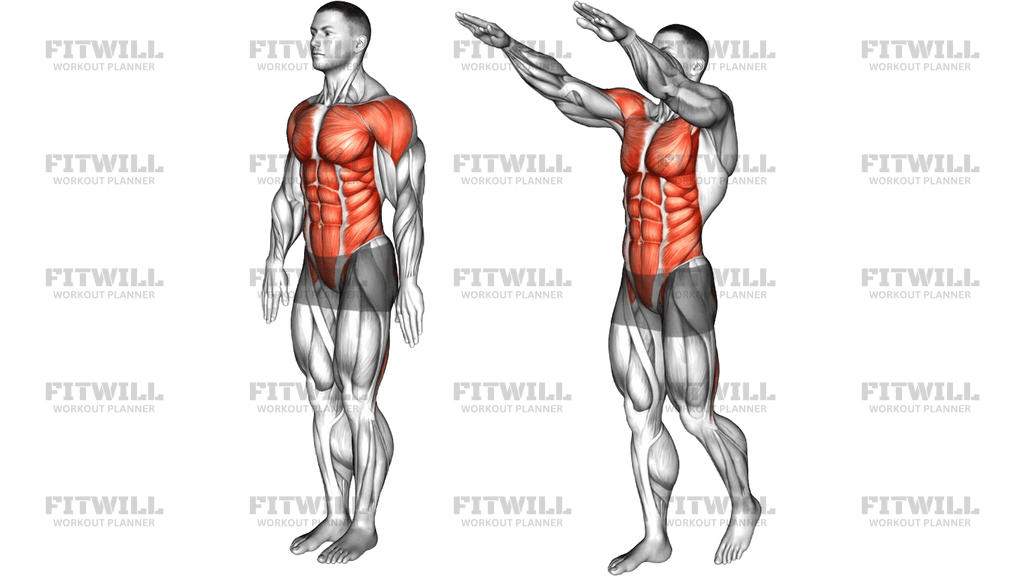
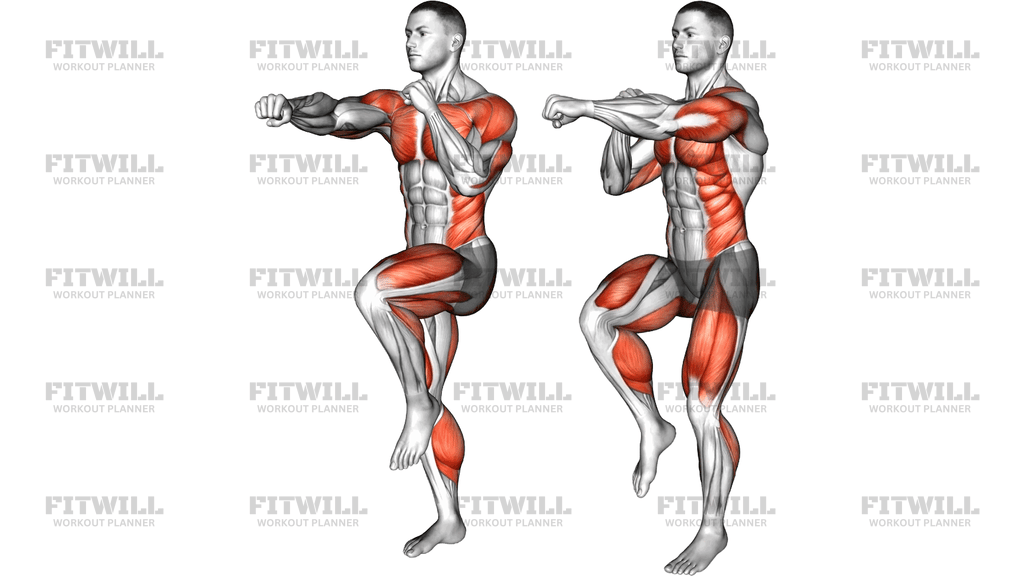
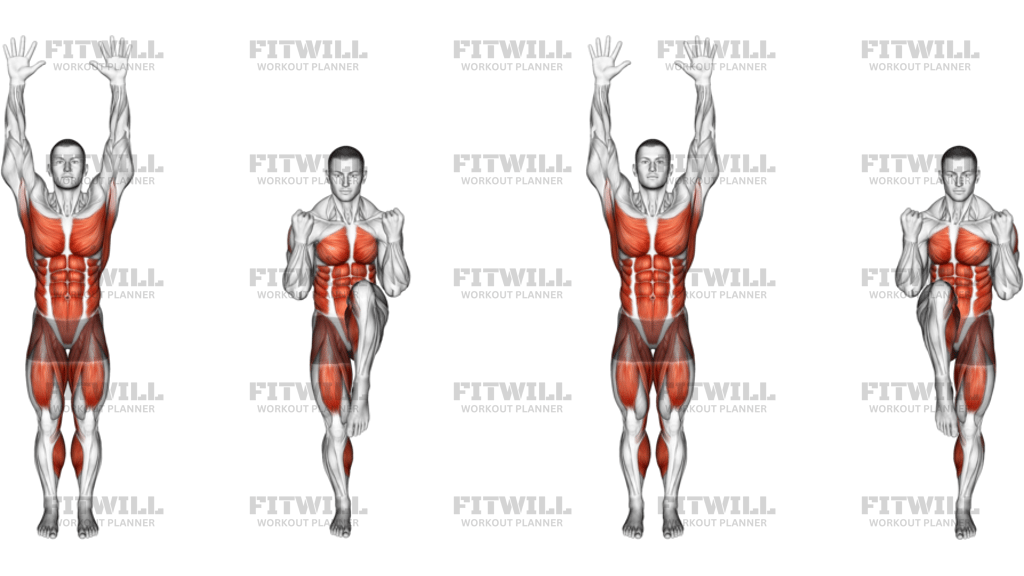
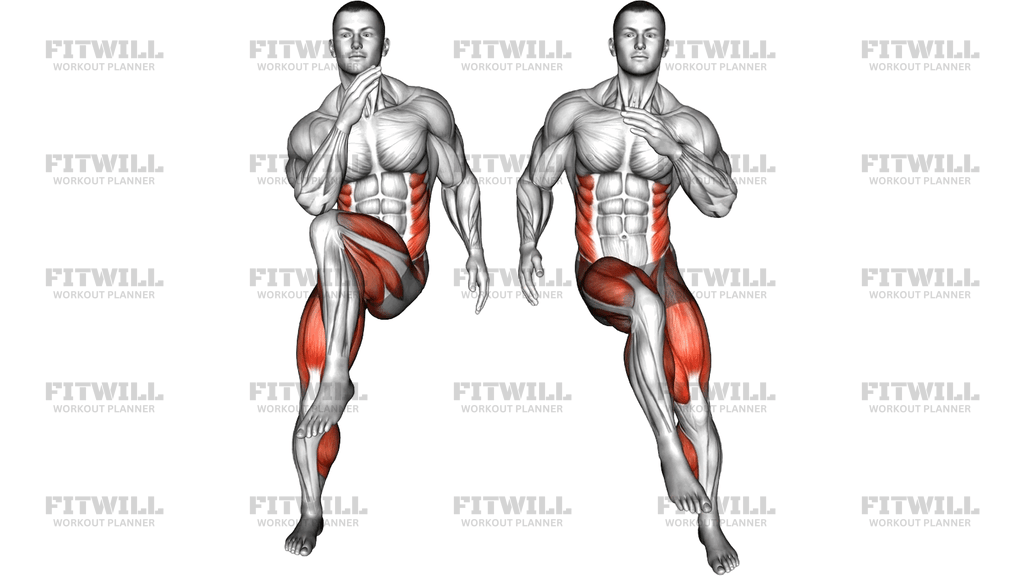
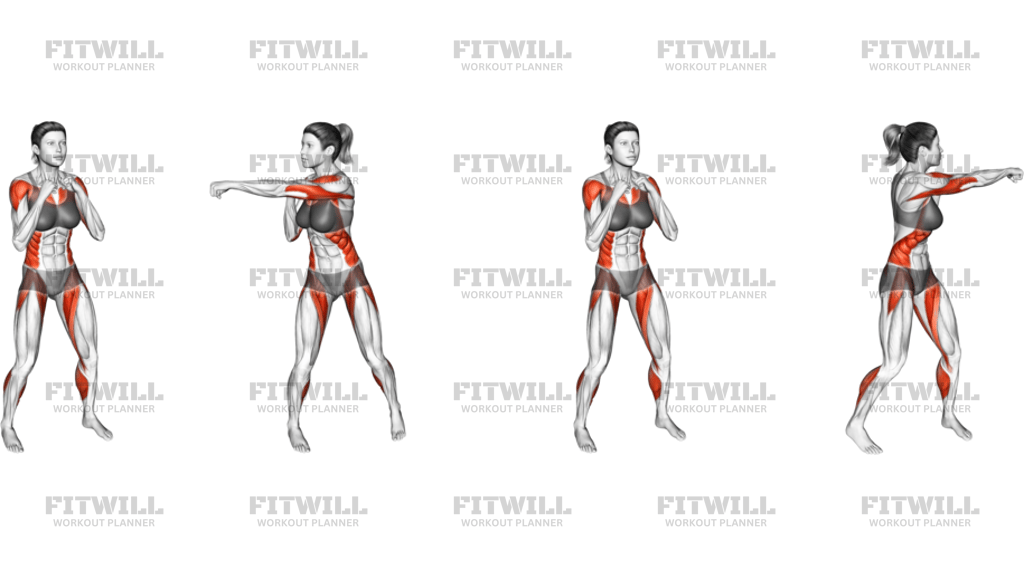
Diagonal Punch is a standing bodyweight striking drill that trains coordinated force production, trunk control, and shoulder endurance through a fast diagonal reach. It is most useful when you want a conditioning-style movement that still rewards precision, because the punch should look crisp and repeatable rather than wild or rushed. The movement is simple on paper, but the value comes from how cleanly you keep the stance, guard, and rotation working together.
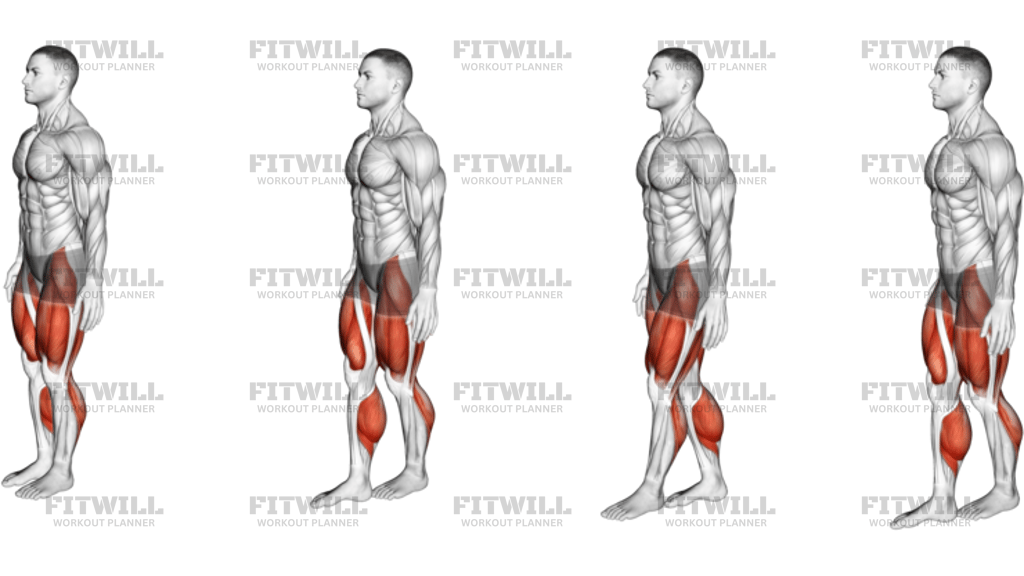
Even though the drill is driven by the punching arm, it is not just an arm exercise. The front deltoid, triceps, chest, serratus, obliques, and the muscles around the hips all help organize the motion, while the non-punching side stays in a guard position to keep the torso balanced. That makes Diagonal Punch useful for warmups, boxing-style conditioning blocks, athletic circuits, or core sessions where you want the upper body to move quickly without losing alignment.
The setup matters because the punch starts from the floor up. Stand tall with one foot slightly ahead of the other, knees soft, ribs stacked over the pelvis, and both hands up near the face or upper chest. From there, the punch travels on a diagonal line away from the body, and the same-side hip and rear heel can rotate just enough to help the strike finish cleanly without twisting the knee or collapsing the trunk.
Each rep should feel snappy on the way out and controlled on the way back. Exhale as the fist drives out, reach to shoulder height or slightly forward along the diagonal, then pull the hand back to guard on the same path instead of letting it drift downward. Keep the shoulders relaxed, the chin protected, and the landing position stable so the next punch starts from a balanced base instead of momentum.
Diagonal Punch works well as a low-equipment conditioning drill, but it can also expose sloppy posture quickly. If the torso leans, the shoulders shrug, or the rear hand drops, shorten the range and slow the return until the pattern is clean again. Beginners can use it safely with body weight alone, while more advanced users can build volume, speed, or interval density as long as the strike stays organized and the stance never gets loose.
[ Workout Log & Planner ]
Put your next workout in Fitwill
Keep your plan and training log ready when you are.


Instructions
- Stand with one foot slightly ahead of the other, knees soft, and both hands up in a light guard near your cheekbones.
- Stack your ribs over your pelvis, keep your chin tucked, and turn the punching-side hip slightly back before you start.
- Drive the punching hand on a diagonal line across the body to about shoulder height, finishing with the arm nearly straight and the knuckles facing forward.
- Let the rear heel and hip rotate as the punch extends, but keep the opposite hand parked high in guard.
- Exhale sharply as the fist reaches the end of the strike.
- Pause only long enough to feel the line of the punch, without shrugging the shoulder or locking the elbow hard.
- Pull the fist back to the starting guard on the same diagonal path, keeping the torso tall as the arm returns.
- Repeat on the same side or alternate sides for the planned reps, then lower your hands and reset your stance before the next set.
Tips & Tricks
- Keep the rear foot light so the hip can rotate; if the knee twists while the foot stays planted, shorten the punch.
- Snap the fist out and control the return, because the return phase is where the shoulder usually loses position.
- Guard the non-punching hand near the face instead of letting it drift down to the ribs.
- If your shoulder shrugs toward your ear, punch a little lower and keep the neck long.
- Let the strike start from the floor and hip, not just from the arm.
- Stop the punch before the elbow fully locks if hyperextension shows up at the end range.
- Use a slightly wider stance if balance gets shaky during repeated alternating punches.
- Keep the chest from over-rotating open; the punch should travel diagonally, not turn into a full spin.
Frequently Asked Questions
What muscles does Diagonal Punch work?
Diagonal Punch mainly uses the shoulders, triceps, chest, and core, with the hips and glutes helping you stay balanced through the strike.
Can beginners do Diagonal Punch safely?
Yes. Start with body weight only, shorten the punch if needed, and keep the stance and guard position stable before you speed it up.
Should the punch go straight forward or on a diagonal?
It should travel on a diagonal line from the guard to a forward-reaching finish, usually around shoulder height, not straight up or straight across.
Why should I keep my other hand in guard during Diagonal Punch?
Keeping the non-punching hand high helps you stay balanced, protects your posture, and prevents the torso from opening too early.
What is the biggest mistake in Diagonal Punch?
The most common error is over-rotating the torso and letting the shoulder shrug, which turns the drill into a sloppy swing instead of a clean strike.
Do I need any equipment for Diagonal Punch?
No. It is a bodyweight movement, so you only need room to stand and punch without hitting anything.
How can I make Diagonal Punch harder?
Use longer intervals, alternate sides faster, or add more total rounds while keeping the stance and guard position clean.
Where does Diagonal Punch fit best in a workout?
It works well in warmups, conditioning circuits, shadowboxing rounds, or core-focused finishers where quick but controlled upper-body work makes sense.