Suspension Body Saw
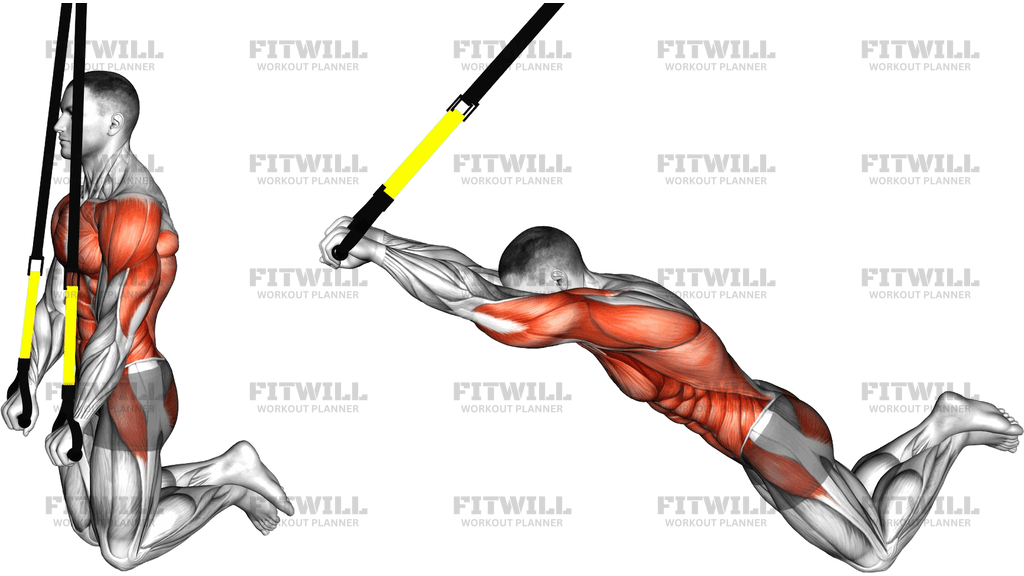
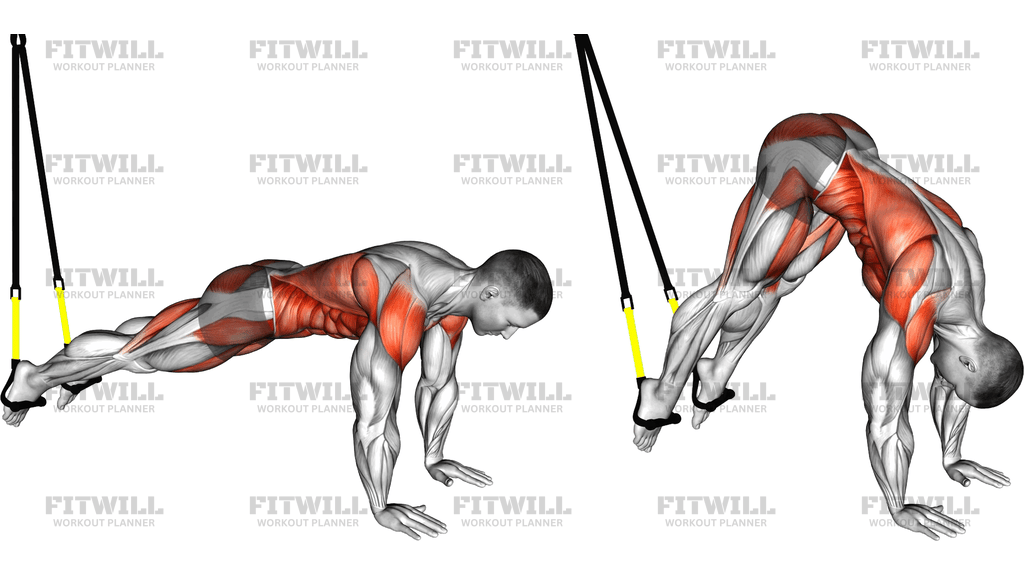
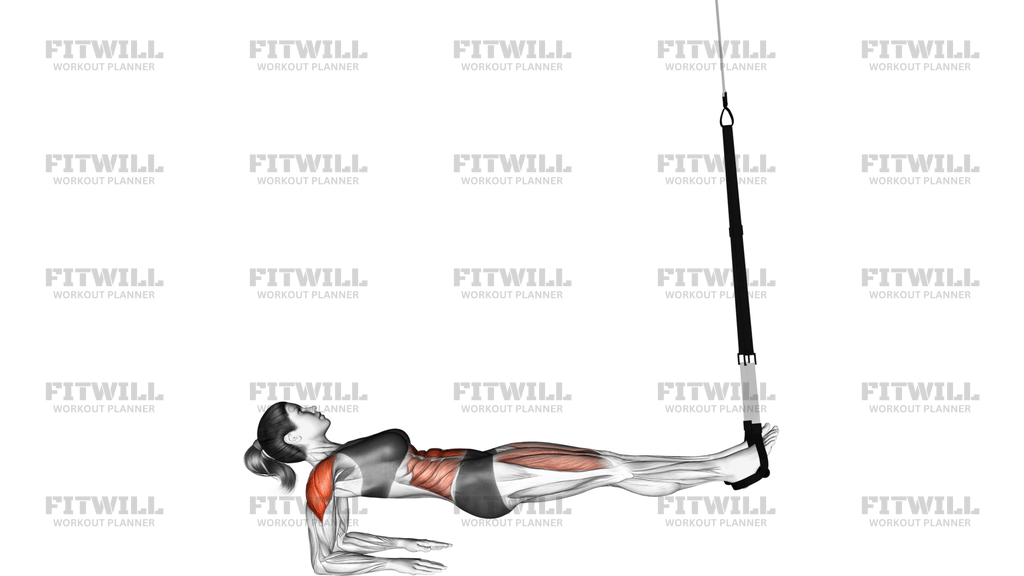
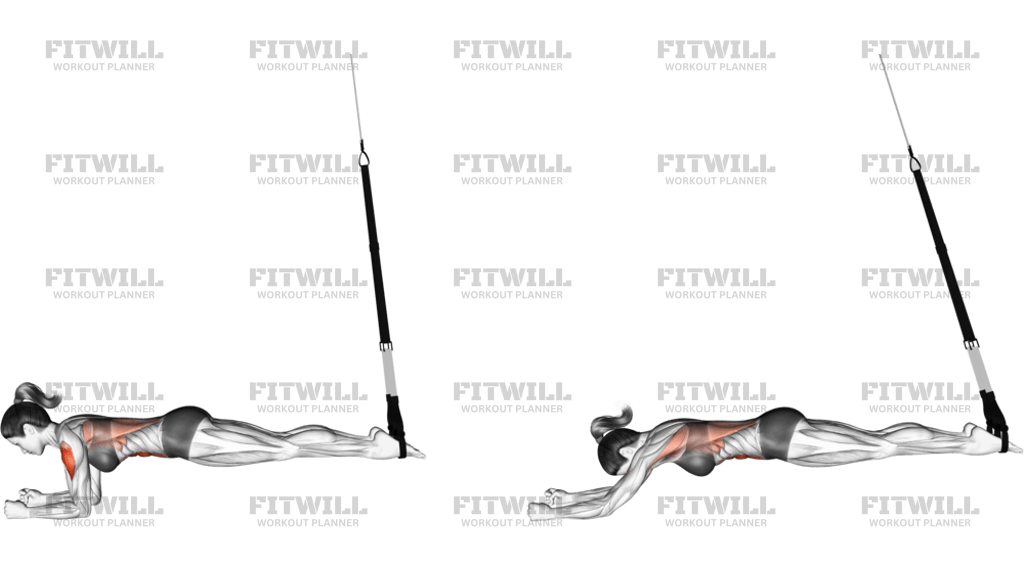
Suspension Body Saw is a moving forearm-plank variation performed with the feet in suspension straps. Instead of holding one static plank, you shift the whole body a few inches forward and back while keeping the torso long, the ribs tucked, and the hips level. The exercise is built to challenge anti-extension strength, shoulder stability, and the ability to keep the midsection braced while the legs and straps add instability.
The visible setup matters more here than it does in many floor-based core drills. Your forearms stay planted under or slightly in front of the shoulders, the elbows remain narrow and steady, and the feet hang in the straps behind you. That combination puts the load through the shoulders, abs, glutes, and upper back at the same time. If the elbows drift, the hips pike, or the lower back sags, the movement stops being a controlled body saw and turns into a loose plank with extra motion.
A good repetition starts from a solid plank line. Once you are braced, use the shoulders and core to glide the body a short distance, then reverse the path without letting the hips twist or the ribs flare. The movement is small on purpose. The goal is not to travel far; the goal is to keep tension continuous while the body moves as one unit. Keep breathing steady and avoid holding your breath so hard that you lose position.
Because the straps amplify instability, this exercise is useful for training control rather than brute force. It fits well in core circuits, warmups, or accessory work when you want to challenge trunk stiffness and scapular control without heavy loading. The best version is the one where the neck stays long, the glutes stay engaged, and every rep looks almost identical to the one before it.
If the body starts wobbling, shorten the range, slow the tempo, or move the straps to a more forgiving length. Suspension Body Saw should feel demanding through the abs and shoulders, but it should still look clean and deliberate from the first repetition to the last.
[ Workout Log & Planner ]
Put your next workout in Fitwill
Keep your plan and training log ready when you are.


Instructions
- Set the suspension straps so your feet or ankles sit securely in the loops and place your forearms on the floor with your elbows under your shoulders.
- Extend your legs into a straight forearm plank, keeping your body in one line from head to heels before you start the first rep.
- Squeeze your glutes, draw your ribs down, and lightly tuck your pelvis so your lower back does not sag.
- Press your forearms into the floor and let the straps stay quiet while you prepare to move.
- Shift your body a few inches backward or forward as one unit, keeping the hips level and the torso rigid.
- Keep the movement small and controlled rather than reaching for a bigger range that breaks plank position.
- Reverse the motion under tension and return to the starting plank without dropping the hips or arching the back.
- Breathe out through the hardest part of the rep, then reset your brace before the next saw.
- Stop the set if the shoulders shrug, the hips pike, or the straps start swinging.
Tips & Tricks
- Think of the rep as a moving plank, not a hip hinge or a crunch.
- Keep the elbows planted under the shoulders so the load stays in a stable forearm line.
- A shorter body saw is usually better than a bigger one if your lower back wants to sag.
- Keep the ribs pulled down so the front of the torso does not flare open as you move.
- If the shoulders burn out first, slow the tempo and reduce the range before adding more reps.
- Do not let the straps swing; that usually means the body is moving too fast.
- Press the forearms down and slightly forward to keep the upper back active through the set.
- Finish the rep when the plank shape starts to change, not when the rep count says you are done.
Frequently Asked Questions
What does the Suspension Body Saw train most?
It primarily trains anti-extension core strength, with a strong demand on the shoulders, glutes, and upper back to keep the body rigid.
Where should I feel this exercise?
You should feel the abs working hard to stop the lower back from arching, along with the shoulders and upper back stabilizing the plank.
How far should I move during each body saw?
Only a few inches. The range should be small enough that your hips stay level and your plank line does not change.
Can I do this if my shoulders get tired quickly?
Yes, but shorten the range and slow the tempo. If the shoulders shrug or lose position, stop the set and reset.
Should my hips move up and down during the rep?
No. The hips should stay level while the whole body glides forward and back as one piece.
Is Suspension Body Saw harder than a normal plank?
Usually yes, because the moving body position and the unstable straps make it harder to keep the trunk braced.
What is the most common mistake?
The most common mistake is letting the lower back sag or the hips pike while trying to move too far.
How can I make the exercise easier?
Use a smaller range of motion, slower reps, or a less aggressive strap position so you can keep a clean plank.
Can I use this for a core circuit?
Yes. It works well as a controlled core drill between other trunk or upper-body exercises.