Weighted Crunch
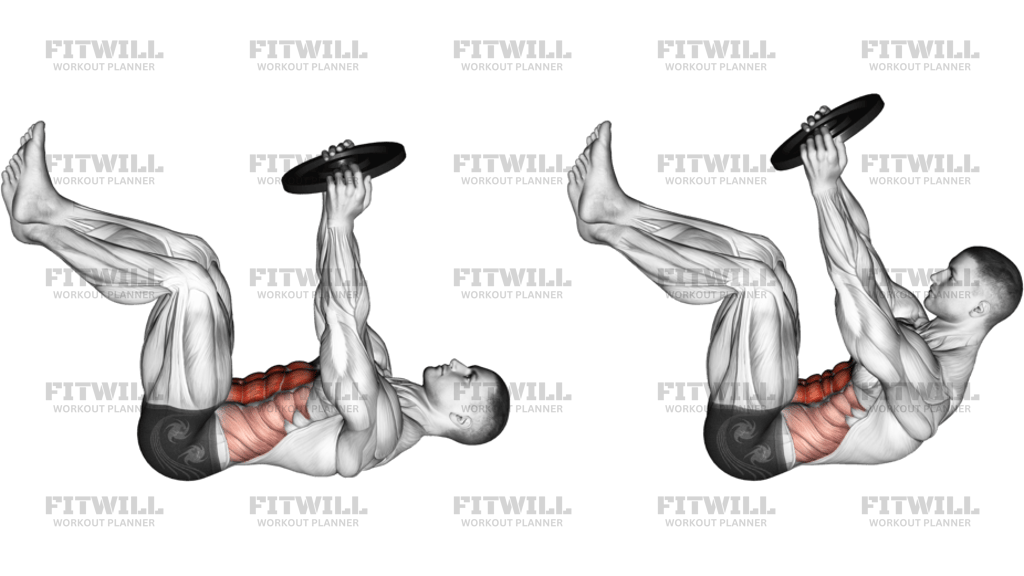
Weighted Crunch is a floor-based abdominal exercise that adds external resistance to the basic crunch pattern. It places the main demand on the rectus abdominis while the obliques and hip flexors help stabilize the torso and control the curl. The goal is not to sit all the way up, but to create a small, strong trunk flexion that keeps tension on the abs from start to finish.
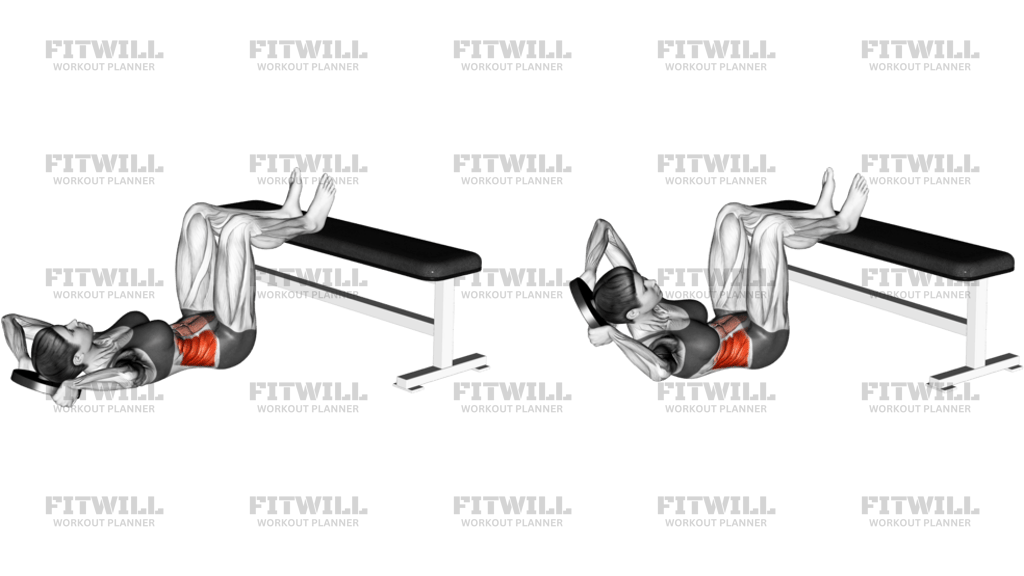
In the starting position, the lifter lies on the back with the knees bent and the legs held up so the lower body stays quiet. A weight plate is held above the chest with the arms mostly straight, which gives the torso a clear load to work against without turning the movement into a pull with the arms. That setup matters because the crunch should come from the rib cage closing toward the pelvis, not from yanking the shoulders forward or swinging the plate.
A good rep begins by pressing the lower back gently into the floor, exhaling, and curling the shoulders just off the ground. The chin stays slightly tucked and the eyes stay up so the neck does not take over. The upper back should move only as far as you can keep the abs tight; once the shoulder blades clear the floor, that is usually enough range for a clean contraction.
On the way down, lower slowly until the shoulder blades return to the floor and the ribs stay controlled instead of flaring open. If the legs start to drift, the low back arches, or the weight plate moves around, the load is probably too heavy or the range is too large. That is the main reason the exercise works well for direct ab training and core-focused accessory work: it rewards precision, not speed.
Weighted Crunch is useful when you want a simple loaded abdominal movement that is easy to scale and easy to place at the end of a workout or in a dedicated core block. Beginners can use it with a light plate and a short range, while more experienced lifters can increase the challenge by slowing the lowering phase or adding a little pause at the top. Keep the motion crisp and controlled, and stop the set when the neck starts pulling, the hips start helping, or the lower back loses contact with the floor.
Fitwill
Log Workouts, Track Progress & Build Strength.
Achieve more with Fitwill: explore over 9600 exercises with images and videos, access built-in and custom workouts, perfect for both gym and home sessions, and see real results.
Start your journey. Download today!




Instructions
- Lie on your back on a mat with your knees bent and your legs lifted so your shins are roughly parallel to the floor.
- Hold a weight plate with both hands above the center of your chest, keeping your arms nearly straight and your elbows softly unlocked.
- Set your chin slightly toward your chest, keep your gaze up, and press your lower back gently into the floor before the first rep.
- Exhale and curl your shoulders and upper back off the floor by bringing your rib cage toward your pelvis.
- Keep the plate stacked over your chest as you crunch, rather than reaching it toward your knees or face.
- Pause briefly at the top when your shoulder blades have cleared the floor and your abs are fully tight.
- Lower yourself slowly until your shoulder blades touch down again while keeping the ribs controlled and the neck relaxed.
- Reset your breath at the bottom and repeat for the planned number of reps.
- Set the plate down carefully when the set is finished.
Tips & Tricks
- Keep the weight plate over your mid-chest; if it drifts toward your face, your neck usually starts doing the work.
- A small exhale before each rep helps flatten the lower back and keeps the crunch from turning into a hip flexor pull.
- Do not try to sit all the way up; once the shoulder blades leave the floor, the abs are already getting the key part of the rep.
- If your neck feels crowded, keep the chin slightly tucked and look at the ceiling instead of reaching your head forward.
- Use a plate you can lower slowly for 2 to 3 seconds without losing rib control.
- The legs should stay quiet in the air; if they start swinging, reduce the load or shorten the range.
- Pause for a brief squeeze at the top instead of bouncing out of the bottom.
- If the low back arches, stop the set and reset your rib position before continuing.
Frequently Asked Questions
What muscles does Weighted Crunch train most?
The main target is the abs, especially the rectus abdominis. The obliques and hip flexors help stabilize the trunk and control the curl.
Should my legs stay in the air during Weighted Crunch?
Yes, keeping the legs lifted makes the torso do the work instead of letting the feet brace. Keep the knees bent and the lower body quiet.
How high should I crunch up?
Only high enough for your shoulder blades to leave the floor. If you are sitting up fully, the rep has turned into more of a sit-up than a crunch.
Where should I hold the weight plate?
Hold it over the middle of your chest with the arms almost straight. That keeps the load centered and reduces the urge to pull on your neck.
Can beginners do Weighted Crunch?
Yes, but start with a light plate and a short range. The exercise is best learned by keeping the ribs down and the lowering phase slow.
Why do I feel Weighted Crunch in my hip flexors?
Some hip flexor work is normal with the legs raised, but they should not dominate the rep. If they take over, reduce the load or bend the knees a little more.
What is the biggest mistake in Weighted Crunch?
The most common mistake is pulling the head and shoulders forward with momentum instead of curling the rib cage toward the pelvis.
How do I make Weighted Crunch harder without cheating?
Use a slightly heavier plate, slow the lowering phase, or add a one-second pause at the top. Keep the same short crunch range so the abs stay in charge.