Weighted Pull-Up
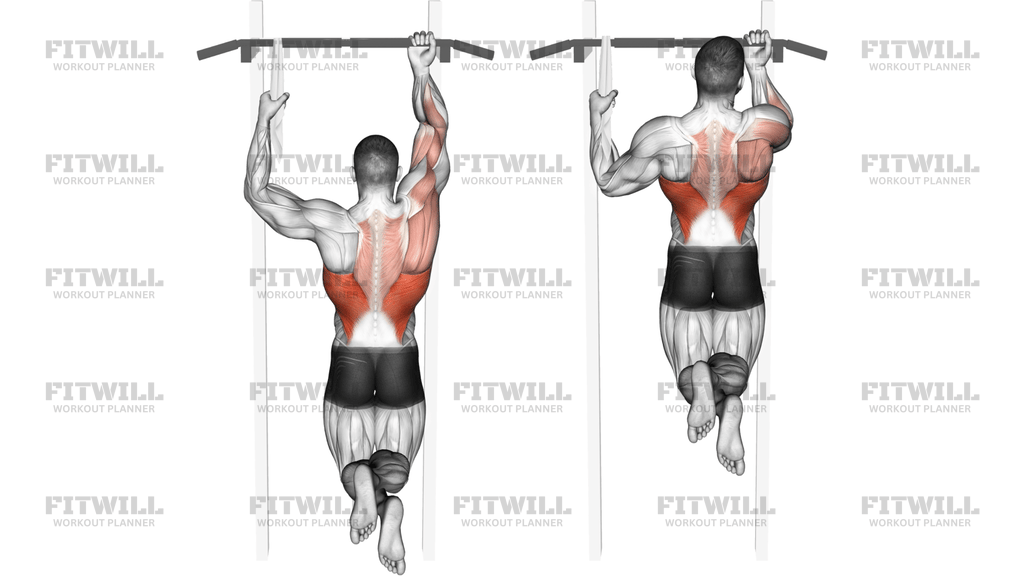
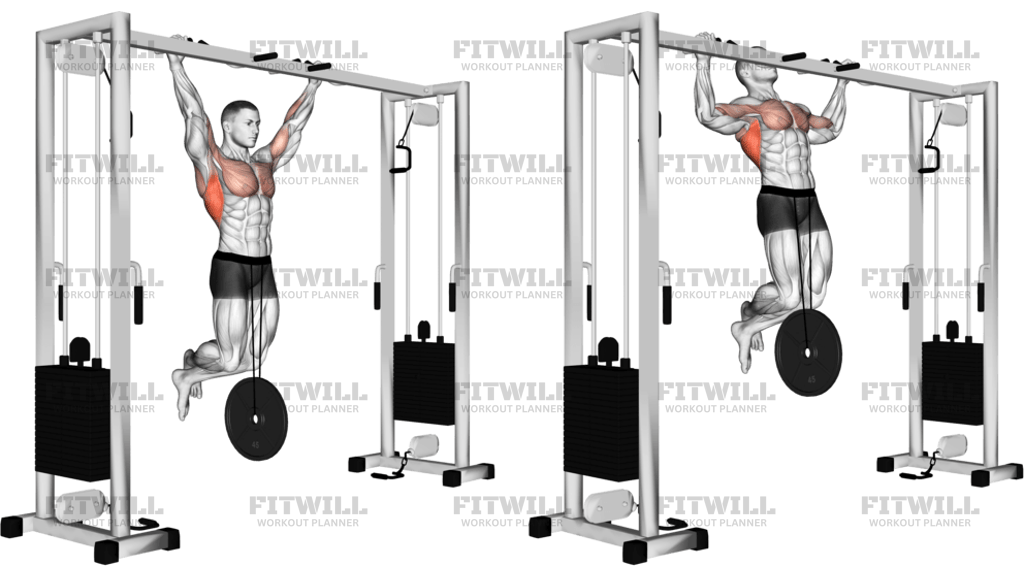
Weighted Pull-Up is a loaded vertical pulling exercise that turns a strict pull-up into a heavier strength movement. The added plate or weight belt increases the demand on the lats, upper back, biceps, and grip while still rewarding clean body control, so it is a useful option when bodyweight pull-ups are no longer challenging enough.
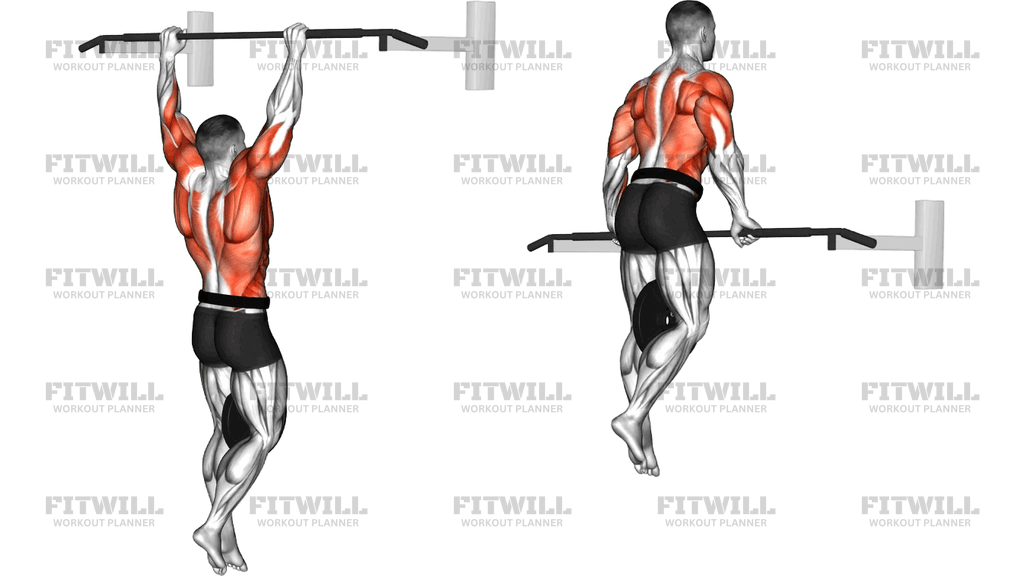
The setup matters because the load hangs below you and can swing if you rush the start. Secure the weight belt or chain so the plate hangs centered between your legs, then take a slightly wider-than-shoulder-width overhand grip on the bar. Once you are hanging, keep the ribs stacked, the shoulders active, and the legs quiet so the weight stays still instead of pulling you out of position.
Each repetition should start from a dead hang or a controlled active hang, then begin with the shoulder blades pulling down before the elbows drive toward the ribs. Think about bringing your chest up to the bar rather than craning your neck forward. The top position should feel strong and compact, with the chin clearing the bar and the shoulders still controlled rather than shrugged.
On the way down, lower with the same discipline you used to pull up. A slow, full descent keeps tension on the back and makes the next rep more repeatable, while bouncing at the bottom usually turns the exercise into a swing. If the plate starts drifting or your torso starts kipping, reduce the load and clean up the set before adding more weight.
This movement is most useful in strength-focused upper-body training, especially when you want to build pulling power without changing the basic pull-up pattern. It works well in low- to moderate-rep sets, with enough rest to keep every rep crisp. If your shoulders or elbows feel irritated, use a smaller load, a neutral grip if available, or stop the set before your form turns into a shrug-and-swing pattern.
[ Workout Log & Planner ]
Put your next workout in Fitwill
Keep your plan and training log ready when you are.


Instructions
- Load a dip belt or chain with a plate and let it hang centered between your legs before you approach the bar.
- Grip the pull-up bar slightly wider than shoulder width with an overhand grip and hang with your arms fully extended.
- Bend your knees or cross your ankles so the plate stays clear of the floor and does not swing.
- Set your shoulders down away from your ears and brace your ribs so the hang feels long and controlled.
- Pull your chest upward by driving your elbows down and back instead of leading with your chin.
- Continue pulling until your chin clears the bar or your upper chest reaches it without shrugging.
- Lower yourself under control to a full hang, keeping the weight steady as your elbows straighten.
- Reset the hang between reps if the plate swings, then repeat for the planned number of reps.
- Step to a box or bench after the set to remove the belt before dismounting.
Tips & Tricks
- Keep the plate hanging straight below your hips; if it swings, shorten the chain or cross your ankles to quiet it.
- Use a load that still lets you reach a dead hang and a clean chin-over-bar finish without kicking.
- Start each rep by pulling the shoulder blades down first; that keeps the pull from turning into a shrug.
- Think about driving elbows toward your front pockets, not reaching your chin toward the bar.
- A brief pause at the top helps expose cheating better than adding more weight.
- If your grip fails before your back, reduce the load or use chalk so the set does not turn into a forearm test.
- Keep your legs quiet and slightly in front of you so the weight belt does not scrape your shins.
- Stop the set when you start losing the dead-hang bottom position or your reps become a swing.
Frequently Asked Questions
What does Weighted Pull-Up train most?
It mainly trains the lats, with strong help from the upper back, biceps, and forearms. The added load makes it a better strength builder than a bodyweight pull-up once you can already do solid reps.
How do I attach the weight for Weighted Pull-Up?
Use a dip belt or chain and let the plate hang centered between your legs. A centered load is easier to control than holding a dumbbell with your feet.
How high should I pull in Weighted Pull-Up?
Aim for chin over the bar with a clean shoulder position, or higher if your structure and mobility allow it without shrugging. Chest-to-bar is fine if you can keep the rep strict.
Can beginners do Weighted Pull-Up?
Most beginners should earn consistent bodyweight pull-ups first. If you are still building the movement, use assisted pull-ups or very light loading until you can control the full hang.
Why does the plate swing during Weighted Pull-Up?
Swing usually comes from kicking into the first rep or letting the knees drift around. Bend the knees, cross the ankles, and start from a still hang so the load stays centered.
Should I use kipping on Weighted Pull-Up?
Not if the goal is strength. Kipping makes the belt swing and shifts the work away from the lats and upper back.
What grip works best on Weighted Pull-Up?
A slightly wider-than-shoulder-width overhand grip is the most common choice. If your elbows or shoulders prefer it, a neutral-grip bar can feel easier on the joints.
How much weight should I add to Weighted Pull-Up?
Add only enough weight to keep every rep strict, usually starting with a small plate. If you cannot keep a full hang and a clean top position, the load is too heavy.