Lever One-Arm Lateral Wide Pulldown Plate Loaded
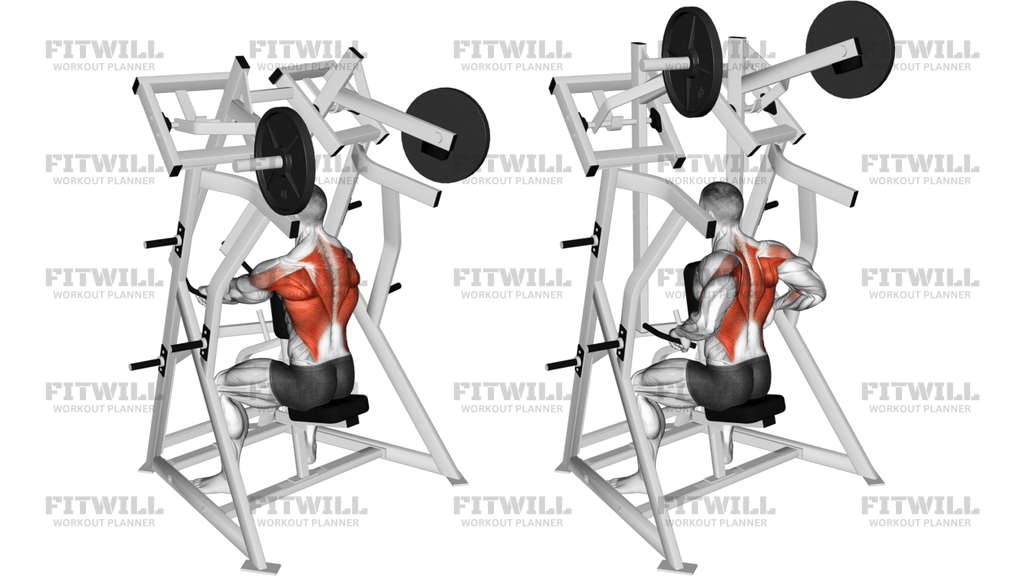
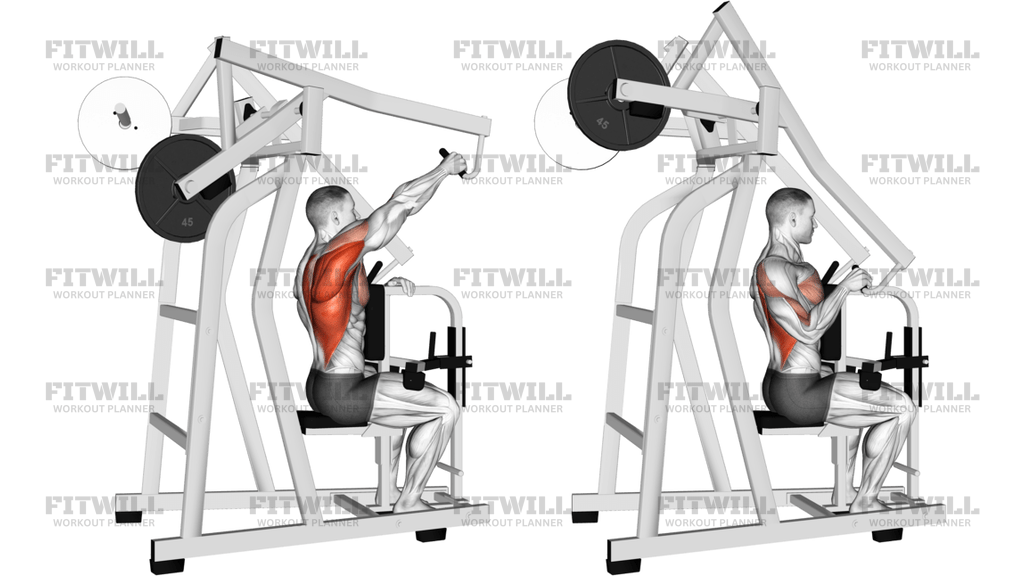
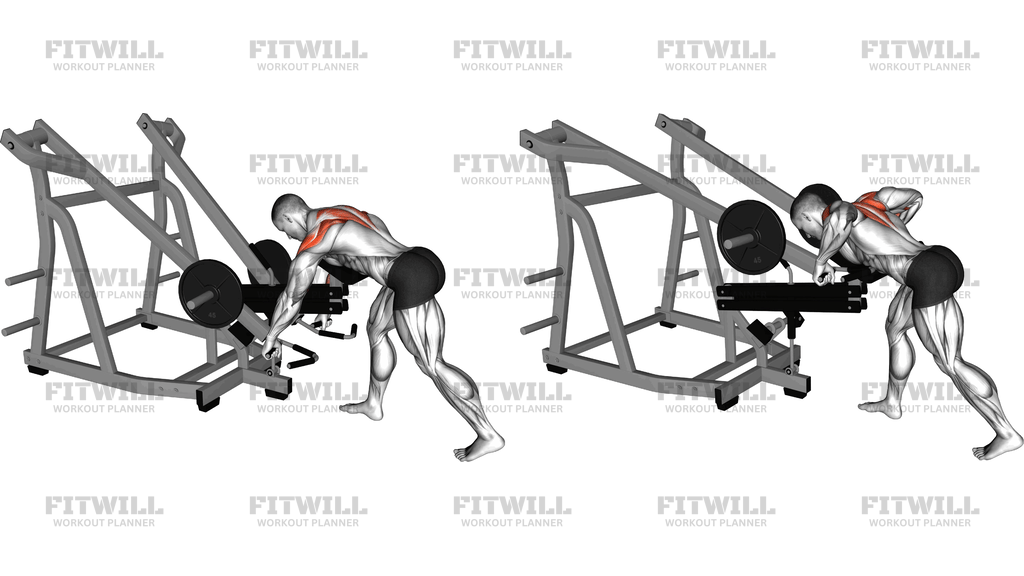
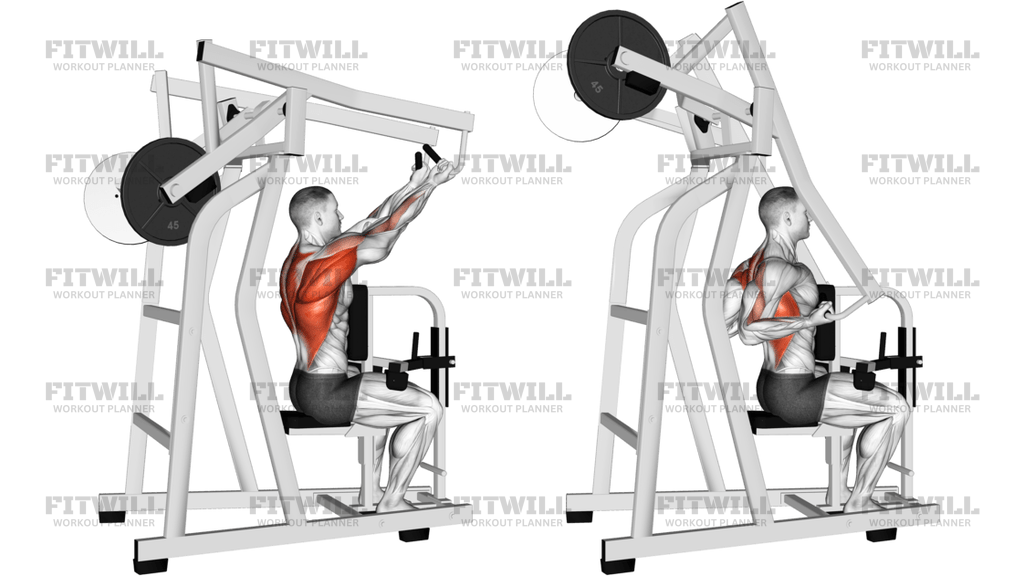
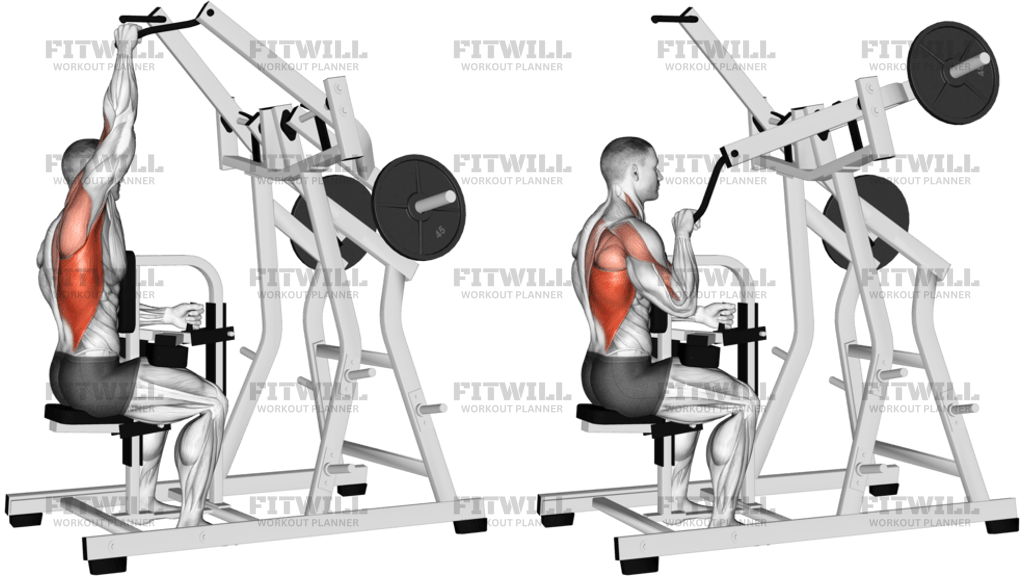
Lever One-Arm Lateral Wide Pulldown Plate Loaded is a single-arm lat exercise performed on a plate-loaded leverage machine. The image shows a seated position with the working arm reaching high on a wide overhead handle while the other hand holds the support grip to keep the torso steady. That setup makes the exercise useful for training the lats through a long range of motion while still giving you a guided path and a consistent resistance curve.
This movement is mainly about shoulder adduction and scapular depression on one side at a time. The latissimus dorsi does most of the work, with the upper back, biceps, forearm flexors, and rear shoulder helping stabilize the pull. Because the handle starts high and slightly out to the side, the pull is not a straight-down row; it is a controlled arc from overhead toward the upper chest or shoulder line. Keeping that arc clean is what turns the machine from a momentum exercise into a targeted back builder.
The seated pad, thigh support, and free-hand handle matter because they keep the torso from drifting. A good rep starts tall, with the ribs stacked over the pelvis and the shoulder set before the elbow moves. If you lean back hard or yank with the arm, the load shifts away from the lat and into the body swing. When the setup is right, the shoulder blade moves down first, the elbow follows in a smooth path, and the handle finishes close to the upper chest without shrugging or twisting.
Use this exercise when you want focused lat work, unilateral back training, or a machine-based pulldown that helps you match both sides of the body more evenly. It works well in hypertrophy blocks, back days, and accessory work after heavier compounds. Beginners can use it if the seat position is comfortable and the load stays light enough to keep the shoulder down, the neck relaxed, and the return controlled. The goal is not to pull the weight as far as possible; it is to repeat the same clean arc with the same body position on every rep.
[ Workout Log & Planner ]
Put your next workout in Fitwill
Keep your plan and training log ready when you are.


Instructions
- Adjust the seat so the upper handle starts high enough that your working arm reaches overhead without losing contact with the pad.
- Sit tall with your chest against the support pad and plant both feet flat on the floor.
- Grip the free support handle with your non-working hand and take the wide overhead handle with the working hand.
- Start with the working shoulder set down and the arm extended overhead in line with the machine arm.
- Brace your torso, then pull the elbow down and slightly in toward your upper ribs in a smooth arc.
- Keep the chest lifted but do not lean back or twist to finish the rep.
- Squeeze the lat briefly at the bottom when the handle reaches shoulder or upper-chest height.
- Return the handle slowly until the arm is fully lengthened again and the shoulder stays controlled.
- Repeat for the planned reps, then set the handle back to the start position before switching sides.
Tips & Tricks
- Keep the working shoulder depressed before you start each rep; shrugging turns the pull into an upper-trap dominant movement.
- Use the support hand to resist rotation so the torso stays square to the machine instead of spinning toward the pulling side.
- Think about driving the elbow down and in, not just pulling with the hand; that cue usually improves lat engagement.
- Stop the rep when the handle reaches a strong, controlled bottom position instead of forcing it lower with trunk lean.
- Use a slower return than the pull so the lat stays loaded through the stretched top half of the rep.
- Choose a load that lets you keep the same shoulder path for every rep; if the arm path changes, the stack is too heavy.
- Keep your neck long and your chin neutral so you do not crane toward the handle as fatigue builds.
- If the seat is too low or too high, the shoulder will lose its clean overhead start position, so adjust the machine before loading up.
Frequently Asked Questions
What muscles does this one-arm leverage pulldown work most?
The lats do most of the work, with the upper back, biceps, forearms, and rear shoulder helping stabilize the pull.
Why does the exercise use one arm at a time?
One arm lets you focus on a cleaner lat path and helps expose side-to-side strength differences without the stronger side taking over.
Should I pull the handle straight down?
No. The image shows a slightly arcing path from overhead toward the upper chest or shoulder line, which keeps the lat in a better line of pull.
What should my free hand do on this machine?
Hold the support grip so your torso stays stable and you do not rotate or lean back as the working arm pulls.
How do I know the seat height is set correctly?
At the start, the working arm should reach overhead comfortably and the shoulder should stay down against the pad without shrugging.
What is the most common mistake on this pulldown?
Most people lean back, twist, or shrug to finish the rep instead of keeping the shoulder blade and elbow path controlled.
Is this a good beginner back exercise?
Yes, if the load is light and the seat is adjusted so the machine arm starts in a stable overhead position.
How should I progress this exercise?
Add small amounts of resistance only when you can keep the same torso position, elbow path, and slow return on every rep.