Weighted Pullover On Stability Ball
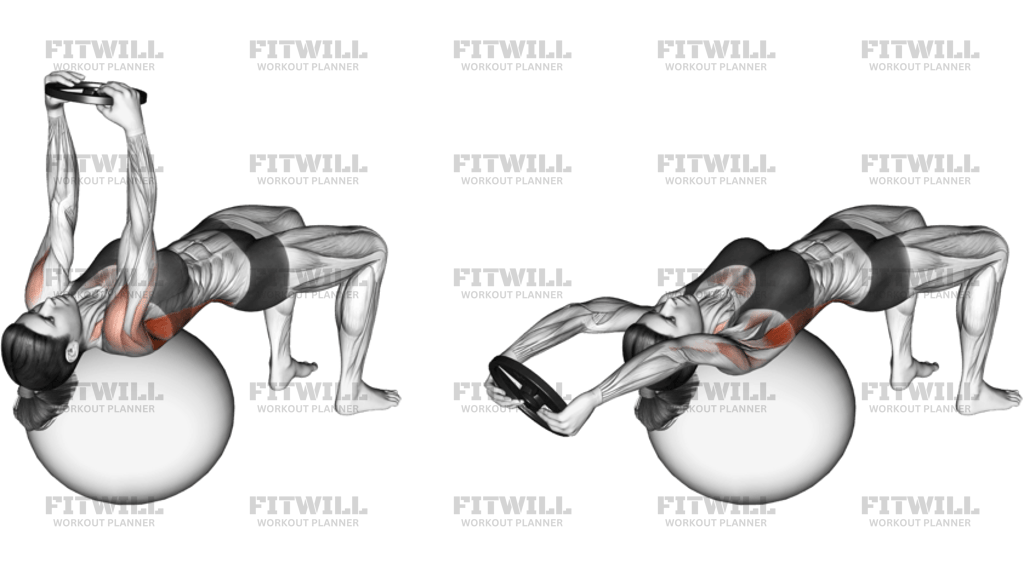
Weighted Pullover on Stability Ball is a lying pullover variation that trains the lats through a long overhead arc while the stability ball turns the trunk and hips into part of the exercise. The image shows you bridging across the ball with your upper back supported, feet planted, and a single weight held in both hands above the chest. That setup matters because it changes the pullover from a simple arm movement into a controlled combination of shoulder extension, rib control, and anti-extension stability.
The lats do most of the work, but the upper back, biceps, forearms, and deep trunk muscles help hold the position steady while the weight travels behind the head and back to the start. The stability ball also makes body position more important than load: if the ribs flare, the low back arches, or the feet drift, the movement stops feeling like a pullover and starts turning into a compensation drill.
Start with the shoulders and upper back supported on the ball, hips lifted, and feet far enough out that you can keep a firm bridge. Hold one dumbbell or similar weight with both hands, keep a slight bend in the elbows, and let the arms travel in a smooth arc until you feel a stretch through the lats and chest without losing shoulder position. On the way back, pull the weight over the chest by bringing the upper arms forward rather than bending the elbows to finish the rep.
This exercise works best when the tempo is deliberate and the range is honest. Lower the weight far enough to challenge the lats, but not so far that the ribs pop or the shoulders pinch. Exhale as the weight comes back over the chest, keep the neck relaxed, and reset the bridge position before the next rep if the ball or feet start to shift.
Use the movement as accessory work for back-focused training, upper-body stability, or a core-and-pull session. It is a good choice when you want lat tension without a heavy rowing pattern, but it should still feel controlled and precise. If the ball makes the position unstable or the shoulders do not tolerate the overhead arc, reduce the load, shorten the range, or switch to a floor pullover until the pattern is clean.
[ Workout Log & Planner ]
Put your next workout in Fitwill
Keep your plan and training log ready when you are.


Instructions
- Sit on the stability ball and walk your feet forward until your upper back and shoulders are supported, your hips are lifted, and your feet are flat on the floor.
- Hold one dumbbell or similar weight with both hands above your chest and keep a soft bend in the elbows.
- Set your feet hip-width apart, brace your ribs down, and keep your neck long before the first rep.
- Lower the weight in a smooth arc behind your head until your upper arms are near your ears and you feel a stretch through the lats.
- Keep your glutes engaged and your feet planted so the ball stays steady and your hips do not drop.
- Stop the descent if your low back starts to arch or your shoulders start to shrug forward.
- Exhale and pull the weight back over your chest by bringing the upper arms forward, not by straightening the elbows harder.
- Pause above the chest, reset the bridge if needed, and repeat for the planned number of repetitions.
- At the end of the set, bring the weight to your chest, lower your hips, and sit up slowly off the ball.
Tips & Tricks
- Choose a light-to-moderate load; the stability ball makes heavy pullover reps much harder to control.
- Keep only a small bend in the elbows and hold that angle nearly fixed throughout the set.
- If your ribs flare as the weight goes back, shorten the range instead of forcing the dumbbell farther overhead.
- Place your feet far enough forward to keep the hips high and the torso supported without sliding on the ball.
- Think about bringing the upper arms back over the chest rather than pulling with the hands.
- A slower lowering phase usually gives you better lat tension than a bigger swing at the bottom.
- Keep the weight centered between both hands so it does not drift to one side and twist the shoulders.
- If the shoulders pinch, stop just before the arms reach full overhead and use a shorter arc.
- If the ball moves, widen your stance and check that the surface under the ball is not slippery.
Frequently Asked Questions
What does the Weighted Pullover on Stability Ball train most?
The lats do most of the work, with the upper back, biceps, forearms, and trunk helping you hold the bridge and control the arc.
Why use a stability ball for this pullover?
The ball adds an anti-extension challenge, so your ribs, hips, and shoulders have to stay organized while the weight moves overhead.
Can I use a dumbbell or a plate in both hands?
Yes. A single dumbbell, plate, or other compact weight held with both hands works as long as you can keep it centered.
How far should the weight travel behind my head?
Only as far as you can keep your ribs down and your shoulders comfortable. If the lower back arches or the shoulders pinch, stop sooner.
Should my elbows stay bent during the rep?
Yes. Keep a soft bend and hold it nearly fixed so the movement stays a pullover instead of turning into an elbow-dominant press.
Is this exercise beginner-friendly?
It can be, but start with a light load and a shorter range. If the ball feels unstable, try the same pattern on the floor first.
What are the most common mistakes on this movement?
The biggest issues are over-arching the low back, letting the ball drift, bending the elbows more on the way back, and shrugging the shoulders up.
What can I do if the shoulders feel pinchy?
Reduce the load, shorten the overhead range, and keep the arms a little in front of the ears instead of chasing a deeper stretch.