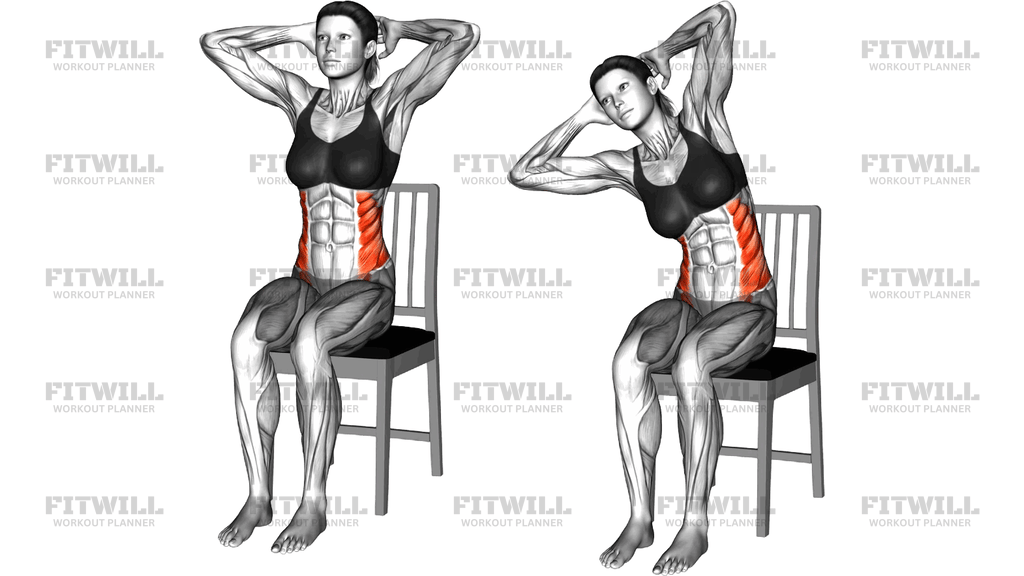
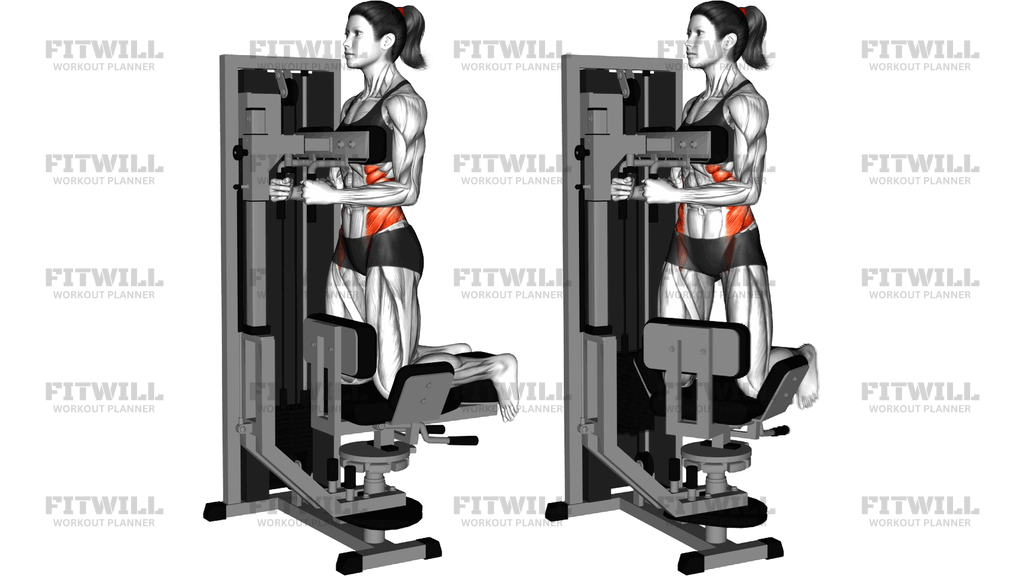
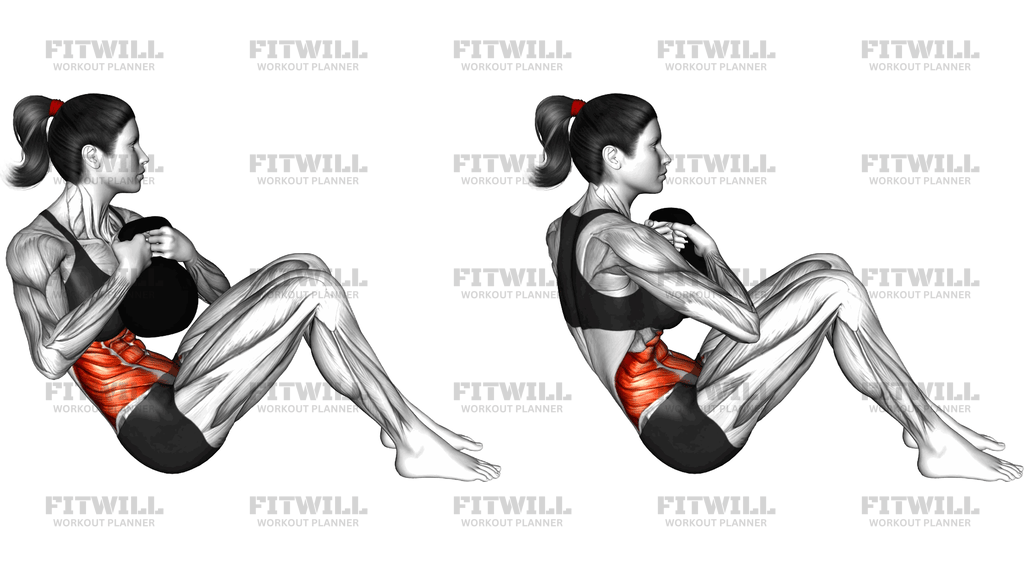
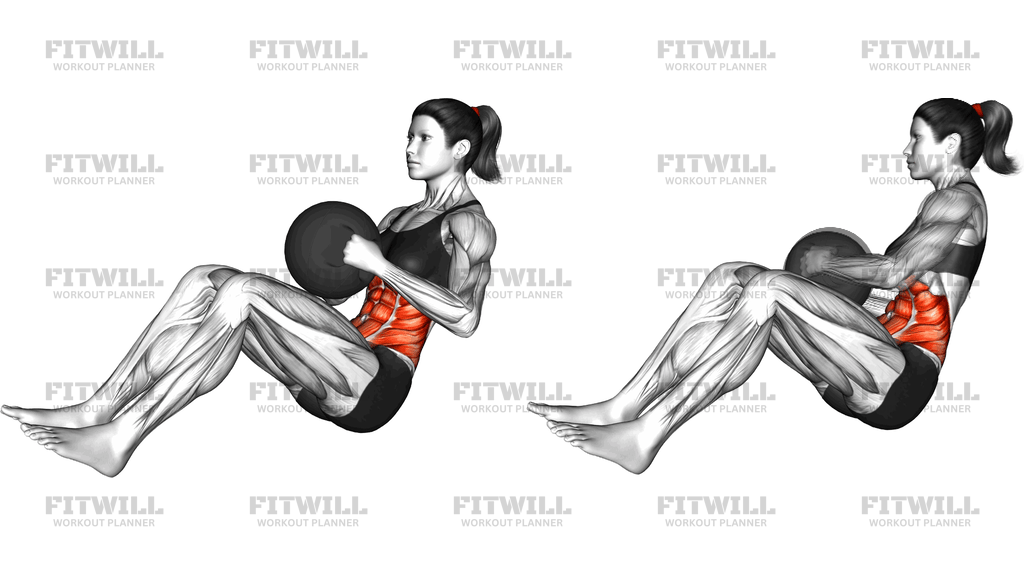
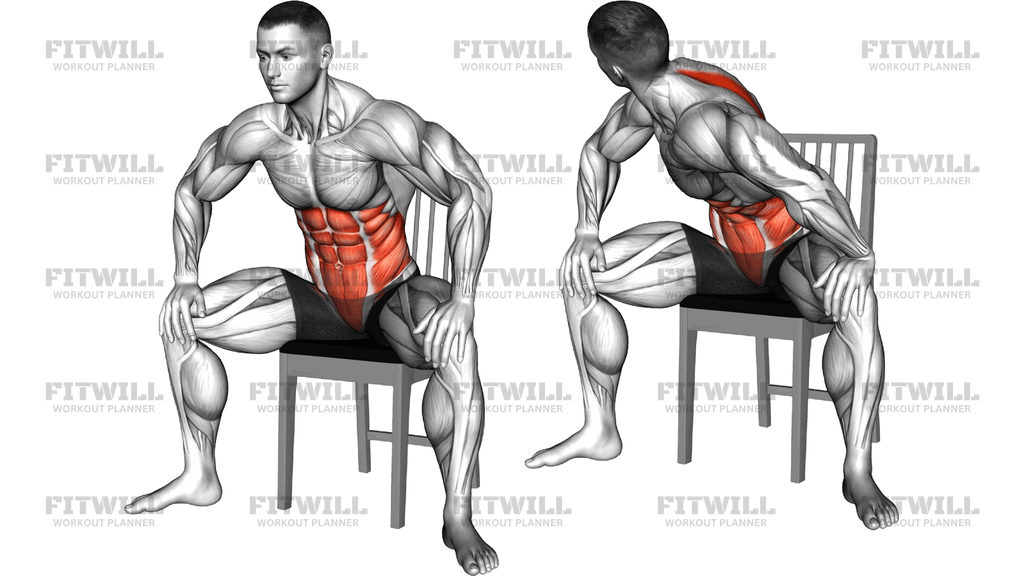
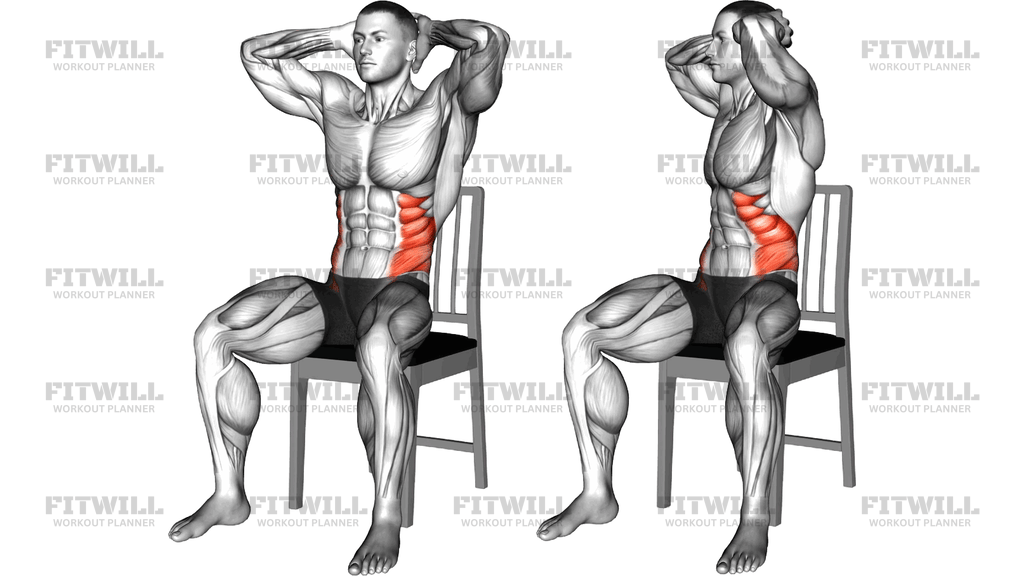
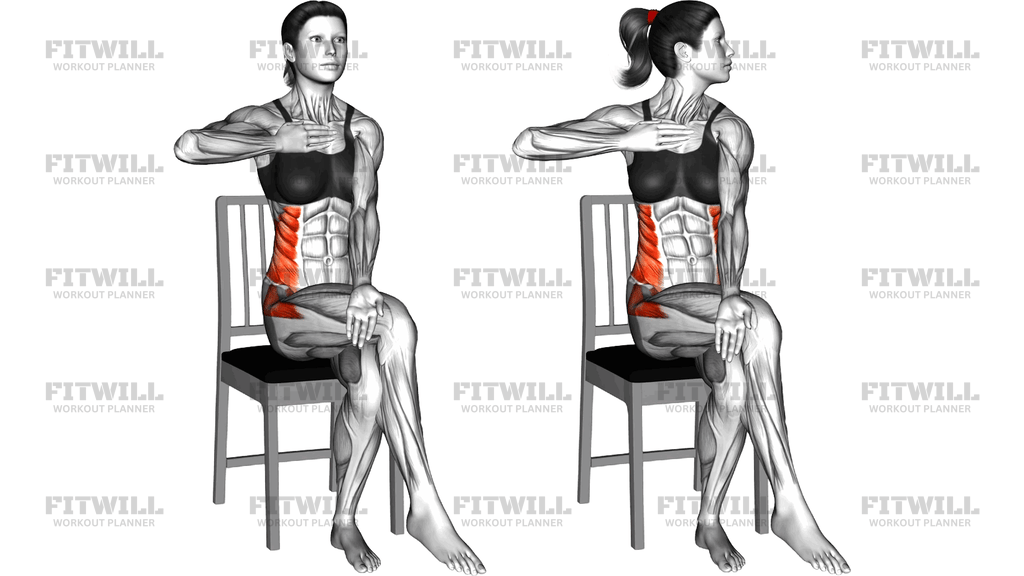
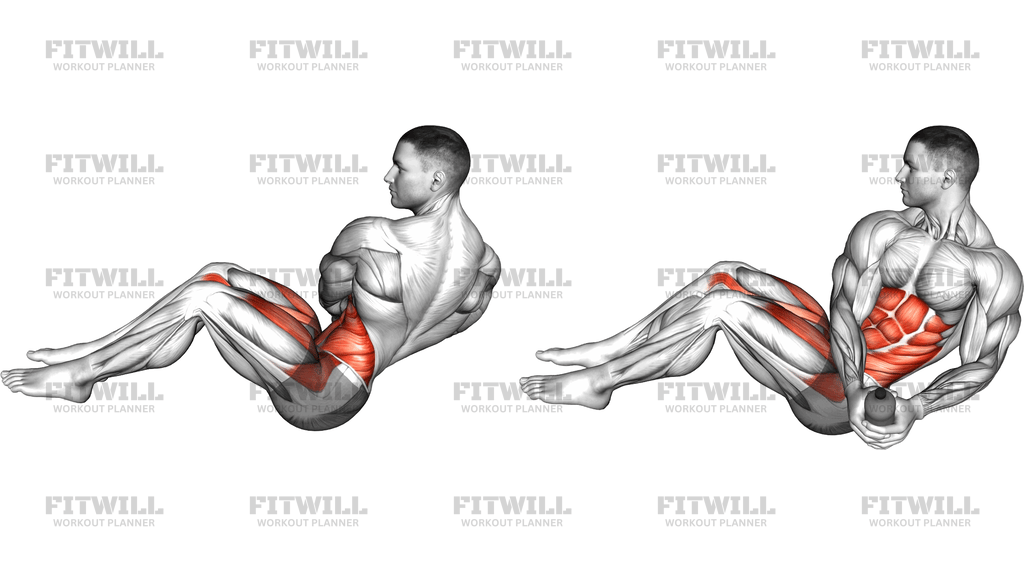
Weighted Standing Twist
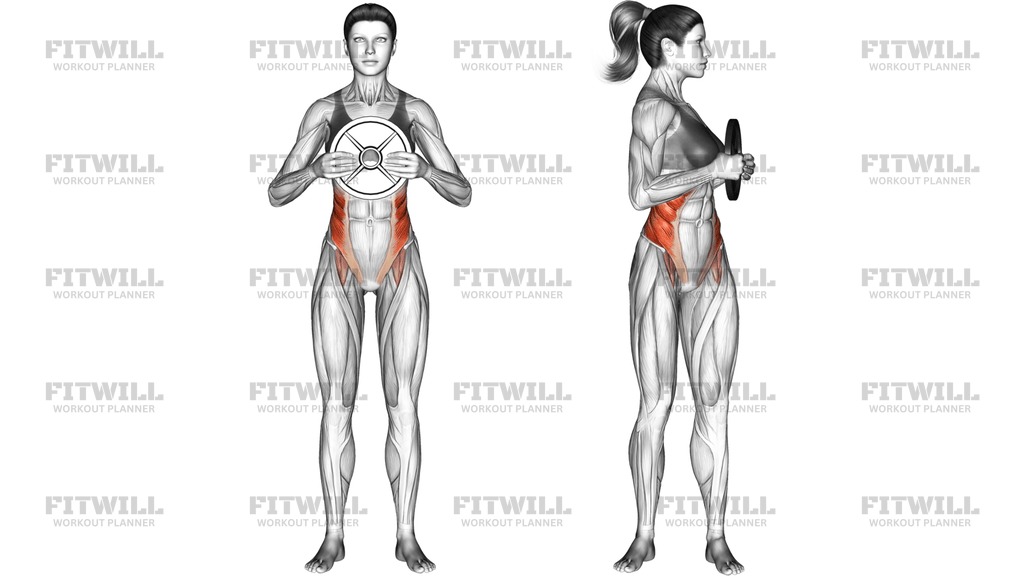
Weighted Standing Twist is a standing anti-rotation and rotation drill performed with a plate or other handheld weight held at chest height. It trains the obliques to create and control trunk rotation while the hips, feet, and rib cage stay organized enough that the movement comes from the torso instead of from swinging the arms or spinning the whole body.
The main training effect is on the obliques, with the rectus abdominis, transverse abdominis, and spinal erectors helping you keep the torso stacked as you turn. In practical terms, the exercise is useful when you want better control through twisting, better midsection stiffness, and a cleaner way to load rotational work without needing a machine.
The setup matters because this movement only works well when the stance is stable. Stand tall with feet about hip width apart, knees soft, and the weight centered at the sternum. Keep the shoulders level and the pelvis mostly forward before you start the turn. If the weight drifts away from the chest or the knees start to cave and sway, the set turns into momentum work instead of trunk control.
On each rep, rotate the rib cage as far as you can without letting the hips lead the motion. Pause briefly at the end range, then come back through the center under control before twisting to the other side. Exhale as you rotate, inhale as you return, and keep the neck long so the head follows the torso naturally instead of yanking ahead.
This exercise fits well in core blocks, warmups, athletic accessory work, or lighter conditioning circuits. It is usually best performed with moderate to light resistance and a clean tempo, because the goal is not to fling the weight around but to keep the torso honest against rotation. When the reps stay smooth, the obliques, waist, and deep core do the work that makes the movement worthwhile.
[ Workout Log & Planner ]
Put your next workout in Fitwill
Keep your plan and training log ready when you are.


Instructions
- Stand tall with your feet about hip width apart and hold the plate or weight against your chest with both hands.
- Soften your knees, stack your ribs over your pelvis, and keep your shoulders level before the first twist.
- Brace your midsection so the torso is ready to rotate without the lower body drifting.
- Turn your rib cage to one side while keeping the weight close to the sternum.
- Let the hips move only as much as needed for comfort, but do not spin them to drive the rep.
- Pause briefly at the end of the rotation, then return through the center under control.
- Repeat the same twist to the opposite side with the same range and tempo.
- Exhale as you rotate and inhale as you come back to center.
- Finish the set if the weight starts to drift, the knees sway, or the torso begins to jerk.
Tips & Tricks
- Keep the plate pressed close to the chest so the lever stays short and the obliques have to control the turn.
- Rotate from the ribs first; if your hips are whipping around, the load is too heavy or the range is too big.
- A narrow but stable stance usually feels better than a wide staggered stance for this drill.
- Move slowly enough that you can stop the twist at any point without losing balance.
- Do not chase a huge range if your shoulders are collapsing forward or one heel is peeling off the floor.
- If the lower back feels pinchy, shorten the range and keep the pelvis more square to the front.
- Use a lighter plate before increasing speed, because momentum quickly takes over this movement.
- The rep should feel like controlled torso rotation, not an arm raise with a little twisting added on.
Frequently Asked Questions
What muscles does the Weighted Standing Twist target most?
It mainly targets the obliques, with the deeper core and spinal stabilizers helping keep the torso controlled.
Should the weight stay at chest level?
Yes. Holding the plate at the sternum keeps the lever short and makes the obliques do more of the work.
How far should I twist on each rep?
Twist only as far as you can without the hips spinning, the heels lifting, or the shoulders rounding forward.
Can I move my hips during the twist?
A small amount of hip motion is normal, but the torso should lead and the pelvis should stay mostly forward.
Is this more of a strength or conditioning exercise?
It can serve either purpose, but it is usually best treated as controlled core accessory work rather than an all-out lift.
What is the most common mistake with this exercise?
The biggest mistake is using momentum from the arms, hips, or knees instead of rotating the trunk under control.
Is it okay if my lower back feels the exercise?
You should mainly feel the obliques and deep core. If the lower back is doing most of the work, shorten the range and reduce the load.
How do I progress the Weighted Standing Twist?
Progress by cleaning up the tempo first, then increasing the plate load only if you can keep the torso stacked and the movement smooth.