Weighted Side Bend On Stability Ball
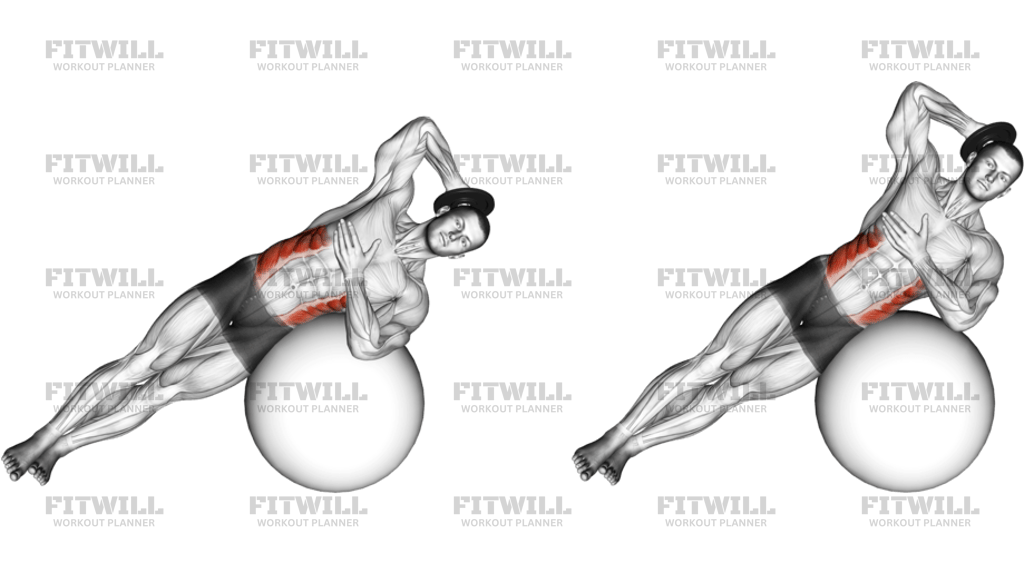
Weighted Side Bend On Stability Ball is a supported side-bending exercise that loads the obliques through a controlled arc while the ball limits how much the torso can cheat. The setup makes the difference here: the body is draped over the side of the ball so the waist can shorten and lengthen without turning the movement into a twist or a hip hike.
This exercise primarily trains the obliques, with the rectus abdominis, transversus abdominis, and spinal erectors helping you stay organized as you move. It is useful when you want direct lateral trunk work without standing side bend momentum, especially for athletes or lifters who need stronger side-to-side control through the torso. Because the ball removes a lot of fixed support, the movement also asks you to stay honest through the rib cage instead of leaning into momentum.
The ball should sit under the lower ribs and waist, not high in the back and not down on the pelvis. Keep the feet planted wide enough to make you feel stable, then hold the weight close to the side of the head so the load challenges the waist instead of the shoulder. A small shift in setup changes the leverage a lot, so take the time to find a position where you can bend cleanly without rolling backward.
Each repetition should look like a smooth shortening of the side of the torso. Lower the upper ribs toward the floor, keep the hips stacked, then bring the ribs back up under control until the side body is long again. Exhale as you come up, inhale as you lower, and stop the set if the motion turns into swinging, neck pulling, or a twist through the rib cage. The rep should feel like the side of the waist is doing the work, not the elbow, shoulders, or lower back.
Weighted Side Bend On Stability Ball works best as accessory core work after your main lifts or as part of a focused trunk session. It is usually best done with lighter loading and slower tempo, because the obliques should finish the set before your grip, neck, or lower back starts taking over. When performed well, it adds clean lateral-strength work without requiring a big range of motion or a heavy load, and it can be a useful choice when you want side-body work that feels more controlled than a standing dumbbell side bend.
[ Workout Log & Planner ]
Put your next workout in Fitwill
Keep your plan and training log ready when you are.


Instructions
- Place the stability ball under the lower ribs and waist, then let your body rest sideways across it with your feet planted wide on the floor.
- Stack your legs and keep the torso long from hip to shoulder before you start the first rep.
- Hold the weight in your top hand beside the head, and keep the other hand across the chest or lightly supporting the torso.
- Set your ribs down and brace so the ball supports you without letting your waist collapse.
- Lower the upper ribs toward the floor by bending through the waist while keeping the hips mostly stacked.
- Let the top elbow travel slightly toward the hip as you descend, but do not twist the chest forward.
- Drive the ribs back up until the side of the torso is long again, and exhale through the effort.
- Pause for a beat at the top, then lower under control to the starting position.
- Reset your feet and shoulder position before the next rep, and set the weight down carefully when you finish.
Tips & Tricks
- Keep the ball under the lower ribs, because placing it too high turns the rep into a loose torso lean.
- Plant the feet wider than the ball so your body does not roll backward as the weight moves.
- Hold the weight close to the head instead of reaching it away; the longer lever makes the side bend much harder.
- Do not let the top shoulder drift forward, or the rep becomes part twist and part bend.
- Use a light load first; the obliques should control the motion before the neck or grip starts to fatigue.
- A slow lowering phase makes this exercise more effective than trying to bounce off the ball.
- Keep the chin relaxed and the eyes forward so the neck does not help yank the torso up.
- If the lower back feels pinched, shorten the range and keep the ribs from flaring as you bend.
- Stop the set when you can no longer return to the same stacked body position rep after rep.
Frequently Asked Questions
What muscle does Weighted Side Bend On Stability Ball target most?
The obliques do most of the work, especially the external obliques on the side of the torso.
Where should the stability ball sit during Weighted Side Bend On Stability Ball?
It should sit under the lower ribs and waist, where it supports the side of the torso without blocking the bend.
Do I hold the weight in front of me or beside my head?
Keep it beside the head in the top hand so the load challenges the waist instead of turning the rep into a front-loaded crunch.
Is Weighted Side Bend On Stability Ball a twist or a side bend?
It is a side bend. The chest should stay stacked while the torso shortens and lengthens laterally.
Can beginners do Weighted Side Bend On Stability Ball?
Yes, if they start light and keep the ball position, foot placement, and shoulder stack consistent.
Why does my neck get tired on this exercise?
The weight is probably too heavy or too far from the head. Keep the elbow relaxed and use the obliques to lift the torso instead of pulling with the neck.
How far should I lower on each rep?
Lower only until you can still keep the hips stacked and the rib cage from twisting; the bottom position should feel controlled, not collapsed.
What if the ball keeps sliding while I bend?
Widen your stance and move the ball slightly lower on the torso. If it still shifts, reduce the load until the setup feels stable.
What is the best tempo for Weighted Side Bend On Stability Ball?
Use a slow lowering phase, a brief pause at the top, and a controlled return so the obliques stay loaded instead of the movement turning into momentum.