Weighted Hanging Leg-Hip Raise
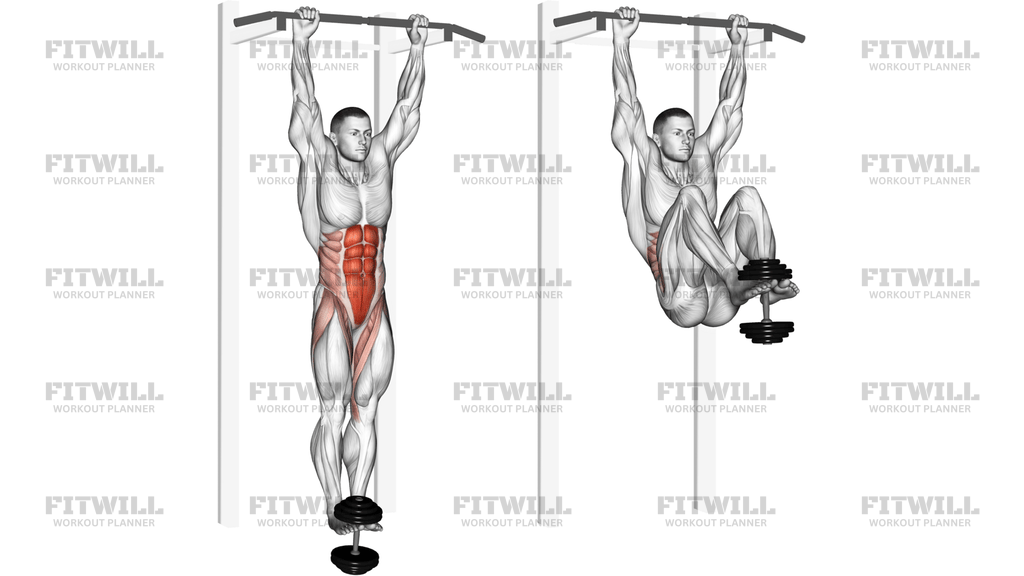
Weighted Hanging Leg-Hip Raise is a hanging core exercise performed from a pull-up bar while a dumbbell or other compact load is held between the feet. The movement trains the abs hard because the pelvis has to curl up under the rib cage while the legs stay controlled in space. Compared with a simple hanging knee raise, the added weight makes the bottom position more challenging and makes it easier to lose shape if the setup is sloppy.
The main work is felt in the rectus abdominis, with the obliques helping stabilize the trunk and the hip flexors helping lift the thighs. That means the rep should look like a controlled tuck and hip flexion, not a swing. If the lower back arches, the legs drift, or the body starts rocking, the set shifts away from the abs and toward momentum. A good rep keeps the shoulders active, the ribs down, and the pelvis moving smoothly.
Setup matters because the weight has to stay secure before you leave the ground. Grip the bar firmly, hang tall, and clamp the dumbbell between the feet or ankles before starting the first rep. From there, create tension through the whole body, then raise the knees and hips together toward the chest. At the top, curl the pelvis slightly so the abs finish the rep instead of stopping at a loose knee lift. Lower under control until the legs are long again and the torso is still.
This exercise is useful for advanced abdominal training, weighted core work, and accessory work after the main lifts. It also works well when you want a stricter hanging variation that challenges grip, shoulder stability, and trunk control at the same time. Keep the load modest enough that every rep stays crisp. If you cannot stop the swing at the bottom or cannot hold the dumbbell securely, the weight is too heavy or the setup is not stable enough. Clean reps beat higher reps here, because the quality of the hip tuck is what makes the exercise effective.
[ Workout Log & Planner ]
Put your next workout in Fitwill
Keep your plan and training log ready when you are.


Instructions
- Grip the pull-up bar with both hands and hang with the arms straight, then clamp a dumbbell securely between the feet or ankles.
- Set the shoulders down and slightly back so the body starts in a controlled dead hang without collapsing through the upper back.
- Keep the legs long, the ribs stacked over the pelvis, and the lower body still before the first rep begins.
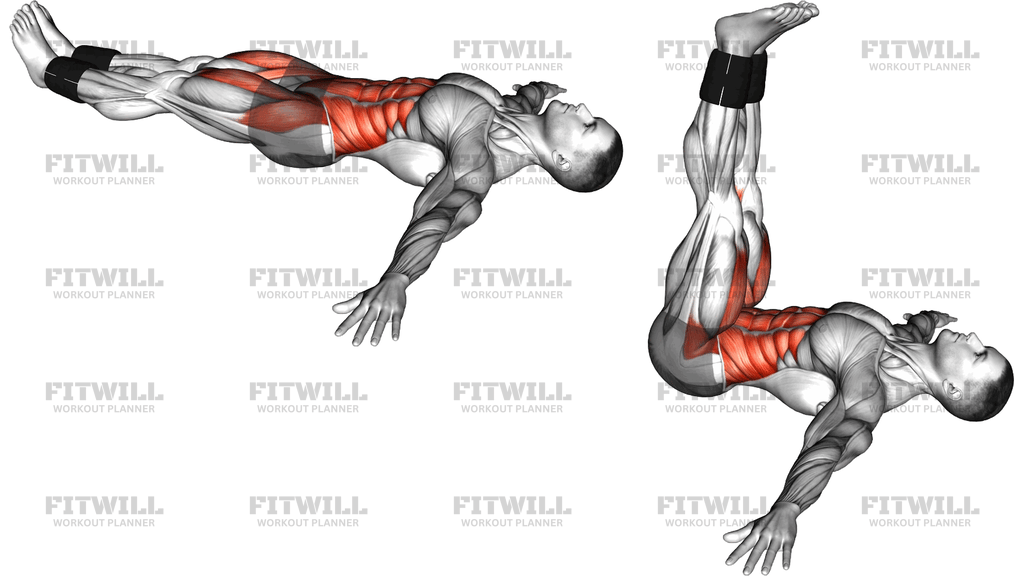
- Exhale and lift the knees upward while letting the hips fold so the thighs travel toward the torso instead of swinging forward.
- Continue curling the pelvis upward at the top so the abs finish the rep, not just the hip flexors.
- Pause briefly when the knees are high and the trunk stays quiet.
- Lower the legs slowly until the body returns to a still hang and the weight remains secure between the feet.
- Reset the shoulders, re-brace, and repeat for the planned number of repetitions without using momentum.
Tips & Tricks
- Choose a dumbbell that stays pinched between the feet without forcing you to squeeze so hard that your calves cramp.
- If the bar starts to swing, shorten the range and remove load before chasing more reps.
- Keep the shoulders active the whole set; a passive hang makes the lift feel sloppy and shifts stress into the joints.
- Think about bringing the pelvis up toward the rib cage at the top, not just lifting the knees higher.
- Avoid kicking the feet forward on the way up, because that turns the rep into a swing instead of a curl.
- Lower slowly until the legs are long again; dropping too fast usually creates the next rep's swing.
- Use a grip width that lets the knees rise without hitting the hands or the bar path.
- Stop the set when you can no longer keep the dumbbell steady between the feet.
Frequently Asked Questions
What muscle does Weighted Hanging Leg-Hip Raise target most?
The rectus abdominis is the main target, with the obliques and hip flexors helping to control the lift.
Can beginners perform this exercise?
It is usually better for intermediate lifters. Beginners should master strict hanging knee raises before adding a dumbbell between the feet.
Where should the weight sit during the rep?
The dumbbell should stay clamped between the feet or ankles so it does not swing as the knees and hips rise.
What is the difference between this and a hanging knee raise?
This version adds load and usually asks for a stronger hip tuck, so the abs have to control both the lift and the descent more tightly.
Why do my shoulders get tired during this exercise?
A hanging core raise still demands shoulder stability. If the shoulders are hanging passively, the grip and upper back will fatigue early.
How high should the knees come up?
Raise them as high as you can while keeping the pelvis curling upward and the body from swinging backward.
What if I cannot keep the dumbbell secure?
Use less weight or switch to a bodyweight hanging leg raise first. The load should stay locked in place for the whole set.
What should I avoid at the bottom of the rep?
Do not drop into a loose swing. Control the descent until the body is still again before starting the next rep.