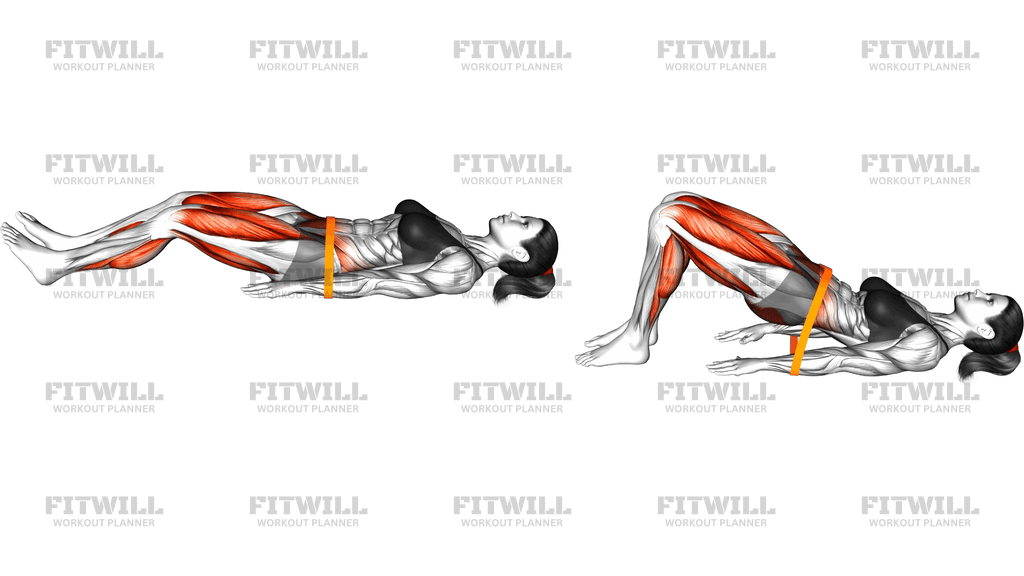
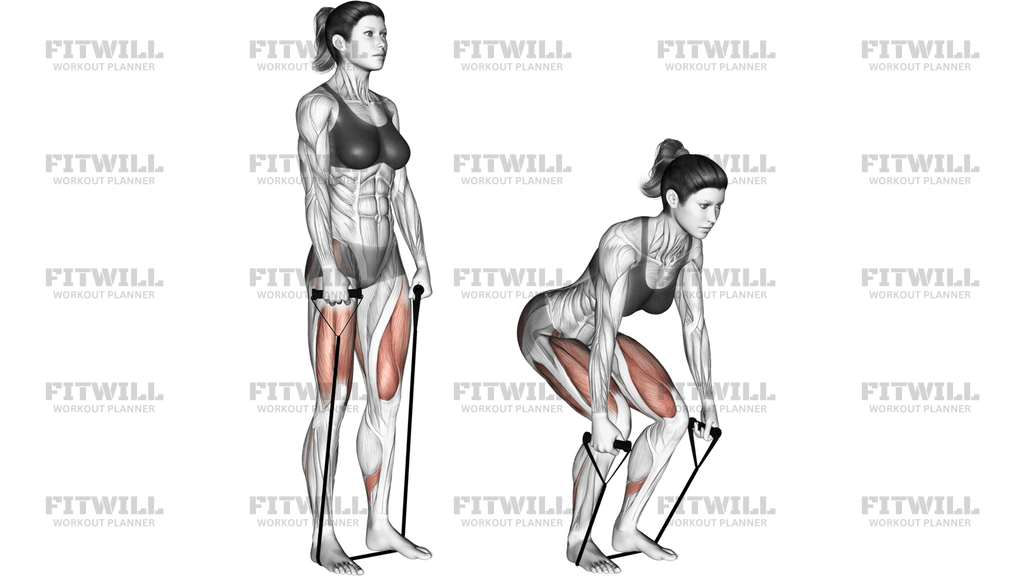
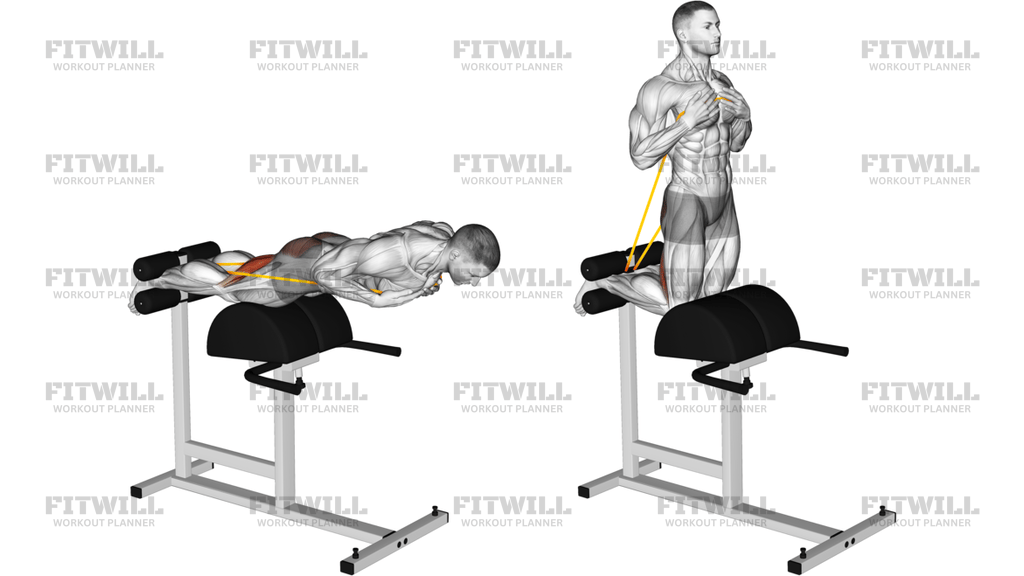
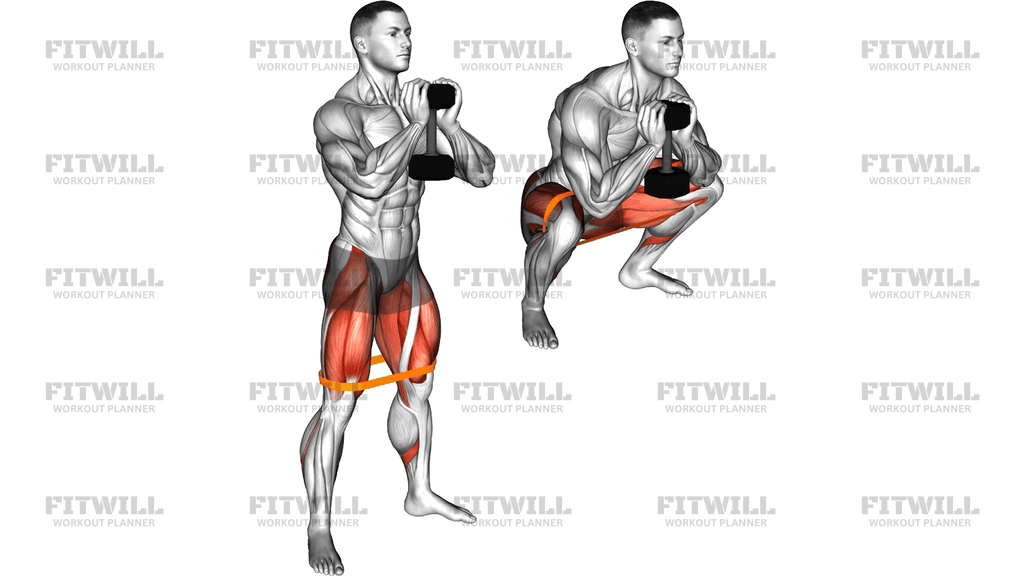
Resistance Band Lunge
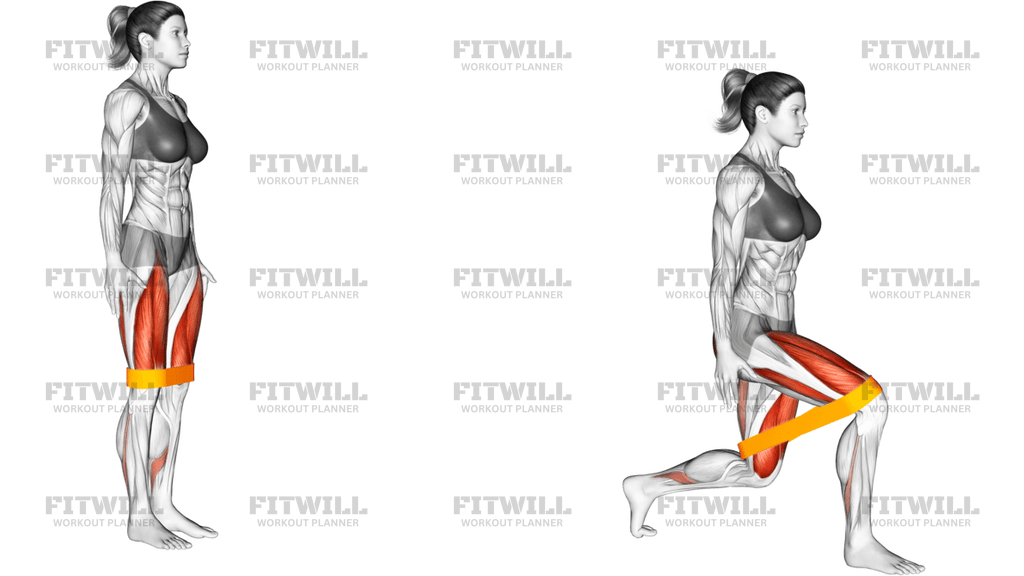
Resistance Band Lunge is a split-stance lower-body exercise that uses a loop band above the knees to add tension while you lunge. It is most useful when you want to train the legs and hips with a clear emphasis on glute control, knee tracking, and steady balance rather than on heavy loading.
The band changes the feel of the rep by asking the hips to stay active as you descend and rise. That makes the exercise especially good for reinforcing glute engagement, thigh strength, and clean alignment through the knee and ankle. In practice, the main work comes from the gluteus maximus and the quadriceps, with the hamstrings, adductors, and trunk stabilizers helping keep the pelvis level and the torso quiet.
The setup matters more than it looks. A band placed just above the knees should stay snug without sliding, and the front foot should stay planted so the lunge begins from a stable base. From there, lower straight down into the split stance instead of lunging forward aggressively. The front knee should track in line with the toes, the back knee should travel toward the floor under control, and the band should never pull the knees inward.
On the way up, drive through the front heel and midfoot while keeping tension in the band. The goal is not a long, rushed stride; it is a repeatable rep with a stable pelvis, quiet trunk, and smooth breathing. If the set starts to feel sloppy, shorten the range or lighten the band before form breaks down.
This exercise fits well in warm-ups, accessory work, lower-body circuits, and unilateral training days because it teaches leg strength without demanding maximal load. It is also a practical option for beginners who need a simpler split-squat pattern, as long as the band resistance is light enough to keep the knees and hips aligned through every rep.
[ Workout Log & Planner ]
Put your next workout in Fitwill
Keep your plan and training log ready when you are.


Instructions
- Place a loop band just above your knees and stand tall with your feet hip-width apart.
- Step one foot back into a split stance so your front foot is flat and your rear heel stays lifted.
- Keep the band snug, your pelvis level, and your torso stacked over your hips before you start the rep.
- Inhale and lower straight down by bending both knees, keeping most of your weight over the front leg.
- Let the front knee track in line with the second and third toes instead of collapsing inward against the band.
- Descend until the back knee hovers close to the floor or the front thigh reaches a controlled depth.
- Pause briefly at the bottom, then exhale and drive through the front heel and midfoot to stand back up.
- Finish the rep with the hips and knees extended, then repeat for the planned reps before switching sides if needed.
Tips & Tricks
- Keep the band above the knees, not on the kneecaps, so it gives hip tension without digging into the joint.
- Think about lowering straight down between your feet instead of taking a long step forward and pitching your chest.
- If the front knee caves inward, shorten the stance and press the knee gently out against the band on every rep.
- Use a light band first; the exercise should feel controlled at the hips, not unstable at the knees.
- Keep the front heel down and your weight spread across the heel and midfoot so the glutes can help finish the rep.
- Let the back knee travel toward the floor without bouncing off it, then drive up smoothly through the front leg.
- A slower lowering phase makes the band work harder without needing a stronger band or extra reps.
- If your torso starts folding forward, reduce depth before you lose the upright split-stance position.
Frequently Asked Questions
What muscle does Resistance Band Lunge target most?
It emphasizes the glutes and thighs, especially the gluteus maximus and quadriceps, with the band adding extra hip-stability work.
Can beginners perform this exercise?
Yes. Beginners usually do best with a light band, a shorter stance, and a smaller range of motion until the split-squat pattern feels stable.
Where should the resistance band sit?
Place it just above the knees so it stays secure and gives feedback on knee tracking without sliding down onto the joint.
Should my back knee touch the floor?
No. Let it hover close to the floor or lightly tap only if that fits your mobility and knee comfort.
How do I keep my front knee from caving in?
Keep pressure on the outer edge of the band, track the knee over the toes, and avoid taking such a long stance that the hip collapses inward.
Is it okay if my front knee moves past my toes?
Yes, a small forward knee travel is normal as long as the heel stays down and the knee tracks in line with the foot.
What is the biggest mistake with this lunge?
Most people either rush the descent or push off the back leg too much, which takes tension away from the front hip and thigh.
What can I do if the band rolls or feels unstable?
Use a wider or lighter band, move it slightly higher on the thighs, and reduce the range until the rep stays smooth.