Resistance Band Pullapart Pronated At 90 Degrees
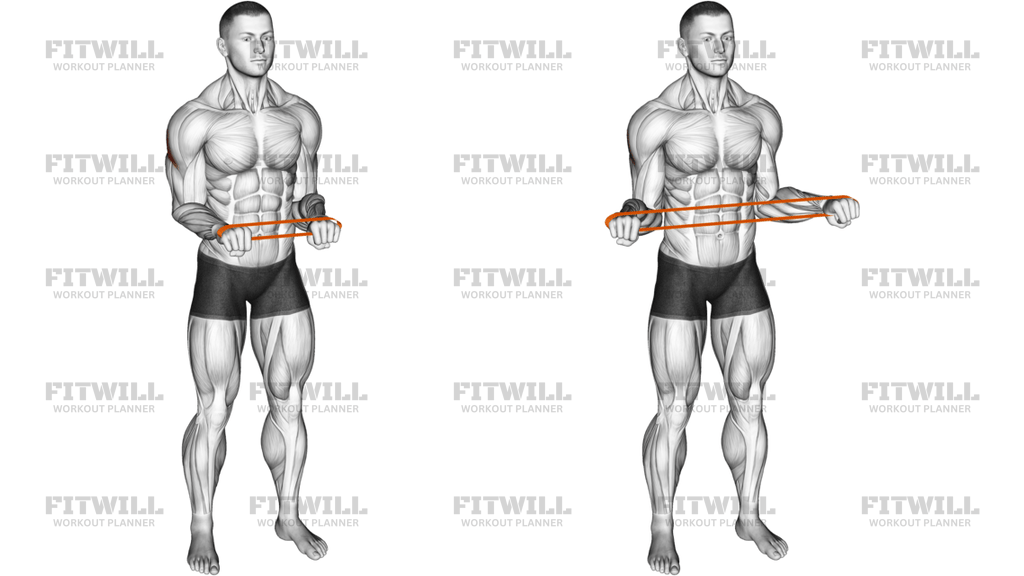
Resistance Band Pullapart Pronated at 90 Degrees is a standing upper-back and rear-shoulder drill built around horizontal abduction with the arms held at shoulder height. The pronated grip keeps the palms facing down or slightly forward, which helps the wrists stay stacked and makes the shoulder blades and rear shoulder line do the work instead of the hands or lower back.
This version is usually used to train the scapular retractors, rear delts, and the smaller stabilizers that keep the shoulders organized when the arms are lifted out in front of the body. Because the band gets harder the farther it stretches, the top half of the rep is where control matters most. If the band is too heavy, the torso will sway, the ribs will flare, and the shoulders will shrug.
Set the band with only light tension at the start, hands in front of the chest and upper arms close to shoulder height. Keep a soft bend in the elbows and pull the band apart by moving the hands straight out to the sides, not by yanking the shoulders back. Finish when the band is open across the chest and the shoulder blades have moved together without forcing the neck forward.
This exercise is useful as a warm-up, posture drill, or accessory movement on upper-body days because it reinforces clean shoulder positioning without loading the spine heavily. It also works well before pressing, rowing, or overhead work when you want the upper back awake and the shoulder blades moving well.
The safest and most productive reps are smooth, symmetrical, and short of failure. Keep the band under control on the way back in, stop the set if the shoulders start to climb toward the ears, and choose a resistance that lets you repeat the same arm path every rep.
[ Workout Log & Planner ]
Put your next workout in Fitwill
Keep your plan and training log ready when you are.


Instructions
- Stand tall with your feet about hip-width apart and hold the band in front of your chest with a pronated grip, palms down, and your upper arms lifted to shoulder height.
- Keep a slight bend in both elbows and create only light tension by separating your hands a little before the first rep.
- Stack your ribs over your pelvis, soften your knees, and keep your chin neutral so the neck stays long.
- Pull the band apart by moving both hands straight out to the sides while the elbows stay near shoulder level.
- Stop when the chest opens and the shoulder blades come together without shrugging or arching the lower back.
- Hold the open position for a brief pause and keep the wrists straight.
- Return the hands to the start slowly, resisting the band instead of letting it snap you back.
- Reset the shoulder position and repeat for the planned reps, breathing out as you pull apart and breathing in on the return.
Tips & Tricks
- Use a band light enough that you can keep both arms at shoulder height for every rep.
- If one shoulder rises higher than the other, reduce tension and match the sides before adding load.
- Think wide hands rather than a hard squeeze between the shoulder blades.
- Keep the elbows softly bent; locking them can turn the movement into a wrist and neck exercise.
- Do not let the ribs pop forward as the band stretches.
- The band should travel on a straight line across the chest, not dip toward the waist.
- Pause for a beat in the open position to feel the rear delts and upper back finish the rep.
- Slow the return, because the posture usually breaks down first on the way back to the start.
Frequently Asked Questions
What does Resistance Band Pullapart Pronated at 90 Degrees train most?
It mainly trains the rear delts, rhomboids, middle traps, and the smaller muscles that stabilize the shoulder blades.
What does the pronated grip change?
Palms-down hand position keeps the wrists neutral and usually makes it easier to feel the upper-back line doing the work.
How high should my arms be during the pull-apart?
Keep the upper arms around shoulder height so the movement stays in the 90-degree position instead of drifting down toward the waist.
Should my elbows stay bent?
Yes. Keep a soft bend in the elbows and move the hands apart without turning the rep into a straight-arm swing.
How far apart should my hands go?
Open the band until the chest is wide and the shoulder blades have come together cleanly, but stop before the neck tightens or the ribs flare.
Can beginners do this exercise?
Yes. It is very beginner-friendly with a light band and a short, controlled range.
What are the most common mistakes?
Shrugging the shoulders, arching the lower back, bending the wrists, and letting the band snap back to the start are the main ones.
When should I use this movement?
It works well as a warm-up, a shoulder-health accessory, or a posture-focused upper-back drill before presses and rows.
What can I use instead if I do not have a band?
A cable rear-delt fly, face pull, or supported reverse fly can fill a similar role if you want another upper-back isolation option.