Thumb Abduction
Thumb Abduction is a small, precise body-weight drill for the muscles that pull the thumb away from the palm. You kneel behind a padded box or bench, rest your forearms on top, and lay one hand flat on the surface. From there you lift the thumb straight up off the surface, away from the fingers, while everything else stays glued down. Because your forearm weight anchors the wrist, the only joint free to move is the thumb, which is exactly what makes the exercise effective.
The main work comes from the thenar muscles at the base of the thumb, especially the abductor pollicis brevis, with the abductor pollicis longus in the forearm assisting from the other side. These muscles rarely get direct training, yet they contribute to pinch grip, hand control, and the thumb stability you rely on every time you hold a dumbbell, a barbell, a racket, or a climbing hold. Lifting a thumb sounds trivial, but done slowly and cleanly it produces a clear effort right at the thumb pad.
This drill suits a wide range of people. Lifters use it as a warm-up before heavy grip or pulling work. Climbers and racket-sport players use it to balance out the huge thumb demand their sports place on one side of the hand. Office workers with stiff, tired thumbs from typing and phones benefit from the controlled movement, and it is commonly used in hand rehabilitation settings because the load is simply the weight of the thumb itself.
Setup matters more here than in most exercises. If your wrist rolls, your palm tilts, or your fingers lift, neighboring muscles take over and the thumb gets almost nothing out of the rep. The kneeling position with forearms supported on a box removes those escape routes. Keep the palm flat and relaxed, the fingers long and loose, and let the thumb do the moving.
Execution should feel deliberate rather than forceful. The range of motion at the thumb base is naturally modest, so there is no reason to chase height. Lead with the pad of the thumb, pause briefly at the top, and lower it back down with control instead of letting it drop. Expect a mild burn or ache at the base of the thumb after ten to fifteen clean reps.
For safety, keep the wrist neutral and never press hard through the heel of the hand. If you have a recent thumb injury, sprain, or surgery, clear this movement with a qualified professional first, and otherwise stay well within a pain-free range. Slow, small, and precise beats big and sloppy every time with this one.
[ Workout Log & Planner ]
Put your next workout in Fitwill
Keep your plan and training log ready when you are.


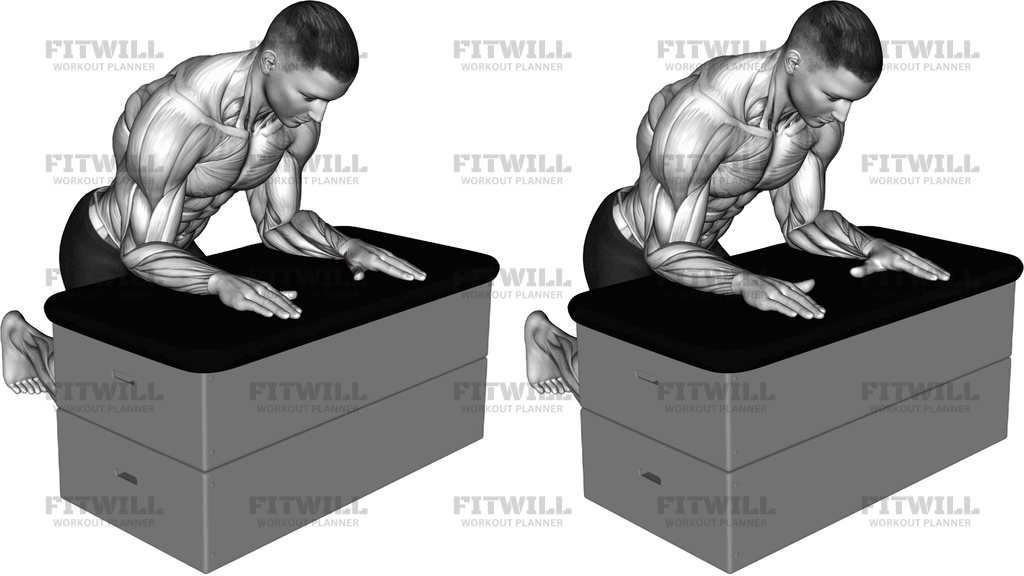
Instructions
- Kneel behind a padded box or bench tall enough that you can rest both forearms on top with your shoulders stacked over your hands.
- Place one hand flat on the padded surface, palm down, fingers together and relaxed, thumb pointing forward alongside the index finger.
- Settle a comfortable portion of your upper-body weight onto your forearms so the wrist is supported and neutral, and look down at your hand with a relaxed neck.
- Check that the whole palm and all four fingers are in contact with the surface before you start; this is your fixed base.
- Exhale and lift the thumb straight up away from the surface, leading with the pad of the thumb and keeping the fingers and palm completely still.
- Pause for one to two seconds at the top of the range, feeling the effort at the base of the thumb rather than in the wrist or fingers.
- Inhale and lower the thumb back down with control until it rests lightly beside the index finger again.
- Complete all reps on one hand, keeping the movement slow and even, then reset the palm flat and switch to the other hand.
Tips & Tricks
- If your palm tilts or your wrist rolls inward as the thumb lifts, you are losing the anchor that makes the drill work — press the palm lightly into the surface and restart with a smaller range.
- A common error is lifting the fingers along with the thumb. Watch your hand and keep the fingertips soft and in contact with the pad the entire time.
- Do not sweep the thumb out to the side or back toward the wrist; that mixes in other thumb actions. The path is straight up off the surface, away from the index finger.
- Keep the fingers limp rather than gripping the box. Tension in the fingers steals work from the thumb muscles you are targeting.
- The top of the range is only a few centimeters. Chasing extra height forces the wrist to compensate, so treat a short, clean lift as a full rep.
- Use a slow two-second lift and a two-second lower. Fast reps let momentum do the job and make it hard to feel the thumb pad working.
- If the base of the thumb cramps, shorten the top hold to under a second and rest briefly between reps; cramping is common in a muscle group that is rarely trained directly.
- Train both hands even if one thumb feels weaker, and pair the drill with a gentle thumb stretch afterward to keep the joint comfortable.
Frequently Asked Questions
Which muscles does Thumb Abduction actually train?
The primary movers are the thenar muscles at the base of the thumb, especially the abductor pollicis brevis, with the abductor pollicis longus in the forearm assisting. The wrist and forearm muscles only work to hold position.
Why kneel with forearms on a box instead of doing Thumb Abduction with the arm free?
Resting the forearms locks the wrist and shoulder in place so the thumb is the only moving joint. With a free arm, the wrist naturally rolls and tilts to help the thumb, and the isolation is lost.
What is the difference between thumb abduction and thumb extension?
Abduction lifts the thumb up and away from the palm at a right angle to it, while extension draws the thumb backward out to the side in the plane of the hand. Thumb Abduction trains the first of those two paths.
Is Thumb Abduction suitable for beginners?
Yes. The only load is the weight of the thumb itself, and the kneeling, forearm-supported setup makes it easy to watch your own hand and control the movement. Beginners should focus on keeping the palm flat rather than on range of motion.
How many reps and sets should I do?
Ten to fifteen controlled reps per hand for one to two sets is a solid starting dose. Because the load is so light, the drill can be done most days, including as a warm-up before grip or pressing work.
Can Thumb Abduction improve my grip strength?
Indirectly, yes. The thenar muscles are key contributors to pinch grip and to stabilizing the thumb around bars and handles, so strengthening them supports overall grip, though the drill itself is not a heavy grip builder.
What is the most common mistake in this exercise?
Rolling or flexing the wrist to fake a bigger thumb lift. If the palm edge or fingers rise off the surface, reduce the range until only the thumb moves.
Can I do this exercise without a box or bench?
Yes. Sitting at a table with your forearm resting on the surface and your palm flat works exactly the same way. The box simply gives a comfortable, stable height for the kneeling position.
I had a thumb injury — is Thumb Abduction safe for me?
It is often used in hand rehabilitation because the load is minimal, but you should get clearance from a doctor or hand therapist first. Once cleared, start with a short, pain-free range and no top-end holds.
Should I feel this anywhere besides the thumb?
You may feel light effort in the forearm on the thumb side and a mild stretch between the thumb and index finger. Sharp pain in the wrist or the base of the thumb is a signal to stop and reduce the range.