Bear Plank
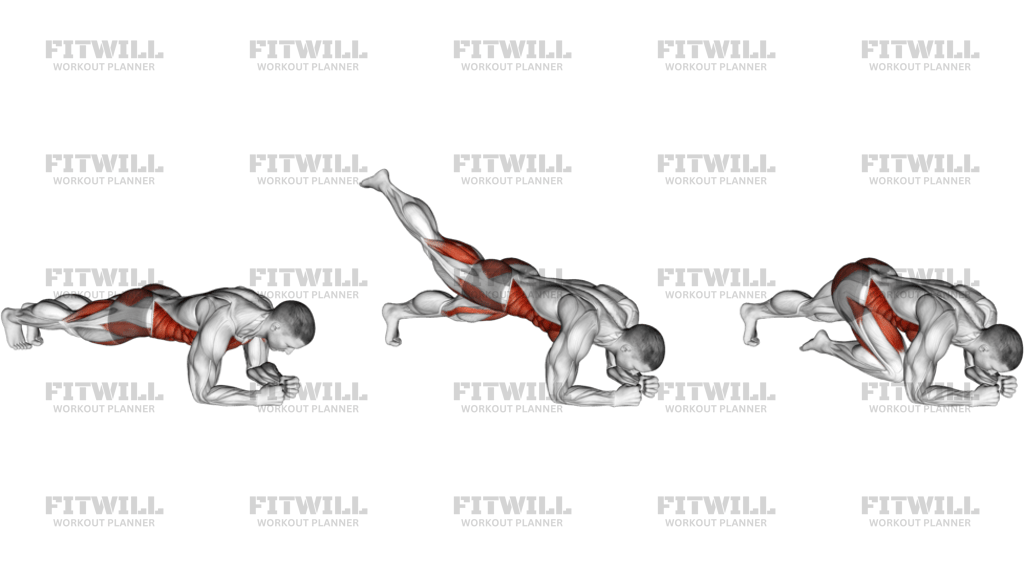
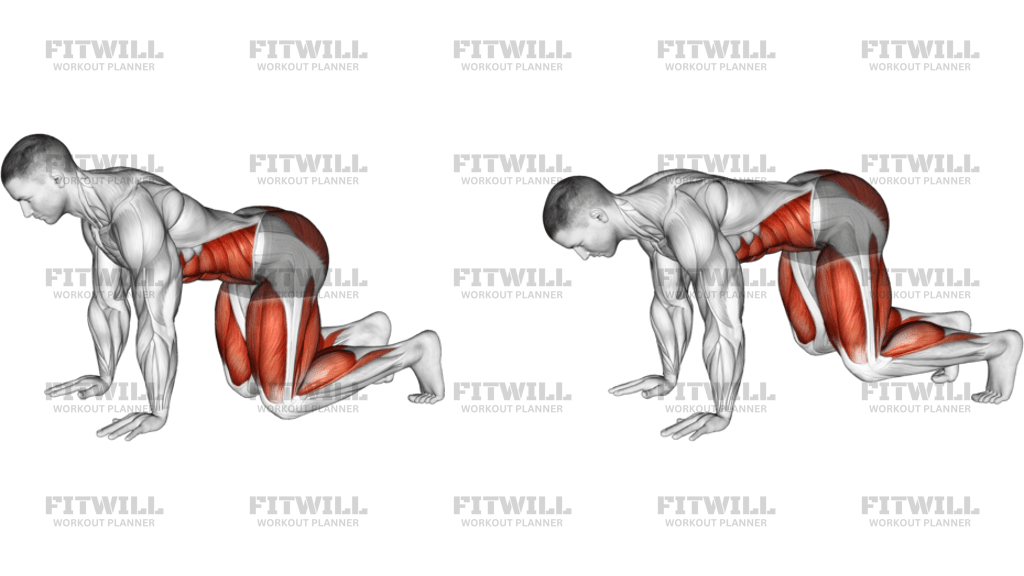
Bear Plank is a body-weight floor hold performed from hands and knees with the knees hovering just above the floor. The image shows a quadruped position with the shoulders stacked over the wrists, hips slightly lifted, knees bent, and the trunk held still rather than moving through a large range of motion. That setup makes it a strong anti-extension and anti-rotation drill for the core while also demanding shoulder stability, scapular control, and hip position awareness.
The main training value comes from holding a short, precise shape instead of chasing speed or range. When the knees float under the hips and the ribs stay down, the abs, deep core, glutes, and hip flexors have to organize the torso while the arms support body weight. Because the exercise is isometric, the goal is not to swing or shift, but to keep the spine quiet and the pressure evenly shared between the hands and the ball of the feet.
The setup matters more than it does in many other body-weight drills. Hands should be planted firmly under the shoulders, fingers spread for grip, and the knees lifted only far enough that the thighs stay parallel to the floor and the back does not sag. If the hips rise too high, the exercise turns into a partial crouch; if the hips drop, the low back starts taking over. The best repetitions look controlled from the first breath to the last.
Bear Plank fits well as a warm-up, core accessory, or between heavier lifts when you want trunk stiffness without spinal movement. Beginners can use it as a short timed hold and advanced trainees can make it harder by extending the hold, breathing more slowly, or adding alternating knee taps or shoulder taps without losing the square, quiet body position. If the shoulders, wrists, or low back lose alignment, the hold is too hard and should be shortened before form breaks down.
[ Workout Log & Planner ]
Put your next workout in Fitwill
Keep your plan and training log ready when you are.


Instructions
- Start on all fours with your hands under your shoulders, knees under your hips, and toes tucked on the floor.
- Spread your fingers and press the palms down so your shoulders are stacked directly above your wrists.
- Brace your abs, squeeze your glutes, and keep your ribs pulled down before you lift.
- Lift both knees 1 to 2 inches off the floor so the thighs stay parallel to the ground.
- Hold the bear position with a flat back and steady neck, keeping the hips level instead of piking up.
- Breathe quietly through the hold without letting the torso twist, sway, or arch.
- Maintain the hover for the planned time or reps, then lower the knees under control.
- Reset the hands, knees, and spine before starting the next hold.
Tips & Tricks
- A short hover is enough; if the knees are too high, the hips usually rise and the core work drops off.
- Keep the shoulders active by pushing the floor away instead of sinking between the shoulder blades.
- Your low back should feel braced, not compressed; if it arches, lower the knees or shorten the hold.
- Think about pulling the zipper of your ribcage toward your pelvis to stop the torso from flaring open.
- Keep the pressure balanced between both hands and both feet so one side does not take over.
- If the wrists are sensitive, turn the hands slightly out or shorten the set before discomfort builds.
- Slow nasal breaths help keep the trunk from shaking and make it easier to hold the position longer.
- Stop the set as soon as the knees drift, the hips twist, or the neck starts craning forward.
Frequently Asked Questions
What does Bear Plank train most?
It primarily trains core stiffness, with strong work from the shoulders, glutes, and hip stabilizers.
How high should my knees be in the bear hover?
Lift them just 1 to 2 inches off the floor. The goal is a quiet hover, not a high crouch.
Should my shoulders stay over my wrists?
Yes. Keeping the shoulders stacked over the wrists makes the hold more stable and keeps the load spread through the arms.
Why do my hips rise during Bear Plank?
That usually means the hold is too hard or the brace is fading. Lower the knees a little and shorten the set.
Can beginners use this exercise?
Yes. Beginners can start with 5 to 10 second holds and build up as long as the back stays flat.
What should I do if my wrists hurt in the hold?
Shorten the set, spread the fingers wider, and keep pressure through the whole palm. If needed, use an easier floor variation.
Is Bear Plank the same as a regular plank?
No. A regular plank is usually on forearms or straight arms, while Bear Plank uses a bent-knee hover that changes the lever and the core demand.
How do I progress the bear position?
Increase the hold time, slow the breathing, or add controlled knee taps or shoulder taps without letting the torso shift.