Lever Shoulder Press (Plate Loaded) (Version 3)
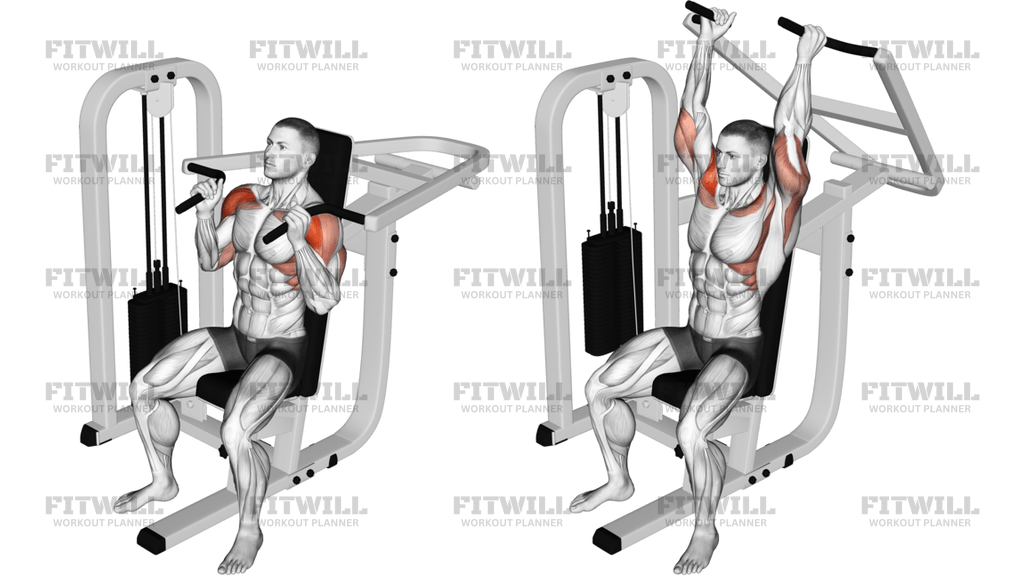
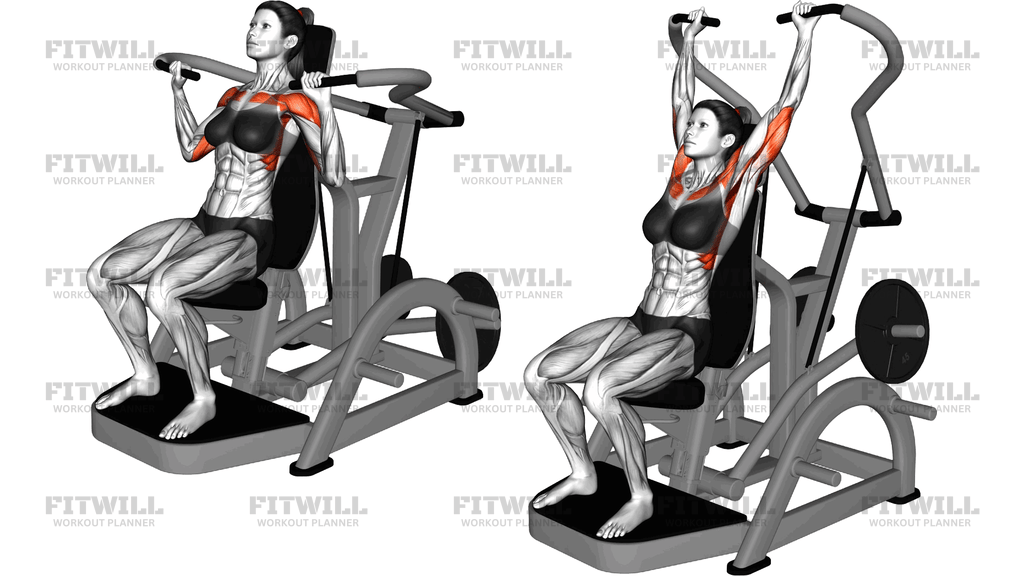
The Lever Shoulder Press (Plate Loaded) (Version 3) is a seated machine press where you drive a pair of overhead handles up along a fixed lever path, with the resistance coming from weight plates you load onto the machine's plate pegs. You sit with your back against a vertical pad, grip the handles at roughly ear or shoulder height, and press them up and slightly inward until your arms are extended overhead. Because the lever arm guides the movement, the press stays on one consistent arc from rep to rep.
This movement is a solid choice for lifters who want pressing volume on their shoulders without the balance and stabilization demands of a free-weight barbell or dumbbell press. The fixed path makes it easier to push close to failure safely, which is useful for muscle-building work, and the backrest keeps your torso from leaning back as the weight gets heavy. It also suits beginners learning what an overhead press should feel like, and experienced lifters using it as a finisher after heavier free-weight pressing.
The primary work falls on the front and side portions of the shoulder muscles, with the triceps extending the elbows to lock out each rep. The upper chest assists at the bottom of the press, and the traps help control the weight near the top. Keeping your back flat against the pad trains you to press without overarcheing your lower back, a habit that carries over to all overhead pressing.
Setup matters more on this machine than it might appear. Adjust the seat so the handles line up around shoulder height at the start position, and load plates evenly so the lever starts balanced. If the seat is too low, you start each rep with the handles behind your head; if it is too high, you lose the stretch at the bottom and shorten the rep range. Taking a minute to get the seat height right changes the whole feel of the exercise.
To execute it well, plant your feet flat, brace your trunk lightly, and press the handles up in a smooth arc without shrugging into your ears or snapping the elbows open at lockout. Lower under control until your elbows drop just below shoulder level, then start the next rep. The plate-loaded lever provides a fairly flat strength curve, so expect the effort to feel steady across the range rather than spiking at one point.
In practice, this machine works well as the main overhead press in a machine-based or home-gym routine, as a secondary pressing movement after barbell or dumbbell work, or as a way to accumulate shoulder volume when fatigue makes free weights feel risky. Keep the loads honest: if you have to rock your torso off the pad to finish a rep, the weight is past what your shoulders can control on this path.
[ Workout Log & Planner ]
Put your next workout in Fitwill
Keep your plan and training log ready when you are.


Instructions
- Sit on the machine's seat with your back, shoulders, and hips flat against the vertical back pad, and place both feet firmly on the floor.
- Adjust the seat height so the handles sit at about shoulder or ear level when your elbows are bent roughly 90 degrees.
- Load weight plates evenly onto the machine's plate pegs and secure the collar or retaining pin if the machine has one.
- Grip the two handles with a neutral-to-slightly-pronated grip, wrists stacked straight over your elbows.
- Brace your trunk gently and keep your ribcage down so your lower back stays in contact with the pad.
- Press the handles up and slightly inward along the lever's fixed arc until your arms are fully extended overhead without locking hard.
- Pause briefly at the top with your elbows just short of locked and your shoulders away from your ears.
- Lower the handles under control until your elbows drop to just below shoulder level and the plates nearly touch down.
- Exhale as you press up, inhale as you lower the handles.
- Complete all reps, then let the lever settle fully onto its rest position before releasing your grip and standing up.
Tips & Tricks
- If the handles start behind your head, the seat is too low; raise it until the handles track in front of your face at the bottom.
- Do not let your elbows flare far behind the back pad at the stretch position — stopping just below shoulder level keeps the shoulder joint in a friendlier angle.
- Keep your head neutral and look forward; craning the chin up to watch the handles usually means the load is too heavy.
- Avoid shrugging your shoulders toward your ears as you press; think of pushing the handles up while keeping your upper traps relaxed.
- The lever's fixed path removes the need to stabilize side to side, so if you feel yourself twisting, check that both plates are loaded evenly and grip both handles with equal pressure.
- Lower the weight slower than you press it. Letting the lever drop fast at the bottom is the most common way lifters get sloppy on this machine.
- If your lower back lifts off the pad at lockout, reduce the weight or consciously exhale as you finish each press to keep the ribcage down.
- Rest about a second at the bottom rather than bouncing the plates off the stack pegs; the stretch reflex you gain is not worth the joint stress.
Frequently Asked Questions
Which muscles does the Lever Shoulder Press (Plate Loaded) work?
The front and side shoulders do most of the pressing, with the triceps straightening the elbows to lockout. The upper chest and traps assist, especially near the bottom and top of the arc.
Is this machine press a good starting point for beginners who have never pressed overhead?
Yes. The fixed lever path teaches the pressing arc without requiring you to balance a barbell or control two independent dumbbells, and you can bail safely by simply lowering the lever. Start light to learn the seat height and range before adding plates.
How high should I set the seat for the Lever Shoulder Press (Plate Loaded)?
Set it so the handles line up at about shoulder to ear height with your elbows bent around 90 degrees and slightly in front of your torso. If the handles start behind your head, the seat is too low.
Should I lock my elbows out at the top of each rep?
Press to full extension but avoid snapping the elbows into a hard lock, especially under heavy plates. A brief controlled pause just short of full lock keeps tension on the shoulders and spares the elbow joints.
Why does my lower back arch off the pad when I press heavy?
Heavy overhead loads tend to pull the ribcage up and the spine into extension. Exhale during the press, brace your trunk before each rep, and drop the weight if your hips or lower back keep lifting off the pad.
Can I press one arm at a time on this lever machine?
Some plate-loaded lever presses allow unilateral pressing, but check that the lever is designed for it and that the machine stays stable. If the machine rocks or the plate horn lifts, press both handles together instead.
What can I use if my gym has no plate-loaded lever press?
A seated dumbbell overhead press is the closest substitute, followed by a Smith machine press or a pin-selectorized shoulder press machine. All three train the same pressing pattern with a supported back.
How does this machine press differ from a standing barbell overhead press?
The lever press removes the balance and core-stabilization demands of standing pressing and fixes the bar path for you, so you can push closer to failure in relative safety. The barbell press trains more total-body stability, so many lifters use both.
Is it safe for the shoulders if I feel a pinch at the bottom of the press?
A pinch at the deep stretch usually means the elbows are dropping too far behind the torso for your current mobility. Reduce the range so your elbows stop around shoulder level, lower the weight, and warm up thoroughly before pressing.