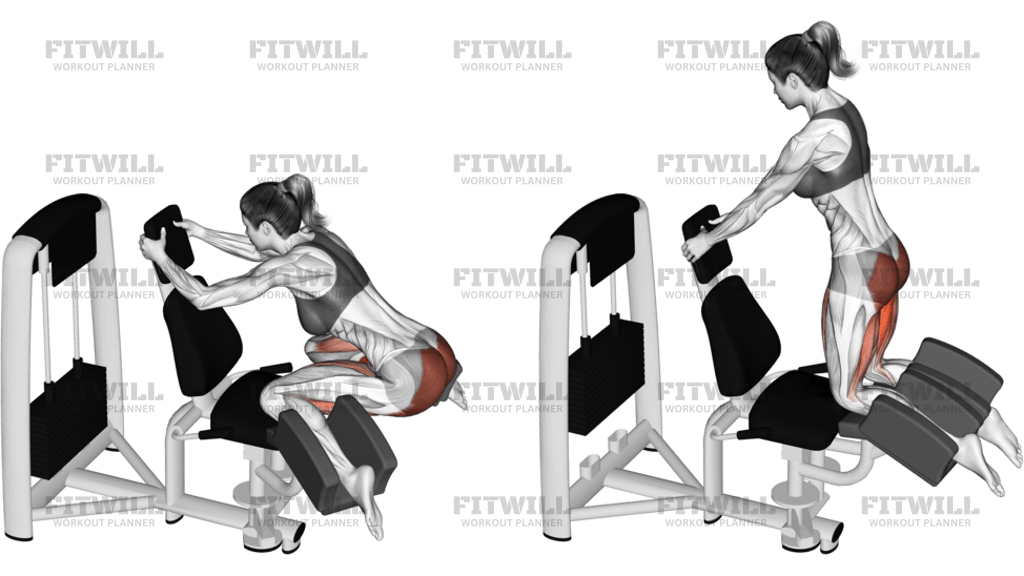
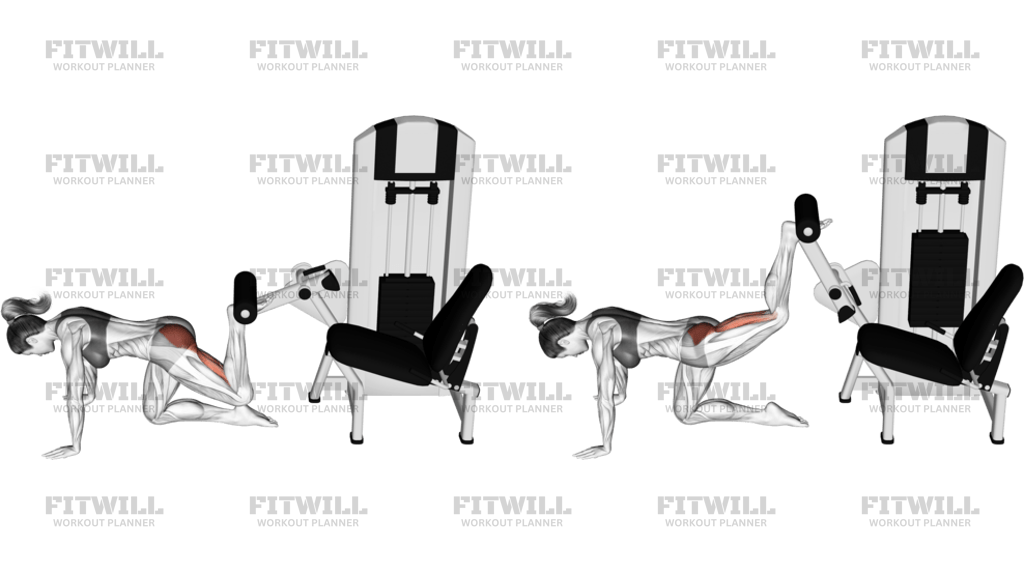
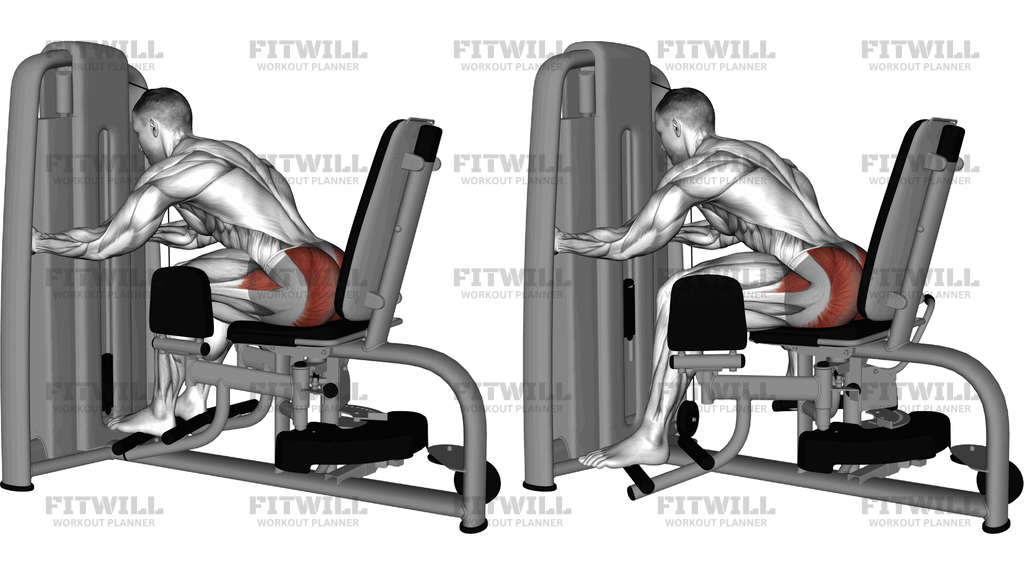
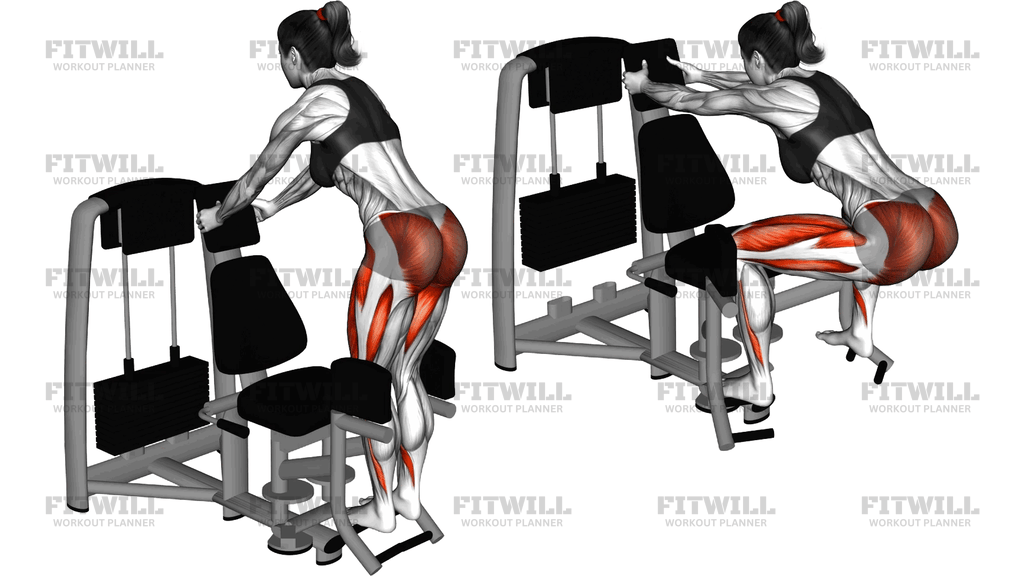
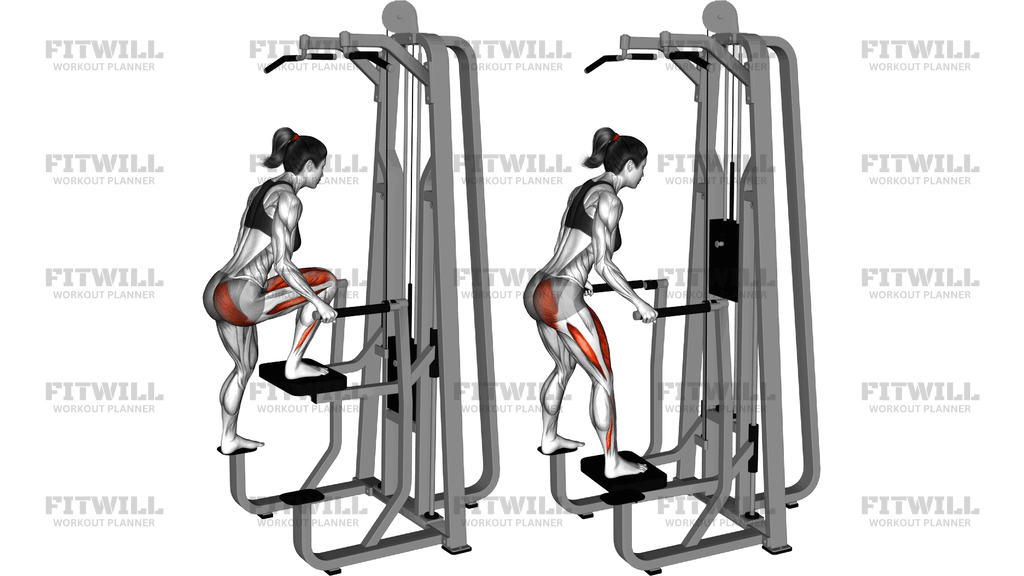
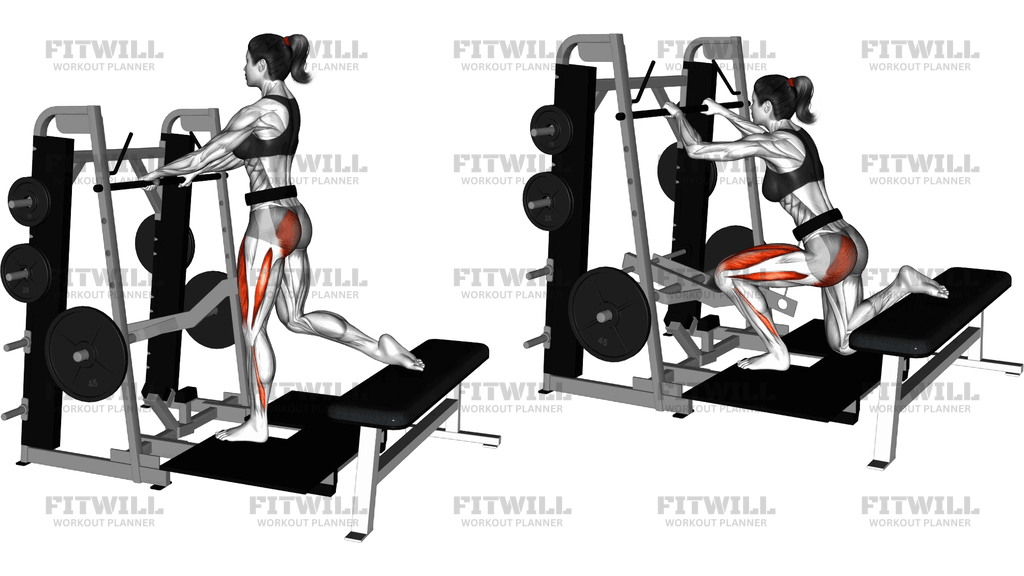
Lever Single Leg Hip Thrust
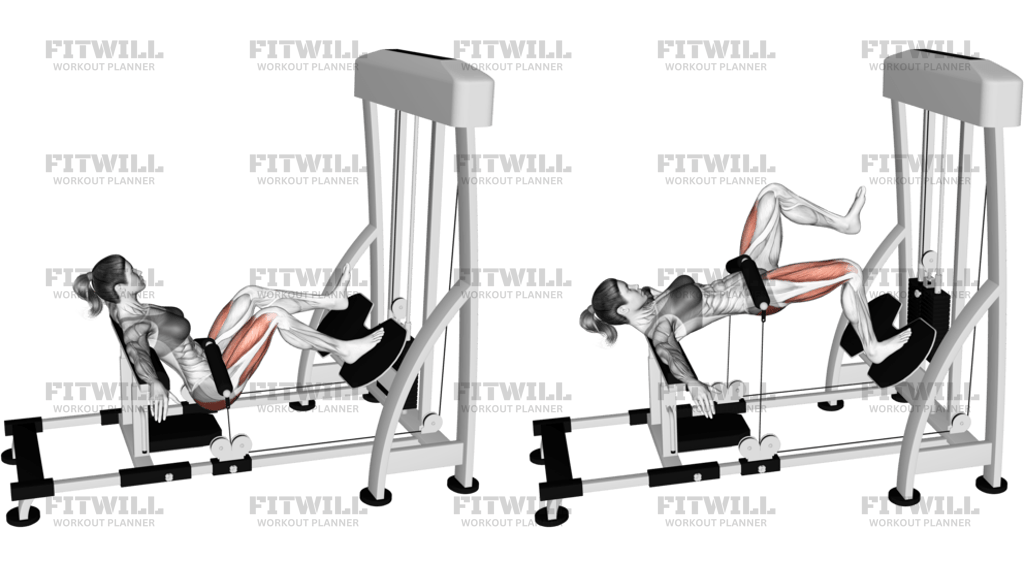
Lever Single Leg Hip Thrust is a unilateral glute exercise performed on a leverage machine with the upper back supported and one foot driving the machine while the other leg stays lifted. It is built to train hip extension hard without requiring you to balance a barbell across your hips, so the machine can make it easier to focus on the working side and keep the torso stable. The single-leg setup also exposes side-to-side differences that can be hidden in bilateral hip thrusts.
The main target is the glutes, especially the gluteus maximus, with the hamstrings helping extend the hip and the core working to keep the pelvis from rotating. Because only one leg is producing force, the exercise asks for more control from the trunk and pelvis than a regular two-leg thrust. That makes Lever Single Leg Hip Thrust useful when you want glute strength, hip stability, and cleaner unilateral control in the same movement.
The setup matters a lot. Position your shoulders and upper back against the support, place the working foot on the platform so you can drive through the heel, and keep the other leg bent and lifted so it does not help. If the foot is too close, the knee takes over; if it is too far away, the low back often starts to arch to finish the rep. The goal is to feel the working glute load first, then move the machine through that hip extension without twisting off to one side.
Each rep should rise from a braced, controlled bottom position. Let the hips drop only as far as you can maintain a square pelvis, then press the platform away until the torso and thigh finish in a strong line. At the top, squeeze the glute without throwing the ribs up or overextending the lower back. The descent should stay smooth and deliberate so the working side keeps tension instead of bouncing out of the bottom.
Lever Single Leg Hip Thrust fits well in lower-body sessions, glute-focused blocks, and accessory work after heavier compound lifts. It is also a good choice when you want to reduce spinal loading compared with some barbell variations while still challenging the hips hard. Start lighter than you think, keep the machine centered under your hips, and switch sides with the same range and tempo so one leg does not become the dominant driver.
[ Workout Log & Planner ]
Put your next workout in Fitwill
Keep your plan and training log ready when you are.


Instructions
- Sit into the leverage machine with your upper back and shoulders braced against the support pad and the hip belt or pad resting across your hips.
- Plant the working foot on the platform so your heel can drive the motion, then bend and lift the other leg so it stays out of the way.
- Grab the handles or side supports and square your hips before you start the first rep.
- Brace your ribs down and let the working hip drop until you feel a strong stretch in the glute without losing position.
- Press through the heel and midfoot of the working leg to drive the platform away and lift your hips.
- Keep the lifted leg quiet and the pelvis level as you rise; do not let the body twist toward the working side.
- Finish the rep when your torso and working thigh line up, then squeeze the glute without arching your lower back.
- Lower the machine under control until you are back in the stretched starting position, then repeat for the planned reps before switching sides.
Tips & Tricks
- Set the working foot far enough away that your shin is close to vertical at the top; too close shifts the effort into the knee, too far turns the rep into a low-back compensation.
- Keep the lifted leg bent and quiet. If it starts pushing or swinging, the non-working side is stealing the rep.
- Think about tucking the pelvis slightly as you finish each rep so the glutes finish the thrust instead of the lumbar spine.
- Use a slower lowering than lifting. The bottom position is where a rushed return usually causes the hips to drift or the belt to slide.
- Let the hips come up only until the torso and thigh are in line; extra height usually means rib flare and lower-back extension, not more glute work.
- If the machine has a moving belt or hip pad, keep your hips centered on it so the load tracks straight instead of pulling you sideways.
- Start lighter than your bilateral hip thrust load. Single-leg leverage work is more demanding even when the weight stack looks modest.
- Switch sides with the same rep count and tempo. Chasing fatigue on one side can make the stronger side hide the imbalance.
Frequently Asked Questions
What muscles does Lever Single Leg Hip Thrust work?
The glutes do most of the work, with the hamstrings helping extend the hip and the core stabilizing the pelvis so you do not twist through the machine.
How should my foot sit on the platform?
Place the working foot so you can drive through the heel and midfoot, with the shin close to vertical near the top. That usually gives the glute the best leverage.
Why keep the other leg lifted during Lever Single Leg Hip Thrust?
Keeping the free leg lifted prevents it from helping the rep and makes the working side do the full hip extension. It also makes pelvic control more obvious.
Can beginners do Lever Single Leg Hip Thrust?
Yes, but start light and keep the range short enough to avoid twisting or overextending the lower back. The machine support makes it easier to learn than a free barbell version.
What is the most common form mistake?
Most people either place the foot too close and feel the knees take over, or they arch the lower back at the top. Both usually mean the glutes are no longer finishing the rep.
Should I pause at the top of each rep?
A brief squeeze at the top is useful if you can keep the pelvis level. The pause should come from the glutes, not from leaning back harder into the pad.
What should I do if I feel it in my lower back?
Shorten the range, move the working foot a little farther away, and stop the rep before the ribs flare up. If the back still takes over, reduce the load and reset the setup.
Can I use this instead of a barbell single-leg hip thrust?
Yes. The lever machine is a solid substitute when you want the same unilateral glute focus with more built-in support and less setup friction.