Barbell Fat Bar Reverse Curl
The Barbell Fat Bar Reverse Curl is a standing curl performed with an overhand, palms-down grip on a thicker-than-standard bar. Instead of letting the biceps do most of the work as in a regular underhand curl, the reversed grip shifts the emphasis to the brachioradialis along the top of the forearm, while the thick handle forces the hands and forearms to work overtime just to hold onto the bar. The result is a movement that builds the forearm area from the elbow down and develops real crushing grip strength at the same time.
This lift suits anyone whose grip gives out before their back or pulling muscles do — deadlifters, rowers, and climbers all tend to notice the carryover quickly. It is also a smart choice for lifters who want the forearms to look and feel more complete, since the brachioradialis is the muscle that gives the forearm its thickness when viewed from the side or from behind.
The fat bar setup is the key detail. A thicker handle reduces how much force your fingers and thumb can produce, so the forearm flexors and grip muscles stay under tension the entire set. Combined with the reversed grip, which puts the wrist in a slightly extended position and takes the biceps out of a strong line of pull, the exercise becomes a forearm and grip builder first and a biceps exercise second.
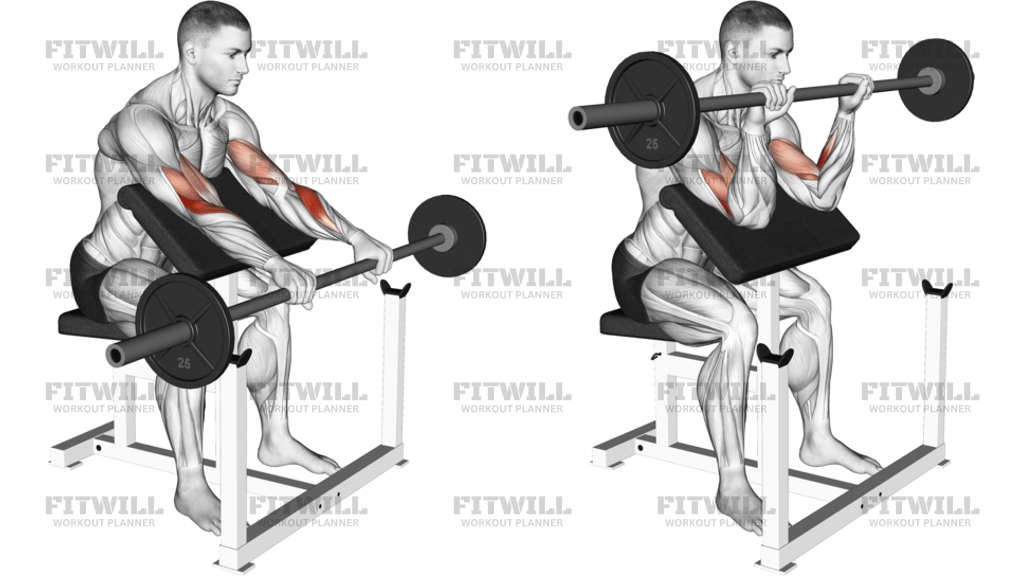
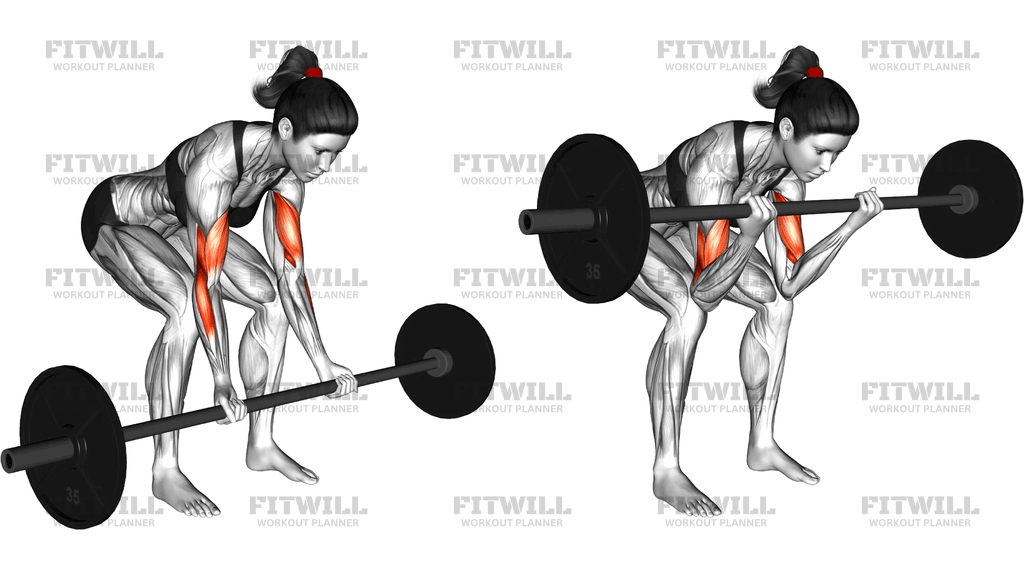
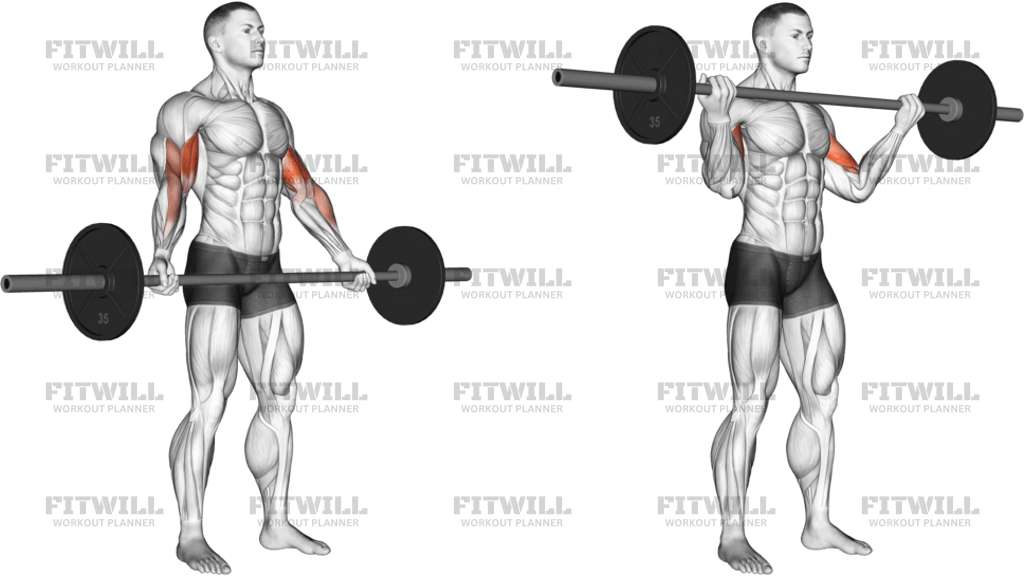
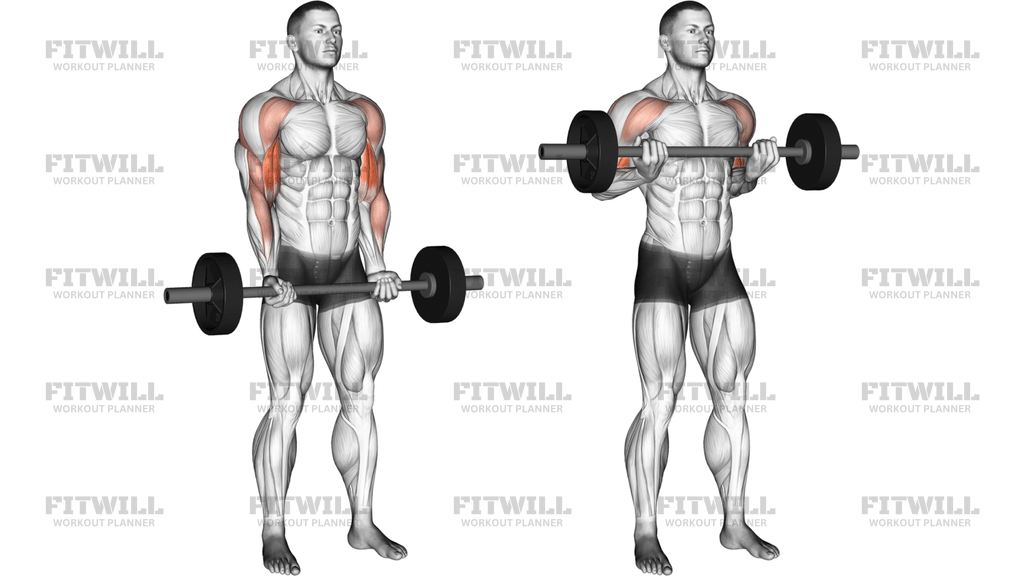
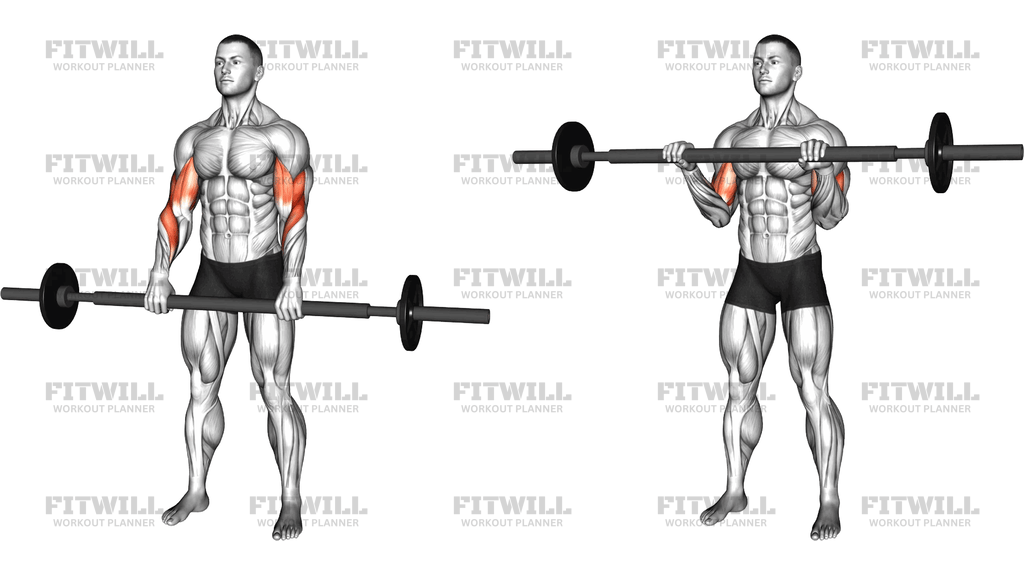
Execution is simple but unforgiving. Stand tall with the bar held at arm's length in front of your thighs, hands roughly shoulder width and palms facing down. Curl the bar up in a smooth arc toward your shoulders without swinging your torso or letting your elbows drift forward, pause briefly at the top, then lower the bar under control back to the start. Because the grip is the limiting factor, most lifters should use noticeably less weight here than on a normal barbell curl.
Common use cases include finisher work at the end of a pull or arm session, dedicated grip blocks, and as a substitute for standard reverse curls when a thick bar is available. Keep the reps moderate and the form strict — the moment the wrists collapse or the body starts rocking, the benefit shifts away from the forearms and toward momentum.
[ Workout Log & Planner ]
Put your next workout in Fitwill
Keep your plan and training log ready when you are.


Instructions
- Load a fat barbell with a light to moderate weight and set it on the floor or in a rack at about hip height.
- Stand with your feet hip-width apart, then take an overhand grip on the bar with palms facing down, hands about shoulder width and thumbs wrapped fully around the handle.
- Stand up straight with the bar resting against the front of your thighs, arms fully extended, and your elbows tucked in close to your sides.
- Brace your core, pull your shoulders back slightly, and keep your chest up so your torso stays still throughout the set.
- Curl the bar up in a smooth arc toward your shoulders, keeping your upper arms vertical and your elbows pinned at your sides.
- At the top, the bar should sit just below shoulder height with your palms facing forward and down; hold that position for a brief pause.
- Lower the bar slowly back down along the same path until your arms are fully extended and the bar touches near your thighs again.
- Exhale as you curl the bar up and inhale as you lower it, keeping your breathing steady.
- Reset your grip on the thick handle at the bottom of each rep if it has started to slip, then begin the next repetition.
- Once the set is finished, return the bar to the rack or set it down on the floor with a flat back rather than rounding over it.
Tips & Tricks
- Start much lighter than your normal curl weight — the thick handle and reversed grip usually cut usable load by 30 to 50 percent, and ego lifting here shows up as wrist collapse.
- If your wrists ache at the top of the rep, widen or narrow your grip slightly or use a straight standard-diameter bar; forcing a cramped wrist position under load is the most common complaint with this movement.
- Watch for elbows drifting forward as the bar rises. When the elbows travel toward the front of the body, the shoulders take over — keep them glued to your ribs so the forearms do the work.
- Do not lean back to finish a rep. If your torso starts rocking, the set is over; grip-limited exercises reward controlled reps, not body English.
- Squeeze the bar hard with your whole hand, not just your fingers. Active gripping on the fat handle is part of the training effect and also protects against the bar rolling out of a loose grip.
- Keep the descent slow, around two to three seconds. The lowering phase is where the brachioradialis gets strong eccentric tension, and dropping the bar wastes it.
- Chalk or a lifting grip can help once your hands sweat; a slipping grip on a fat bar turns the set into a partial rather than a curl.
- Place this exercise at the end of your session. Doing it first will fry your grip and weaken every pull that follows.
- If a fat bar is unavailable, a fat grip adapter on a standard barbell gives a similar challenge, though the handle will not be quite as thick.
Frequently Asked Questions
What muscles does the Barbell Fat Bar Reverse Curl work?
The primary mover is the brachioradialis on the top of the forearm, with strong support from the forearm flexors and grip muscles due to the thick handle. The biceps assist, but they are in a weaker position because of the overhand grip.
Why use a fat bar instead of a regular barbell for reverse curls?
The thicker handle demands much more from your fingers, thumbs, and forearm flexors just to hold the bar, so every rep trains grip strength on top of elbow flexion. It turns an already forearm-heavy curl into a grip builder as well.
Is the Barbell Fat Bar Reverse Curl suitable for beginners?
Yes, as long as beginners start very light and focus on keeping the wrists straight and the elbows fixed. Learning strict technique with a light bar first prevents the bad habits of swinging and wrist collapse.
Why do my wrists hurt during reverse curls?
The overhand grip places the wrists in a partially extended position, and too much weight or too narrow a grip can strain them. Reduce the load, adjust hand width slightly, and stop the set if sharp pain appears rather than pushing through it.
How heavy should I go on the Barbell Fat Bar Reverse Curl?
Expect to use well less than your regular barbell curl weight, since the reversed grip and thick handle are both limiting factors. Pick a load you can curl for 8 to 12 strict reps without your torso leaning back.
What is the most common mistake with this exercise?
Swinging the torso and letting the elbows slide forward to heave the bar up. Both mistakes shift work away from the forearms, so keep your back upright, your core braced, and your elbows pinned to your sides.
Can I do reverse curls without a fat bar?
Yes — a standard barbell, dumbbells, an EZ bar, or a cable with a straight bar all allow the same overhand curling motion. You lose the thick-grip challenge, but the brachioradialis still works hard.
Where should I put this exercise in my workout?
Treat it as accessory or finisher work after your main pulls, rows, or presses. Because it heavily taxes the grip, doing it first would compromise everything that comes after it.
How many sets and reps should I do?
Two to four sets of 8 to 15 controlled reps works well for most lifters. Because the grip fatigues quickly, prioritize clean reps over chasing heavy loads.