Lever Isometric Squat Hip Abduction
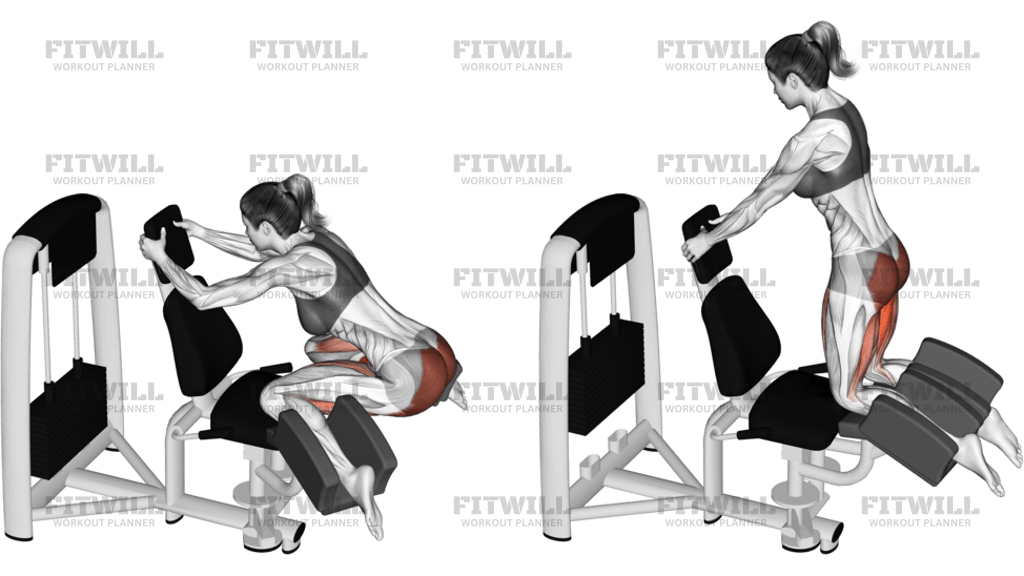
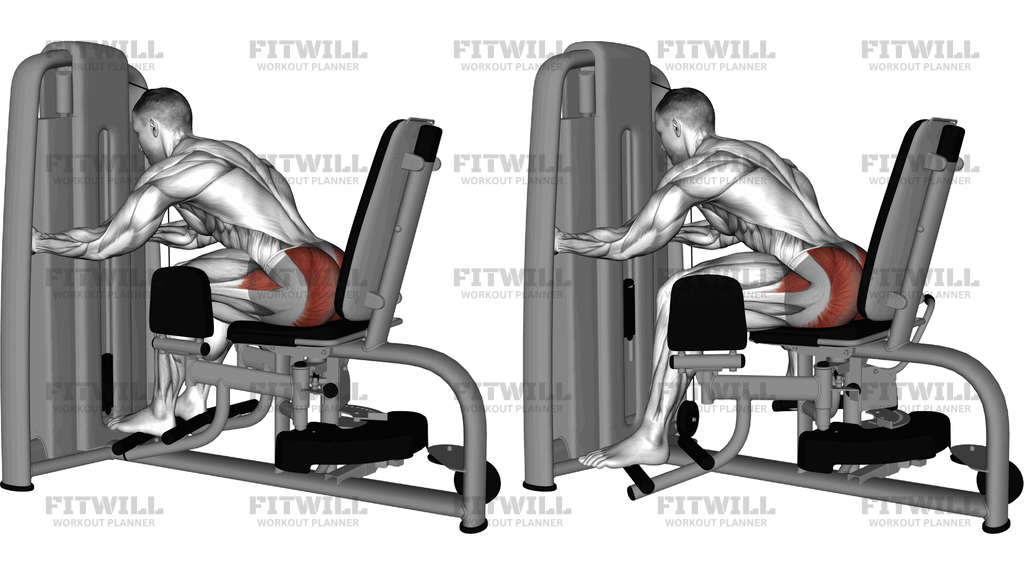
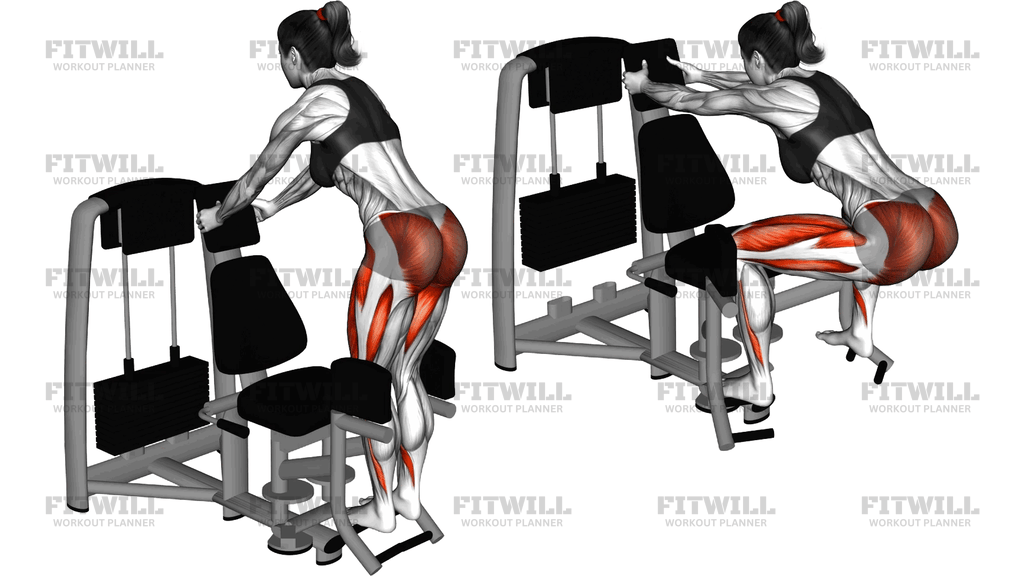
The Lever Isometric Squat Hip Abduction is a machine-based hip exercise performed on a standing leverage abduction station. You face the machine, grip the vertical handles in front of you, lean your torso forward, and lower into a partial squat with your feet on the platforms and the padded arms braced against the outside of your thighs. From that held squat position, you press your thighs outward against the pad resistance, working the hip abductors while your legs and trunk hold a static squat under load.
This movement primarily targets the gluteus medius and other outer-hip abductors, with strong involvement from the gluteus maximus as the hip extends and stabilizes in the squat position. Because you hold a bent-knee stance the entire time, your quadriceps work isometrically to maintain depth, and your trunk stabilizers keep your torso from collapsing as you push. That combination makes it a two-for-one exercise: abduction strength and squat-position endurance in the same set.
It suits lifters who want to build hip stability for squats, running, and change-of-direction work, as well as anyone rehabilitating or prehabbing the outer hip after their provider has cleared them for loaded work. The forward-leaning torso and handle support let you load the hips hard without loading the spine the way a barbell squat would, which is helpful for people managing lower-back fatigue between heavy squat sessions.
Setup quality determines everything here. The pad needs to sit on the outside of the thigh just above the knee, your feet need to be planted flat on the platforms, and your squat depth needs to be consistent before you start pressing. If your stance is too tall or too deep, the resistance arm changes and your abductors either get shortchanged or overloaded at an awkward angle.
To execute it well, brace your trunk, keep your chest angled down toward the handles, and drive your knees and thighs outward against the pads rather than simply swinging the legs. Press to a firm end range, hold briefly if you are training isometrically, then control the legs back in without letting the weight stack slam. Keep the squat depth frozen; the moment your hips rise or drop mid-set, the exercise stops being an isometric squat and becomes something less specific.
You will see this movement used as an accessory after squats, as a glute medius builder in lower-body days, and in warm-up blocks where athletes want to wake up the outer hips before heavier leg training. Rep ranges tend to sit higher than main lifts, and paused or held reps are common because the abductors respond well to time under tension.
[ Workout Log & Planner ]
Put your next workout in Fitwill
Keep your plan and training log ready when you are.


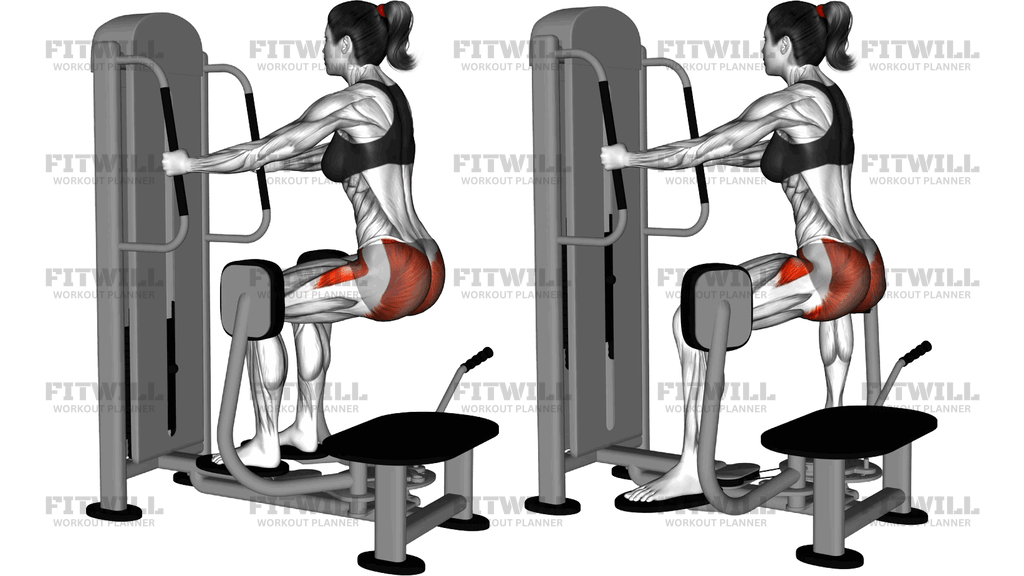
Instructions
- Stand facing the leverage machine and grip the two vertical handles with your arms extended in front of you.
- Step your feet onto the foot platforms and lean your torso forward so your upper body is supported through your arms and shoulders.
- Position the padded arms against the outside of both thighs, just above the knees, and check that both feet are flat and evenly placed.
- Lower your hips into a partial squat with your knees tracking over your toes, and hold this depth as your working position.
- Brace your trunk and keep your weight spread across your whole foot rather than rocking onto your toes or heels.
- Press both thighs outward against the pads, pushing your knees away from each other while your torso and squat depth stay unchanged.
- Squeeze the outer hips at the widest point of the press, pausing for a beat if you are holding isometric reps.
- Slowly resist the pads as they draw your legs back toward the start position, keeping tension instead of letting the machine collapse your knees inward.
- Exhale as you press out and inhale as you return, keeping your breathing steady throughout the squat hold.
- Finish the set by letting the pads return fully, standing up out of the squat, and stepping off the platforms with control.
Tips & Tricks
- The most common error is letting squat depth drift. If your hips rise as you press out, you are unloading the isometric squat; pick a depth you can hold for every rep and reset between reps if needed.
- Pad placement too low toward the knee turns this into a knee-dominant press and can strain the joint. Keep the pads on the meat of the outer thigh above the knee.
- Do not flare your lower back or arch to generate force. The forward lean against the handles should come from your torso braced, not from hinging and snapping your spine in and out of position.
- If your heels lift off the platforms during the press, your stance is too narrow or the press is too aggressive. Widen your feet slightly and push through the whole foot.
- Control the return. Letting the pads snap your knees inward defeats the abduction work and gives the outer hips no eccentric loading.
- Keep your knees pressing in line with your feet rather than caving inward between reps; the machine should never do the abducting for you on the way back.
- Start lighter than you think. The gluteus medius is smaller than the gluteus maximus, and cranking heavy weight here usually produces hip hiking and shrugging instead of abduction.
- Watch for hip hiking, where one side of your pelvis lifts as you press. Fix it by gripping the handles firmly and keeping even pressure through both arms and both feet.
Frequently Asked Questions
Which muscles does the Lever Isometric Squat Hip Abduction work?
The outer hip abductors, mainly the gluteus medius, are the prime movers, with the gluteus maximus assisting as you press. Your quads and trunk also work isometrically to hold the squat position throughout the set.
Why does this exercise hold a squat position instead of standing upright?
Holding the squat keeps constant tension on the glutes and quads and trains hip stability in a bent-knee position that carries over to squatting, running, and lateral movement. It also prevents you from using momentum from an upright stance.
Is the Lever Isometric Squat Hip Abduction suitable for beginners?
Yes, as long as the weight is kept light and depth is modest at first. Beginners should prioritize holding a steady squat and feeling the outer hips work before adding load.
How deep should my squat be on the Lever Isometric Squat Hip Abduction?
A partial squat with thighs roughly parallel to a comfortable quarter-to-half depth works well for most people. Choose the depth you can hold without your hips rising or your lower back rounding, and keep it identical for every rep.
Should I do dynamic reps or hold the abduction isometrically?
Both options work. Dynamic reps build strength through the range, while pressing out and holding for five to ten seconds emphasizes isometric hip stability. You can also mix them, pressing out and pausing briefly on every rep.
What is the most common mistake on this machine?
Losing squat depth or letting the pads snap the legs back together between reps. Both remove tension from the abductors and turn the set into a partial-effort swing.
What can I substitute if my gym has no leverage abduction machine?
Standing or seated cable hip abduction, banded lateral walks, or banded abduction holds in a partial squat position all train the same outer-hip muscles with similar intent.
Where exactly should the pads sit on my legs?
Just above the knees on the outside of the thighs. Too low stresses the knee joint, and too high toward the hip shortens the resistance arm and reduces the challenge.
Is this exercise safe for the knees?
With the pads correctly placed, a moderate squat depth, and controlled reps, the knee joint is supported rather than stressed. Stop and reduce range or load if you feel pinching at the front of the knee.
How many reps and sets should I use for the Lever Isometric Squat Hip Abduction?
Two to four sets of ten to fifteen controlled reps, or five to eight isometric holds of five to ten seconds, fit most programs. Treat it as an accessory, so place it after your main lower-body lifts.