Lever Seated Leaning Forward Hip Abduction
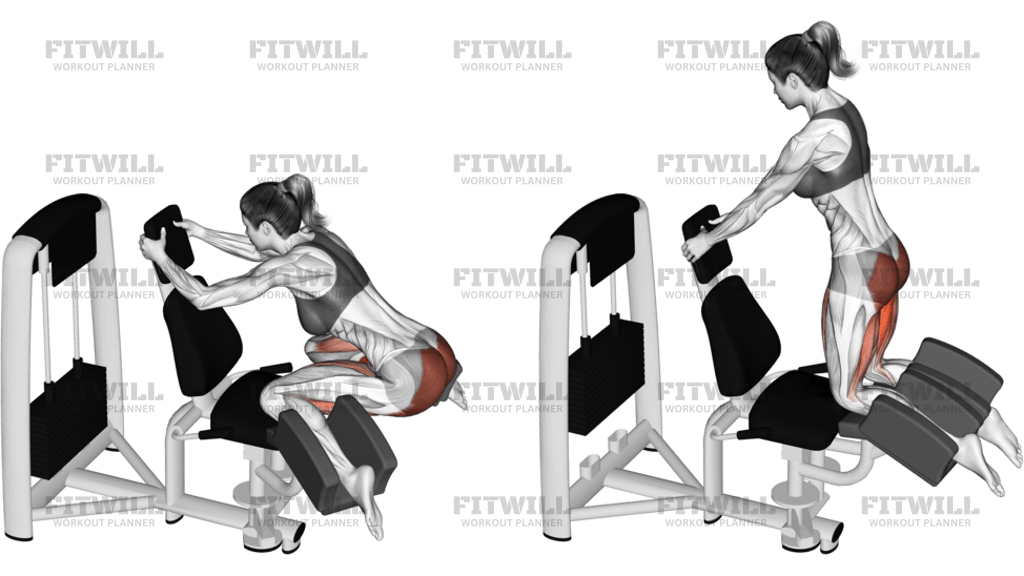
The Lever Seated Leaning Forward Hip Abduction is a machine-based movement performed on a leverage hip abduction station with the torso pitched forward over the thighs. Instead of sitting upright as in a standard seated abduction exercise, you hinge at the hips and grip the front of the machine for support, which changes the line of pull on the working hip muscles. From that forward-leaning position, you press your knees or legs outward against the machine's resistance arms and control them back in.
Leaning forward tilts the pelvis and shifts a large share of the workload toward the gluteus medius and the upper fibers of the gluteus maximus, the muscles responsible for pulling the thigh away from the midline. Many lifters find they feel this position more directly in the side of the hip than the upright version, where the hip flexors and other nearby muscles can dominate. The secondary work comes from stabilizers around the pelvis and lower back that hold your torso steady while the legs move.
This exercise suits anyone building balanced hip strength: lifters who want fuller glute development, runners and field-sport athletes who need strong hip stabilizers for single-leg control, and people rehabilitating or bulletproofing the hips against the demands of squatting, lunging, and running. Because the machine fixes the movement path and supports the upper body, it is approachable for beginners while still allowing experienced lifters to load meaningfully.
Setup quality determines whether you actually train the hips or just slide around on the seat. Position the leg pads against the outer thighs just above the knees, plant your feet firmly on the foot rests, and commit to the forward lean with a neutral spine rather than a rounded back. If the pads sit too low toward the calves or too high toward the hip crease, the leverage changes and the target muscles lose their advantage.
To perform it well, think of pushing the knees apart by squeezing the sides of the hips, pausing briefly at the widest point, then resisting the weight on the way back in rather than letting the arms snap shut. Keep the movement in a controlled range where your seat and torso stay planted. If your body rocks or lifts off the pad, the load is too heavy or the range is too wide.
Use the Lever Seated Leaning Forward Hip Abduction as an accessory after your main lower-body lifts, typically for sets of 10 to 20 controlled reps. It pairs naturally with squats, hip thrusts, and lunges, covering the outward hip movement those patterns do not train directly.
[ Workout Log & Planner ]
Put your next workout in Fitwill
Keep your plan and training log ready when you are.


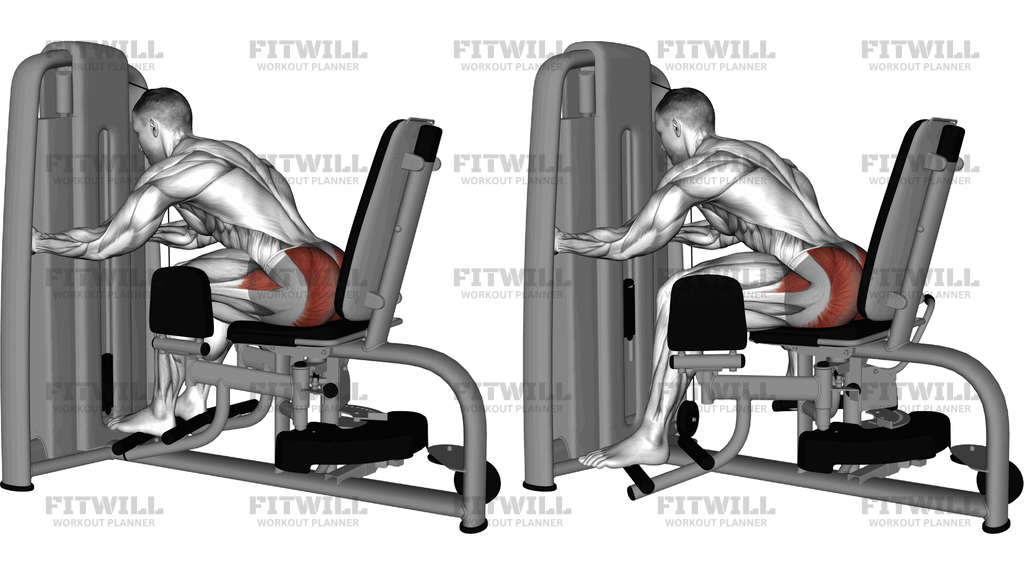
Instructions
- Sit on the leverage abduction machine and slide your hips fully back into the seat so your pelvis is supported by the back pad.
- Grip the front handles of the machine and lean your torso forward until your chest is over your thighs, keeping your back flat rather than rounded.
- Place the outer edge of your knees or lower thighs against the resistance pads and rest your feet flat on the foot rests, roughly hip-width apart.
- Brace your abdominal muscles to lock the forward-leaning torso in place before the set begins.
- Press your knees outward against the pads by squeezing the sides of your glutes, letting the legs swing away from the midline.
- Hold the widest position for a moment without flaring your lower back or lifting your seat off the bench.
- Lower the legs back together under slow control, stopping just before the weight stack or resistance arm bottoms out.
- Exhale as you push the legs out and inhale as they return inward.
- Complete your reps, then release the handles carefully and let the resistance arm settle before standing off the machine.
Tips & Tricks
- If you feel the work in the front of the thighs instead of the side of the hips, slide the pads slightly higher on the thigh and shorten the range.
- Do not round your upper back to reach the handles; hinge from the hips so the lean comes from the pelvis, not a slouched spine.
- A common mistake is swinging the legs out with momentum and letting them slam back together. The return under tension is where much of the hip work happens.
- Keep your chest close to the thighs throughout the set. If you rise upright as you fatigue, the lean that targets the upper glutes is lost.
- Grip the handles to stabilize your torso, but avoid pulling on them to force the legs outward, which shifts effort away from the hips.
- Stop the legs about a hand's width apart at the bottom rather than letting the pads touch, so tension stays on the glutes between reps.
- Choose a load that lets you pause at the widest point. If the machine's cam clanks or your body rocks, reduce the weight.
- Push evenly with both legs. Favoring one side usually means the seat or pads are not centered, or one hip is stiffer than the other.
Frequently Asked Questions
Which muscles does the Lever Seated Leaning Forward Hip Abduction work?
It primarily targets the gluteus medius and upper gluteus maximus, which pull the thighs outward. The tensor fasciae latae and deep pelvic stabilizers assist, while your core and lower back hold the forward-leaning torso steady.
Why lean forward instead of sitting upright like on a normal abduction machine?
The forward lean changes the angle at which the thigh moves relative to the pelvis, which many lifters feel more strongly in the upper glutes and outer hips. The upright position can let the hip flexors and other muscles take over.
Is this exercise suitable for beginners?
Yes. The machine guides the arc of movement and supports your upper body, so beginners only need to learn the forward-lean setup and a controlled tempo before adding meaningful load.
Where should the leg pads sit on my legs?
Place them against the outer thigh just above the knee. Pads positioned toward the calf reduce leverage on the hip, and pads too close to the hip crease can pinch or shift the emphasis.
How many reps should I use?
Hip abduction responds well to moderate loads and higher volumes, so sets of 10 to 20 controlled reps with a brief pause at the widest point work well as an accessory after squats or hip thrusts.
My lower back aches when I lean forward. What should I fix?
You are likely rounding your spine instead of hinging at the hips. Push your hips back into the seat, keep a neutral spine, and reduce the depth of the lean until you can hold it without discomfort.
Can I substitute anything if my gym has no leverage abduction machine?
Seated cable hip abductions with an ankle strap, banded seated abductions, or side-lying leg raises with a mini band train the same outward hip motion with lighter resistance.
Should my feet stay planted during the movement?
Yes. Keep your feet flat and fixed on the rests so the motion comes purely from the hip joints. Lifting or sliding the feet means you are driving with the legs rather than abducting at the hips.
Is it safe to do every training day?
The hip abductors recover quickly compared to large compound lifts, so two to four sessions per week is reasonable. If the outer hips feel persistently sore, reduce frequency or load.