Band Wrist Curl
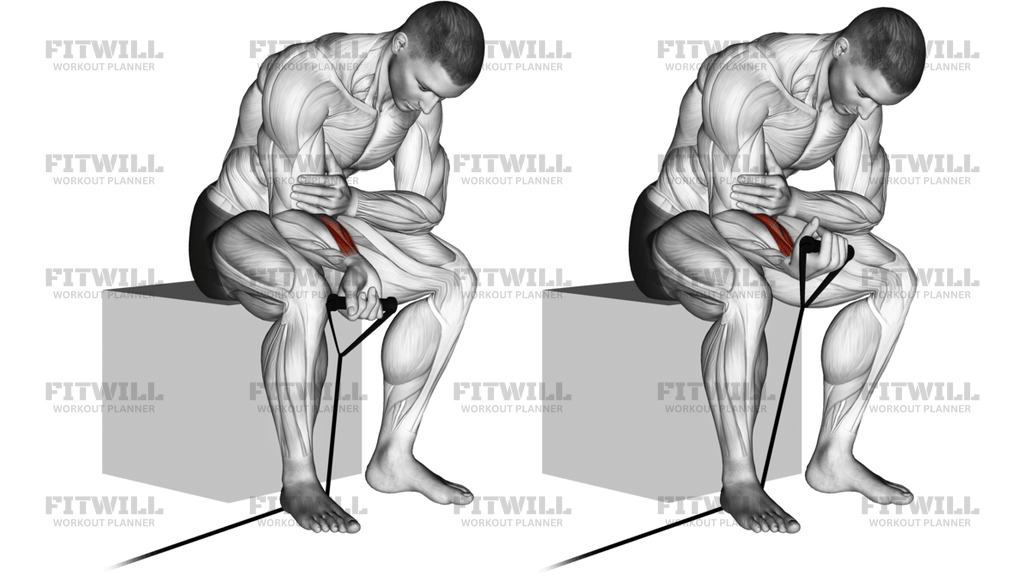
Band Wrist Curl is a seated forearm isolation exercise that loads the wrist flexors against a band anchored under the foot. The working arm is braced on the thigh, the palm faces up, and the wrist moves through flexion while the elbow, shoulder, and torso stay quiet. That setup matters because it keeps the band tension focused on the forearm instead of turning the movement into a bigger arm or body swing.
This exercise is usually used to build forearm strength, wrist control, and grip endurance for athletes and lifters who need more resilient hands and wrists. The main technical work is done by the wrist flexors, with the brachioradialis, biceps brachii, and wrist extensors helping stabilize the arm and control the band path. In practical terms, it is a small movement with a big tendency to cheat, so the quality of the setup decides how much useful tension you actually get.
A good rep starts with the forearm fully supported on the thigh and the hand hanging just past the knee so the wrist can move freely. From there, curl the knuckles toward the forearm against the band, then lower slowly until the wrist opens again. The forearm should stay planted while the hand travels; if the elbow lifts, the shoulder rolls, or the torso rocks, the band is too heavy or the setup is too loose.
Because the range is short, tempo and control matter more than load. A slower lowering phase keeps tension on the forearm and makes the exercise more productive without needing a stronger band. Light to moderate resistance works best for most people, especially when the goal is rehab-style control, accessory forearm work, or high-rep hypertrophy. If the wrist feels pinched or the band pulls the hand off line, adjust the foot placement or reduce resistance before pushing harder.
Band Wrist Curl fits well after compound pulling work, on arm day, or in any session where wrist capacity is a limiting factor. It can be a useful beginner exercise when the band is light and the forearm stays braced, but it rewards patience more than brute force. Clean reps, even tension, and a stable elbow create the best forearm stimulus and the lowest chance of irritating the wrist.
[ Workout Log & Planner ]
Put your next workout in Fitwill
Keep your plan and training log ready when you are.


Instructions
- Sit on a bench or box with one foot planted on the band so the anchor is directly under the working side.
- Hold the band in the working hand with the palm facing up and rest the forearm across the same-side thigh just above the knee.
- Use the free hand to steady the upper arm or elbow so the shoulder stays quiet and the forearm does the work.
- Let the wrist start in a lowered, extended position with the hand hanging just beyond the knee.
- Curl the knuckles toward the forearm by flexing only at the wrist while the forearm stays pressed into the thigh.
- Squeeze briefly at the top when the wrist is fully curled and the band tension is strongest.
- Lower the hand slowly until the wrist opens back to the start position without letting the elbow move.
- Breathe out as you curl up, breathe in as you lower, then switch sides after the planned reps.
Tips & Tricks
- Keep the forearm pinned to the thigh for the whole set; if it floats, the elbow starts helping too much.
- Choose a light band first, because the leverage is short and resistance can jump fast near the top.
- Let the wrist move, not the elbow; the upper arm should stay still against the leg.
- Keep the hand relaxed enough to move cleanly, but not so loose that the band slips in the palm.
- Lower under control for at least a couple of seconds so the forearm keeps working on the way back down.
- If the band pulls the wrist sideways, adjust your foot so the line of tension runs straight through the hand.
- Stop just short of pain or pinching in the wrist joint; this should feel like forearm work, not joint irritation.
- Use higher reps if the goal is forearm endurance, and keep every rep identical instead of chasing momentum.
Frequently Asked Questions
What muscle does Band Wrist Curl target most?
The main target is the wrist flexors in the forearm, with the brachioradialis and biceps helping stabilize the arm.
Can beginners perform this exercise?
Yes. Beginners usually do best with a light band, a seated setup, and a forearm that stays supported on the thigh.
Why is the forearm braced on the thigh?
The thigh support keeps the elbow from drifting and isolates wrist flexion so the band loads the forearm instead of the whole arm.
Should my elbow move during the rep?
No. The elbow and upper arm should stay quiet while only the wrist opens and closes against the band.
How far should I curl the wrist?
Use the full comfortable range from a lowered wrist to a strong flexed top, but stop before the joint pinches or the forearm lifts off the leg.
What if I feel this more in my shoulder or biceps?
That usually means the arm is drifting or the load is too heavy. Re-seat the forearm on the thigh and lighten the band.
How do I make this exercise harder without changing form?
Add reps, slow the lowering phase, or use a slightly stronger band while keeping the same seated setup and wrist path.
When is Band Wrist Curl most useful?
It works well as accessory work after pulling exercises, as forearm endurance training, or during rehab-style wrist control work.