Resistance Band Serratus Wall Slide
Resistance Band Serratus Wall Slide is a standing shoulder-control drill that uses a light band around the wrists, a wall for feedback, and a slow upward slide to teach the shoulder blades to rotate and protract cleanly. The exercise is named for the serratus anterior focus, but it also asks the upper back, front shoulders, and trunk to stay organized while the arms travel overhead. In practice, it is less about loading the shoulders hard and more about building a cleaner overhead pattern.
The wall gives you an honest reference point. When the forearms stay on the wall and the wrists press gently outward into the band, it becomes much easier to notice when the ribs flare, the low back arches, or the shoulders shrug. That is why the setup matters so much. If your feet are too far from the wall or the band is too strong, the rep turns into a compensation drill instead of a serratus and shoulder-stability drill.
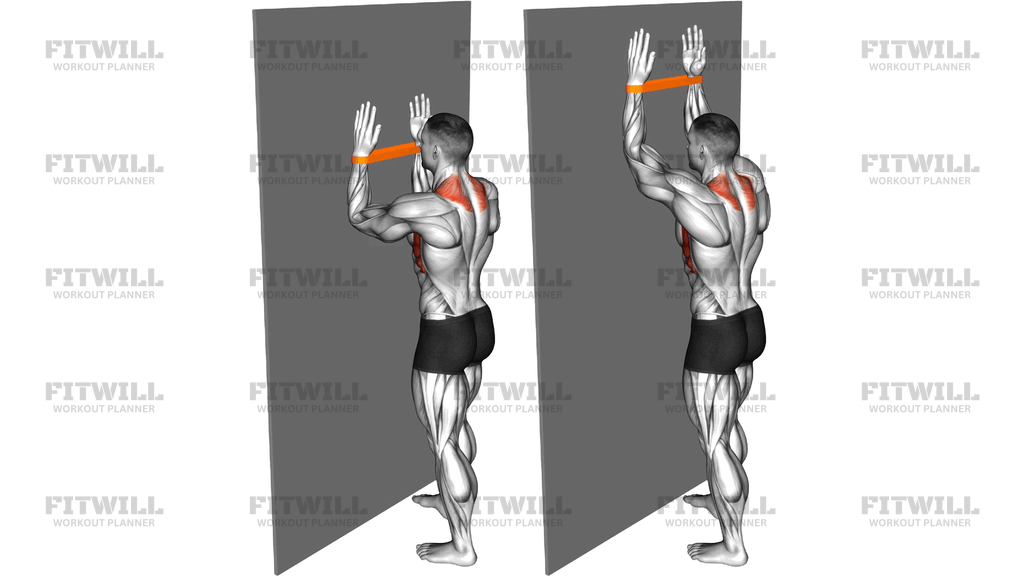
A good repetition starts with the elbows bent, forearms on the wall, and a light outward press into the band. From there, slide the arms upward in a smooth arc while keeping the forearms connected to the wall as long as possible. Let the shoulder blades rotate upward as the hands travel higher, and finish with the arms overhead only as far as you can reach without losing rib position or shrugging. Lower the arms under control along the same path and reset before the next rep.
This movement fits well in warmups, shoulder-prep circuits, rehab-style accessory work, and any session where overhead mechanics need to be cleaner before pressing or pulling. It is especially useful for lifters who struggle with rib flare, winging shoulder blades, or excessive upper-trap dominance overhead. The right version should feel precise and controlled, not aggressive.
Keep the load light enough that you can preserve wall contact, steady breathing, and a quiet torso. If the movement feels pinchy at the shoulder, shorten the range, step closer to the wall, or use a lighter band. The goal is to teach better mechanics rep by rep, not to force height at the expense of position.
[ Workout Log & Planner ]
Put your next workout in Fitwill
Keep your plan and training log ready when you are.


Instructions
- Stand facing a wall with a light band looped around both wrists, feet about a foot back, knees soft, and forearms resting on the wall with elbows bent near 90 degrees.
- Press your wrists gently outward into the band, keep your forearms parallel, and set your ribs down so the low back does not arch.
- Keep your neck long and your shoulders away from your ears before you start the first rep.
- Slide your forearms up the wall in a smooth path while reaching both arms overhead.
- Let the shoulder blades rotate upward and move around the ribcage as your hands travel higher, but keep the band lightly stretched the whole time.
- Stop the slide before your ribs flare, your lower back takes over, or your shoulders shrug toward your ears.
- Pause briefly at the top, then lower your forearms back down the wall with the same control.
- Exhale as you slide up, inhale as you return, and reset your rib position before the next repetition.
Tips & Tricks
- Use the lightest band that still gives you gentle outward tension at the wrists; this drill should feel precise, not difficult.
- If your shoulders shrug early, shorten the range and keep the hands lower until the upward rotation feels smooth.
- Keep the forearms in contact with the wall as long as possible; losing the wall usually means the torso has started to cheat.
- Think about reaching the upper back toward the wall while the arms go up, not just lifting the hands higher.
- Step closer to the wall if your low back arches or your ribs pop forward during the slide.
- Keep the wrists pressing out evenly so the band does not collapse your elbows inward.
- A slow lowering phase is important here because it exposes loss of control at the shoulder blades and trunk.
- If the front of the shoulder feels pinched, reduce the overhead range and keep the elbows slightly lower on the next rep.
Frequently Asked Questions
What does the Resistance Band Serratus Wall Slide train most?
It mainly trains serratus anterior function and overhead shoulder control, with help from the upper back, front deltoids, and trunk stabilizers.
Where should my forearms and wrists be during the slide?
Your forearms stay on the wall and your wrists press gently outward into the band so the arms stay aligned as you reach overhead.
How far should I slide my arms up the wall?
Only as far as you can keep your ribs stacked, your neck relaxed, and your shoulders from shrugging.
Why do I need the band around my wrists?
The band encourages outward pressure and helps the shoulders stay active instead of collapsing inward as the arms rise.
Can beginners do this exercise?
Yes. A light band, a shorter range, and slow reps make it a good beginner shoulder-prep drill.
What is the most common mistake on this wall slide?
Rib flare and upper-trap shrugging are the biggest issues because they steal the work from the serratus and shoulder blades.
Should I feel this in my upper back or shoulders?
A bit of upper-back and front-shoulder work is normal, but the movement should feel controlled and smooth rather than strained.
When is this exercise most useful?
It fits well in warmups, rehab-style work, and accessory sessions before pressing or overhead training.