Lever Parallel Chest Press
Lever Parallel Chest Press is a machine-based pressing exercise that lets you train the chest with a guided path and a stable seated position. The parallel handles give you a neutral grip, which usually feels easier on the shoulders than a straight bar and makes it simpler to keep the elbows and wrists stacked as you press.
This movement mainly trains the chest, with the front of the shoulders and the triceps helping finish each rep. Because the machine supports the path, you can focus on clean pressing mechanics, even tension, and a controlled return instead of worrying about balancing a free barbell. That makes Lever Parallel Chest Press useful for beginners, accessory work, and higher-rep hypertrophy sets.
The setup matters. Sit back into the pad with your head and upper back supported, place your feet flat, and line the handles up so the press starts from mid-chest rather than the shoulders or neck. If the seat is too high or low, the handles will force an awkward elbow angle and the rep will feel more like a shoulder press than a chest press.
Press the handles forward in a smooth arc until your arms are almost straight without locking out hard. Keep your chest lifted, wrists neutral, and shoulders down as you drive through the middle of the range. On the way back, let the handles return slowly until you feel a controlled chest stretch, but stop before your shoulders roll forward or the weight stack jerks into place.
Lever Parallel Chest Press works well as a main machine press, a safer pressing option when you want more stability, or a chest-focused accessory after heavier compound lifts. It is also a good choice when you want to stay close to failure without needing a spotter. Keep the motion strict, control the return, and choose a load that lets every rep look the same from the first repetition to the last.
Fitwill
Log Workouts, Track Progress & Build Strength.
Achieve more with Fitwill: explore over 9600 exercises with images and videos, access built-in and custom workouts, perfect for both gym and home sessions, and see real results.
Start your journey. Download today!




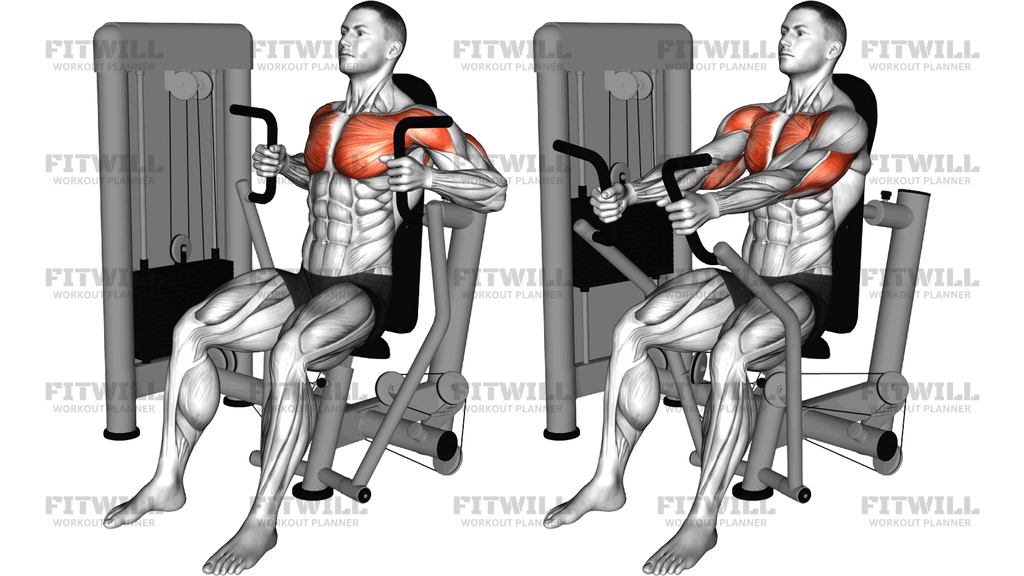
Instructions
- Sit on the Lever Parallel Chest Press with your back and head against the pad, feet flat on the floor, and both hands wrapped around the parallel handles.
- Adjust the seat so the handles line up with mid-chest and your elbows sit slightly below shoulder height at the start.
- Set your shoulder blades down and back, lift your chest, and keep your wrists straight before you unrack or start the first rep.
- Take a breath and brace lightly through your trunk so your torso stays fixed against the back pad.
- Press the handles forward in a smooth path until your arms are nearly straight, keeping the elbows tracking in line with the handles.
- Squeeze through the chest at the front of the rep without shrugging your shoulders up toward your ears.
- Lower the handles back with control until you feel a comfortable chest stretch and the elbows are again slightly behind the torso.
- Keep the descent slower than the press so the weight stack or lever does not slam.
- Repeat for the planned reps, then return the handles to the start and sit upright only after the machine is fully settled.
Tips & Tricks
- If the handles start too high, lower the seat before you load up; a chest press that begins near the shoulders turns into a front-delt press.
- Keep your forearms close to vertical at the start so the force goes straight through the handles instead of leaking into the wrists.
- Do not let your elbows flare hard at the bottom; a moderate elbow angle usually keeps the shoulder joint happier on this machine.
- Drive the handles together as if you were trying to shorten the machine, not just move the grips forward.
- Hold the chest up against the pad, but do not arch so hard that your lower back lifts or your ribs flare aggressively.
- Use a controlled return of about two to three seconds to keep tension on the chest and avoid bouncing off the stack.
- Stop the rep just short of the point where your shoulders roll forward and the front of the shoulder takes over.
- Exhale as the handles pass the hardest part of the press, then inhale on the way back to the start.
Frequently Asked Questions
What muscles does Lever Parallel Chest Press work most?
It primarily targets the chest, with the front delts and triceps helping to finish each press.
Why use the parallel handles on Lever Parallel Chest Press?
The neutral grip usually feels more natural on the shoulders and makes it easier to keep the wrists stacked during the press.
How should I set the seat on Lever Parallel Chest Press?
Set the handles around mid-chest at the start so you press straight forward instead of from too high or too low.
Should my elbows flare on Lever Parallel Chest Press?
A small flare is normal, but keep them from shooting wide so the shoulders stay stable and the chest stays in control.
Is Lever Parallel Chest Press good for beginners?
Yes. The machine path and back support make it easier to learn pressing mechanics with less balance demand than a free-weight press.
How deep should I lower the handles?
Lower them until you feel a solid chest stretch, but stop before your shoulders round forward or the front of the shoulder feels pinched.
What is a common mistake on Lever Parallel Chest Press?
Letting the shoulders shrug forward or slamming the weight back into the start position usually takes tension off the chest.
Can I use Lever Parallel Chest Press instead of a barbell bench press?
Yes, it works well as a chest-focused pressing option when you want more stability, less setup, or a safer push close to fatigue.