Elliptical Machine Walk
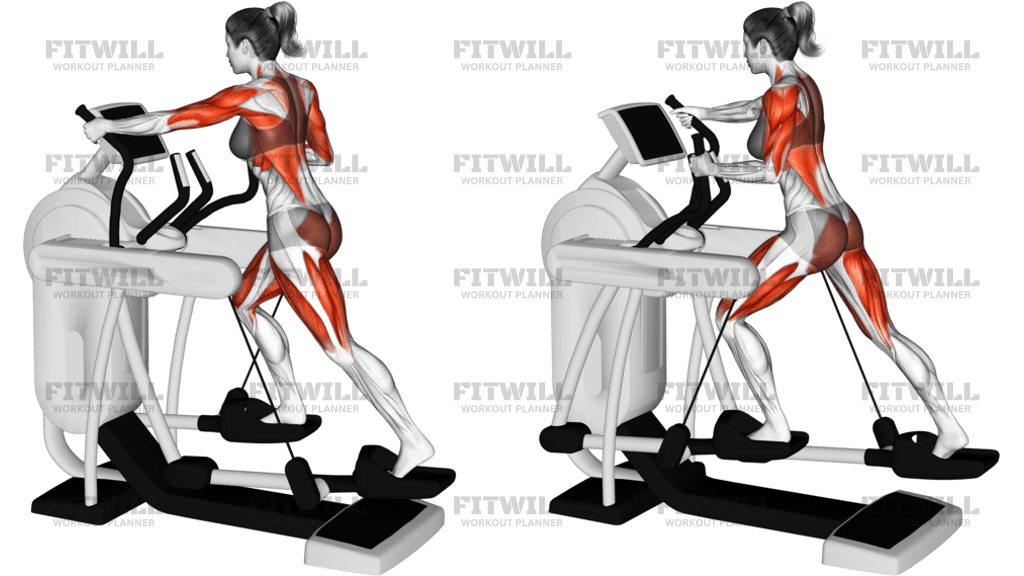
Elliptical Machine Walk is a low-impact cardio exercise performed on an elliptical trainer with moving arms and foot pedals. The movement looks like a smooth walk or climb: one foot drives down and back while the opposite foot comes forward, and the handles travel in sync with that stride. It is useful when you want sustained heart-rate work without the pounding of running or jumping, and it also gives the hips, calves, glutes, shoulders, and upper back a steady conditioning challenge.
The setup matters because the machine will amplify whatever posture you start with. Step onto the pedals one side at a time, take the handles with a relaxed but secure grip, and stand tall with your ribs stacked over your pelvis. Keep a slight bend in the knees, set your gaze forward, and let your feet stay flat and centered on the pedals so the stride stays smooth instead of choppy.
During the walk, drive one leg as the other returns, letting the pedals and handles move together instead of forcing the motion with your arms. Keep the torso quiet, avoid leaning heavily on the console, and let your weight stay balanced between the pedals. The stride should feel rhythmic and controlled, with each push creating a natural glide rather than a bounce. Breathe steadily through the effort so you can keep the pace consistent.
This exercise is a good fit for warm-ups, steady-state cardio, recovery sessions, and conditioning blocks where joint comfort matters. Light to moderate resistance is usually enough to make the stride feel purposeful without turning the movement into a grind. If the machine starts to shake, your shoulders creep up, or your hips rock side to side, the pace or resistance is too aggressive.
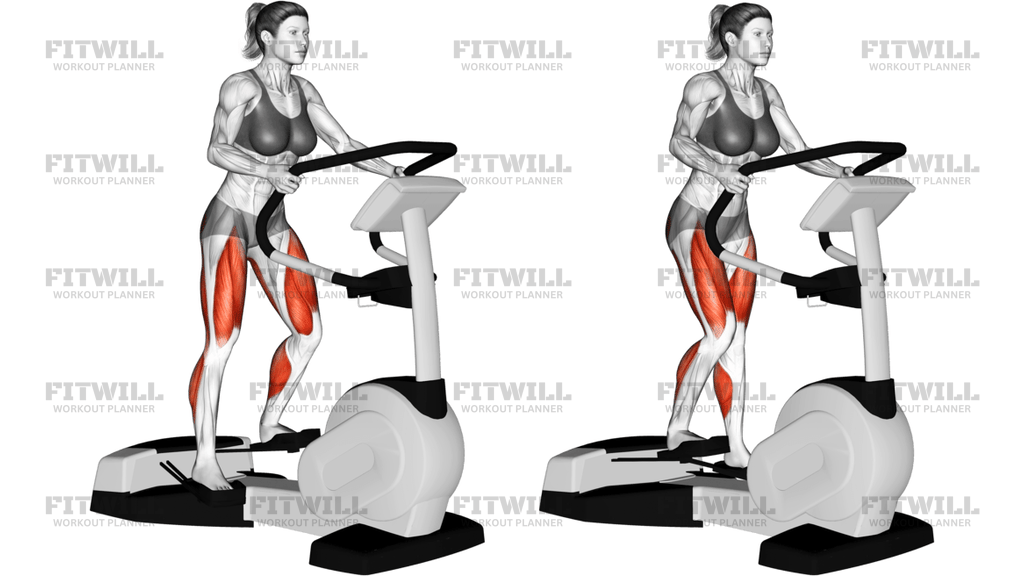
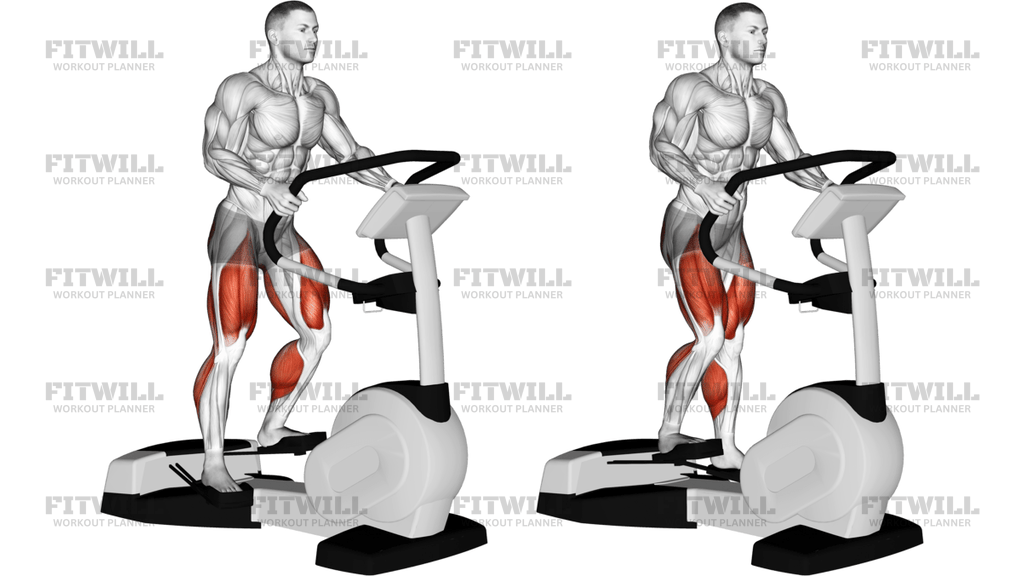
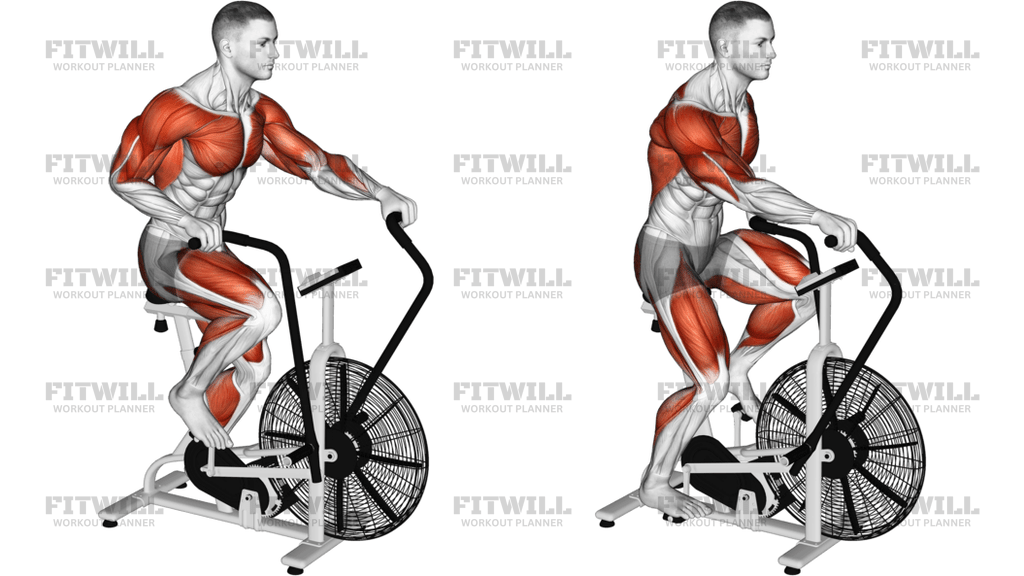
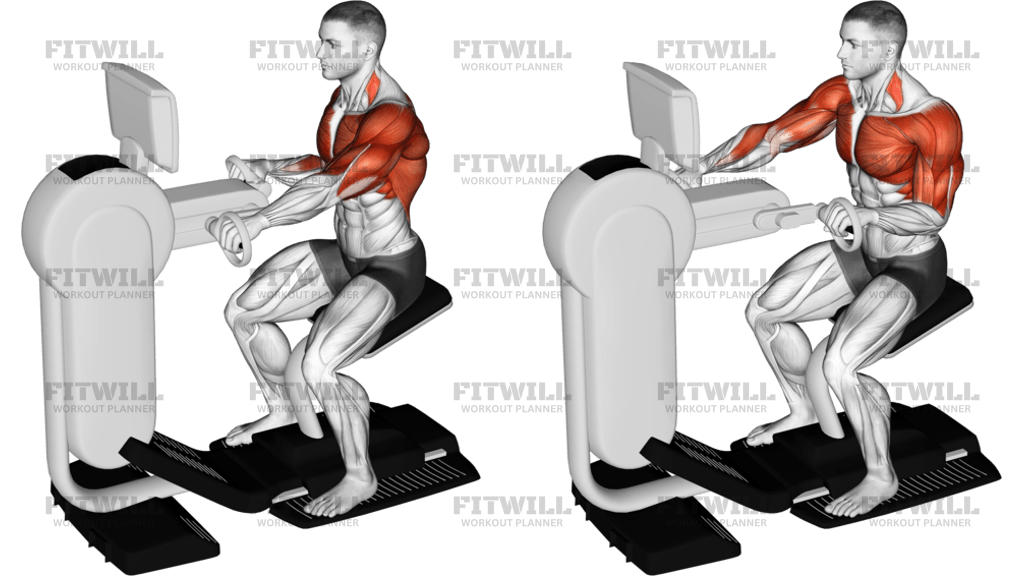
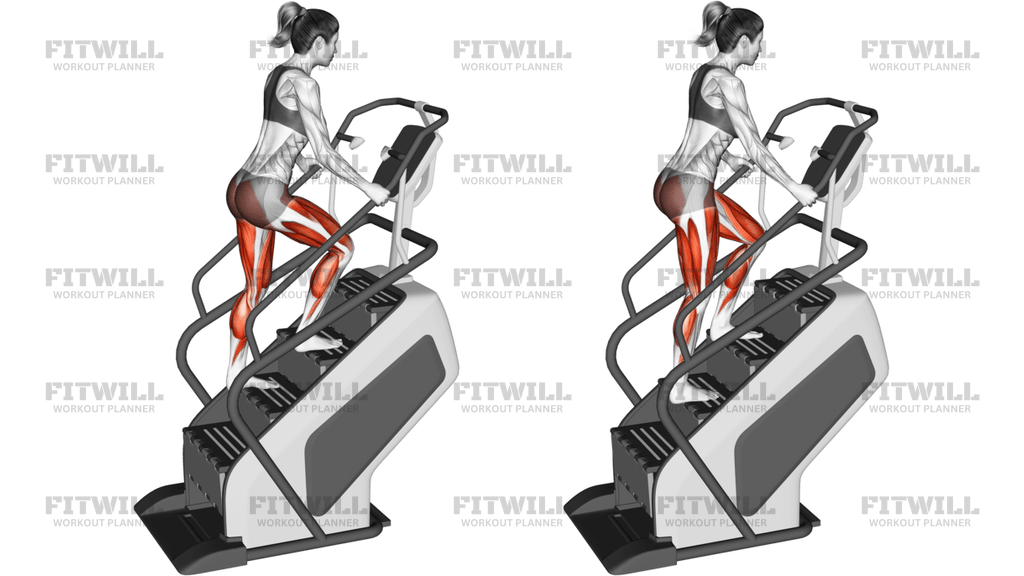
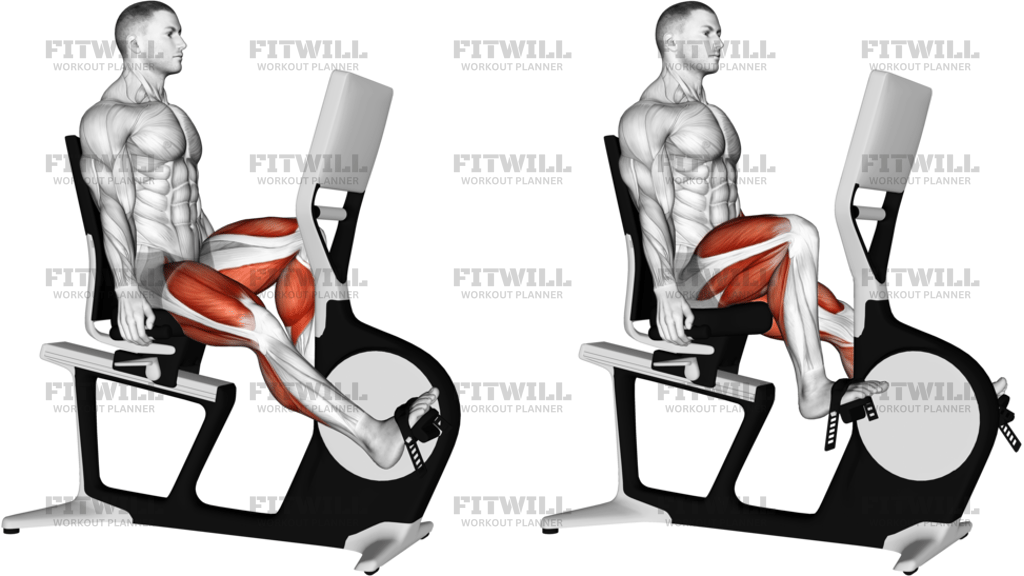
Because the image shows a standard upright elliptical with moving arms and pedals, the best version of this exercise is simple and repeatable: smooth cadence, clean posture, and even pressure through both legs. Keep the motion continuous, finish each interval without stomping off the pedals, and stop before fatigue turns the stride into a shuffle or a lean.
[ Workout Log & Planner ]
Put your next workout in Fitwill
Keep your plan and training log ready when you are.


Instructions
- Step onto the elliptical one foot at a time and place each foot centered on the pedals.
- Hold the moving handles with a relaxed grip and stand tall with your shoulders stacked over your hips.
- Set your feet and hands before you start so the first stride begins from a stable position.
- Begin pedaling with a smooth, alternating walk instead of stabbing at the pedals.
- Push one pedal down and back as the opposite pedal comes forward, letting the handles swing in the same rhythm.
- Keep your torso upright and your core lightly braced so your hips do not rock side to side.
- Breathe in a steady pattern while you maintain a continuous cadence.
- Use a controlled pace for the planned interval, then slow the pedals before stepping off.
- Finish by stopping the machine fully and stepping down one foot at a time.
Tips & Tricks
- Keep your weight centered on the middle of each pedal instead of drifting onto your toes or heels.
- Think of a long, smooth walking stride; jerky stomps make the machine feel heavier than it needs to.
- Do not lean your chest into the console, because that turns the movement into a supported hang instead of a stride.
- Let the arms assist the rhythm, but do not pull so hard that your shoulders rise toward your ears.
- If the cadence gets noisy or bouncy, reduce the resistance or slow the pace until the motion is quiet again.
- Use a resistance level that still lets you keep the pedals moving in a clean oval path without grinding.
- Keep your knees tracking in line with your toes so each drive feels even from side to side.
- A tall posture will usually let you breathe better and last longer than a forward-hunched position.
- If your hips start shifting or your lower back arches, shorten the session or lower the intensity.
Frequently Asked Questions
What does Elliptical Machine Walk work most?
It mainly trains cardiovascular endurance while involving the legs, glutes, shoulders, and upper back in a smooth, low-impact stride.
Is this the same as using a regular elliptical machine?
Yes. The name describes the walking-style stride on the elliptical trainer shown in the image.
Should I push or pull with the handles?
Use the handles to match the stride, not to yank the machine forward. The legs should still drive most of the motion.
How should my feet sit on the pedals?
Keep each foot centered and flat enough to stay stable, with pressure spread across the whole pedal rather than just the toes.
What is the most common mistake on this exercise?
Leaning on the console or bouncing through the stride. That usually means the resistance is too high or the pace is too fast.
Can beginners do Elliptical Machine Walk?
Yes. It is one of the easier cardio options for beginners because the pedals guide the movement and reduce impact.
How hard should the resistance feel?
It should feel smooth and controlled, with enough load to make you work but not so much that the pedals grind or stall.
When is this exercise useful in a workout?
It works well as a warm-up, a steady cardio block, active recovery, or a conditioning finisher when you want less joint stress.
What should I do if my hips start rocking?
Slow down, lower the resistance, and shorten the stride slightly until you can keep the torso quiet again.