Lever Alternate Biceps Curl
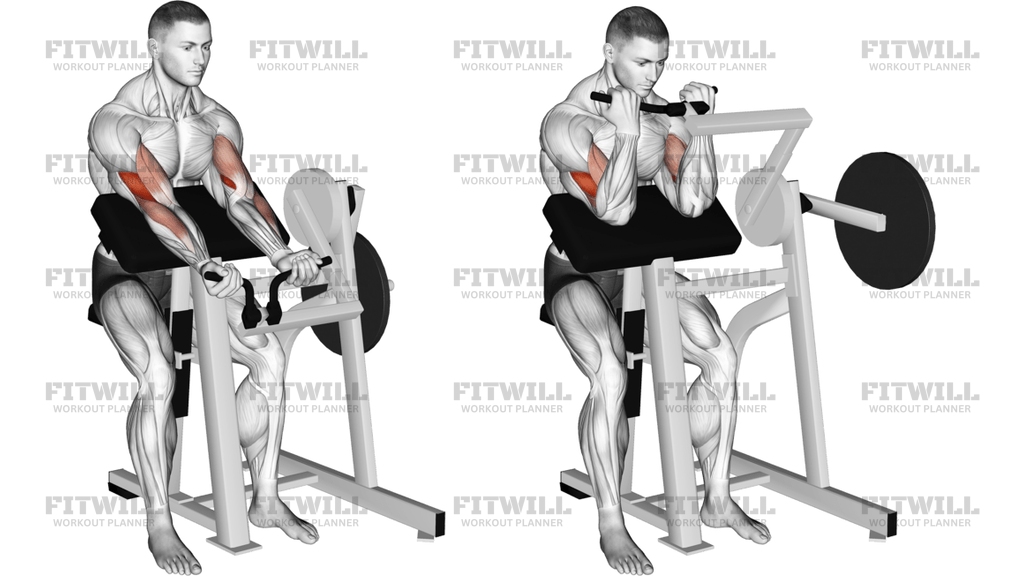
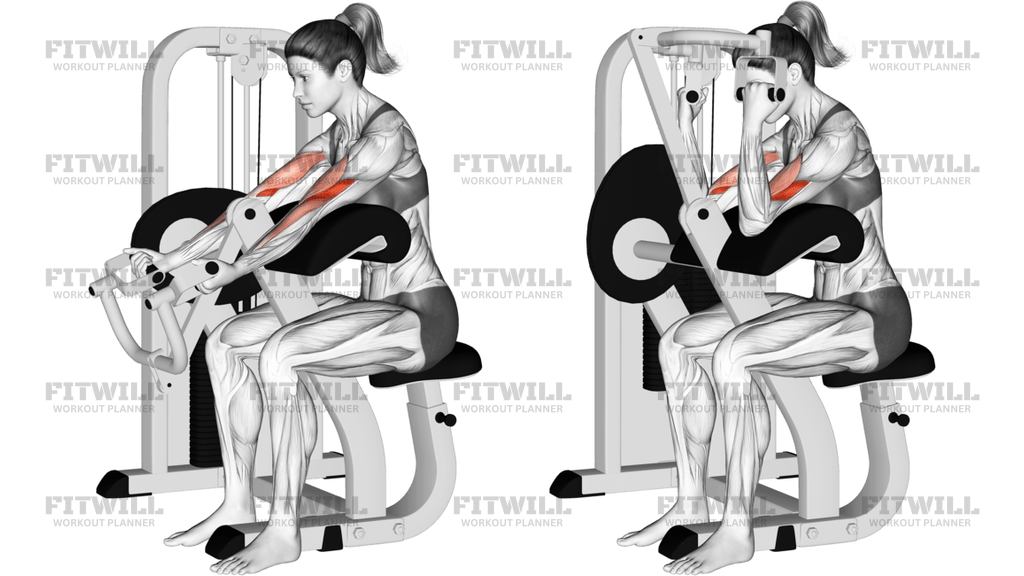
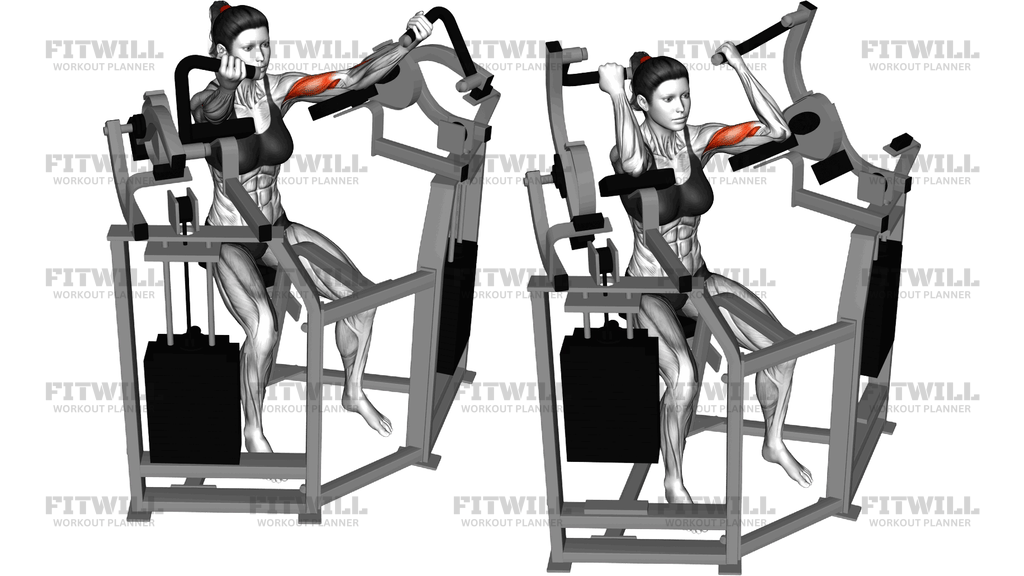
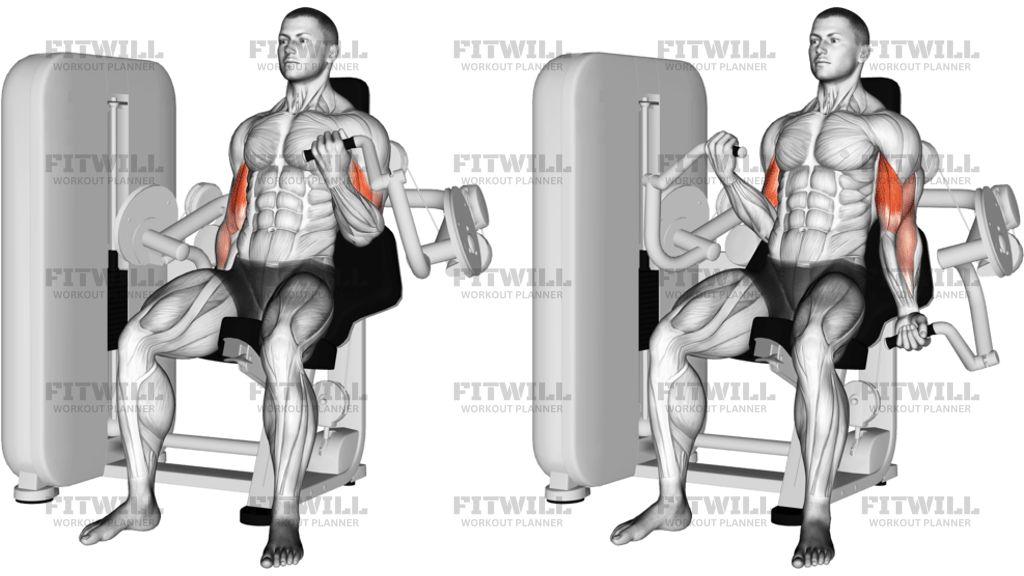
Lever Alternate Biceps Curl is a seated machine curl that trains one arm at a time on an independent lever arm. The image shows the lifter seated upright with the upper arm supported by the machine, one handle curled while the other returns, which keeps the work strict and makes side-to-side differences easier to notice. Because the path is guided, this movement is useful when you want direct biceps work without having to stabilize a free weight through the whole range.
The main muscle involved is the biceps brachii, with the brachialis, brachioradialis, and forearm flexors helping at the elbow and wrist. That makes the exercise a good choice for building arm size, improving elbow flexion strength, and reinforcing cleaner curling mechanics. Since the machine controls the path, the challenge comes from keeping the shoulders quiet, the elbows pinned, and the torso still while each arm works through its own range.
Setup matters more than it does on a simple standing curl. Adjust the seat so the handles line up with your natural curl path and the elbows stay close to the machine pads or torso support. Sit tall, keep your chest lifted, and plant both feet firmly. Start with the shoulders down, wrists stacked over the handles, and the non-working arm relaxed rather than helping the rep. A solid setup lets the biceps do the work instead of turning the set into a torso-driven swing.
Curl one handle by bending the elbow and bringing the grip toward the shoulder without letting the upper arm drift forward. Squeeze briefly at the top, then lower that side under control while the opposite arm repeats. Alternate smoothly rather than jerking from side to side. Exhale as you curl, inhale on the return, and keep the motion smooth enough that the machine never starts bouncing or pulling you out of position.
Use this exercise as direct arm work in hypertrophy blocks, accessory sessions, or arm-focused finishers when you want a stable curl pattern and easy load management. It is also useful for beginners because the machine removes much of the balance demand, but the rep still needs strict control to be effective. Choose a weight that lets both arms travel through the same clean range, and stop the set when you have to lean back, shrug, or shorten the lowering phase.
[ Workout Log & Planner ]
Put your next workout in Fitwill
Keep your plan and training log ready when you are.


Instructions
- Adjust the seat so the machine handles sit at a comfortable curl height and your elbows can stay close to your sides or the arm pads.
- Sit tall with your back against the pad, chest up, feet flat, and wrists stacked over the handles.
- Grip both handles with palms up or slightly turned in, and let the arms start fully extended without locking out harshly.
- Brace your torso before the first rep so your shoulders stay down and your ribs do not flare.
- Curl one handle by bending the elbow and bringing the grip toward the same-side shoulder.
- Keep the upper arm still while you lift, and do not let the elbow drift forward or outward.
- Pause briefly near the top and squeeze the biceps without shrugging the shoulder.
- Lower that handle slowly to the start while the opposite arm performs its curl, alternating sides with control.
- Keep breathing smooth through the set and stop when you can no longer keep both arms strict and even.
Tips & Tricks
- Set the seat height first; if the handles start too low or too high, the curl turns into a shoulder-driven motion.
- Keep the elbows pinned in the same place so each rep stays on the biceps instead of becoming a front-delt lift.
- Use a tempo you can own on the lowering phase; the eccentric is where alternating machine curls get sloppy fastest.
- Do not twist your torso toward the working side to finish the rep.
- Let the non-working arm relax, but do not fully unload the shoulder into the bottom stop if the machine path feels abrupt.
- Choose a load that lets both sides match. If one arm needs to swing or shorten the range, the stack is too heavy.
- Keep your wrists neutral so the handle sits deep in the palm instead of bending the wrist back.
- A short squeeze at the top is enough; chasing extra height usually brings the shoulder forward.
- If your machine has independent arms, alternate smoothly rather than rushing one side to beat the other.
- Stop the set before the lower back starts arching or the chest starts popping off the pad.
Frequently Asked Questions
What does Lever Alternate Biceps Curl train most?
It primarily trains the biceps brachii, with help from the brachialis, brachioradialis, and forearm flexors.
Why use the lever machine instead of dumbbells?
The machine guides the curl path and makes it easier to keep the elbow still, which is helpful when you want strict arm work or want to compare left and right sides.
How should my seat and handles be set?
Set the seat so the handles line up with a natural curl path and you can keep your elbows close to your sides or the support pads without shrugging.
Should I curl both arms at the same time?
No. This variation alternates sides, so one arm works while the other lowers or rests. That keeps the set strict and makes side-to-side differences easier to spot.
What is the most common form mistake?
Leaning back, shrugging the shoulders, or letting the elbows drift forward to turn the curl into a body swing.
Is this exercise beginner-friendly?
Yes. The machine path reduces balance demands, but beginners should still use a light load and a slow lowering phase.
How heavy should I go on this curl?
Use a load that lets both arms move through the same full, pain-free range without twisting, bouncing, or shortening the eccentric.
What grip works best on the handle?
A supinated or slightly turned-in grip usually works best as long as the wrist stays neutral and the handle sits deep in the palm.