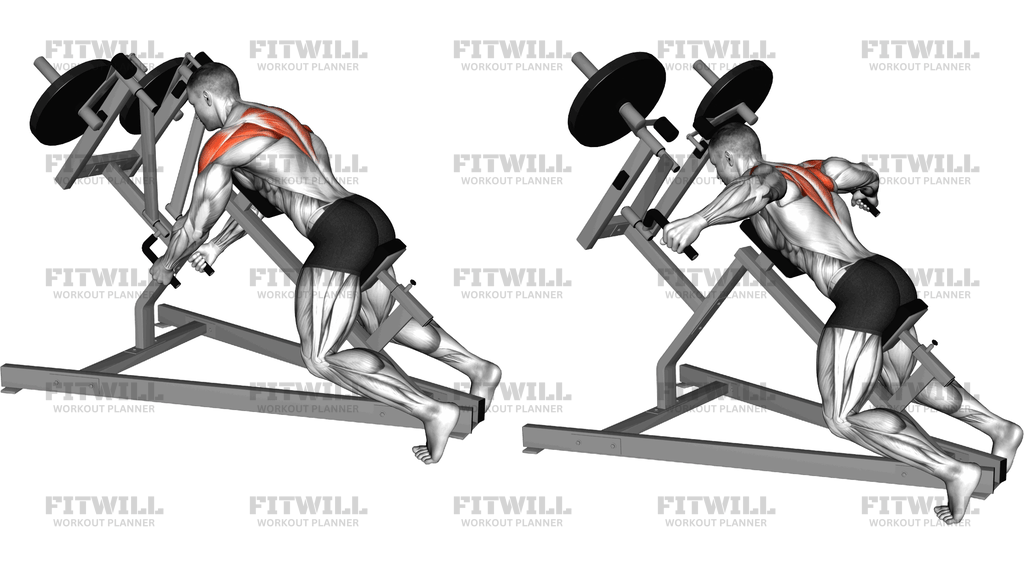
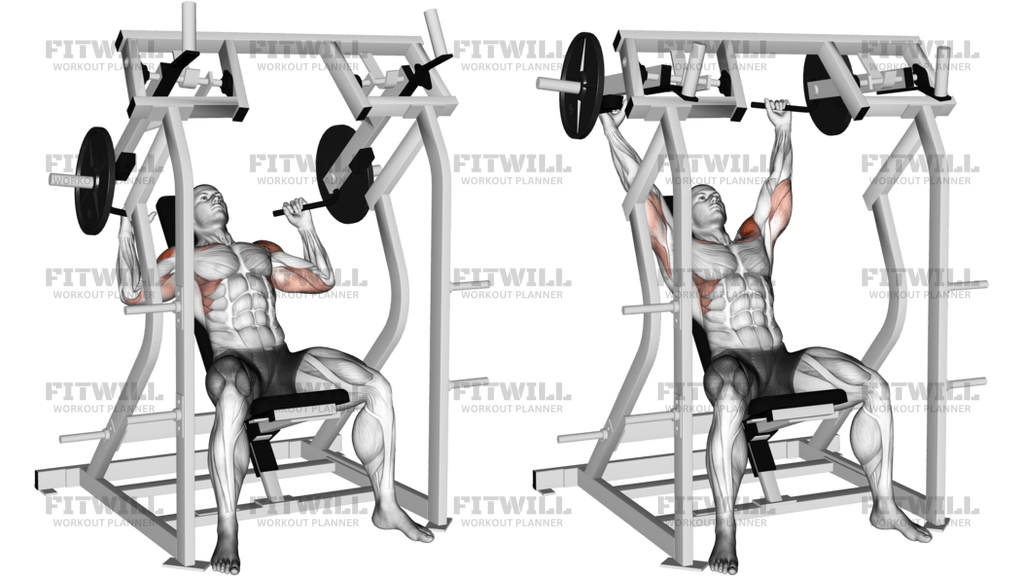
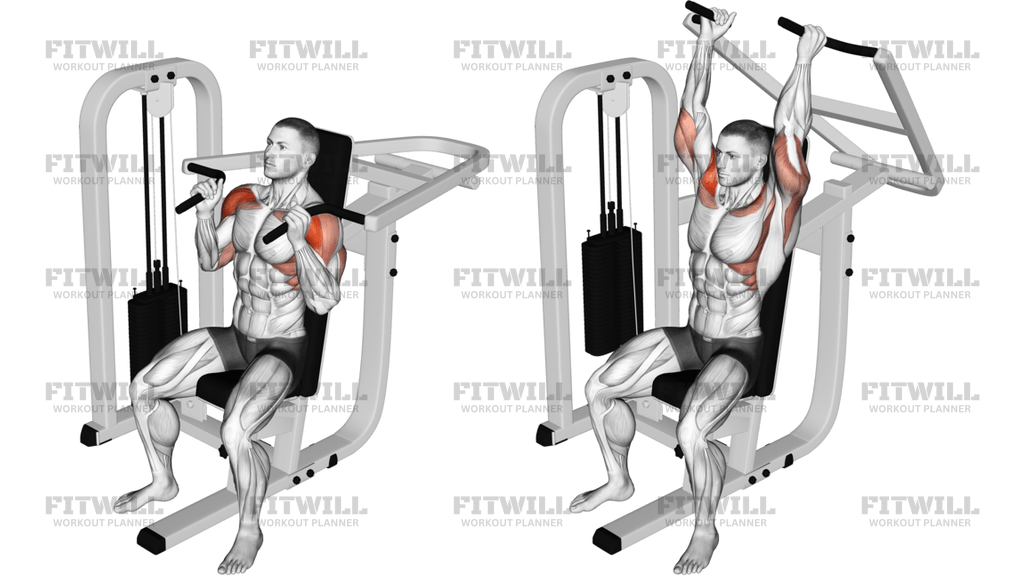
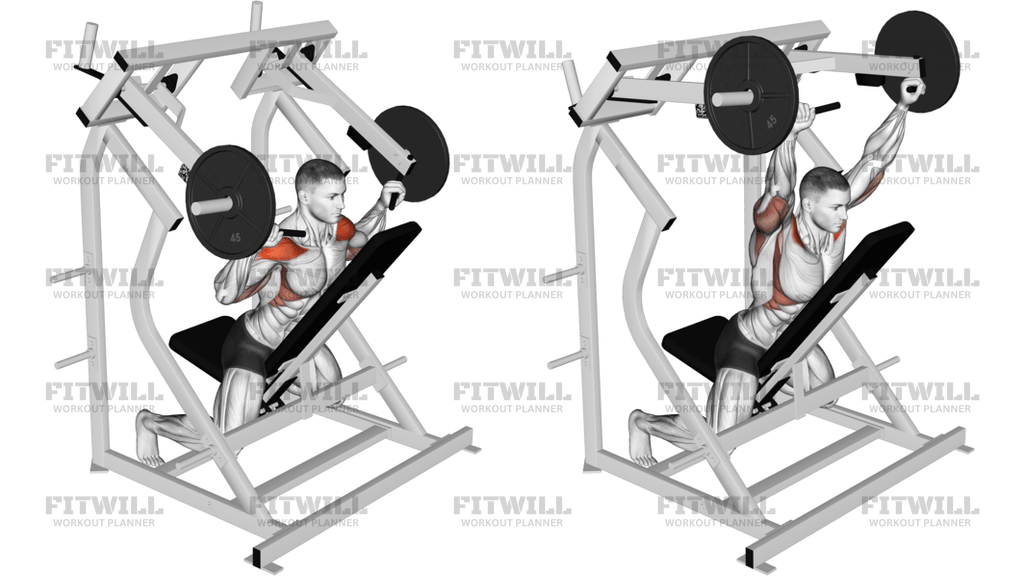
Lever Military Press Plate Loaded
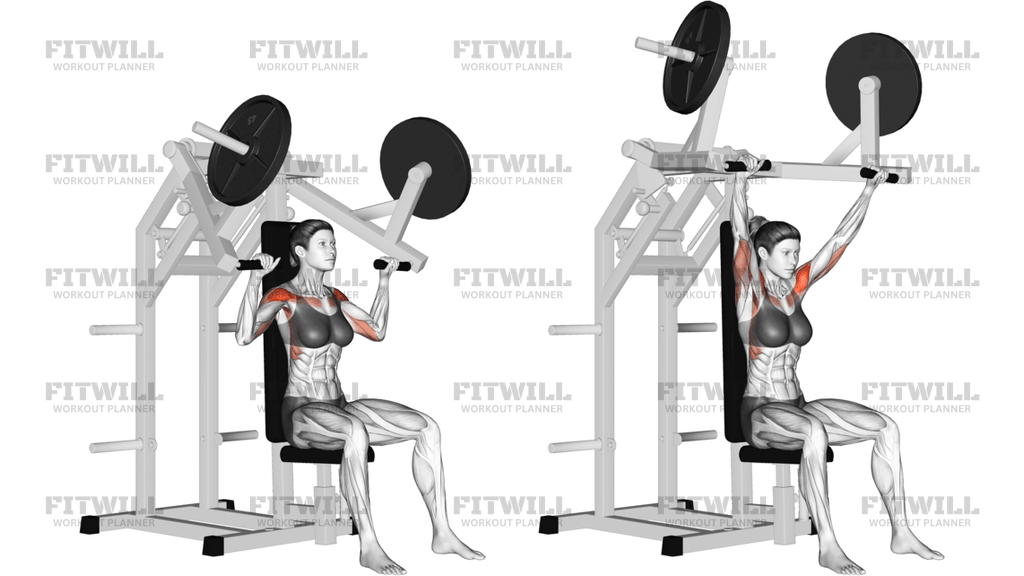
Lever Military Press (Plate Loaded) is a seated machine shoulder press built around a fixed pressing arc. It trains the delts through a guided overhead path, so you can load the shoulders hard without having to balance dumbbells or stabilize a free bar. The machine’s leverage changes the resistance curve, which makes the start of the rep feel different from the finish and rewards steady positioning throughout the set.
The main training effect is on the deltoids, especially the front and side heads, with the triceps helping finish the press and the upper back working to keep the torso organized against the pad. In anatomy terms, the primary work centers on the Deltoids, with help from Triceps brachii, Trapezius, and Rhomboids. That makes the exercise useful when you want direct shoulder work with a stable setup and a clear overhead pressing pattern.
Seat height matters. Set the handles so the start position sits around shoulder level or just below it, not up by the chin and not so low that the shoulders have to reach. Keep your feet flat, back and head against the pad, and your ribs stacked over your pelvis. If the seat is too low, you will tend to flare the elbows and arch the low back; if it is too high, you may lose range before the press even starts.
Press the handles upward in a smooth arc until the arms are extended without forcing a hard shrug at the top. The elbows should track slightly in front of the torso and finish under the wrists, not drift far behind the body. Exhale as you press, then lower the handles under control until the shoulders return to the loaded start position. A short pause at the bottom can help keep the rep honest and stop the stack from bouncing.
This is a strong choice for hypertrophy blocks, accessory shoulder work, or lifters who want a more guided overhead press than dumbbells or a barbell. It is also practical for beginners because the machine removes a lot of balance demand, but shoulder comfort still matters: if the front of the shoulder pinches, reduce the range, adjust the seat, or use a lighter load before pushing through it.
[ Workout Log & Planner ]
Put your next workout in Fitwill
Keep your plan and training log ready when you are.


Instructions
- Adjust the seat so the handles start around shoulder height, then sit back with your head and upper back against the pad.
- Plant both feet flat on the floor and grip the handles with your wrists stacked over your elbows.
- Set your shoulders down and slightly back, then brace your midsection before the first rep.
- Begin with the handles just outside shoulder width and your elbows slightly in front of your torso.
- Press the handles upward in a smooth arc until your arms are extended overhead without shrugging.
- Keep the machine path controlled and avoid letting your lower back arch as the handles rise.
- Lower the handles slowly back to the start until your elbows return to shoulder level or slightly below.
- Exhale on the press, inhale on the return, and repeat for the planned reps.
Tips & Tricks
- Set the seat first; if the handles start too high, you will shorten the press and overload the upper traps instead of the delts.
- Keep your wrists stacked over the handles so the force goes straight into the press instead of folding the wrists back.
- Press on the machine’s natural arc instead of trying to force the handles straight up or forward.
- Keep your ribs down and glutes lightly against the seat pad so the rep does not turn into a back arch.
- Stop just short of a hard lockout if the top position makes you shrug or lose shoulder tension.
- Lower under control for two to three seconds; the return phase usually exposes sloppy setup faster than the press.
- Use a grip width that lets your elbows stay under your wrists without flaring far out to the sides.
- If the front of the shoulder pinches, shorten the bottom range and reduce the load before adding more motion.
Frequently Asked Questions
What muscles does the Lever Military Press Plate Loaded work most?
The main target is the delts, with the triceps helping finish the press and the upper back stabilizing the torso.
Can beginners perform this exercise?
Yes. The fixed machine path makes it easier to learn than a free overhead press, as long as the seat height and load are set correctly.
How high should the handles start?
They should begin around shoulder height or just below it. If they start near your chin, lower the seat; if they start too low, raise it.
Should I arch my back while pressing?
No. Keep your back in contact with the pad and your ribs stacked so the shoulders do the work instead of the lower back.
How low should I lower the handles?
Lower until your elbows return to shoulder level or slightly below, but stop before the bottom position causes pain or shoulder pinching.
Why do I feel this in my traps?
A little trap work is normal near the top of the press, but if they take over, reduce the load and stop shrugging at lockout.
Is this a substitute for dumbbell shoulder press?
Yes, it is a good pressing variation when you want a more guided path and less balance demand than dumbbells.
What should I do if my shoulders feel pinched at the bottom?
Shorten the range, lighten the stack, and adjust the seat so the start position sits more comfortably before pressing again.