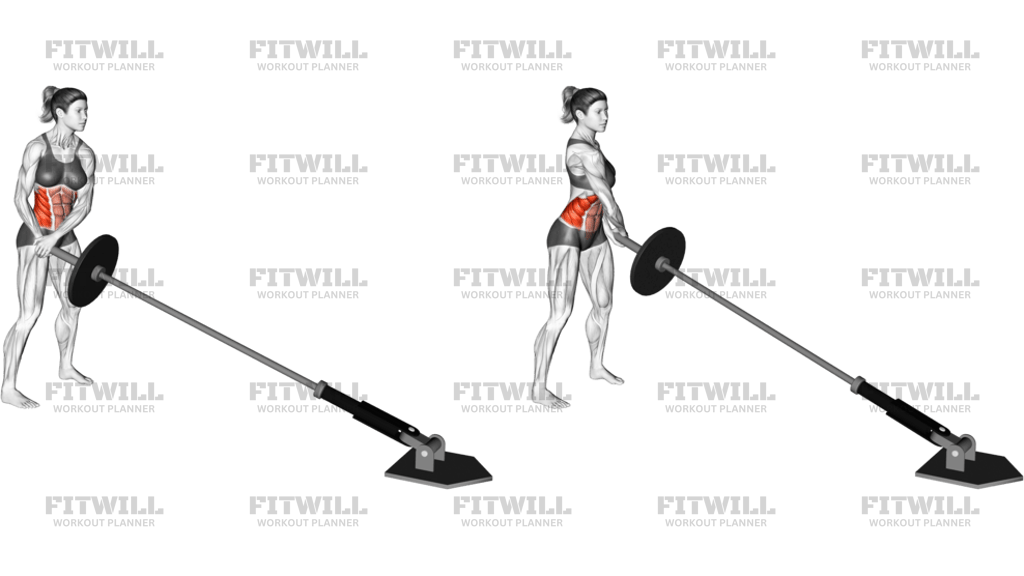
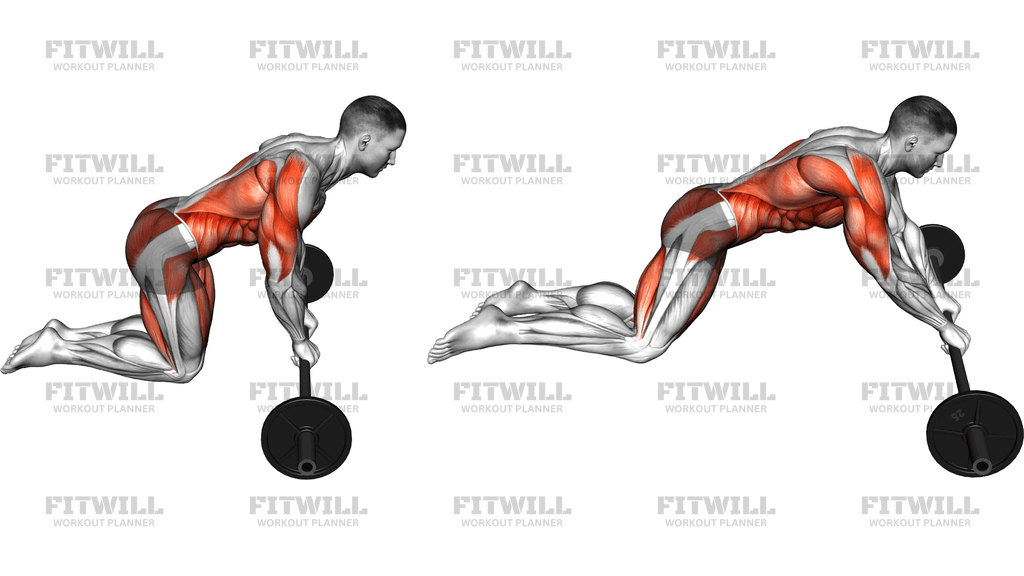
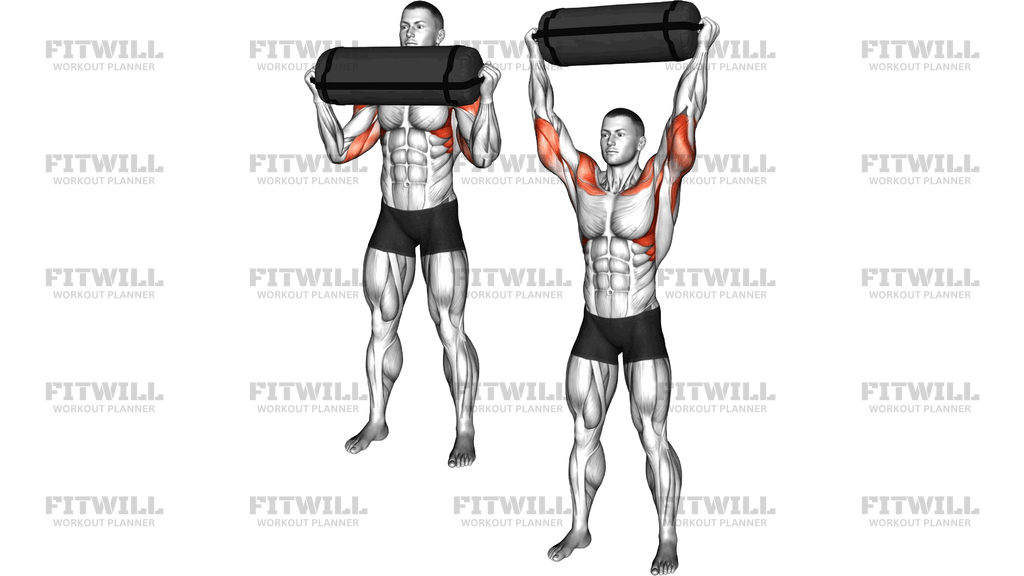
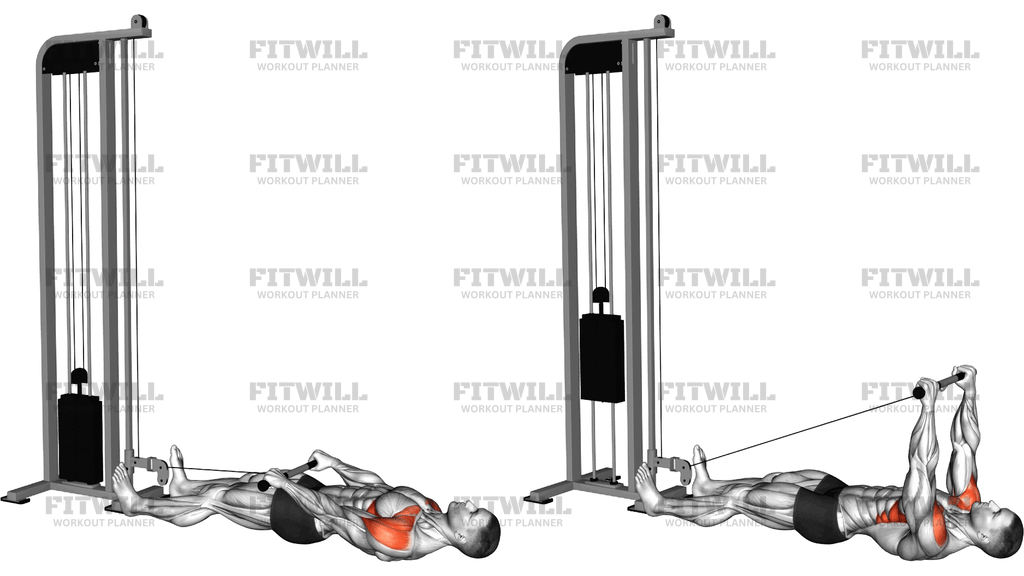
Barbell Side Rollout
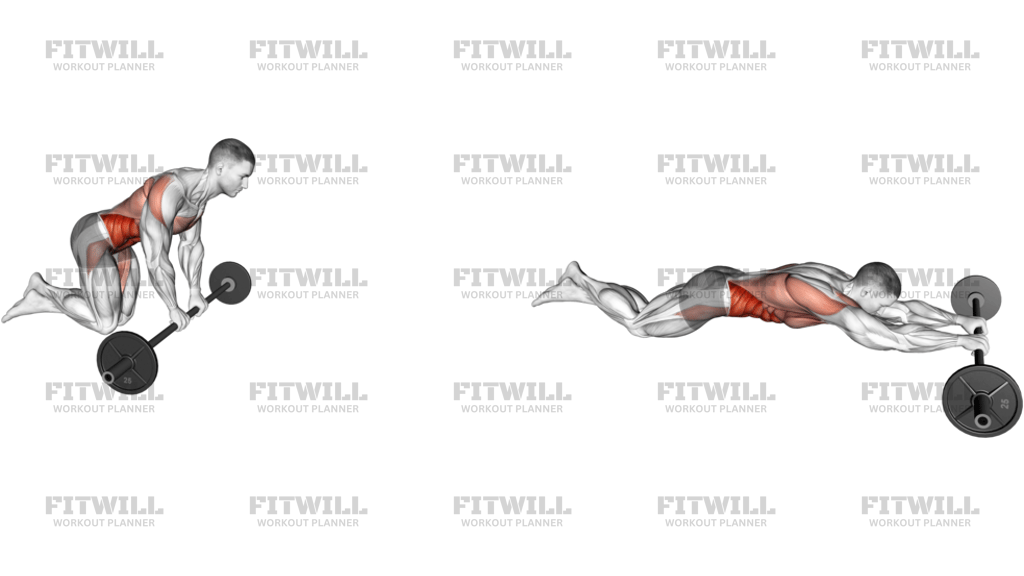
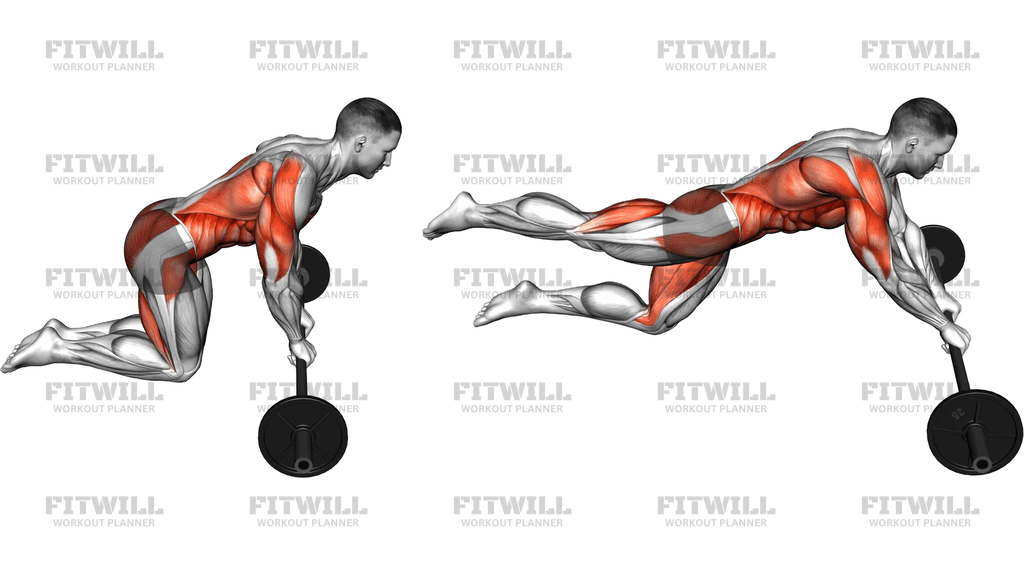
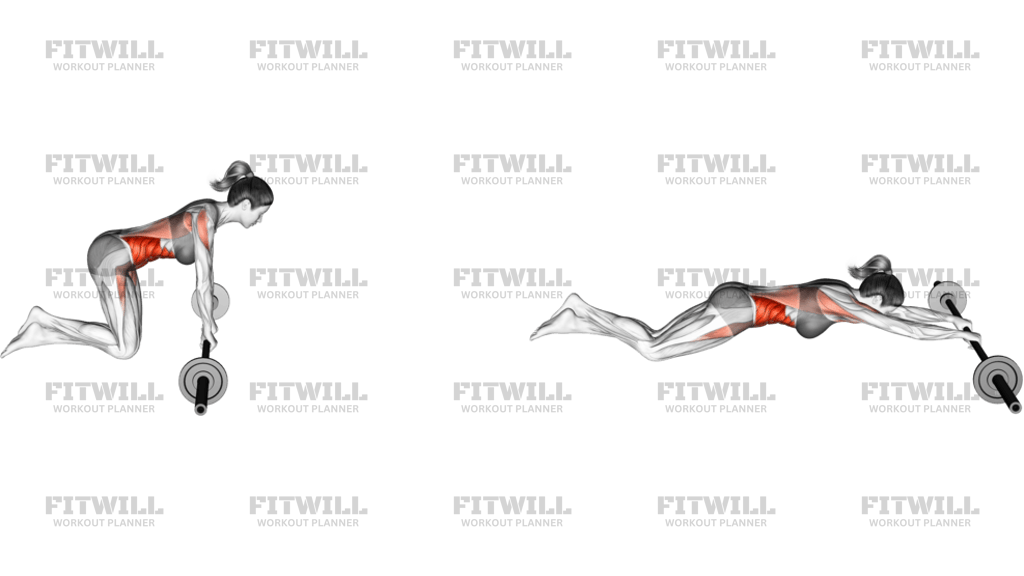
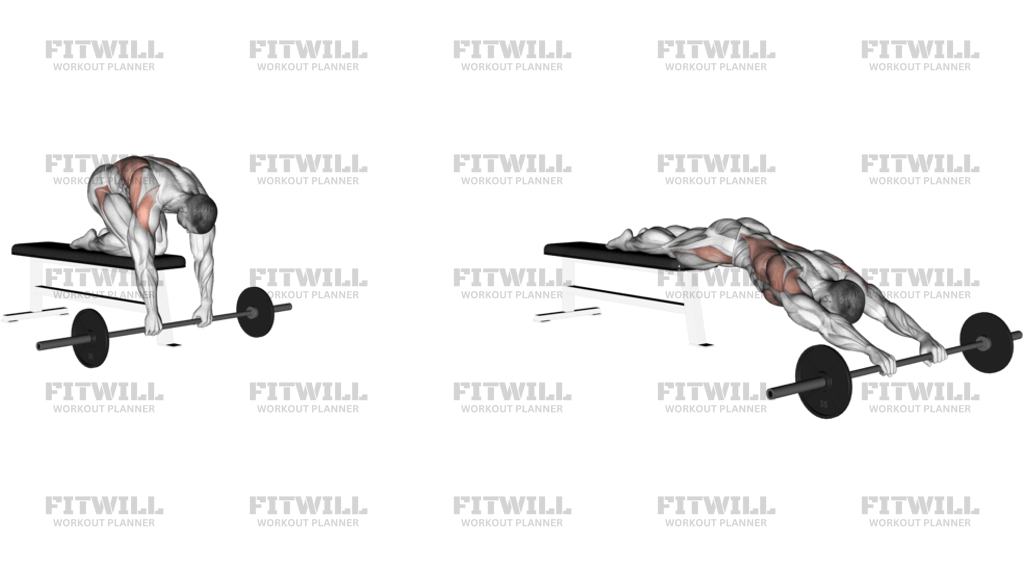
The Barbell Side Rollout is an anti-extension and anti-rotation core exercise performed with a loaded barbell that rolls on its plates like a crude ab wheel. From a kneeling position you grip the bar in the center, roll it out forward and slightly to one side along an angled path, then pull it back with your abs and obliques doing the braking and the return work. The angled path is what separates it from a standard rollout: because the bar drifts off-center, one side of your waist has to resist lengthening while the other side compresses, which loads the obliques far more directly than a straight-line rollout.
This movement suits lifters who already own a solid straight rollout or plank and want a harder challenge for the lateral core. It is popular in strength and conditioning settings because rolling toward one side teaches the trunk to resist rotation under load, a quality that carries over to sprinting, throwing, swinging implements, and heavy carries. It also trains the lats and shoulders isometrically, since your arms must stay locked out and anchored to the bar through the entire range.
Setup matters more here than in most core work. Use round, evenly loaded plates on each side so the bar rolls smoothly and predictably, and set the bar on a non-slip surface. Your hands should start directly under your shoulders, knees on a pad, hips tucked so your lower back is not already arched before you move. If the plates are uneven or the floor lets the bar slide sideways unpredictably, the exercise turns into a gamble with your lower back.
To execute it well, brace your whole trunk as if bracing for a punch, then roll the bar out along a diagonal line so your body travels into an almost-straight position with a slight side bend. The farthest point should feel demanding but never leave your hips sagging or your waist twisting toward the floor. Pull the bar back by driving your arms toward your knees and curling your pelvis under, keeping the return just as controlled as the way out.
Most people use this exercise in low-rep, high-quality sets of 5 to 8 per side, placed early in a session when the core is fresh. Beginners should earn it first with planks, dead bugs, and standard kneeling rollouts. Treat it as a skill movement: the goal is a rigid trunk traveling along a clean diagonal path, not extra distance. Cutting the range to half extension with a perfect line beats a full rollout with a sagging lower back every time.
[ Workout Log & Planner ]
Put your next workout in Fitwill
Keep your plan and training log ready when you are.


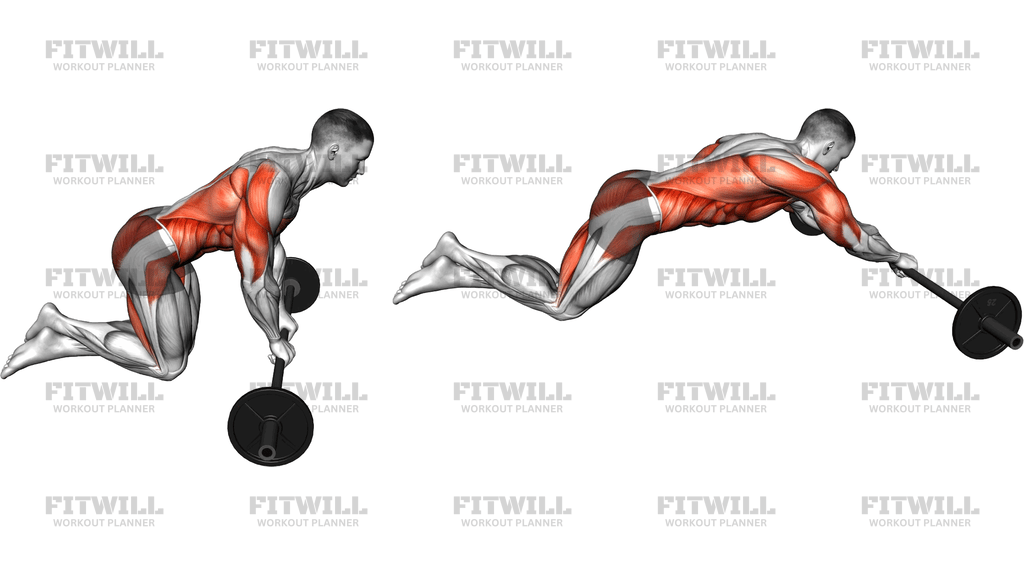
Instructions
- Load a barbell evenly with round plates on both sides and set it on the floor so it can roll freely without sliding sideways.
- Kneel on a pad behind the bar and grip the barbell in the center with both hands, shoulder-width apart, arms straight and directly under your shoulders.
- Tuck your pelvis under so your lower back is flat, squeeze your glutes, and brace your abs hard before the bar moves an inch.
- Roll the bar forward and slightly toward one side along a diagonal path, letting your body lengthen while your trunk stays rigid.
- Continue until your body is nearly parallel to the floor with a slight side bend, arms fully extended, hips still tucked and level.
- Pause briefly at the far point, making sure your lower back has not arched and your shoulders have not collapsed toward the floor.
- Pull the bar back toward your knees by engaging your abs and obliques, keeping your arms straight so the trunk, not the elbows, does the work.
- Exhale as you roll out under control, and inhale as you pull back, keeping the brace constant through both directions.
- Complete all repetitions toward one side, then reset your brace and perform the same number on the opposite side.
Tips & Tricks
- Check that both plates are the same size and weight before starting; a lopsided bar will roll unevenly and pull you into a twist you cannot control.
- The most common fault is the hips sagging as the bar travels out, which dumps the load into the lower back. Stop the rollout at the exact point your pelvis starts to tip.
- If your elbows bend on the way back, the weight is too heavy or you are too fatigued. Bending the arms turns it into a pullover and strips the tension off the abs.
- Keep the diagonal path shallow at first, rolling only a foot or so past your shoulders, and extend the range over weeks as your obliques adapt.
- Push the floor away with your knees and keep your toes laced under or the tops of your feet down consistently so your lower body does not drift with the bar.
- Avoid holding your breath for the entire set; a sharp exhale at the deepest point often helps you keep the ribs down instead of flaring them up.
- Do your last straight rollout of the workout, not your first, and never attempt side rollouts cold, since the obliques are vulnerable to sudden twisting under load.
- If one side rolls out smoothly but the other shakes or collapses, spend extra sets on the weak side first while you are fresh.
- Slick gym floors can make round plates slide instead of roll. Test the bar with a short, low-effort rollout before committing to a full range.
Frequently Asked Questions
Which muscles does the Barbell Side Rollout work?
The primary work comes from the abs and obliques, which resist extension and rotation as the bar travels off-center. The lats, shoulders, and triceps work isometrically to keep the arms anchored and locked out throughout.
How is the Barbell Side Rollout different from a regular ab wheel rollout?
The bar travels along a diagonal path instead of straight ahead, so one side of the waist must resist lengthening under load. This adds a strong anti-rotation demand that a straight rollout does not provide.
Can beginners do the Barbell Side Rollout?
It is not a good first core exercise. Build up through planks, dead bugs, and standard kneeling rollouts first, then start with a short diagonal range and only extend it once your trunk stays rigid.
Why should the plates on the barbell be round and evenly matched?
Round, identical plates let the bar roll smoothly and predictably along the diagonal path. Mismatched or hexagonal plates create uneven rolling that can twist your trunk unexpectedly at the weakest point of the movement.
How far should I roll the bar out on each rep?
Roll only as far as you can keep your hips tucked and your lower back flat, which for most people is short of full extension. The end position should be a near-straight body with a slight side bend, never a sagging or twisted trunk.
Why do my lower back and not my abs feel this exercise?
That usually means your pelvis is tipping forward and your lower back is arching as you roll out. Reduce the range, re-tuck the pelvis before each rep, and squeeze the glutes harder to hold the position.
What can I use instead of a barbell for this movement?
A wheel roller works for the straight version, but for the side path a loaded barbell with round plates is the practical choice. A closer substitute for the oblique demand is a cable or band anti-rotation press, which is easier to scale.
How many reps and sets of the Barbell Side Rollout should I do?
Because form breaks down quickly under fatigue, keep sets in the range of 5 to 8 controlled reps per side for 2 to 4 sets. Stop the set the moment your hips start to sag or twist.
Should I roll to both sides in the same set?
Finish all reps on one side, reset your brace, then complete the same number on the other side. Alternating every rep makes it easy to lose the diagonal path and rush the setup.
Is it safe to do the Barbell Side Rollout every day?
No, treat it like a demanding strength exercise rather than a daily burn. The trunk muscles need recovery between hard sessions, so two to three quality exposures per week is a sensible dose.