Cable Lying Floor Front Raise
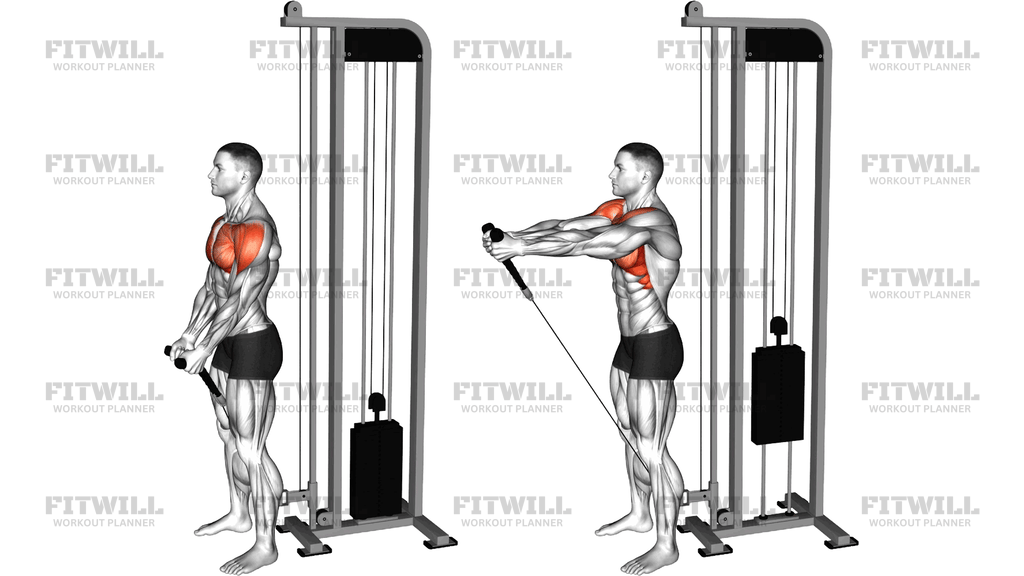
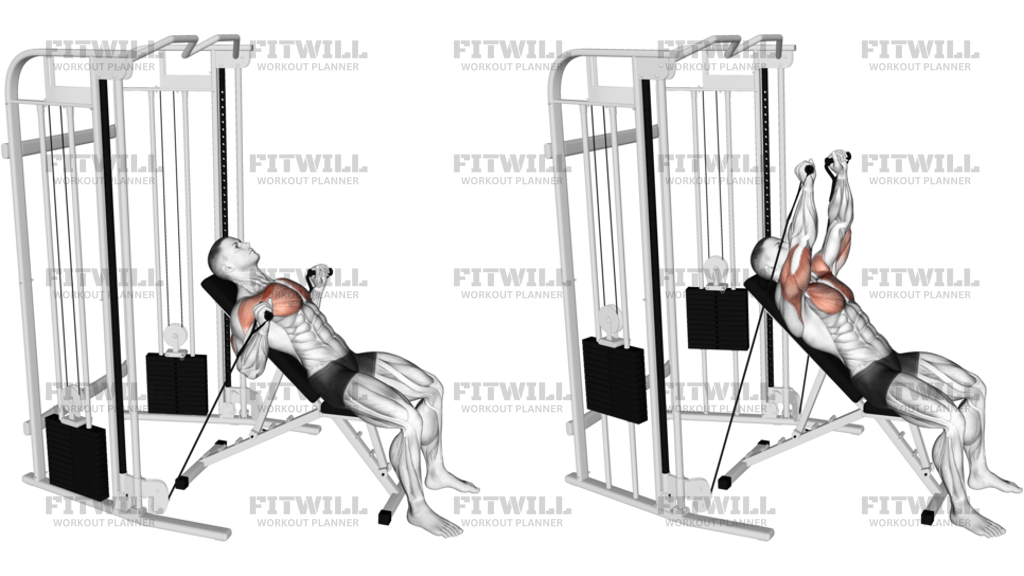
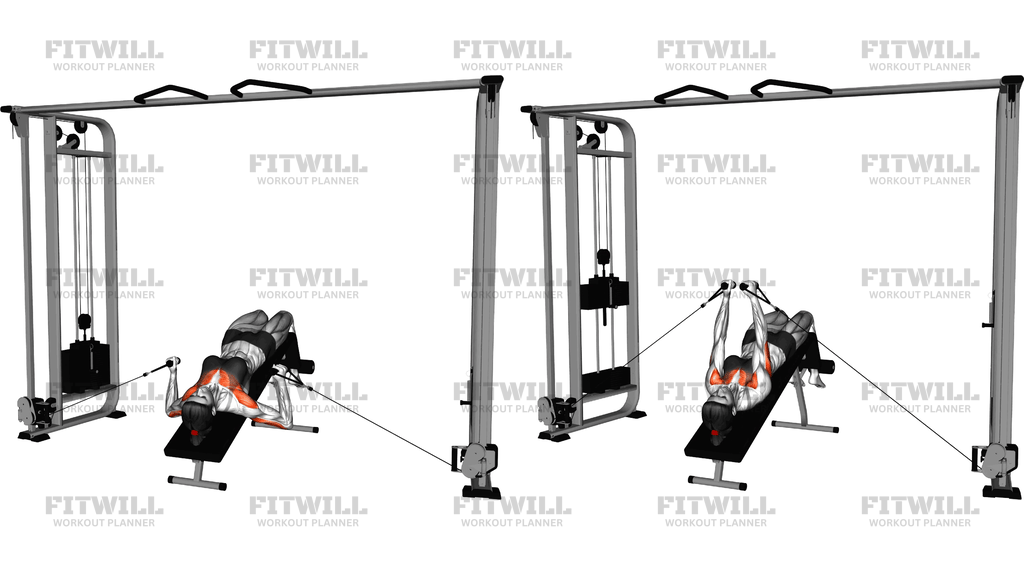
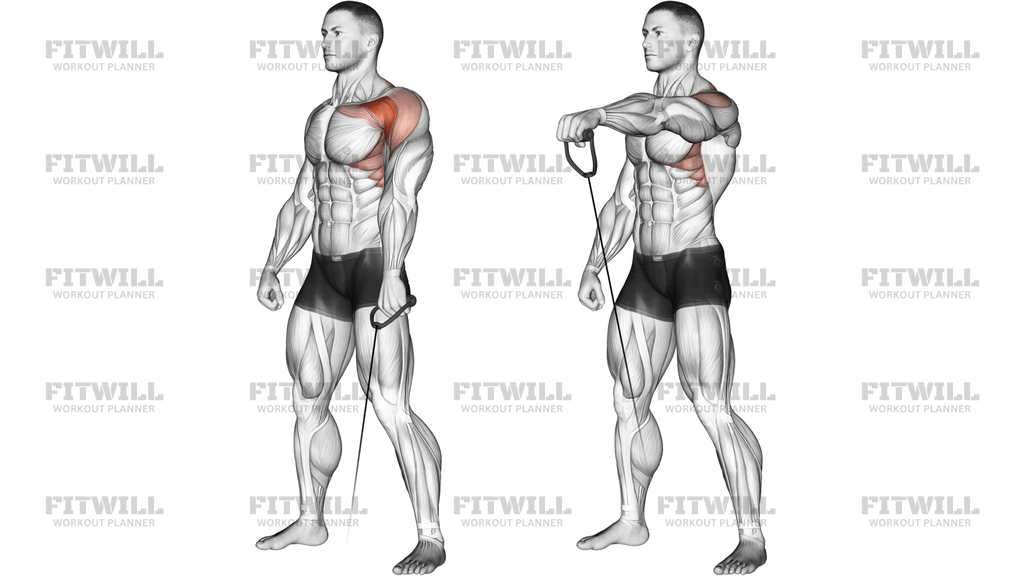
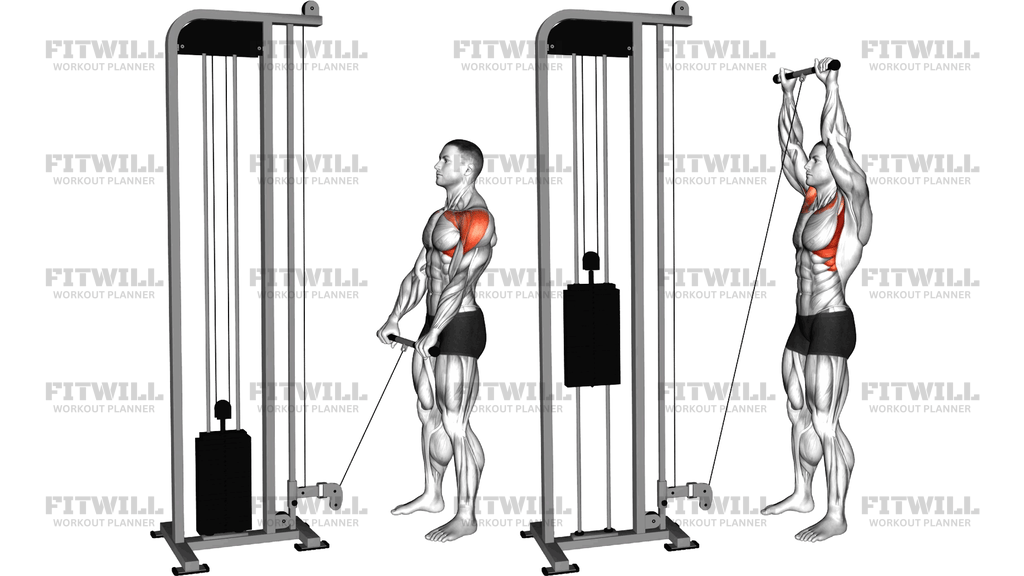
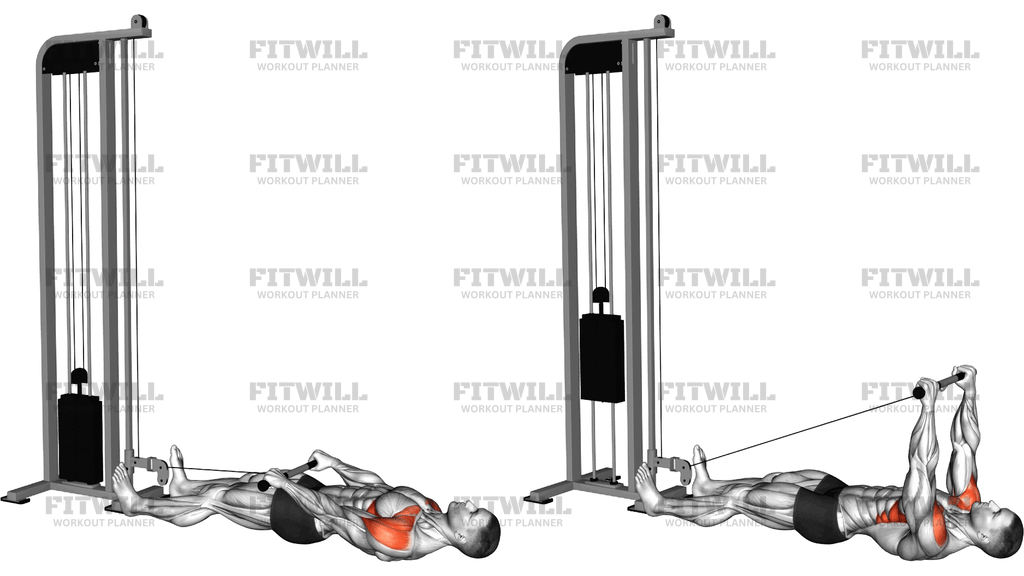
The Cable Lying Floor Front Raise is a shoulder flexion exercise performed face-up on the floor with a straight bar attached to the low pulley of a cable machine. You lie with your head pointing away from the machine, hold the bar over your thighs with straight arms, and sweep it in an arc up until it sits above your chest, then lower it back along the same path under control. Because the cable pulls toward your feet, the resistance on your shoulders grows as your arms rise, which is the opposite of what happens with a dumbbell front raise.
The main muscles at work are the front delts, which lift the arms, with the chest assisting during the early part of the arc. Your abs and deep core stay busy the whole time because there is no bench backing you up — the floor supports your spine, but your trunk still has to hold its position while the cable pulls your shoulders toward your feet. This makes the movement a useful combination of direct shoulder work and light anti-extension core training.
The floor setup matters more than it might seem. Lying flat removes any momentum from your legs and hips, so the only way to move the bar is through your shoulders and arms. It also lets people who feel lower back discomfort during standing front raises keep their spine fully supported while still working through a long range of motion. The cable keeps constant tension in a way free weights cannot, especially at the top of the rep where a dumbbell front raise tends to unload.
This exercise suits lifters who want a focused anterior delt movement without a barbell or heavy dumbbells, beginners learning to feel shoulder flexion without swinging, and anyone with a bench-free setup or a cranky lower back. It also works well as a finishing movement after pressing, when the shoulders are pre-fatigued and light, strict reps are the goal.
Keep expectations realistic: this is an isolation exercise, so it pairs with pressing rather than replacing it. Use a modest weight, move the bar in a smooth arc rather than jerking it off the thighs, and stop the rep when your arms are roughly vertical over your chest. If your hips lift, your lower back arches hard, or you feel it more in your neck than your shoulders, the weight is too heavy or the range is too long.
[ Workout Log & Planner ]
Put your next workout in Fitwill
Keep your plan and training log ready when you are.


Instructions
- Set the pulley of the cable machine to the lowest position and attach a straight bar.
- Lay an exercise mat on the floor if you like, then lie on your back with your head pointing away from the machine and your feet toward the base of the tower.
- Reach overhead past your head to grip the bar with a shoulder-width overhand grip, then bring the bar over your body so it rests on your thighs with your arms fully straight.
- Position yourself far enough from the machine that the cable is taut and runs clear of your legs before you start the first rep.
- Brace your abs lightly and press your lower back toward the floor so your ribs stay down and your hips stay in contact with the ground.
- Exhale and raise the straight bar in a wide arc in front of you, keeping your elbows nearly locked, until your arms are vertical above your chest.
- Pause briefly at the top, keeping your shoulders down away from your ears rather than shrugging.
- Inhale as you lower the bar back along the same arc until it returns to your thighs, keeping tension in the cable instead of letting it drop.
- Complete all reps with the same smooth tempo, then release the bar and sit up carefully, turning to the side to avoid the moving cable.
Tips & Tricks
- The most common mistake is yanking the bar off the thighs with a hip or trunk snap. If you feel your back press into the floor or your hips tilt, drop the weight and start each rep from a still position.
- Keep the arc wide and out in front of your body. Dragging the bar close to your chest turns the movement into something closer to a pullover and shifts work away from the front delts.
- Do not let the cable rest slack at the bottom. Your arms should lower until the bar touches your thighs, but the tension should remain, which protects the shoulder at the stretched end of the rep.
- A soft elbow bend is fine, but if your elbows bend and straighten repeatedly you are turning the set into a triceps movement. Lock the elbow angle in place before the first rep and hold it.
- Watch where your shoulders sit at the top. Reaching hard toward the ceiling tends to shrug the upper traps; keep the shoulder blades settled so the front delts do the lifting.
- Because there is no bench, the floor gives you honest feedback. If your lower back gaps away from the ground during the raise, your ribs are flaring — exhale on the way up and keep the brace.
- Use a lighter weight than you would for a standing front raise. The supine position removes momentum, so the shoulders get no help, and ego lifting shows up immediately as poor form.
- Grip the bar shoulder-width. A very wide grip shortens the arc and a very narrow grip can pinch the front of the shoulder at the top.
- If the cable rubs against your legs, slide your body a few inches further from the machine until the line of pull sits just outside your hips.
Frequently Asked Questions
What muscles does the Cable Lying Floor Front Raise work?
The front delts are the primary movers, lifting your straight arms from your thighs to vertical. The chest assists through the lower half of the arc, and your abs work continuously to keep your trunk from being pulled toward the machine.
Why do this lying on the floor instead of a standing front raise?
The floor blocks your hips and legs from generating momentum, so every rep comes from the shoulders. It also supports the spine fully, which many people find more comfortable than standing with a load out in front.
Is the Cable Lying Floor Front Raise good for beginners?
Yes. The cable path guides the movement, the weight can be set very light, and the supine position makes swinging almost impossible. Beginners should master the arc with a light stack before adding load.
Why does the resistance feel heavier at the top of the rep?
The low pulley pulls the bar toward your feet, so as your arms approach vertical the horizontal distance between the cable line and your shoulder grows and the torque peaks. This is the reverse of a dumbbell front raise, which is hardest around shoulder height.
How far should I lower the bar at the bottom?
Lower until the bar touches or nearly touches your thighs with the cable still taut. Dropping it further so the stack slams down removes tension and can yank your shoulders at the start of the next rep.
My lower back arches during the raise — how do I fix it?
That usually means the load is too heavy or you are flaring your ribs as your arms rise. Exhale through the lift, press your lower back gently toward the floor, and reduce the weight until you can keep your hips and back on the ground for every rep.
What can I substitute if the cable machine is busy?
A band anchored low behind you works with the same arc: lie on your back, grip the band, and raise your straight arms overhead. A lying dumbbell front raise is another option, though tension will drop off near the top.
Should my elbows be completely straight?
A very slight, fixed bend is comfortable and normal. What you want to avoid is bending and extending the elbows during the set, which turns shoulder isolation into a partial triceps exercise.
How many reps and sets should I use?
Because it is an isolation movement, 2 to 4 sets of 10 to 15 controlled reps work well, usually after your main pressing work. Keep the tempo even rather than chasing heavy weight.
Is the Cable Lying Floor Front Raise safe for the shoulders?
It is generally a low-risk setup because the floor supports the arms through the full range and the cable stays taut. If you have an existing shoulder issue, use a light weight, keep the arc pain-free, and stop if you feel pinching at the top.