Barbell Side Hip Rollout
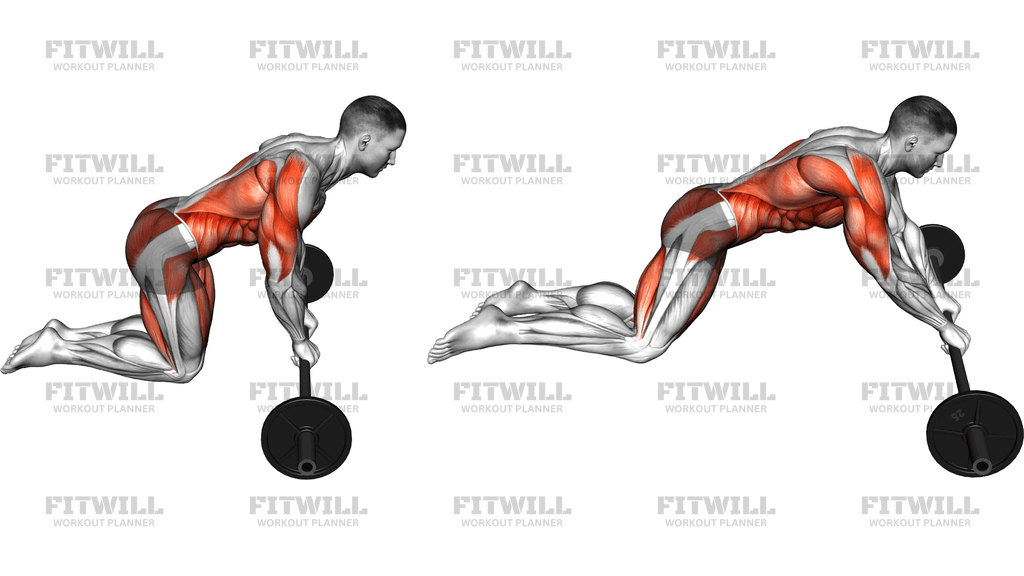
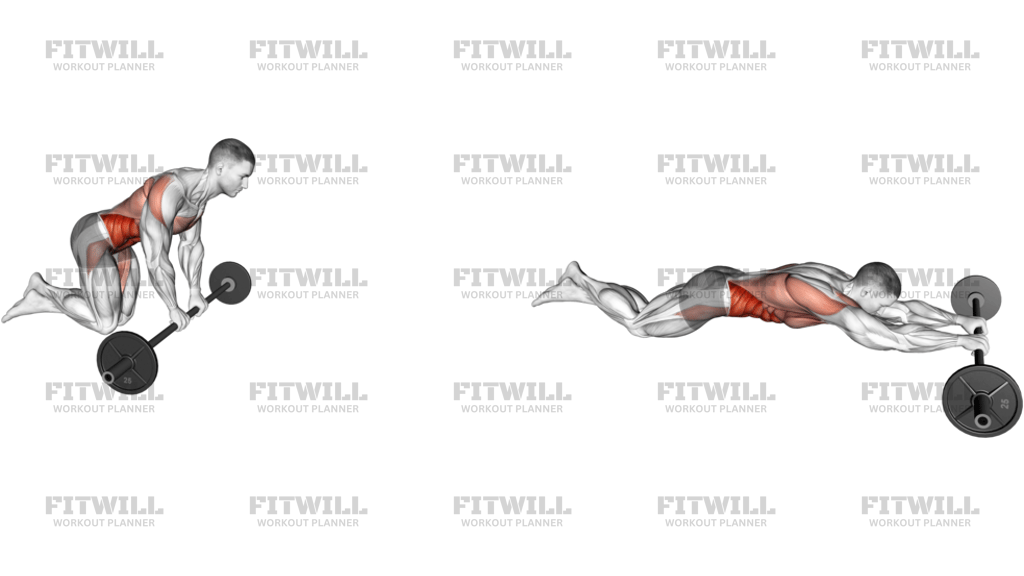
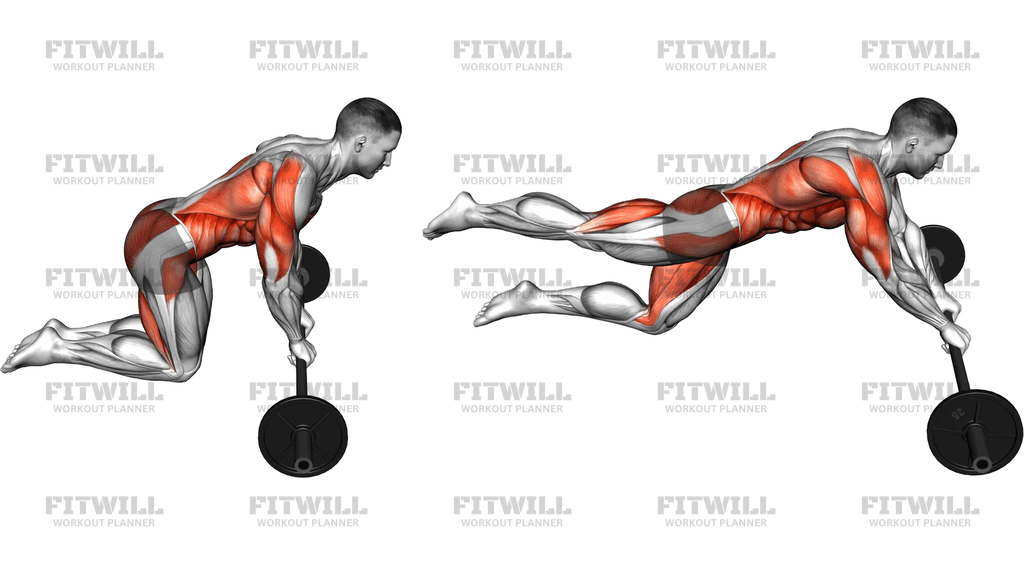
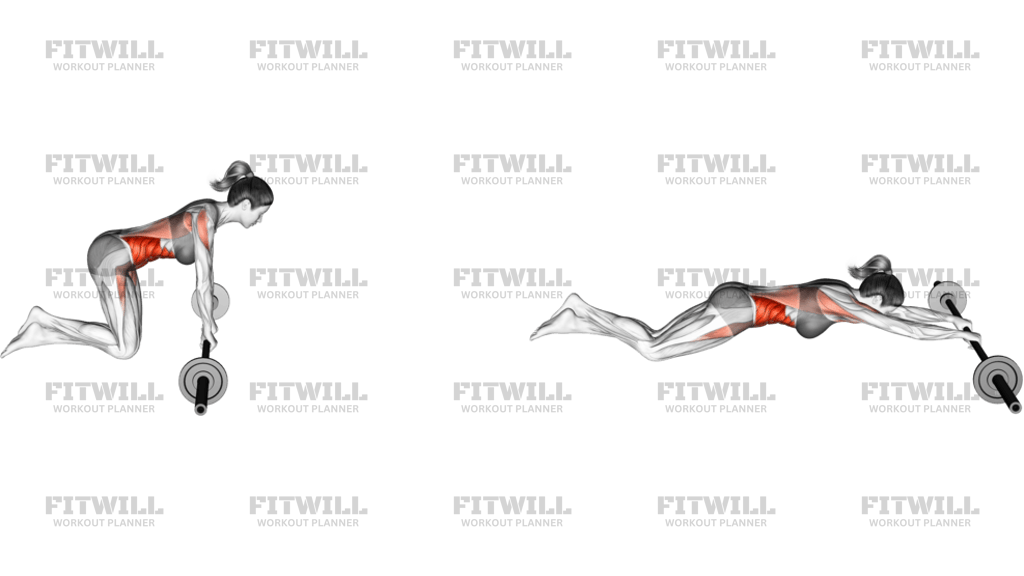
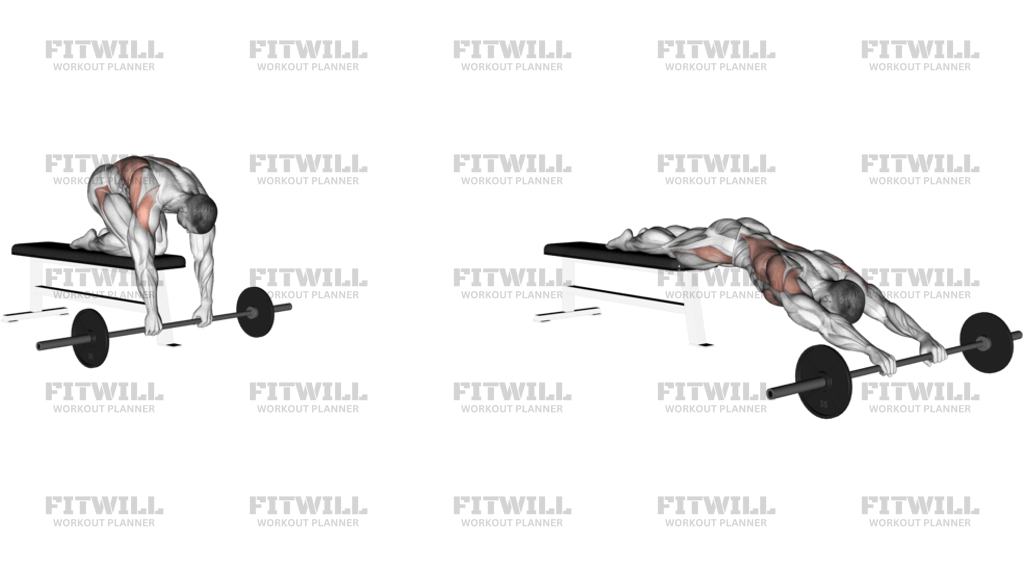
The Barbell Side Hip Rollout is a kneeling rollout performed with a loaded barbell instead of an ab wheel. You kneel on the floor, grip the sleeve or shaft of a barbell that sits in front of your knees, brace hard, and roll it forward and away from you until your body stretches out close to the floor, then pull it back with your abs. Because the barbell's diameter is smaller than most ab wheels and the plates create a long, weighted lever, the movement is surprisingly demanding even with light loading.
The main work is done by the rectus abdominis and deep core, which must resist lumbar extension as your body lengthens over the bar. Your lats and front shoulders drive the pulling and steering, the glutes and quads keep your hips from sagging, and the obliques and lower back stabilize the trunk the whole way. The name points to the hip action: the hinge and extension at the hips is what separates a clean rollout from a belly-drag, and you should feel a strong stretch through the front of your hips and abs at the far end.
This is a progression tool. Lifters who have outgrown basic planks and crunches use it to build anti-extension strength that carries over to squats, deadlifts, presses, and running, where the trunk has to stay rigid under load or speed. Calisthenics athletes use it as preparation for standing rollouts and more advanced wheel work. Because the setup is simple, it fits easily into a core finisher or a warm-up activation block.
Setup quality decides everything here. A barbell with at least one or two plates on each end rolls smoothly but slowly, which gives you time to control the path, and the loaded sleeves keep the bar from drifting sideways. Kneel on padding if your knees are sensitive, and place the bar so you can grip it directly under your shoulders without reaching. Starting too far away forces you to lunge or yank the bar back, which is where form usually breaks.
To execute well, think of the rollout as a moving plank, not a stretch. Tuck the pelvis slightly, squeeze the glutes, and push the bar away in a slow arc while your hips travel forward with it. Stop before your lower back caves in, even if that means a shorter range at first. The return comes from pulling the bar toward your knees with your lats while curling your pelvis under, not from bouncing your hips up. Expect to master a partial range before the full rollout feels controlled.
Two practical cautions. First, this exercise punishes a lazy brace, so if you feel your lower back arching or pinching, cut the range immediately. Second, keep your knees on a mat and your weight off the kneecap point; shifting onto a slick floor or an unprotected knee can turn a good core set into a bruised kneecap. Slow sets of five to eight quality reps beat fast sets of twenty every time with this movement.
[ Workout Log & Planner ]
Put your next workout in Fitwill
Keep your plan and training log ready when you are.


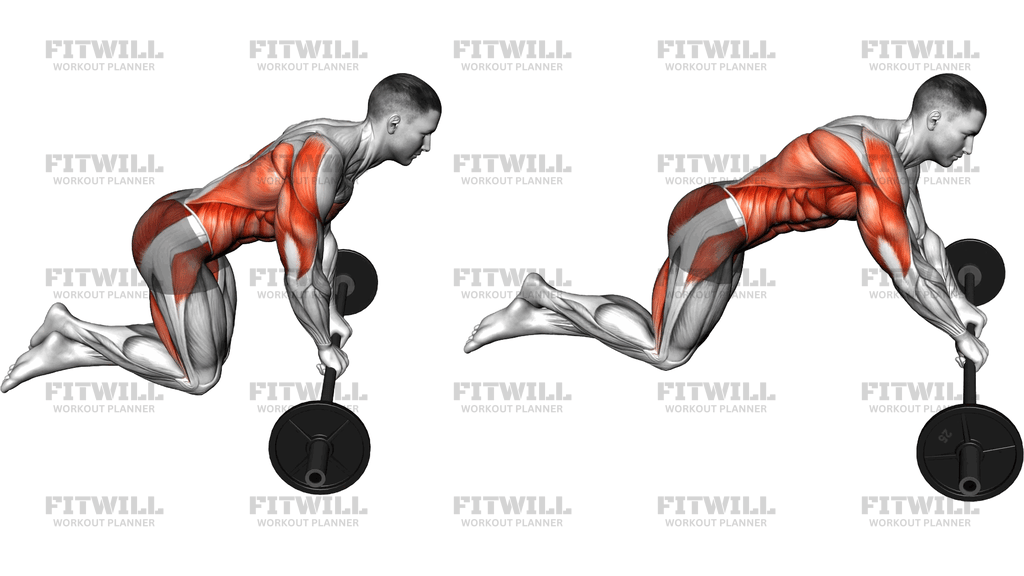
Instructions
- Load a barbell with a light plate on each end and place it on the floor in front of a mat, with the plates acting as the rolling surface.
- Kneel on the mat with both knees roughly hip-width apart and position the bar directly under your shoulders, then grip the bar with hands slightly wider than shoulder width, palms facing away from you.
- Stack your shoulders over your wrists, tuck your pelvis under slightly, and squeeze your glutes so your torso and thighs form one braced line from head to knees.
- Take a deep breath into your belly and brace your abs as if bracing for a light punch before the bar moves at all.
- Roll the barbell forward and slightly away in a smooth arc, letting your hips and torso travel forward together while your arms extend overhead and your knees stay planted.
- Continue until your body is nearly extended toward the floor and you feel a strong stretch through your abs and hip flexors, stopping just before your lower back starts to arch and sag.
- Pause for a beat in the stretched position, keeping the glutes tight so your hips do not drop.
- Pull the bar back toward your knees with your lats while curling your tailbone under, rounding the hips up to reverse the exact path you rolled out on.
- Exhale as you return, finish back over the bar with shoulders stacked over wrists, then reset your brace and glutes before starting the next rep.
Tips & Tricks
- Start with small plates, not heavy ones. Large or heavy plates raise your starting height and make the rollout easier, so drop to smaller plates once you want more range and difficulty.
- The most common failure is the lower back arching at the far end. If your ribs flare and your belly drops toward the floor, you rolled past your current brace strength, so shorten the range and build up gradually.
- Do not let the bar drift sideways. Rollouts with a round bar, unlike a wheel with channels, can wander, so think about pushing the bar along a straight track with equal pressure in both palms.
- Keep the hips moving with the arms. If your hips stall and your arms keep going, the movement turns into a shoulder stretch instead of a core exercise; cue yourself to slide your knees forward as the bar rolls out.
- Push through the floor with your knees rather than hovering your kneecaps. Hovering loads the knee joint directly and fatigues you early.
- Avoid exhaling everything at the top of the rollout. Keep some air in your belly through the extension and exhale on the pull back, or your brace will deflate right where you need it most.
- If kneeling is uncomfortable, fold a mat in half or place a pad under both knees before you start, not between reps.
- Film yourself from the side once. Most people cannot feel the difference between a braced rollout and a sagging-hip rollout, but it is obvious on video.
- Treat soreness in the lats and front shoulders as normal; sharp lower back discomfort is not. The latter means the range or volume is too much for now.
Frequently Asked Questions
What muscles does the Barbell Side Hip Rollout work?
The primary muscles are the rectus abdominis and deep core, which resist extension as you roll out. The lats and front shoulders pull and steer the bar, while the glutes, quads, obliques, and lower back stabilize the hips and trunk throughout.
Why use a barbell instead of an ab wheel for rollouts?
A barbell has a smaller rolling diameter than most ab wheels and the plates add weight, so the same range is harder. It also lets you train rollouts when no wheel is available, using nothing more than a loaded bar on the floor.
How much weight should I load on the bar for the Barbell Side Hip Rollout?
Start with one small plate on each end just so the bar rolls smoothly; the loading is for rolling quality, not resistance. If the weight pulls you forward faster than you can control, it is too heavy.
Can beginners do the Barbell Side Hip Rollout?
Beginners can, but only with a reduced range. Roll out a short distance, stop well before the hips want to sag, and build range over several weeks. Someone who cannot yet hold a solid plank for 45 seconds should start there first.
Why do my lower back and hips ache after the Barbell Side Hip Rollout?
Muscle soreness in the abs, hip flexors, and lats is expected, but a sharp or pinching feeling in the lower back usually means you arched at the far end. Cut the range, keep the pelvis tucked and glutes squeezed, and the discomfort should stop appearing.
How far should I roll the barbell out?
Only as far as you can keep a straight line from head to knees without the lower back arching. A controlled three-quarter rollout beats a full rollout where the hips drop every time.
What can I substitute if I have no barbell?
A standard ab wheel rollout is the closest match, followed by a stability ball rollout or a sliding plank using towels on a smooth floor. All three challenge the same anti-extension role of the core.
Should my feet stay on the floor during the Barbell Side Hip Rollout?
No. You kneel with the tops of your feet and shins on the floor, and as you roll out the feet naturally lift behind you so your weight sits on the knees and hands. Pushing off the toes turns it into a different, less stable variation.
How many sets and reps of the Barbell Side Hip Rollout should I do?
Three to four sets of five to eight slow, controlled reps works well, usually at the end of a lifting session. Stop a set as soon as your brace quality drops, because extra sloppy reps teach the wrong pattern.