Kneeling Pseudo Planche Push Up
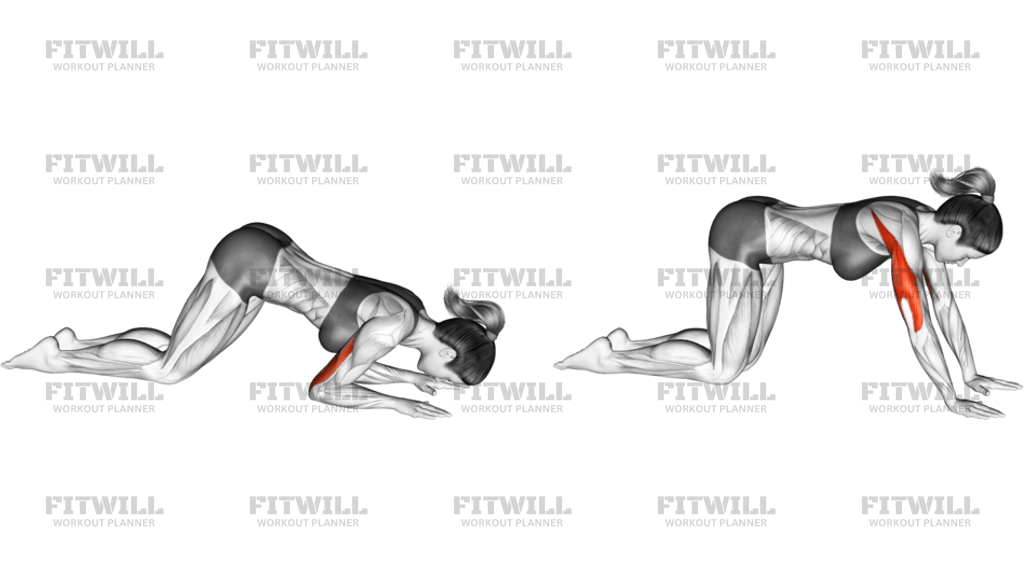
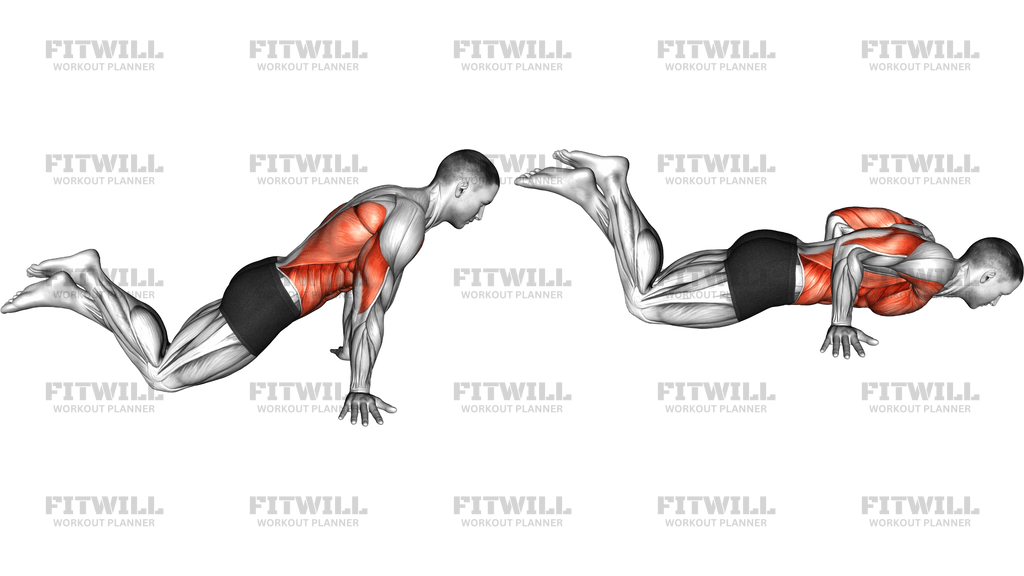
The Kneeling Pseudo Planche Push Up is a scaled version of one of the most demanding push-up variations in calisthenics. Instead of holding a full planche lean from the toes, you kneel with your knees on the floor and your feet lifted behind you, place your hands beside your hips rather than under your shoulders, and lean your weight forward over your wrists. That forward lean is the entire point of the exercise: it shifts your body weight ahead of your hands and forces the front of your shoulders to work far harder than they would in a regular push-up.
This movement is a stepping stone. If a full pseudo planche push-up or any planche training is your goal, the kneeling version lets you practice the exact wrist position, forward lean, and pressing angle with a reduced load. It is also valuable on its own for anyone who wants stronger, more resilient shoulders and a harder-hitting pressing strength that carries over to regular push-ups, dips, and overhead work.
The main muscles working are the front shoulders, which have to hold and press your body weight from a mechanically disadvantaged position. The chest, especially the upper portion, assists throughout the press, and the triceps extend the elbows at the top. Because your hands sit low next to your hips, your wrists and forearms take on significant demand, and your core works continuously to keep your hips from sagging as you lean forward.
Setup matters more here than in almost any other push-up variation. If your hands drift back under your shoulders, you are simply doing a kneeling push-up. To get the planche effect, the hands must be roughly in line with your midsection, fingers angled slightly outward or turned back if that is more comfortable for your wrists, and your shoulders must travel well in front of your wrists before you start pressing.
To perform it well, kneel down, set your hands by your hips, straighten your arms, and shift your weight forward until your shoulders are clearly ahead of your hands. Bend your elbows and lower your chest toward the floor while keeping that forward lean, then press back up without letting your shoulders drift backward over your wrists. The descent and the press should both stay slow enough that you control every inch of the range.
A few practical points will keep this safe and productive. Start with a modest lean and increase it gradually over weeks, since the wrists and shoulders need time to adapt to the loading angle. Kneel on a mat or soft surface to protect your knees, and stop the set as soon as your hips drop or your lean collapses, because sloppy reps here teach exactly the habits you are trying to avoid.
[ Workout Log & Planner ]
Put your next workout in Fitwill
Keep your plan and training log ready when you are.


Instructions
- Kneel on an exercise mat with your knees about hip-width apart and lift your feet off the floor behind you so your shins are vertical and your lower legs stay relaxed.
- Place your palms flat on the floor alongside your hips, roughly in line with your hip crease, with your fingers spread and angled slightly outward or turned back toward your feet.
- Straighten your arms and lean your whole body forward, shifting your shoulders well in front of your wrists until you feel strong pressure through the heel of your palms and the front of your shoulders.
- Brace your abs and squeeze your glutes lightly so your hips and torso form one rigid line from your knees to your head; do not let your lower back sag.
- Inhale, then bend your elbows to lower your chest and stomach toward the floor, keeping your shoulders ahead of your wrists the entire way down.
- Descend until your chest is close to the floor or your elbows reach roughly a 90-degree bend, whichever you can control without losing the lean.
- Exhale and press the floor away, driving your shoulders forward as you extend your elbows so you finish in the same leaned position you started from.
- Keep the tops of your feet lifted and crossed or held together behind you throughout the set so your knees and arms remain the only contact points.
- Complete your reps, then rest your knees down and shake out your wrists between sets.
- Progress by leaning slightly further forward or adding reps each week before attempting harder variations.
Tips & Tricks
- The most common mistake is letting the shoulders slide back over the wrists as you get tired, which turns the exercise into a plain kneeling push-up; if you catch yourself doing this, end the set rather than continue with reduced leverage.
- If your wrists ache, warm them up with circles and gentle stretches first, and try angling your fingers more toward your toes or gripping the edges of two flat objects like parallette-style books to reduce wrist extension.
- Keep your elbows tracking back at roughly 45 degrees to your torso; flaring them straight out to the sides puts extra strain on the shoulders in this leaned position.
- Aim to feel the front of your shoulders working, not your lower back; if your hips sag, tighten your abs and lift your chest slightly before continuing.
- Do not chase depth at the expense of the lean. A partial rep with your shoulders far in front of your hands builds more planche-specific strength than a deep rep performed vertically.
- Your feet will want to drop toward the floor as you press; actively holding them up keeps your body position consistent from rep to rep.
- Build up volume slowly. Because the front shoulders and wrists handle unusual leverage, two or three solid sets with clean form beat high-rep sets where the lean fades.
- Film yourself from the side once in a while; from above or in front, a collapsing lean is easy to miss, but from the side you can clearly see whether your shoulders stay ahead of your wrists.
- Place a folded towel under your knees if the mat alone is not enough padding, so knee discomfort does not distract you from the pressing work.
Frequently Asked Questions
Which muscles does the Kneeling Pseudo Planche Push Up work the most?
The front shoulders carry most of the load because the forward lean places your body weight ahead of your hands. The chest, triceps, and core assist, and the wrist flexors work hard to stabilize your palms.
Why are the hands placed next to the hips instead of under the shoulders?
That low hand position is what creates the planche leverage. With your hands by your hips and your shoulders leaned forward, the front delts must lift your body from a much weaker angle, which is the specific strength this exercise builds.
Is the Kneeling Pseudo Planche Push Up suitable for beginners?
Yes, as long as you begin with a small forward lean and comfortable wrist angle. It is actually the recommended entry point before attempting full pseudo planche push-ups from the toes.
My wrists hurt during this exercise. What should I change?
Turn your fingers slightly outward or back toward your feet, warm up your wrists thoroughly, and keep more of the pressure on the heels of your palms. If discomfort persists, shorten the forward lean or use low parallettes so your wrists stay neutral.
How is the Kneeling Pseudo Planche Push Up different from a regular kneeling push-up?
In a kneeling push-up your hands are under your shoulders and the press is vertical. Here the hands sit by your hips, your shoulders lean well ahead of your wrists, and the pressing angle loads the front shoulders far more heavily.
How far forward should I lean?
Lean only as far as you can control through the whole rep with a straight body line. As your shoulders and wrists get stronger, gradually increase the lean rather than jumping to the maximum position.
What can I use instead if the exercise is too hard?
Regress to a kneeling push-up with hands slightly below shoulder level and a small forward lean, or elevate your hands on a low surface. Both options let you practice the leaned position with less load.
How does the Kneeling Pseudo Planche Push Up help toward the full planche?
It trains the exact overhead-to-hip hand position and the front shoulder strength needed to hold and press from a planche lean. It is one of the most common progressions coaches use before straight-arm planche work.
How many sets and reps should I do?
Start with three sets of five to eight clean reps where your lean holds for every rep. Add reps gradually, and once you can manage sets of twelve or more with a strong lean, progress to the full version from the toes.
Is it safe for the shoulders?
It is generally safe when you progress the lean gradually, keep your elbows from flaring wide, and stop sets as soon as your form breaks. The unusual leverage is demanding, so building volume slowly is the key to keeping your shoulders healthy.