Cable Reverse-Grip Triceps Pushdown SZ-Bar
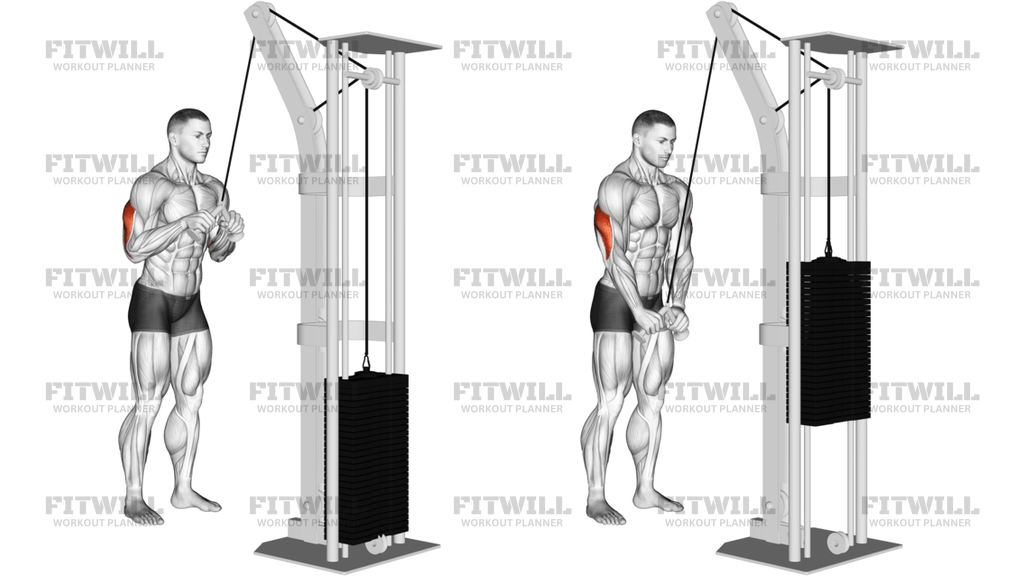
Cable Reverse-Grip Triceps Pushdown SZ-Bar is a cable isolation exercise for the upper arms that keeps the shoulder joint quiet while the elbows do the work. With an underhand grip on an SZ-bar, the movement usually feels most stable when the wrists stay stacked and the elbows stay pinned close to the ribs. The bar should travel from about chest height down to the front of the thighs, with the torso held still and the cable providing constant tension through the whole rep.
The main training goal is triceps development, especially clean elbow extension without using body swing to finish the press. The triceps brachii is the primary mover, while the forearms help hold the reverse grip and the shoulders and core help keep the body organized. Because the grip is supinated, this variation often feels a little friendlier on the wrists and can shift the sensation toward the lower, inner part of the triceps compared with a pronated pushdown.
Setup matters a lot here. Stand close enough to the stack that the cable stays taut at the top, then take a stance that lets you keep balance without leaning on momentum. A small knee bend and a slight forward hinge are usually enough; you do not need to turn the exercise into a full-body press. Keep the ribs down, chest tall, and upper arms fixed in place so the elbows can extend straight down instead of drifting forward and turning the rep into a shoulder movement.
On each repetition, start with the elbows bent and the bar near the upper chest, then press the bar down in a smooth arc until the arms are straight and the triceps are fully shortened. Pause briefly at the bottom, then return the bar under control until the forearms are back near the torso. Breathe out on the press and breathe in on the return. If the load forces the shoulders to shrug, the wrists to bend back, or the torso to rock, the weight is too heavy for the quality this exercise is meant to build.
Use this movement for accessory triceps work, arm-focused hypertrophy, or as a lighter finish after compound pressing. It is a useful choice when you want strict elbow extension with constant cable tension and less joint stress than heavier free-weight triceps work. Keep the range pain-free, keep the elbows honest, and treat each rep as a controlled press rather than a momentum-driven shove.
[ Workout Log & Planner ]
Put your next workout in Fitwill
Keep your plan and training log ready when you are.


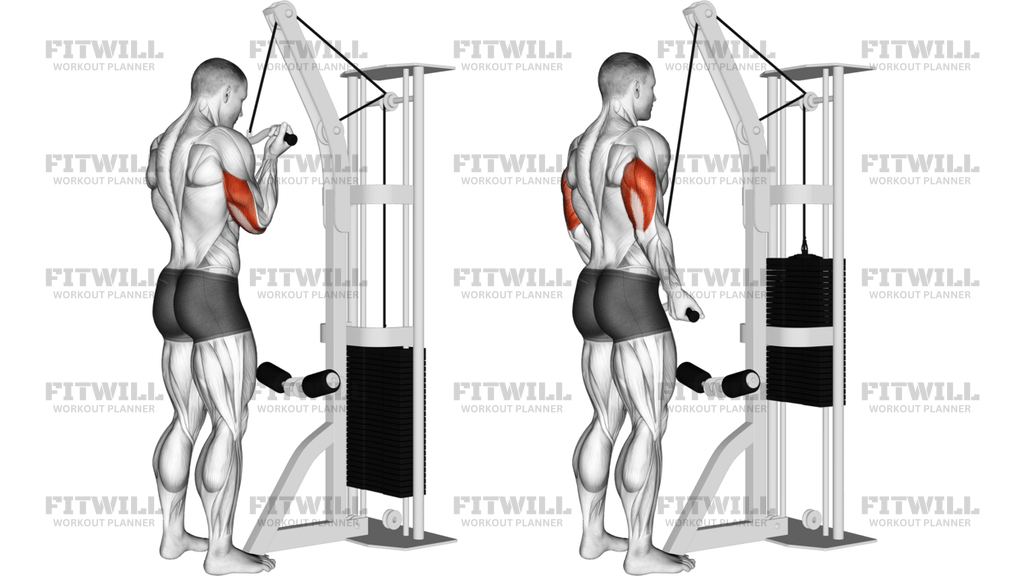
Instructions
- Clip an SZ-bar to a high pulley, face the stack, and take an underhand grip just inside shoulder width.
- Stand close enough that the cable stays taut, with feet about hip-width apart and one foot slightly ahead for balance.
- Set the bar around upper-chest height, tuck your elbows to your sides, and keep your wrists stacked over your forearms.
- Brace your abs, soften your knees, and keep a small forward hinge without rounding your back or leaning on the stack.
- Press the bar straight down by extending only the elbows, letting the bar travel toward the front of your thighs.
- Keep your upper arms still and avoid letting the elbows drift forward as the bar moves to the bottom position.
- Squeeze the triceps for a brief pause at full extension, but do not slam into a hard lockout.
- Return the bar slowly until your forearms come back near your torso and your elbows are bent again.
- Breathe out as you press down, breathe in on the controlled return, and reset your shoulders before the next rep.
Tips & Tricks
- If your wrists feel strained, narrow or widen the SZ-bar grip slightly until the forearm stays aligned with the handle.
- Keep the elbows fixed at your sides; if they travel forward, the set turns into a shoulder-driven push instead of a triceps isolation.
- A small forward lean is enough. If you hinge too far, your lower back will start helping the movement.
- Think about pushing the bar to your thighs, not just straight down, so the cable path stays smooth and the triceps stay loaded.
- Use a weight that lets you pause cleanly at the bottom without bouncing the stack or swinging your torso.
- The reverse grip often feels stronger with lighter loads and higher control, so do not judge the exercise by how much weight you can move.
- Keep your shoulders down and away from your ears; shrugging usually means the set is too heavy or the stance is too loose.
- If the forearms start doing most of the work, slow the lowering phase and focus on extending the elbows first.
Frequently Asked Questions
What does the reverse-grip SZ-bar change in this triceps pushdown?
The underhand grip can make the wrists feel more comfortable and often shifts more of the effort toward a strict elbow-extension pattern.
Which muscles work hardest in this exercise?
The triceps do the main work, while the forearms grip the bar and the shoulders and core help keep the torso steady.
How should the bar move during each rep?
It should travel from chest height down toward the front of the thighs while the elbows stay tucked and the upper arms stay mostly still.
Why does my lower back get involved?
Usually because the load is too heavy or the torso is rocking to help finish the press. Shorten the hinge and tighten the stance.
Can beginners use the cable reverse-grip triceps pushdown?
Yes. It is a good beginner-friendly arm exercise if the load is light enough to keep the elbows and wrists in a fixed position.
Should I lock my elbows hard at the bottom?
No. Finish the rep with a strong triceps squeeze, but stop short of snapping into the joint.
What is the most common form mistake?
Letting the elbows drift forward or using the shoulders and body weight to force the bar down.
How is this different from a regular overhand triceps pushdown?
The reverse grip changes the wrist and forearm position, which can make the movement feel different and sometimes easier to control on the wrists.