Cable Behind The Back Cuffed Lateral Raise
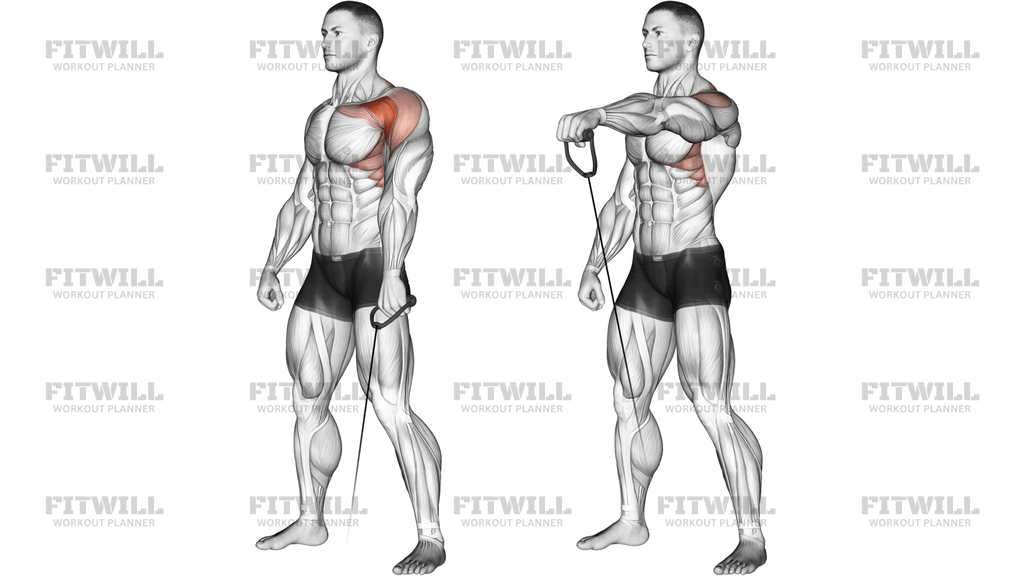
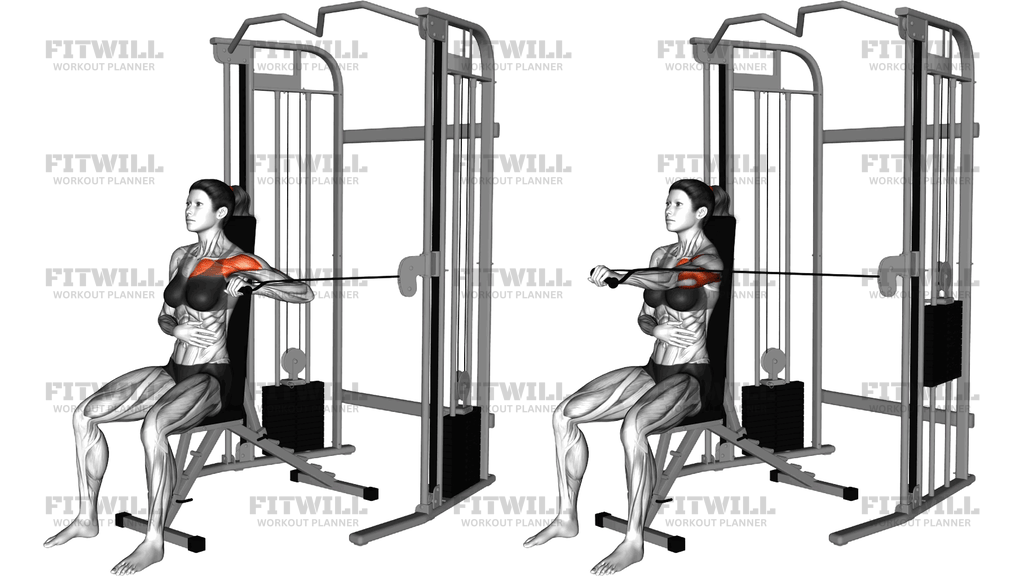
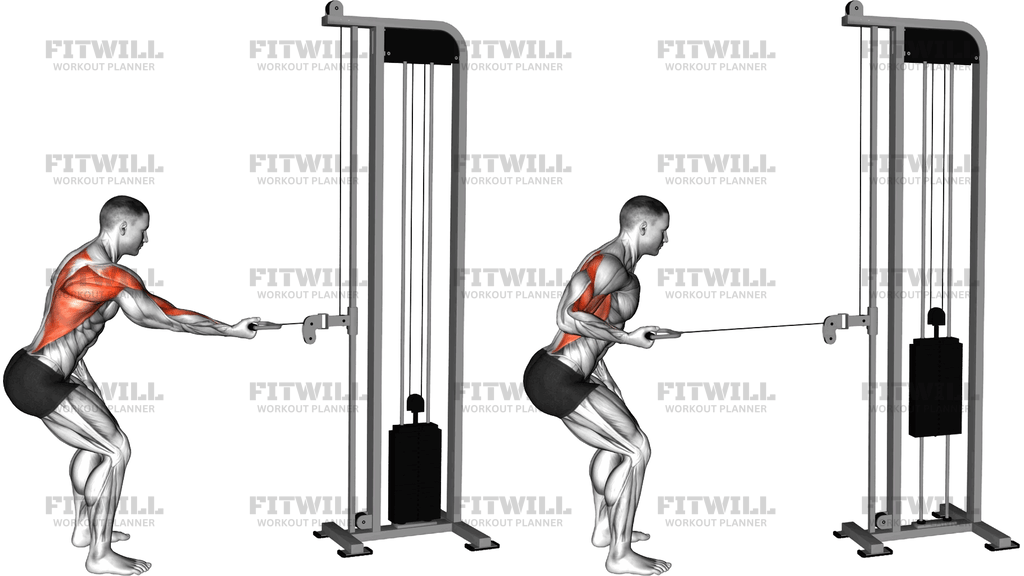
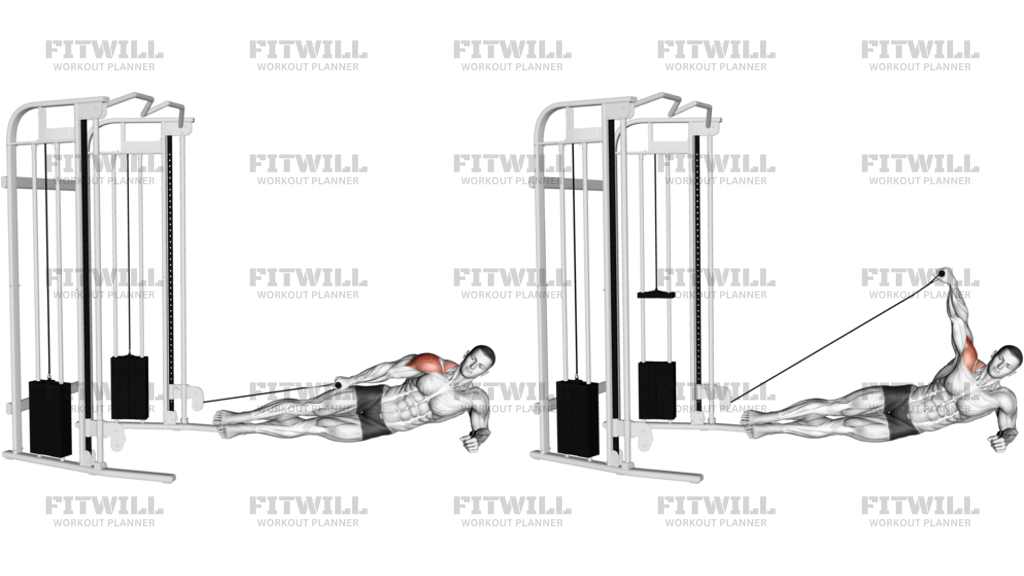
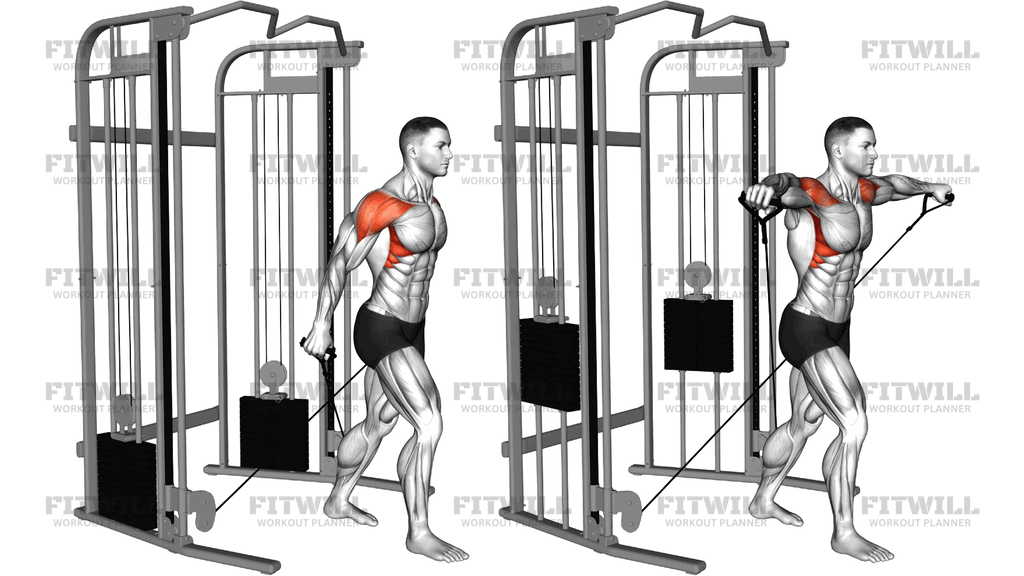
The Cable Behind The Back Cuffed Lateral Raise is a lateral raise variation performed with two low pulleys set behind your body. You stand facing away from the resistance, reach back to grip each attachment, and raise your arms out to your sides through the full arc in front of and beside your torso. Because the cables pull from behind and slightly below, the tension on the side delts is different from a standard dumbbell lateral raise — it stays strong at the bottom of the rep, where dumbbells are nearly unloaded.
This setup suits lifters who want a more complete strength curve for their lateral raises. With dumbbells, the hardest part of the movement is usually the midpoint, and the first few degrees are easy. With the cable pulling from behind, your side delts work from the very start of the lift, which makes this a useful accessory for building shoulder width and for breaking through plateaus on the standard raise.
The primary muscles worked are the lateral deltoids on the outer shoulders. The upper traps assist as the arms approach shoulder height, and the rotator cuff and scapular stabilizers work continuously to keep the shoulder joint centered and controlled through the arc. Because the cables cross behind your back, your rear delts also get stretched under load at the starting position, which many lifters find valuable.
The behind-the-back setup matters because it changes both the resistance angle and the demand on positioning. The cables pulling from behind your hips create a slight backward pull, so your torso has to stay braced and still for the movement to feel clean. Set the pulleys to their lowest position, stand a step forward from the line between them, and grip the opposite handles so the cables cross behind you. If you stand too close to the pulleys, the cables will drag against your legs and glutes; if you stand too far forward, the starting tension becomes excessive.
Execution should be simple and deliberate: raise both arms out and slightly forward until your hands reach shoulder level, pause briefly, then lower under control until the delts are fully stretched at the bottom. Your torso stays upright with a slight forward lean from the hips, which gives the arms room to clear the body.
This movement fits well as a secondary shoulder exercise after pressing work, or as a finishing movement at the end of a push or shoulder day. Typical programming is two to four sets of ten to fifteen reps with a moderate weight. Because both arms work simultaneously and the setup takes a moment to get into, choose a weight you can lift smoothly without jerking the cables, and check that the cables run clear of your body before your first rep.
[ Workout Log & Planner ]
Put your next workout in Fitwill
Keep your plan and training log ready when you are.


Instructions
- Set both pulleys of a dual cable machine to their lowest position and attach a handle to each one.
- Stand facing the machine with the pulleys behind you, then take one step forward and slightly wider than the line between the two pulleys.
- Reach behind your hips and grab the left cable attachment with your right hand and the right attachment with your left hand, so the cables cross behind your glutes.
- Stand tall with a small forward lean from the hips, knees softly bent, and pull your shoulder blades down and back before the first rep.
- Exhale and raise both arms out to your sides in a wide arc, keeping a soft bend in the elbows, until your hands reach shoulder height.
- Pause for a moment at the top without shrugging your shoulders toward your ears.
- Inhale and lower your arms slowly back down behind your body until you feel a stretch across the rear of the shoulders.
- Keep the cables running clear of your legs and glutes throughout the set; adjust your stance if they make contact.
- Complete all reps, then set the handles down or let the arms return fully before releasing your grip.
- Rest, then step back into position for the next set, rechecking your grip and cable path each time.
Tips & Tricks
- If the cables rub against your glutes or hamstrings on the way up, you are standing too close to the pulleys — take a half step forward until the cables track freely.
- Do not swing the weight by leaning back; the behind-the-back pull already tempts your torso backward, so keep the slight forward lean and let the delts do the lifting.
- Keep the elbow bend fixed from start to finish. Straightening the arms as you fatigue turns the movement into a partial and loads the elbows instead of the shoulders.
- Raise to shoulder height, not higher. Pulling the hands well above the shoulders shifts work to the upper traps and reduces the lateral delt focus.
- Use a lighter weight than you would for a dumbbell lateral raise. The cable tension at the stretched bottom position is greater than most lifters expect, and heavy loads encourage torso sway.
- Control the lowering phase for two to three seconds. The stretched position behind your body is one of the main reasons to choose this variation over the standard raise.
- If one side feels noticeably stronger, check that both hands start at the same height behind your hips — an uneven grip is easy to miss in this crossed setup.
- Warm up the shoulders with a few light reps before your working sets, since the rear shoulder stretch at the bottom is more demanding than in a standard lateral raise.
Frequently Asked Questions
Which muscles does the Cable Behind The Back Cuffed Lateral Raise work?
The lateral deltoids on the sides of the shoulders are the primary movers. The upper traps assist near the top, while the rotator cuff and rear delts stabilize and stretch under the behind-the-back cable pull.
Why run the cables behind the back instead of at the sides like a normal cable lateral raise?
The behind-the-back setup keeps tension on the side delts at the very bottom of the rep, where a dumbbell or side cable raise provides little resistance. It also places the rear shoulders under a loaded stretch, which the standard version does not.
Is the Cable Behind The Back Cuffed Lateral Raise suitable for beginners?
Yes, with a light weight and attention to the setup. The main challenge for beginners is getting a clean cable path behind the body, so it helps to learn the movement empty or with minimal load first.
How do I stop the cables from hitting my legs during the raise?
Stand one step forward from the line between the two pulleys so the cables clear your glutes and hamstrings. If they still drag, widen your stance slightly or lean a little more from the hips.
Should I grip the same-side handle or cross the cables behind my back?
For this exercise, grip the opposite handles so the cables cross behind your glutes. This keeps the pull aligned behind your hips and preserves the consistent tension that makes the variation worthwhile.
How high should I raise my arms?
Raise until your hands are level with your shoulders. Going higher mainly brings the upper traps into the lift and takes emphasis away from the side delts.
What is a good substitute if my gym only has one cable stack?
A single-arm behind-the-back cable lateral raise works the same pattern one side at a time, or you can use regular dumbbell lateral raises, accepting that the tension at the bottom will be lower.
Is it normal to feel this in the rear shoulders at the bottom of each rep?
Yes, a stretch across the back of the shoulders is expected because the cables pull from behind. It should feel like a stretch, not a sharp pinch — if you feel pinching, reduce the weight and lower less deeply.
How many sets and reps should I do?
Two to four sets of ten to fifteen controlled reps works well as an accessory or finishing movement. Because both arms lift together, prioritize smooth technique over heavy loading.
Are there any safety concerns with this exercise?
The main risks are releasing a handle under tension or letting the cables catch on your body. Keep a firm grip through the entire set, use a moderate weight, and let the arms return fully before letting go of the attachments.