Cable Front Raise (Rope Attachment)
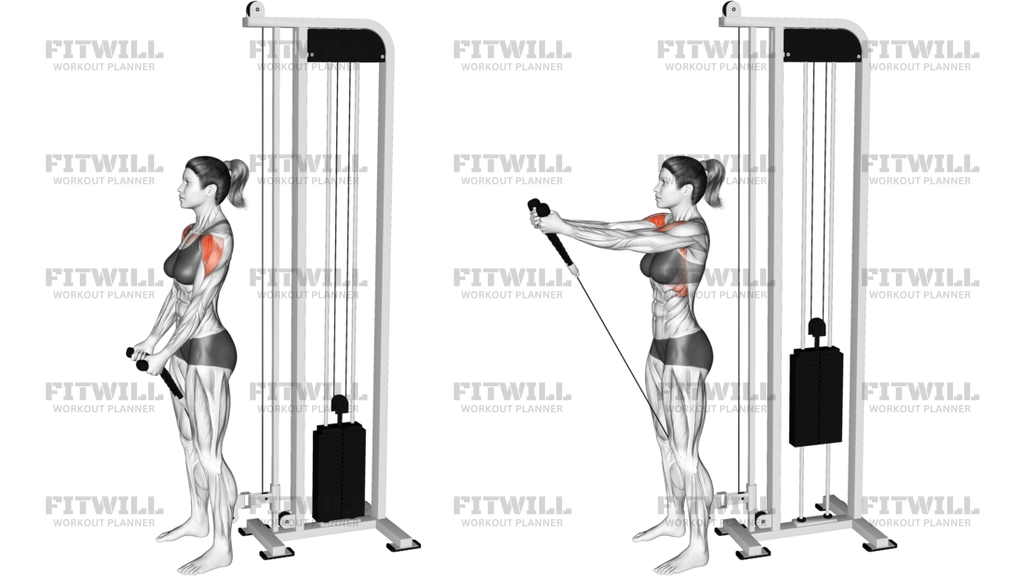
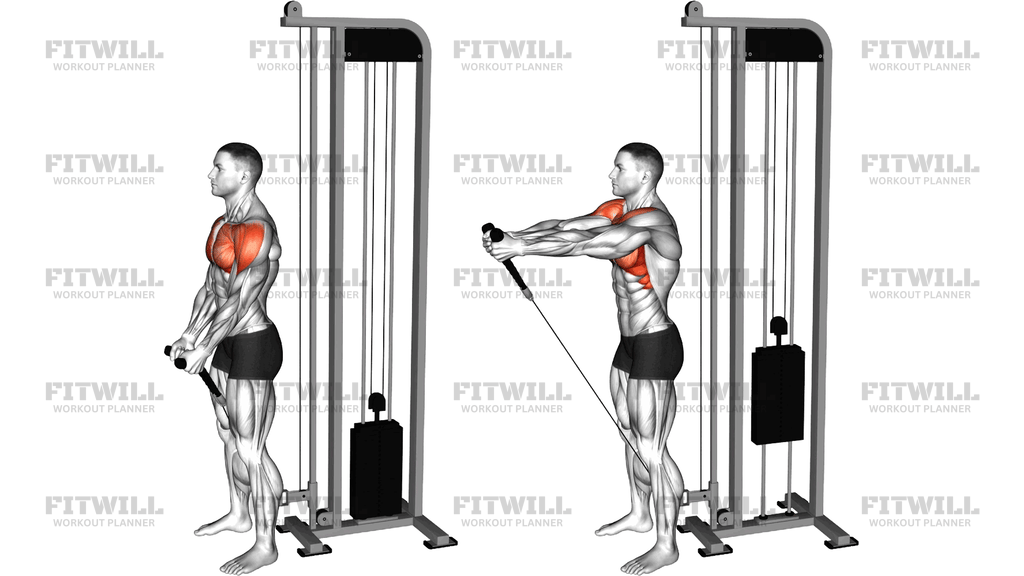
The Cable Front Raise (Rope Attachment) is a standing isolation exercise for the front of the shoulders, performed on a cable machine with a rope handle connected to the low pulley. You face away from the machine, hold the rope ends behind your hips with a neutral grip, and raise the rope forward and up to roughly shoulder height in a smooth arc. Because the cable runs behind you and pulls downward through the entire lift, the resistance stays on the front delts from the very first inch to the top of the rep, which is something a barbell or dumbbell front raise cannot do.
This movement is a solid choice for lifters who want more direct work on the anterior deltoids without loading the spine or stressing the elbow joints the way pressing can. It also brings the upper chest fibers into play as a helper, since raising the arm forward from behind the body starts with a small amount of shoulder flexion that the clavicular pec assists with. People recovering pressing volume, physique-focused lifters chasing balanced shoulder development, and anyone whose dumbbell front raises feel stale will all get something useful out of it.
Setup matters more here than in most front raise variations. Because the rope starts behind your thighs, a stance that is too close to the machine changes the resistance angle, and gripping the rope at the knot instead of the ends lets your wrists collapse and shifts tension away from the shoulders. Stand about a step forward from the pulley, take one rope end in each hand with your thumbs pointing up or forward, and let your arms hang naturally behind your hips before the first rep.
Execution should be deliberate. Lift the rope forward and upward in an arc, keeping your elbows nearly straight but not locked, and stop when your arms reach shoulder height in front of you. The torso wants to lean back as the rope rises; that lean is the most common way this exercise turns into a partial front swing, so keep your ribs down and your core braced throughout.
A controlled return is just as important as the lift. Lower the rope slowly along the same path until your arms are back behind your hips and the plates settle briefly, then start the next rep. This keeps tension on the front delts during the portion of the range where many lifters simply let gravity do the work.
In practice, this exercise usually sits at the end of a shoulder or upper body session, done for moderate to higher reps. The cable provides a steady, joint-friendly line of resistance, making it easier to keep honest form late in a set than with heavy dumbbells, but lighter loads and strict positioning still produce the best results.
[ Workout Log & Planner ]
Put your next workout in Fitwill
Keep your plan and training log ready when you are.


Instructions
- Clip a rope attachment to the low pulley of a cable machine and select a light to moderate weight.
- Face away from the machine and take one or two steps forward so there is steady tension on the rope with your arms hanging behind your hips.
- Grip one end of the rope in each hand with a neutral grip, thumbs pointing forward or up, and hold the ends rather than the knot.
- Stand with feet about hip-width apart, a soft bend in the knees, and brace your core with your ribs pulled down.
- With elbows nearly straight, raise the rope forward and upward in a smooth arc in front of your body.
- Stop when your hands reach about shoulder height, arms roughly parallel to the floor, without letting the rope ends drift apart.
- Pause briefly at the top and squeeze the front of your shoulders.
- Lower the rope under control along the same path until your arms return behind your hips.
- Exhale as you raise the rope and inhale as you lower it.
- Complete the set, then step back toward the machine before letting the weight stack settle.
Tips & Tricks
- If your torso rocks backward as the rope rises, drop the weight and think about pushing your hips slightly forward and tightening your glutes to stay upright.
- Holding the rope at the knot lets your wrists bend and pulls tension toward the forearms; grip the rubber ends so the rope points straight down from your fists.
- Do not raise the rope above shoulder height. Going higher turns the lift into a traps-dominant shrug-and-swing and does little extra for the front delts.
- Keep the rope ends together as you lift. Letting your hands spread wide shortens the range on each arm and makes the movement feel like a partial raise.
- A slight bend in the elbows is fine, but if your elbows are bending and straightening each rep, the exercise is drifting toward a cable front raise combined with a pressing motion.
- Because the cable pulls from behind, the hardest part of the rep is the bottom half. Slow down the first third of the lift instead of yanking the rope forward with momentum.
- Set the pulley to its lowest position. A mid-pulley setup changes the resistance angle and reduces the tension on the front delts at the start of each rep.
- If your lower back feels the work, you are leaning back to cheat. Narrow your stance slightly, brace harder, and reduce the weight until the shoulders do the lifting.
Frequently Asked Questions
Which muscles does the Cable Front Raise (Rope Attachment) work?
The primary mover is the anterior deltoid at the front of the shoulder. The upper chest fibers assist with the initial forward lift, and the side delts and upper traps help stabilize and finish the top of the range.
Why use a rope attachment instead of a straight bar for front raises?
The rope allows a neutral grip with your thumbs up, which is more comfortable for many wrists and shoulders than the fixed pronated grip of a bar. It also lets each hand follow its own natural path.
Is the Cable Front Raise (Rope Attachment) suitable for beginners?
Yes. Start with a light weight, focus on standing still and lifting to shoulder height only, and the movement is quite easy to learn. It is a low-skill isolation exercise with a clear, short range.
Why does the cable pull from behind my body during this exercise?
The rope attaches to the low pulley behind you, so tension starts with your arms behind your hips and follows you through the lift. This keeps the front delts loaded at the bottom of the rep, where dumbbell front raises are weakest.
How high should I raise the rope?
Stop when your arms are roughly parallel to the floor at shoulder height. Raising higher shifts the emphasis to the upper traps and can encourage lower back arching.
What is the most common mistake with this movement?
Leaning back and swinging the rope forward with body English. If your heels lift or your torso rocks, the weight is too heavy; reduce the load and keep your ribs down and hips stacked.
What can I substitute if the low pulley is busy?
A front raise with a barbell plate, dumbbells, or a resistance band anchored behind you covers the same pattern. The band version most closely matches the cable's constant tension.
Where should this exercise go in my workout?
It works best as an accessory after your main presses, when the front delts are already warmed up. Moderate weight for 10 to 15 controlled reps suits it well.
Is this exercise safe for the shoulders?
For most people yes, since the load is light and the cable provides smooth resistance. If a shoulder impingement or recent injury is an issue, keep the range below shoulder height and stop if you feel pinching.