Lever Lateral Raise (Version 2)
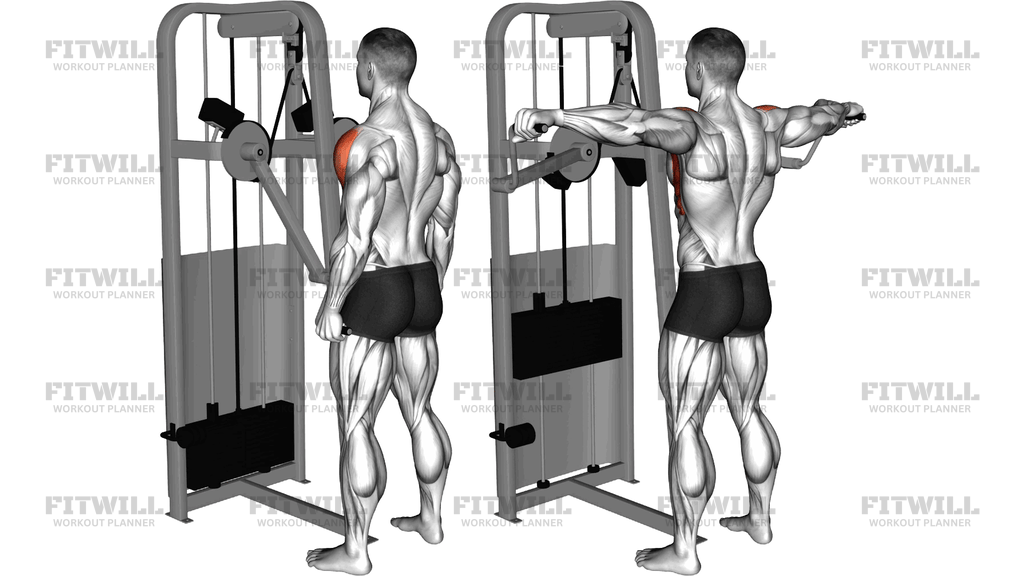
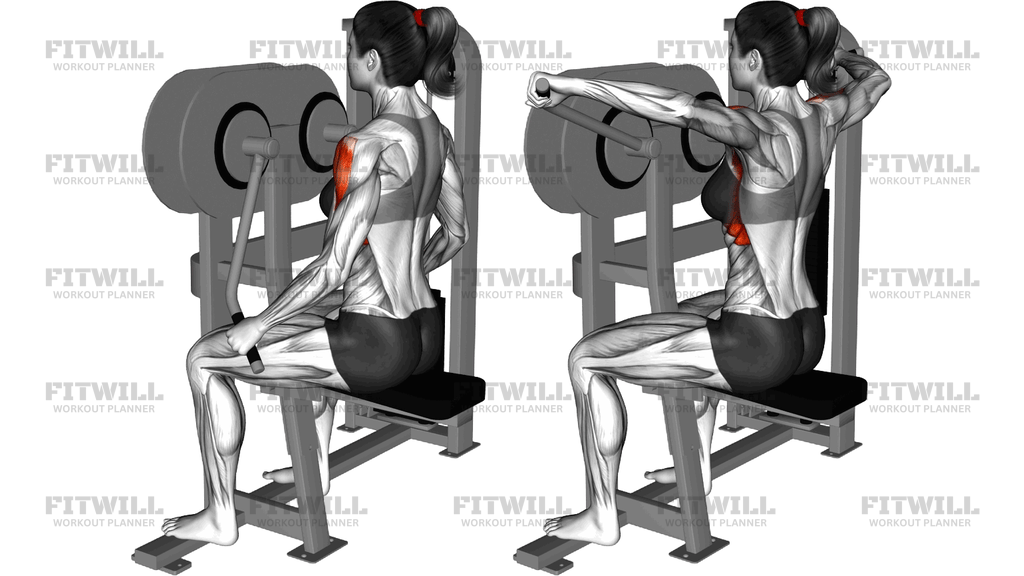
The Lever Lateral Raise (Version 2) is a seated machine movement that isolates the side of the shoulders. You sit with your back braced against the vertical pad, grip the low handles at your sides with a neutral grip, and sweep your arms up and out in a wide arc until they reach roughly shoulder height. Because the resistance travels along a fixed leverage arm, the tension stays smooth and continuous through the entire range, which is hard to replicate with free weights.
This lift is a direct builder of the lateral deltoids, with support from the front shoulders in the early portion of the lift and the upper traps as the arms approach the top. The machine setup removes most of the stabilization demand, so the effort you put in goes almost entirely into the delts rather than into balancing or gripping heavy dumbbells.
It suits a wide range of lifters. Beginners appreciate the guided path because it teaches what a proper lateral raise should feel like without the shoulder-shrugging and momentum problems common with dumbbells. More experienced lifters use it later in a shoulder session, when the delts are fatigued and free-weight form would otherwise break down. It is also a practical choice for anyone with grip or elbow limitations who struggles to hold heavy dumbbells at the sides.
Setup matters more than it looks. Sit squarely on the seat with your spine tall against the back pad, plant your feet flat on the floor, and adjust the seat so the handles sit just below your hips with a slight bend in your elbows. If the seat is too low, you drift into a front raise; if it is too high, the range shortens and the start position gets cramped.
Execution is simple but demanding. Lead with the elbows, keep them slightly bent and higher than the wrists throughout, and raise until your upper arms are level with your shoulders. Pause briefly at the top, then lower under control instead of letting the lever drop. Avoid swinging the torso off the pad, and stop the set the moment your shoulders start creeping toward your ears.
The main safety point is respecting the top of the range. Raising well above shoulder height shifts work to the traps and can pinch the structures around the shoulder joint, especially with heavier loads. Choose a weight you can lower slowly for every rep, and treat this as a strict isolation movement rather than a maximum-effort lift.
[ Workout Log & Planner ]
Put your next workout in Fitwill
Keep your plan and training log ready when you are.


Instructions
- Sit on the machine's seat facing the pad with your back flat against the upright support and your feet flat on the floor about hip-width apart.
- Adjust the seat height so the machine's handles hang just below hip level and your arms hang comfortably at your sides.
- Grip each handle with a neutral, palms-in grip and let the lever arm rest so your arms are fully lowered but not slamming into the stack.
- Draw your shoulder blades down and back, brace your core, and keep the backs of your upper arms in light contact with the sides of the pad.
- Raise the handles out to the sides in a wide arc, leading with your elbows and keeping a slight, fixed bend in each arm.
- Stop when your upper arms reach shoulder height, roughly parallel to the floor, with wrists staying below or level with the elbows.
- Pause for a beat at the top without shrugging your shoulders toward your ears.
- Lower the handles slowly along the same arc, resisting the weight until your arms return to the starting position at your sides.
- Exhale as you raise the handles and inhale as you lower them.
- Complete all reps with the same height and speed, and reset your posture against the pad between sets.
Tips & Tricks
- A common mistake is shrugging at the top of each rep, which lets the upper traps steal work from the side delts. If your shoulders rise toward your ears, reduce the weight and focus on keeping them pinned down.
- Do not raise the handles above shoulder height. Extra height adds trap involvement and compresses the shoulder joint without improving delt development.
- Keep the elbow bend constant. Straightening the arm as you press up turns the movement into a leverage exercise for the arms rather than an isolation for the shoulders.
- If your torso rocks forward off the pad to help the weight up, the load is too heavy. The fixed back support is there to prevent exactly this, so stay tall against it.
- Lead with the elbows rather than the hands. If your wrists end up higher than your elbows, you are rotating the shoulders internally and reducing side delt tension.
- The machine's fixed path means no momentum is needed, so a two- to three-second lowering phase per rep usually produces more delt growth than fast, bouncy reps.
- Position the seat so the handles start just below your hips. Sitting too low turns the arc into a front raise and shifts emphasis away from the lateral delts.
- Because the lever supports the weight at the bottom, you can safely work close to fatigue, but stop before your form shortens the range on the lowering half.
- Pair this with a pressing movement earlier in the session rather than before it, since pre-fatiguing the delts makes strict overhead pressing harder to control.
Frequently Asked Questions
Which muscles does the Lever Lateral Raise (Version 2) work?
The lateral deltoids on the sides of the shoulders are the primary movers. The anterior deltoids assist at the start of the lift and the upper traps contribute as the arms approach shoulder height.
Is the Lever Lateral Raise (Version 2) good for beginners?
Yes. The machine's fixed arc removes the balance and coordination demands of dumbbell lateral raises, so beginners can learn the correct shoulder-height range and elbow position without the shoulders or traps taking over.
How high should I raise the handles on the Lever Lateral Raise (Version 2)?
Raise until your upper arms are roughly parallel to the floor at shoulder height. Going higher shifts the work to the upper traps and adds unnecessary compression at the shoulder joint.
Should my arms be straight during the Lever Lateral Raise (Version 2)?
No. Keep a small, fixed bend in the elbows for the entire rep. If the arms straighten under load, the tension moves toward the elbow and forearm instead of staying on the deltoids.
Why is my back pad position important on this machine?
The pad prevents torso swinging, which is the most common way lifters cheat on lateral raises. Staying in contact with it forces the delts to move the lever on their own.
What can I substitute for the Lever Lateral Raise (Version 2)?
Dumbbell lateral raises and cable lateral raises train the same lateral deltoids. The machine version differs mainly by locking the path and supporting the weight at the bottom, which makes it easier to keep tension without grip fatigue.
How should I breathe during the Lever Lateral Raise (Version 2)?
Exhale as you raise the handles to shoulder height and inhale as you lower them. Keep the breathing steady rather than holding your breath through the set.
Why do my traps fatigue before my shoulders on this exercise?
That usually means you are shrugging as the handles rise or lifting above shoulder height. Drop the weight slightly, start each rep with the shoulder blades pulled down, and stop at ear-level arms.
Where should the Lever Lateral Raise (Version 2) fit in my workout?
It works best after your main shoulder presses, when the delts are warm but you can still control the tempo. It also pairs well at the end of a pull day as focused side delt volume.
Is it safe to use heavy weight on the Lever Lateral Raise (Version 2)?
Moderate loads with strict form are more effective and safer than heavy loads here. Because the shoulder works at the end of a long lever arm, excessive weight commonly causes shrugging, shortened range, and shoulder-joint strain.