Lever T Bar Wide Grip Delt Row
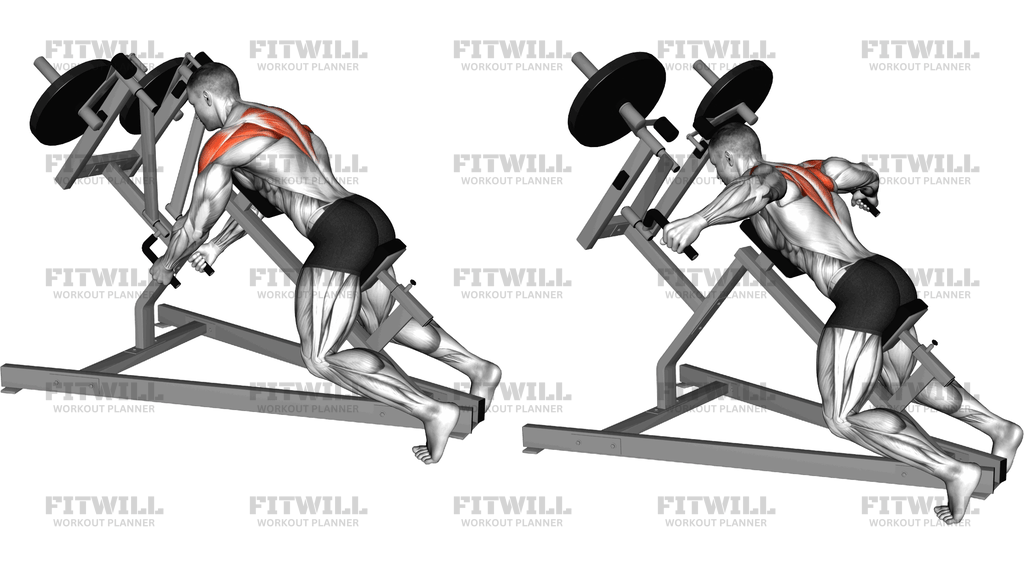
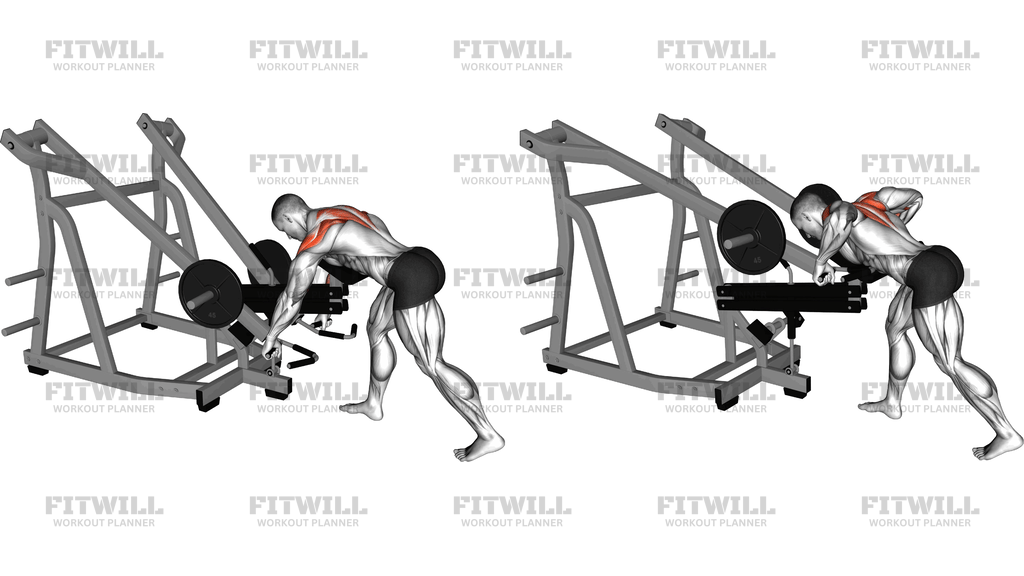
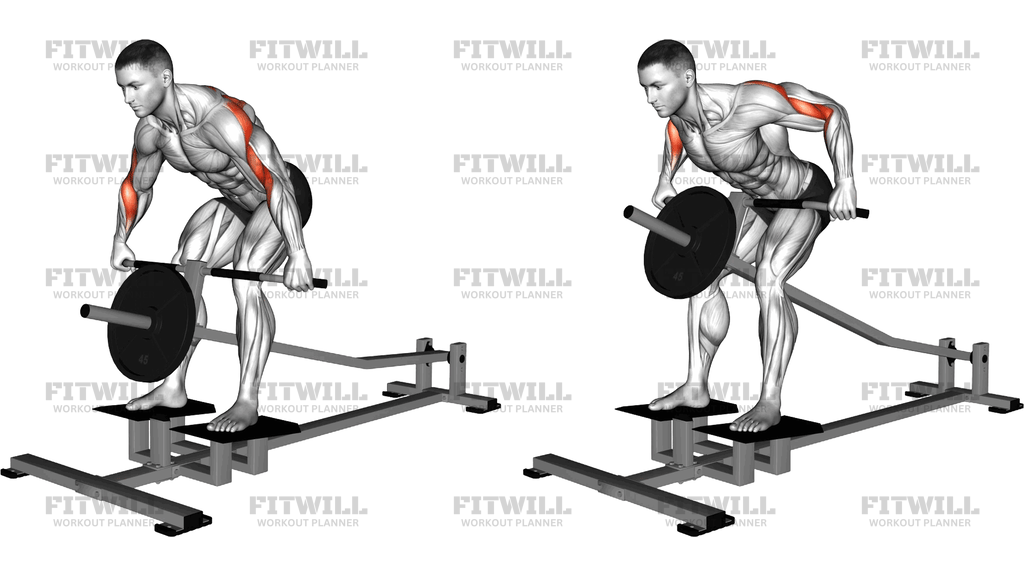
The Lever T Bar Wide Grip Delt Row is a machine-based row performed on a pivot-mounted T-bar station, where the weight plates sit on one end of a long lever arm and the handles sit on the other. You stand on the foot platforms, hinge forward over the bar, and pull the handles up wide toward your upper chest with your elbows flared out to the sides. Because the movement path is fixed by the machine's pivot point, the exercise is very repeatable, which makes it easy to load progressively and to focus entirely on how the target muscles feel from rep to rep.
The wide grip and high elbow path shift the emphasis away from a classic lat row and toward the deltoids, particularly the side and rear portions, along with the upper back. As you pull the handles apart and up, your rhomboids and middle traps retract the shoulder blades, while your biceps and forearms assist with the pull. Lifters who want thicker, rounder shoulders without doing endless isolation work often use this as their main horizontal pull for the delts.
Setup matters more here than it looks. Your torso angle decides how much the delts and upper back work versus how much your lower back has to stabilize, so hinge forward deliberately and keep your spine long rather than rounding over the bar. Foot position on the platforms changes your leverage slightly too, so find a stance where your shins are close to the bar and your arms hang straight down at full extension.
To execute well, think of the pull as a row with your elbows leading. Instead of flexing the arms straight toward your waist, drive the elbows up and outward so the handles travel toward your upper chest. Pause briefly at the top to feel the shoulder blades pull together, then lower the weight under control until your arms are fully extended. The eccentric half of the rep is where a lot of the muscle-building stimulus lives, so don't let the lever drop.
This exercise suits intermediate lifters who already own a solid hinge pattern, as well as experienced rowers looking for a delt-focused variation that a barbell can't easily replicate. It's also a good choice for anyone whose lower back gets beaten up by free-weight T-bar rows, since the machine's chest-high handle position and supported pivot reduce the stabilization demand. Keep loads moderate at first, especially if you're used to pulling narrow, because the wide-grip row is a shorter, stricter movement than it appears.
[ Workout Log & Planner ]
Put your next workout in Fitwill
Keep your plan and training log ready when you are.


Instructions
- Load the plates onto the sleeve at the far end of the T-bar lever and stand on the two foot platforms with your feet about hip-width apart.
- Take a wide overhand grip on both handles, hands set well outside shoulder width so your forearms will point outward when you pull.
- Push your hips back and hinge forward until your torso sits at roughly a 45-degree angle or slightly lower, with your back flat and knees softly bent.
- Check that your arms hang fully extended at the bottom and your shins are close to the bar before you begin the set.
- Brace your core and pull your shoulder blades down and back to set your upper back before the first rep.
- Pull the handles up and out to the sides toward your upper chest, letting your elbows lead and flare above the level of your wrists.
- Pause for a beat at the top with your shoulder blades squeezed together, feeling the delts and upper back under tension.
- Lower the handles slowly along the same path until your arms are straight again, resisting the weight on the way down.
- Exhale as you pull up and inhale as you lower, keeping your breathing steady and your torso angle unchanged.
- After your final rep, bend your knees slightly and guide the lever down to rest before stepping off the platforms.
Tips & Tricks
- If your biceps tire before your delts, lighten the load and focus on driving your elbows up and out rather than curling the handles in.
- A common mistake on this setup is pulling toward the waist like a narrow row, which pulls the lats into the movement; aim the handles for your upper chest instead.
- Keep your torso angle locked from first rep to last. If your chest rises as you pull, the weight is too heavy and your hips are stealing the work.
- Avoid letting the lever crash back into full extension. Catch it with your lats and shoulders engaged so the stretch doesn't yank on the shoulder joint.
- If your wrists bend backward at the top, rotate your grip slightly or narrow your hand position an inch or two until the handles sit square in your palms.
- Don't shrug the handles up. If your upper traps take over and rise toward your ears, lower the weight and keep the shoulder blades pulled down throughout.
- Because the pivot arm moves along a fixed arc, the hardest part of the rep is predictable, so choose a weight you can control through that exact sticking region.
- Warm up your shoulders with a lighter, higher-rep set first. The wide, flared position is stricter on the shoulder joint than a close-grip row when cold.
- Set your feet fully on the platforms, not on the edges, so your balance stays stable when the weight swings forward at the bottom of the rep.
Frequently Asked Questions
Which muscles does the Lever T Bar Wide Grip Delt Row work?
The primary work comes from the deltoids, especially the side and rear portions, with strong assistance from the rhomboids and middle traps as the shoulder blades retract. The biceps and forearms help with the pull, and the lower back stabilizes your hinged torso position.
Why use a wide grip instead of a standard T-bar row grip?
A wide grip forces your elbows out to the sides, which changes the pull from a lat-dominant row into a delt- and upper-back-dominant one. With a narrow grip you would simply pull toward your waist and take the shoulders out of the movement.
Is the Lever T Bar Wide Grip Delt Row suitable for beginners?
It can be, but only after you can hold a flat-backed hip hinge comfortably. Start light, practice the elbow-flared path with a couple of easy sets, and only add plates once the torso angle stays consistent through every rep.
How far should I bend forward during this row?
Aim for roughly a 45-degree torso angle or slightly lower, with a neutral spine and soft knees. A more upright torso shortens the delt range and turns the movement toward a shrug, while excessive rounding strains the lower back.
How high should my elbows travel on each rep?
Pull until your elbows flare up near rib-cage level and the handles reach your upper chest, then stop. Forcing the elbows higher than your shoulders can compress the shoulder joint without adding meaningful muscle work.
What can I substitute if my gym has no lever T-bar station?
A barbell or landmine T-bar row with a wide attachment, or a wide-grip cable row with the handles pulled toward the upper chest, covers the same pattern. Rear delt flyes can supplement if the rowing option still biases the lats too much.
Should I fully lock out my arms at the bottom of each rep?
Yes, extend the arms fully to get the stretch, but keep tension in your shoulders rather than letting the weight hang passively off the joint. A sudden slam into the stretched position is the most common way this exercise gets uncomfortable.
Why does my lower back fatigue before my shoulders?
Your torso angle is probably too low, or you're rounding as you fatigue. Raise your hinge slightly, engage your core harder at the start of each set, and shorten your sets so the delts, not your spinal erectors, are the limiting factor.
How heavy should I go on the Lever T Bar Wide Grip Delt Row?
Use a load you can pull to your upper chest with a two-second lowering phase and no torso swing. Because the wide-grip path is stricter and shorter than a standard row, most lifters need less weight here than they expect.
How does this exercise fit into a shoulder workout?
It works well as a heavy horizontal pull for the delts early in a session, paired with overhead pressing and a lateral raise. Placing it before isolation work lets you load the side and rear delts hardest while you're still fresh.