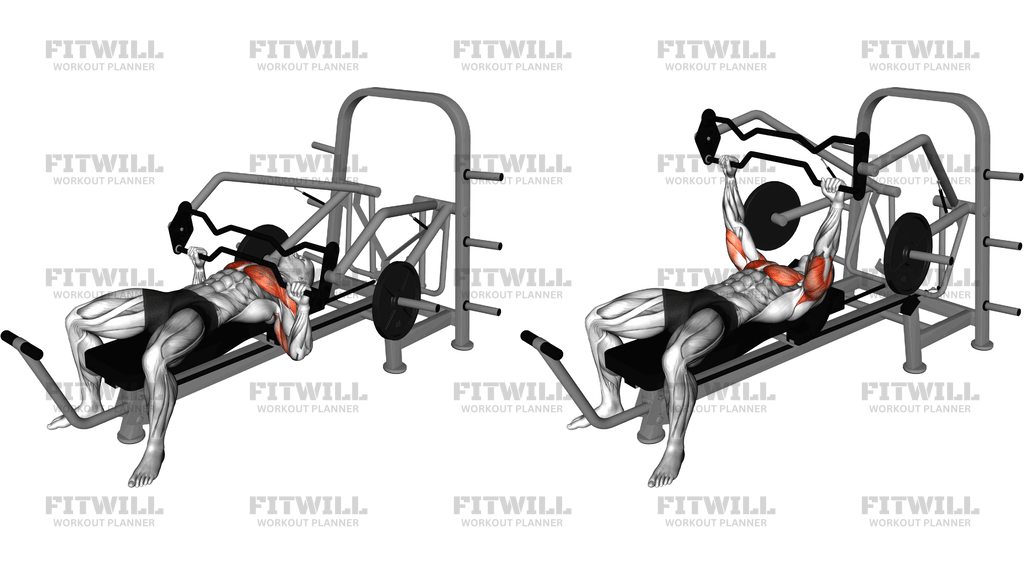
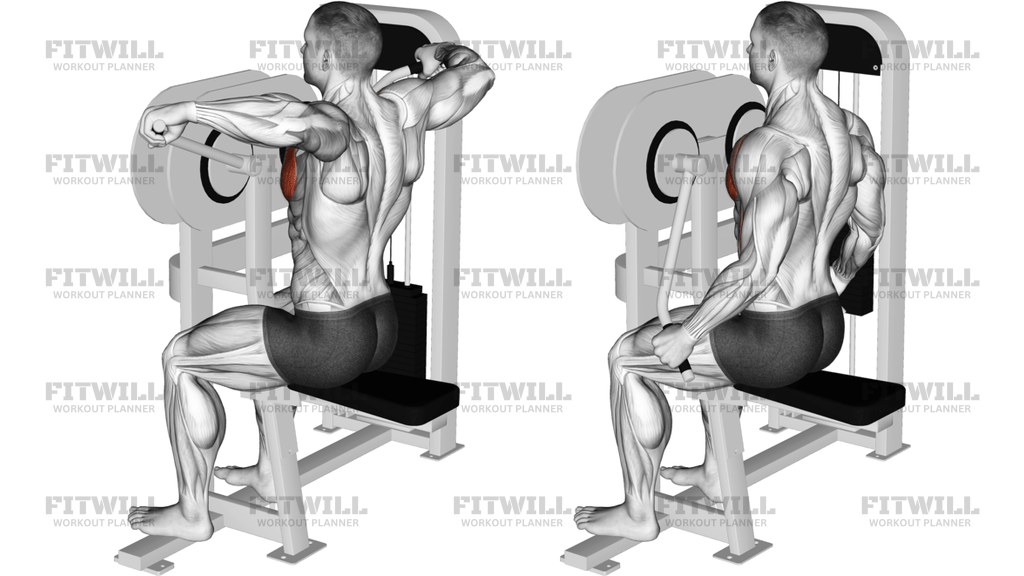
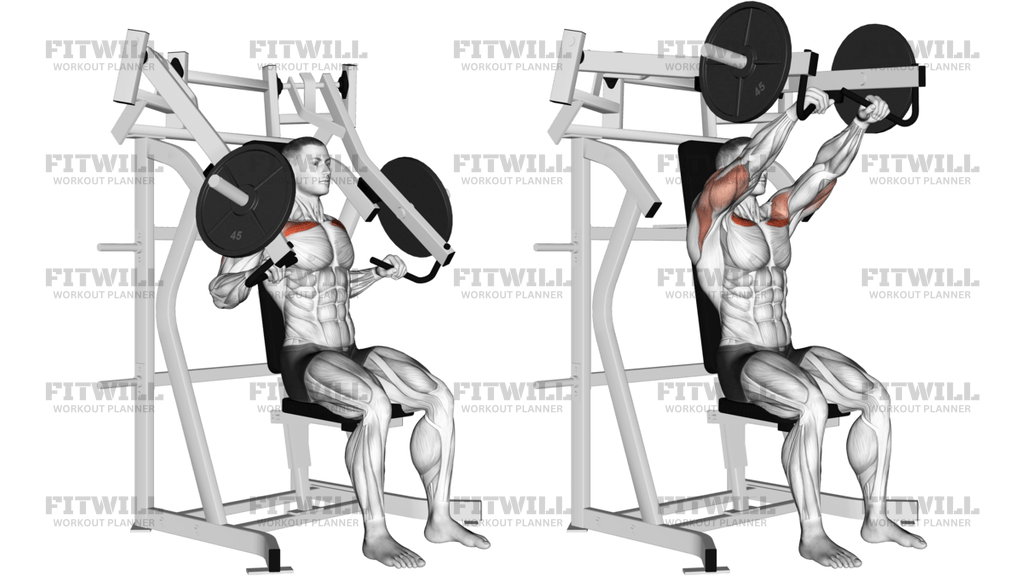
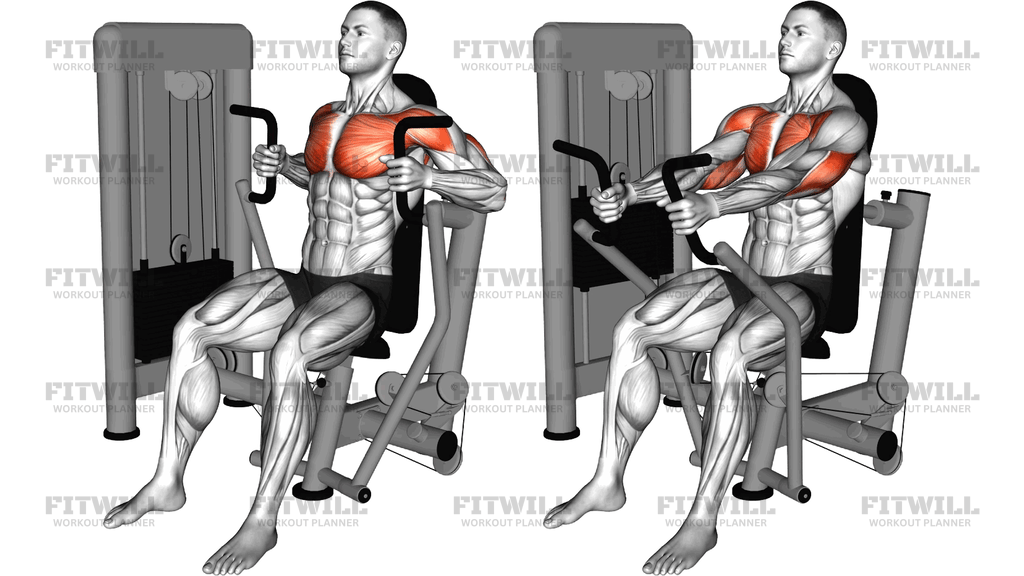
Kneeling Assisted Wide-Grip Chest Dip
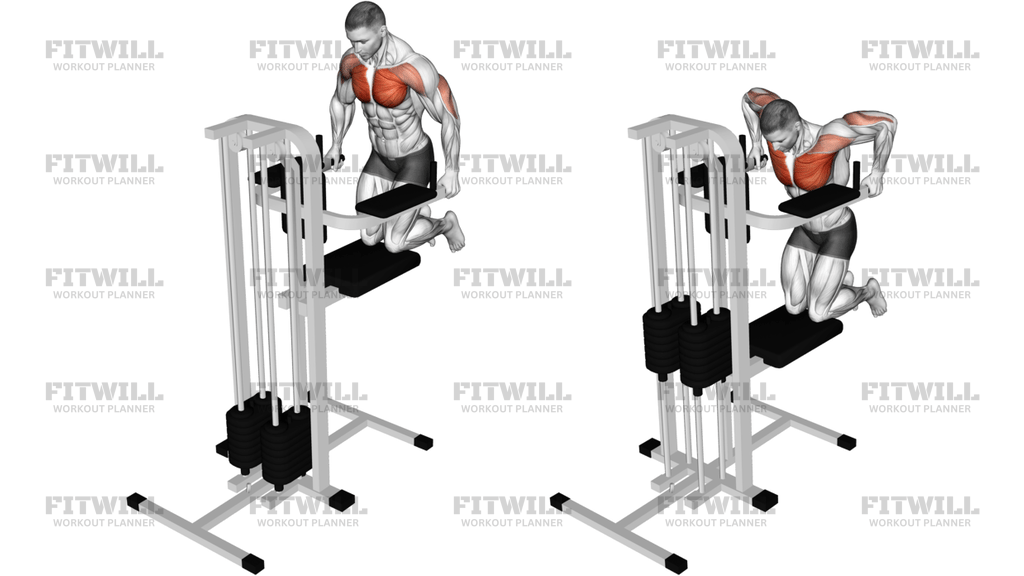
Kneeling Assisted Wide-Grip Chest Dip is a leverage-machine dip variation that lets you train the chest with more control than a free dip. Your knees rest on the assistance pad while your hands take a wide grip on the handles, so the machine supports part of your bodyweight while you practice the dip pattern with a chest-biased torso angle. The wider hand position and forward lean shift more work to the pectorals while the triceps and front delts still help finish each rep.
The setup matters because the machine only feels smooth when your knees, shoulders, and hands are stacked correctly before you move. With the chest lifted and the ribs controlled, you can lower under tension without collapsing through the shoulders or arching the lower back. That makes this a useful option for beginners learning the dip pattern, or for more experienced lifters who want extra chest volume without loading an unassisted dip too heavily.
To perform the movement, start from a stable top position with the handles firmly in your palms, then bend the elbows and let the chest travel slightly forward as you descend between the handles. Lower only as far as your shoulders stay comfortable and the upper arms can move through a clean stretch across the chest. Drive the handles down to press back up, keeping the elbows under control and the shoulders away from the ears. Smooth reps matter more than forcing a deep bottom position.
This exercise fits well in chest-focused sessions, upper-body accessory work, or any program where you want a guided pressing pattern with predictable assistance. It is especially useful when shoulder stability, bodyweight strength, or dip depth are still developing. Keep the range of motion pain-free, use enough assistance to avoid swinging, and let each repetition look the same from start to finish.
[ Workout Log & Planner ]
Put your next workout in Fitwill
Keep your plan and training log ready when you are.


Instructions
- Set the assistance so the knee pad can support you through a full, controlled rep without bouncing you out of the bottom.
- Kneel on the pad with your knees centered, lower legs relaxed behind you, and your hands wrapped around the wide handles.
- Press your chest up, keep your ribs controlled, and let your shoulders stay down instead of shrugging toward your ears.
- Start from the top with straight or nearly straight elbows and a slight forward lean through the torso.
- Lower yourself between the handles by bending the elbows and letting the chest travel forward under control.
- Stop the descent when you feel a solid chest stretch and your shoulders still feel stable.
- Drive the handles down to press back up, keeping the elbows smooth and the wrists stacked over the hands.
- Inhale on the way down, exhale as you press up, and reset your posture before the next rep.
Tips & Tricks
- Use enough assistance that your knees stay planted on the pad and you can control the whole range without swinging.
- A slight forward lean keeps the chest involved; staying too upright turns the rep into more of a triceps press.
- Keep the handles deep in your palms so your wrists do not fold back as you lower and press.
- Let the elbows open naturally, but do not flare them so hard that the shoulders roll forward at the bottom.
- Stop the descent when the shoulders start to lose position, even if the machine lets you go deeper.
- Think about moving the sternum forward and up, not just dropping the body straight down.
- Do not bounce off the assisted pad or use a half-second dive to get out of the bottom.
- If you cannot keep the chest lifted, increase the assistance before adding more reps or load.
Frequently Asked Questions
What muscle does Assisted Wide-Grip chest Dip (kneeling) target most?
The chest is the main target, especially the pectoralis major. The triceps and front delts assist through the press.
Can beginners perform this exercise?
Yes. The knee-assisted machine path makes it easier to learn than an unassisted dip, as long as the assistance is set high enough to keep the rep smooth.
How should I position my hands on the handles?
Use the wide handles the machine provides and keep your wrists stacked so the palm, wrist, and forearm stay in line.
How far should I lower on the dip?
Lower until you feel a controlled stretch across the chest and the shoulders still stay organized. If the shoulders roll forward, shorten the range.
Why do I feel this more in my shoulders or triceps sometimes?
That usually means the torso is too upright, the grip is too narrow for your structure, or the descent is going too deep for your shoulder position.
Should my torso lean forward during the rep?
A slight forward lean is normal and helps bias the chest. Keep it controlled so you do not fold at the hips or lose tension.
How much assistance should I use?
Use enough help that you can control both the lowering and pressing phases without bouncing, shrugging, or losing your chest position.
Is this a good substitute for unassisted dips?
It is a good stepping stone and a chest-focused alternative, but it does not exactly replace the stability and strength demands of a free dip.