Lever Reverse Shoulder Press Plate Loaded
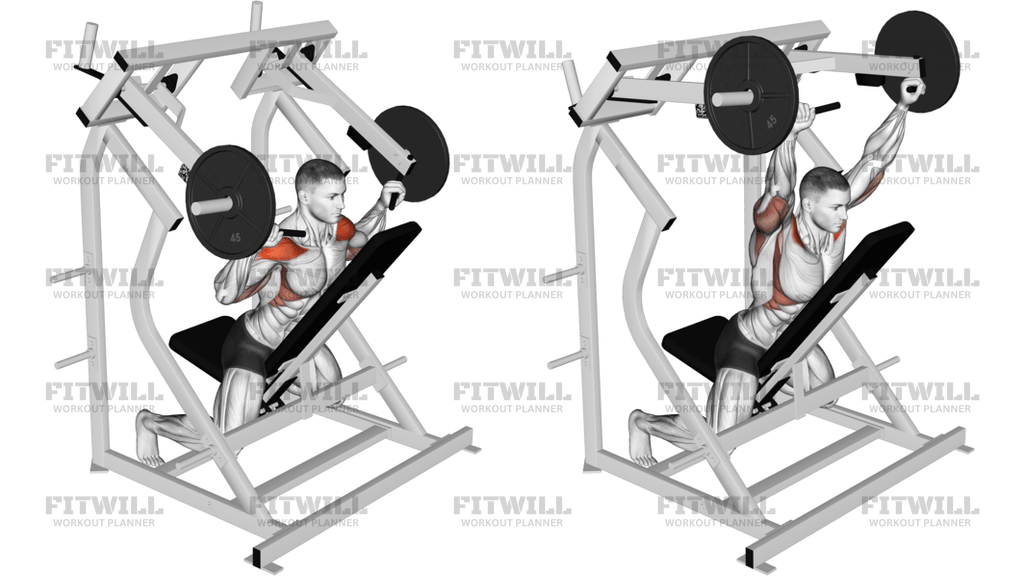
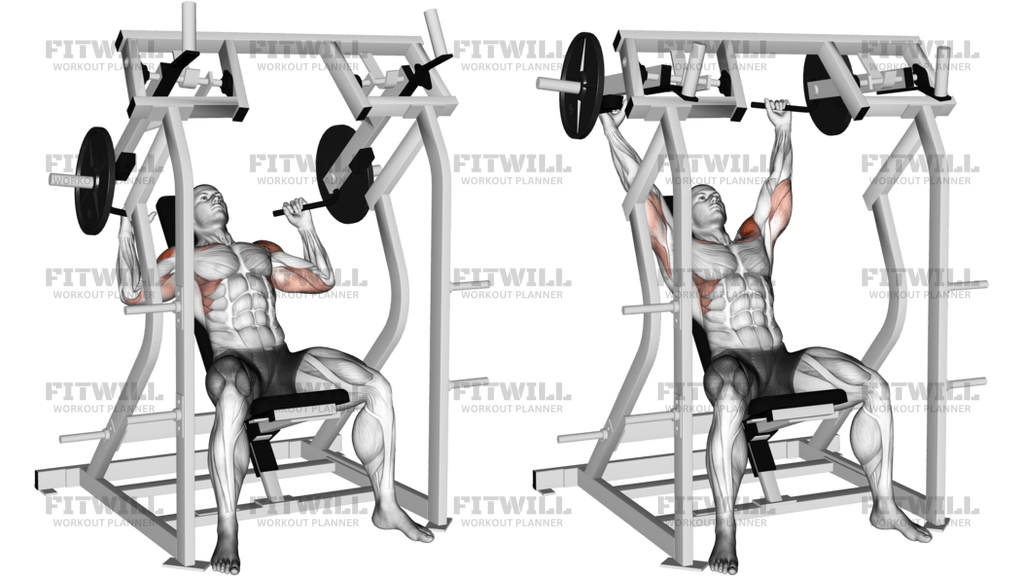
Lever Reverse Shoulder Press Plate Loaded is a plate-loaded machine pressing exercise that trains the shoulders through a fixed leverage path. Because the handles travel on the machine's arc, it is easier to keep tension on the delts and triceps than on a free bar, which makes the movement useful for controlled strength work, hypertrophy blocks, or a shoulder-focused accessory day. The back support also reduces the need to balance the load, so the rep quality comes from pressing well rather than compensating with body sway.
The setup matters because the seat height and back pad position determine where the press starts and how cleanly the elbows can track. Sit with your torso supported against the angled pad, feet planted, and the handles lined up around shoulder height before you press. Your wrists should stay stacked over the handles, and your elbows should sit slightly below or in line with them so the machine starts in a joint-friendly position instead of forcing the shoulders into an awkward angle.
Each repetition should feel like a smooth drive up and a controlled return down the same path. Press the handles upward and slightly forward along the lever arms until the elbows are nearly straight, then lower under control until the upper arms come back near shoulder level. Keep the ribcage from flaring, keep the head neutral, and avoid turning the rep into a shrug by letting the shoulders ride up around the ears.
Lever Reverse Shoulder Press Plate Loaded can work well for lifters who want a stable overhead pressing pattern without having to coordinate a barbell or dumbbells. It is especially useful when you want to focus on the shoulders after heavier compound work, or when you need a machine option that keeps the torso organized. A lighter load with clean pacing usually produces a better training effect than forcing extra plates and losing the line of press.
The safest reps are the ones that stay inside a comfortable shoulder range and keep the machine doing the guiding. Stop the descent before the shoulder rolls forward or the lower back arches to finish the rep. If the handles drift unevenly, the seat is too high or too low, or the elbows start flaring excessively, reduce the load and reset the setup before continuing.
[ Workout Log & Planner ]
Put your next workout in Fitwill
Keep your plan and training log ready when you are.


Instructions
- Sit on the machine with your back against the angled pad, feet flat on the floor, and the handles set roughly at shoulder height.
- Grip the handles with wrists straight and elbows slightly below the handles so the start position feels stacked and stable.
- Pin your hips and upper back into the pad, then brace your torso before you begin the first press.
- Drive both handles upward and slightly forward along the machine's arc until your arms are almost straight overhead.
- Exhale as you press and keep your shoulders down instead of shrugging into your ears.
- Pause briefly at the top without slamming the lockout or arching your lower back.
- Lower the handles slowly until your elbows return near shoulder level and the tension stays on the shoulders.
- Reset your breath and posture before the next rep, then repeat for the planned set.
Tips & Tricks
- Set the seat height so the handles start near shoulder level; if they begin too low, the first half of the press usually feels cramped.
- Keep your wrists stacked over the handles instead of bending them back, especially as the load gets heavier.
- Let the elbows travel slightly in front of the torso rather than flaring wide behind the line of the shoulders.
- Press in a smooth arc instead of driving straight up and bouncing off the top of the machine path.
- Keep your upper back on the pad so the rep stays in the shoulders instead of turning into a standing push.
- Use a controlled lowering phase of about two seconds to keep tension on the delts.
- Stop the set if you have to arch hard through the lower back to finish the last few reps.
- Choose a load that lets both handles rise evenly; a twisting rep usually means the weight is too heavy.
Frequently Asked Questions
What muscles does Lever Reverse Shoulder Press Plate Loaded work?
It mainly trains the shoulder muscles, especially the delts, with the triceps helping to finish the press. The upper back and core stay active to keep you supported against the pad.
Is Lever Reverse Shoulder Press Plate Loaded beginner friendly?
Yes, it is usually easier for beginners than a free-weight overhead press because the machine guides the path. Start light so you can keep your back on the pad and press without shrugging.
How should the handles line up at the start?
The handles should begin around shoulder height with your wrists stacked over them and your elbows just below the handles. If you have to reach up or down to get there, adjust the seat before you start.
How far should I lower the handles on Lever Reverse Shoulder Press Plate Loaded?
Lower until your elbows come back near shoulder level and the stretch stays comfortable. If the bottoms of the rep pinch the shoulder or pull the chest forward, shorten the range.
Should my back stay on the pad the whole time?
Yes, the back support is part of the exercise. If your ribs flare or your lower back leaves the pad to finish the press, the load is too heavy or the seat needs adjusting.
What is the most common mistake on this machine?
Most people shrug at the top or bounce the handles off the start position. Keep the motion smooth and let the shoulders do the work instead of turning it into a jerky push.
Is Lever Reverse Shoulder Press Plate Loaded good for strength or muscle size?
It can serve either goal, but it usually shines as a controlled accessory movement for shoulder size and pressing volume. For strength work, keep the reps clean and avoid grinding through the top half.
Can I replace dumbbell shoulder press with this machine?
Yes, it is a solid substitute when you want a more stable overhead press pattern. The machine removes balance demands, so you can focus more on the delts and less on coordinating the weight.