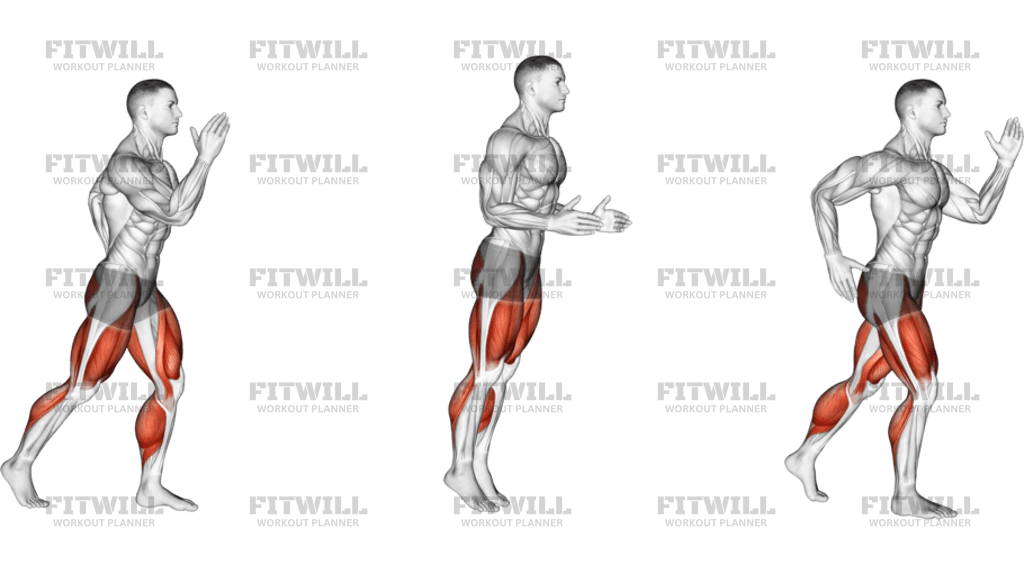
Jogging Jab
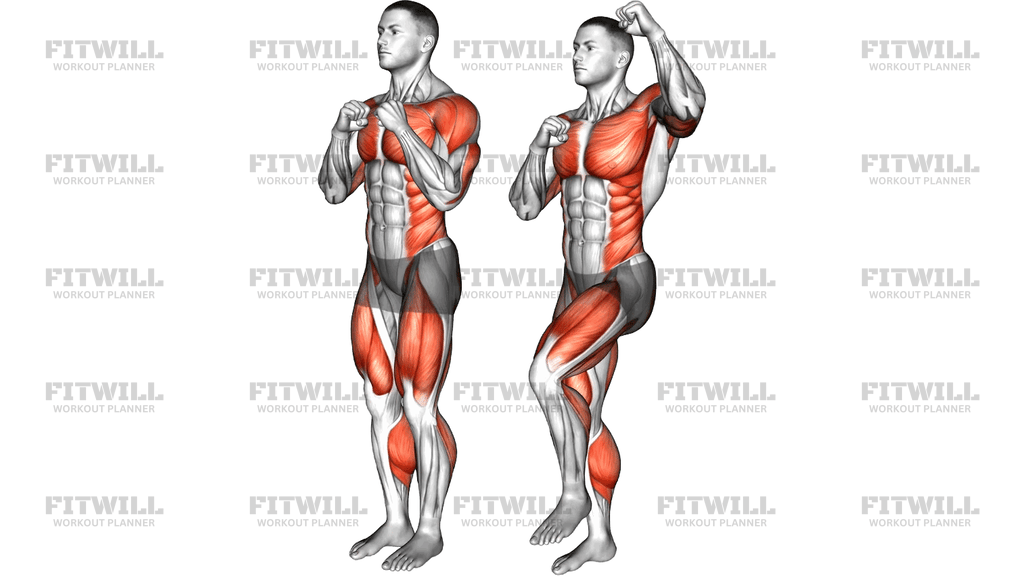
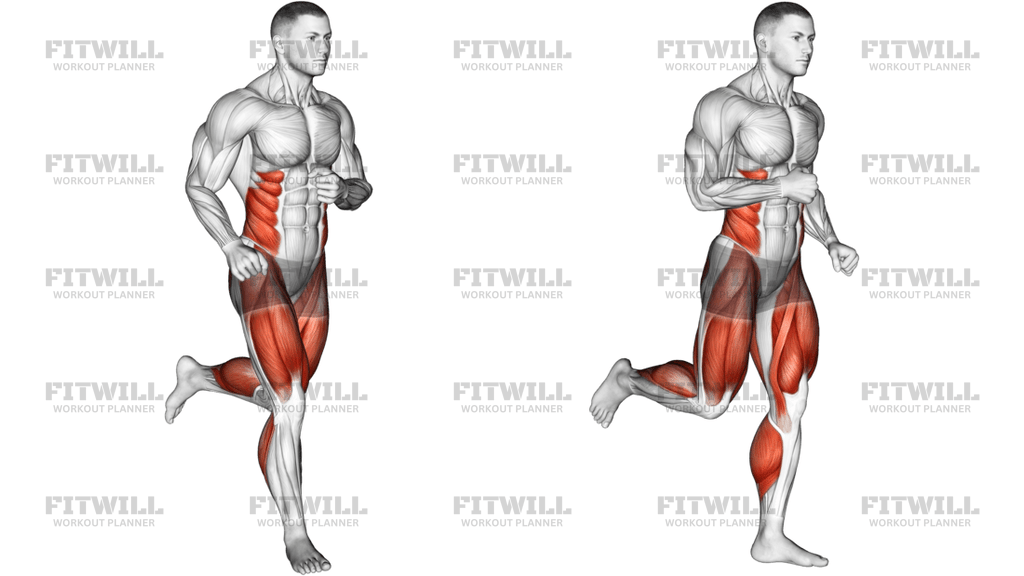
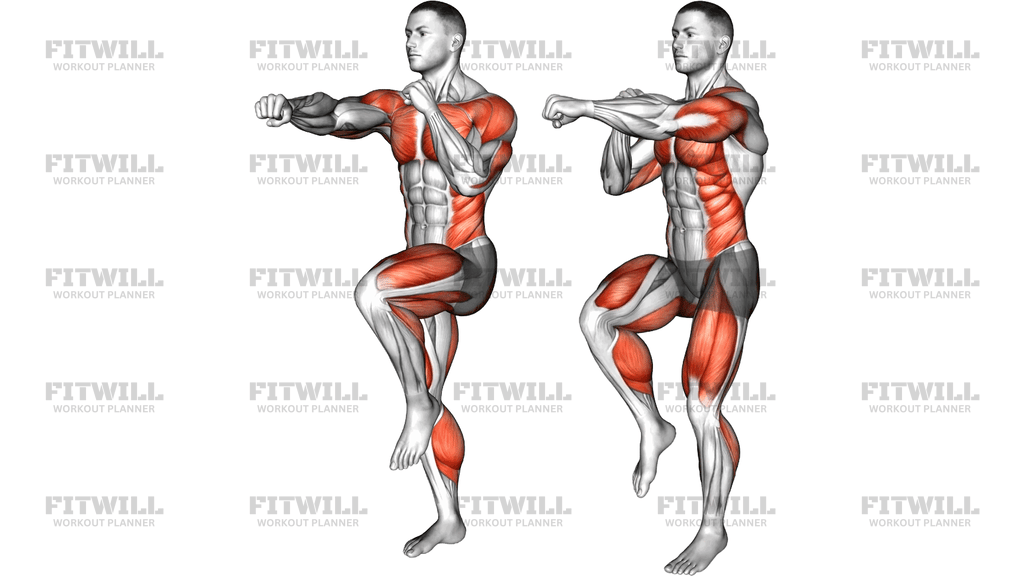
Jogging Jab is a standing, body-weight conditioning drill that combines a light on-the-spot jog with alternating straight punches. You stay on the balls of your feet, lift each knee roughly to hip height with every step, and drive one arm out at a time in a compact jab while the other hand stays tucked near your chin. The result is a continuous, rhythmic movement that keeps your heart rate high while your arms and legs work in opposition, much like a boxer moving around the ring.
Because it requires no equipment and very little space, this drill fits easily into warm-ups, circuit training, HIIA intervals, or active recovery between strength sets. It is especially useful for people who want to raise their conditioning without jumping: the knee lift is demanding but the footstrike stays relatively soft compared to sprinting or plyometrics. Combat-sports trainees use it to groove the jab under fatigue, while general trainees use it as a simple full-body cardio option that also challenges coordination.
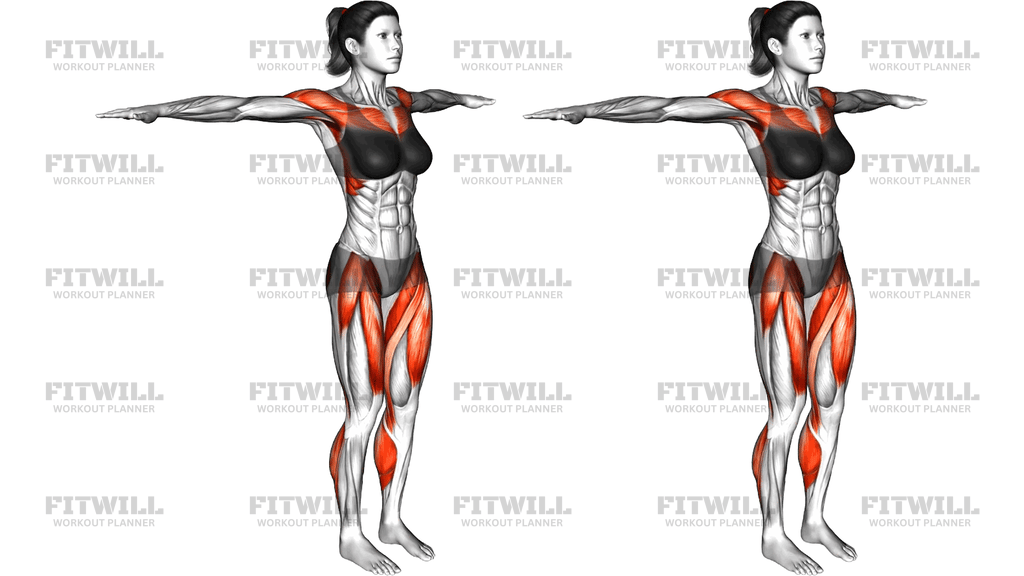
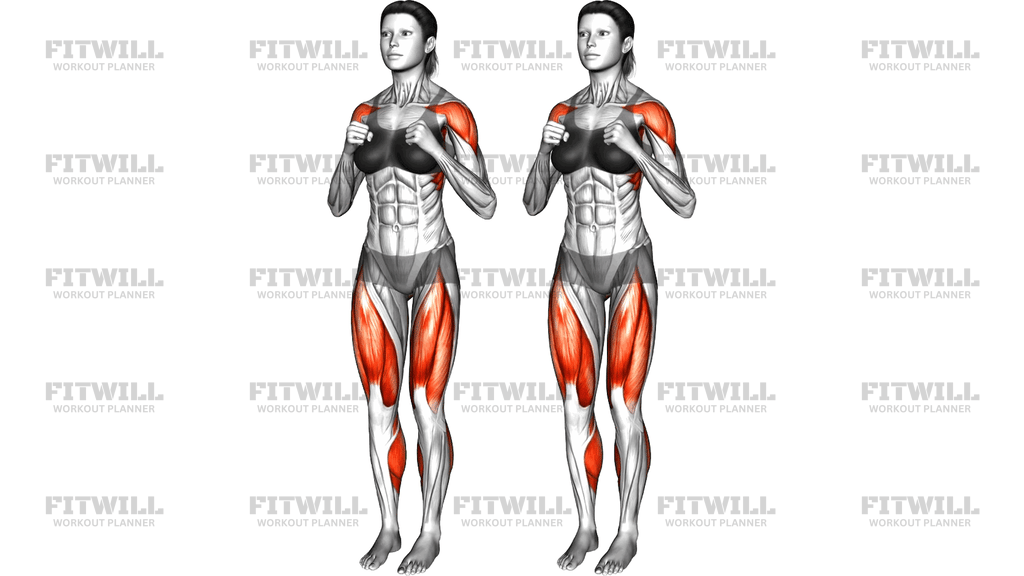
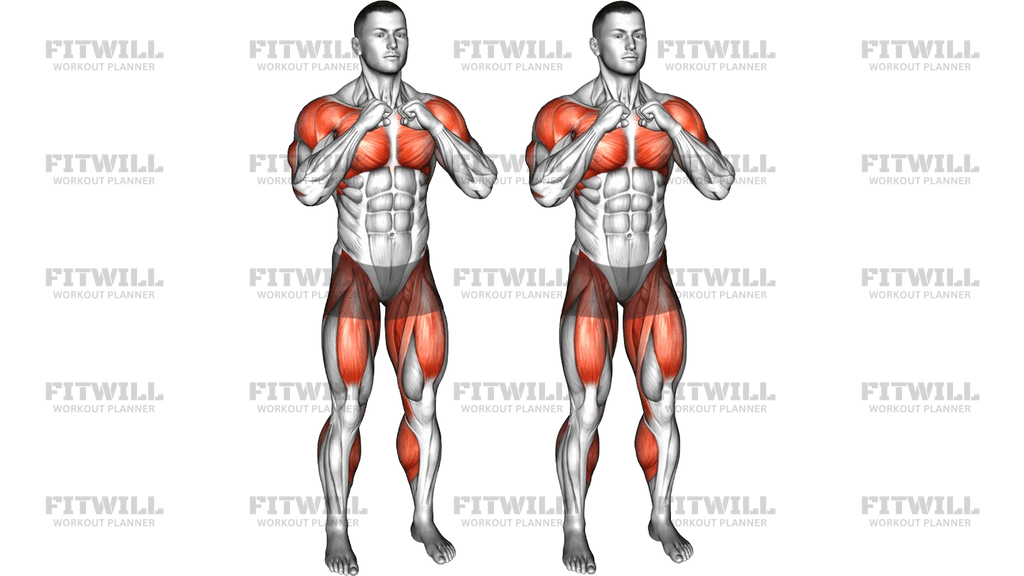
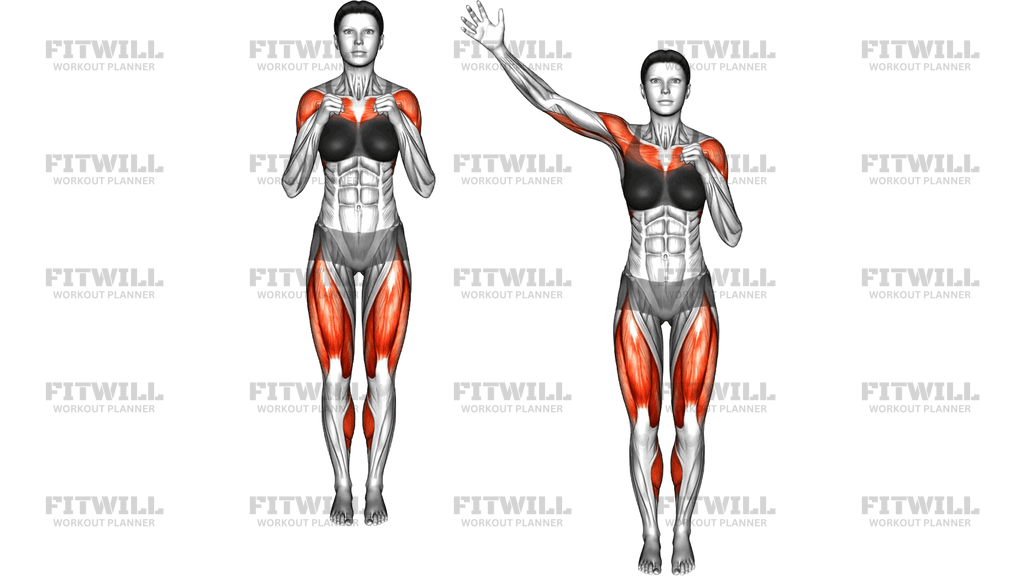
The work is spread across the whole body. The shoulders and triceps power each jab, the core braces and rotates slightly with every punch, and the hip flexors and quads lift the knees while the calves handle the constant bounce on the forefoot. None of these muscles are loaded heavily, so the value comes from repeated, rhythmic contractions at speed rather than maximal force.
Setup matters more than it looks. A tall stance with a soft knee bend keeps your lower back out of trouble, and keeping the non-punching hand at your cheek teaches the guard position instead of letting the arms swing loosely. Punching straight from the shoulder rather than winding up keeps the movement crisp and protects the elbow joint.
To execute it well, stay light on your feet and let the rhythm of the jog drive the rhythm of the punches. Alternate hands with each knee lift so the opposite arm and leg move together, exhale sharply on every jab, and keep your torso upright rather than leaning toward the punch. If your form breaks down, slow the tempo instead of shortening the work set, since sloppy, rushed jabs teach bad movement patterns.
Common use cases include finishing a workout with a short timed interval, building a cardio block of 30 to 60 seconds of work with equal rest, or stringing several rounds together for a standalone conditioning session. Start with 20 to 30 seconds per round if you are new to it, and keep the punches at chest to chin height with a relaxed hand so the shoulders stay loose.
[ Workout Log & Planner ]
Put your next workout in Fitwill
Keep your plan and training log ready when you are.


Instructions
- Stand tall with your feet about hip-width apart, knees slightly bent, and weight balanced on the balls of your feet.
- Bring both fists up to guard: hands relaxed but closed, knuckles facing outward, elbows tucked close to your ribs, and hands just below cheek height.
- Brace your abs lightly and keep your chest lifted and gaze forward, avoiding a rounded upper back.
- Begin jogging in place, lifting each knee to roughly hip height and landing softly on the ball of the foot.
- With each knee lift, extend one arm straight forward in a jab from chin height, rotating the fist so the palm faces down at full extension.
- Snap the punching arm back to guard as the opposite knee comes up, so your arms alternate in rhythm with your legs.
- Keep the opposite hand pressed to your cheek throughout, and avoid letting it drop as you fatigue.
- Breathe steadily, exhaling sharply on each jab and inhaling on the return, rather than holding your breath.
- Maintain the bounce and knee lift for your planned interval, then slow the jog gradually before stopping to bring your heart rate down.
- Reset your stance and hand position between rounds so each set starts with the same tall posture and guard.
Tips & Tricks
- A common mistake is winding up before the punch, pulling the fist back toward the hip. Drive the jab straight from the chin so it travels in a line, not an arc.
- If your knees stop reaching hip height late in the set, shorten the interval rather than half-repping the lift, since the knee drive is what keeps the calves and hip flexors working.
- Landing flat-footed kills the rhythm and jars the joints. Stay on the balls of your feet and think of the ground as hot.
- Keep the punching elbow slightly soft at full extension. Locking it out hard on every rep is the fastest way to irritate the joint.
- If your shoulders creep up toward your ears as you tire, drop them back down and loosen your fists. Tension in the hands travels straight to the neck.
- Match the punch to the opposite knee so your right fist goes with the left knee and vice versa. This cross-body rhythm is what trains the coordination benefit.
- Keep the jab at chin to nose height. Punching downward shortens the shoulder movement and pulls your torso forward.
- On soft floors like thick carpet, reduce the bounce and focus on knee height instead, since the surface already absorbs your footstrike.
Frequently Asked Questions
What muscles does the Jogging Jab work?
The shoulders and triceps drive each punch, the core stabilizes and rotates slightly with every jab, and the hip flexors, quads, and calves handle the knee lifts and constant bounce. It is a conditioning movement, so these muscles work repeatedly at low load rather than against heavy resistance.
Is the Jogging Jab good for beginners?
Yes. It is low-skill and needs no equipment. Beginners should start with 20 to 30 second rounds, lift the knees a little lower, and focus on clean alternating punches before chasing speed.
How high should I lift my knees during the Jogging Jab?
Aim for roughly hip height on each step. If you cannot hold that height with good posture for the whole interval, use a shorter work period rather than letting the knee lift shrink.
Should the jab match the same-side leg or the opposite leg?
Pair each jab with the opposite knee, so the right fist extends as the left knee lifts. This cross-body pattern keeps the rhythm natural and trains coordination between the arms and legs.
How long should a Jogging Jab round last?
For conditioning, 30 to 60 seconds of work with equal rest works well. For a warm-up, 20 to 30 seconds at a relaxed tempo is enough to raise your heart rate without fatiguing the shoulders.
My shoulders burn before my legs do. What am I doing wrong?
You are likely clenching your fists and shrugging, which wastes energy in the upper traps. Relax your hands, drop your shoulders away from your ears, and let the punch come from the shoulder joint rather than a stiff, tense arm.
Can I replace the knee lift with a regular jog in the Jogging Jab?
You can, but you lose much of the lower-body demand. The high knee lift is what engages the hip flexors and keeps the intensity up, so keep it unless your hips are fatigued.
Is the Jogging Jab safe if I have knee problems?
The movement is low impact, but the repeated knee lift and bounce still load the joint. Reduce the knee height, slow the tempo, and stop if you feel pain rather than ordinary muscle effort.
What can I use instead of the Jogging Jab?
High knees alone, shadow boxing with a wider stance, or jumping rope cover similar ground. The Jogging Jab is the best choice when you want arm and leg work combined without any equipment.