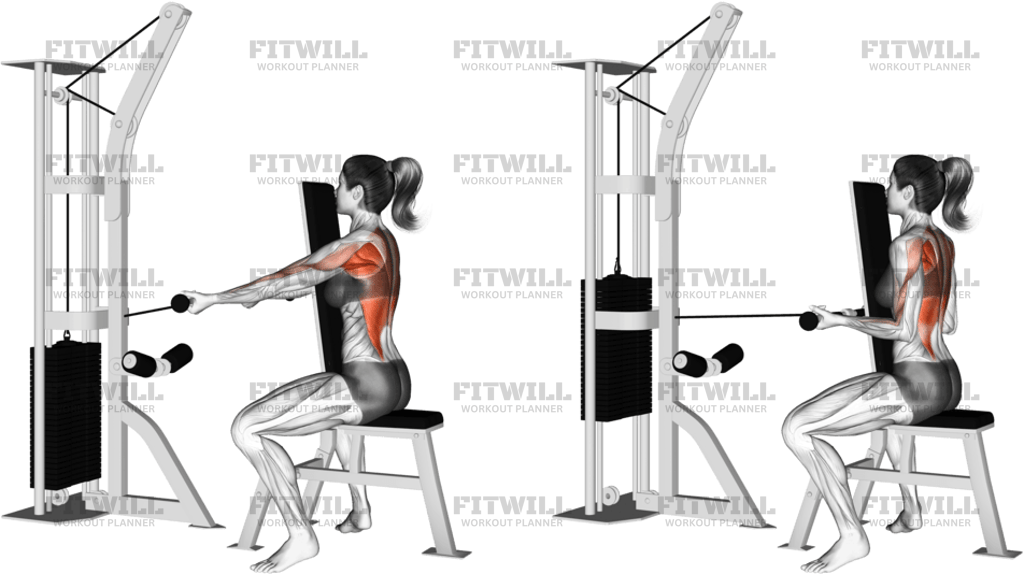
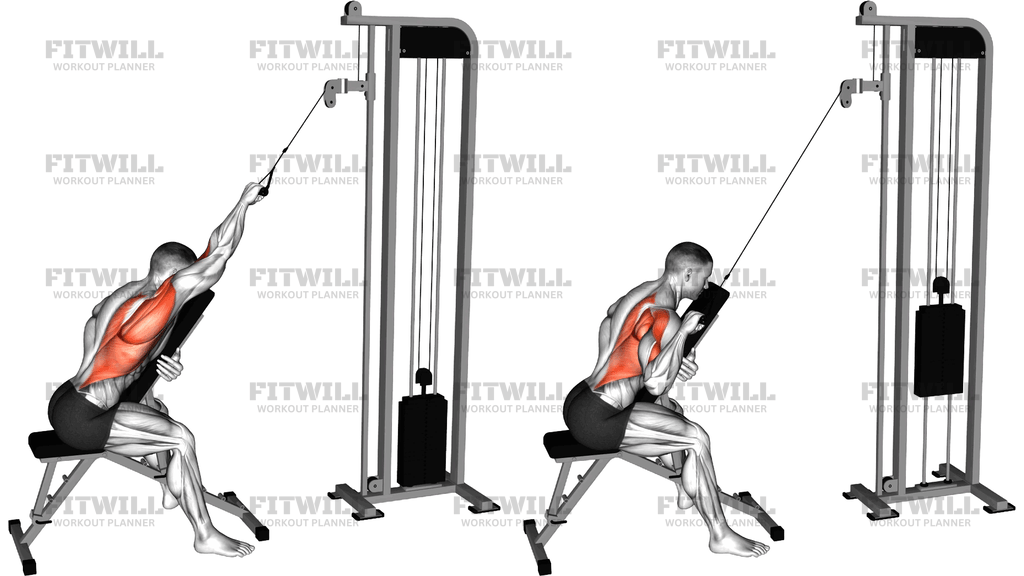
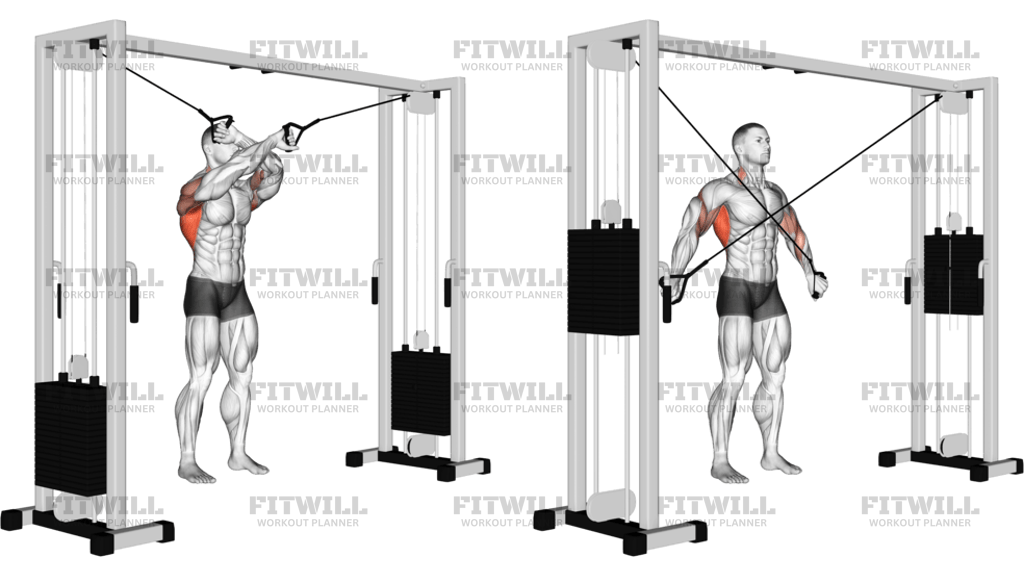
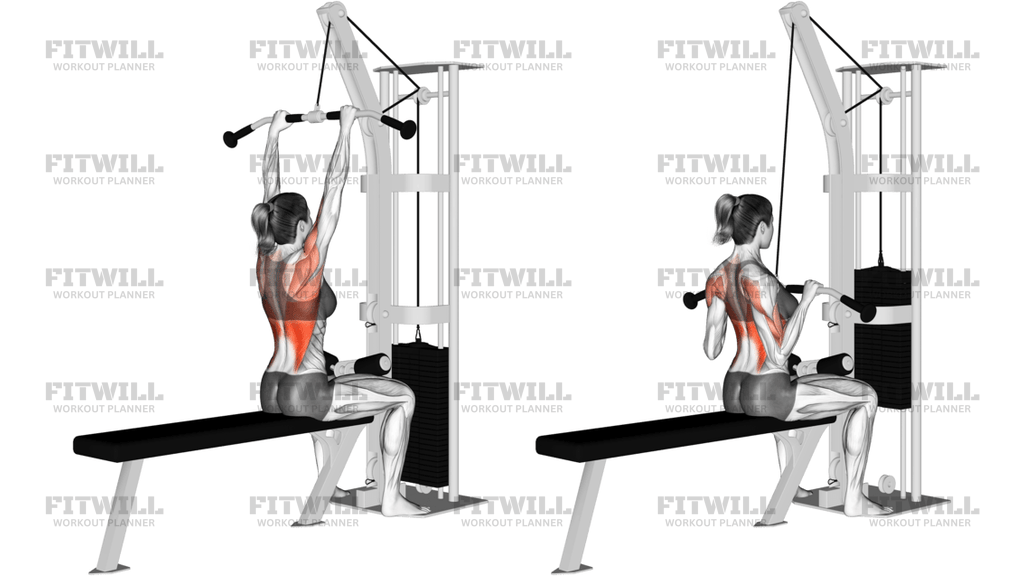
Cable Close-Grip Front Lat Pulldown
Cable Close-Grip Front Lat Pulldown is a seated vertical pulling exercise that uses a cable machine and a close handle to train the lats through a long, controlled range of motion. It is especially useful when you want to build back width, reinforce scapular depression, and practice pulling strength without the instability of free weights. Because the line of resistance stays constant, the quality of each rep depends on how well you set your seat, lock your thighs under the pads, and keep your torso from turning the set into a swing.
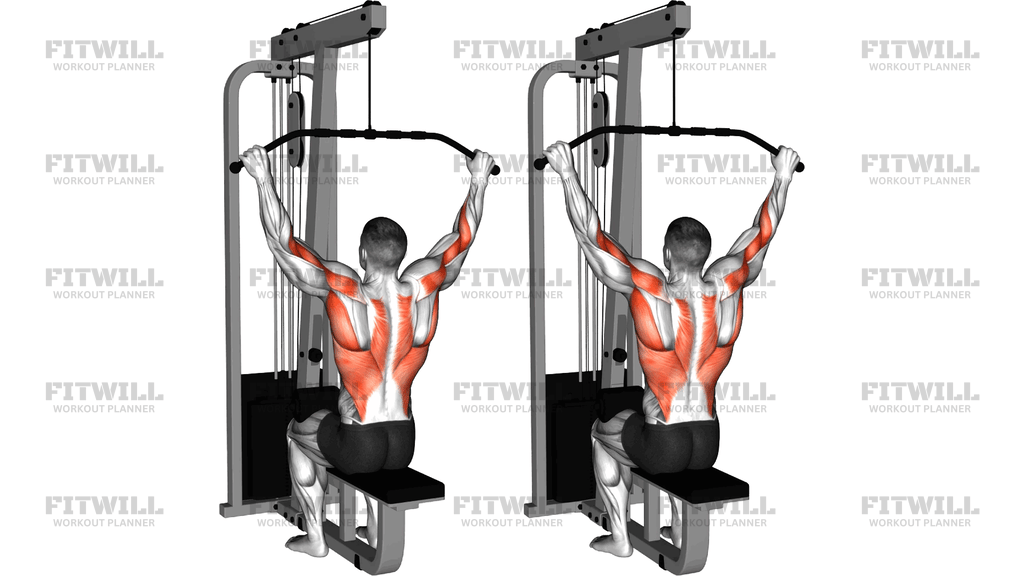
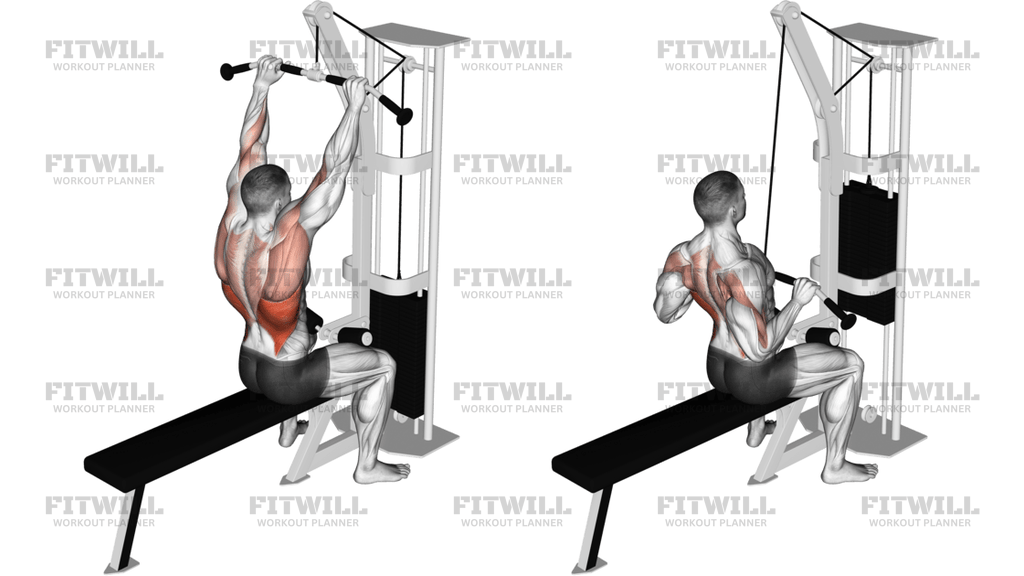
The setup matters a lot on this movement. Sit facing the tower with the thigh pad secured tight enough that your hips stay down when the load gets heavy. Start with your arms overhead, hands close together on the handle, feet planted, and chest tall. A small lean back is fine, but the goal is still a front pulldown, not a row or a behind-the-neck pull. If the seat height or pad position is off, you will either lose tension at the top or start cheating with body movement before the lats have done their work.
On the way down, think about drawing the shoulders away from the ears first, then driving the elbows down and slightly in toward the ribs as the handle travels to the upper chest. The hands are just hooks; the elbows should control the path. The best repetition finishes with the handle near the upper sternum or upper chest, the neck long, and the ribs still stacked instead of flared. On the way up, let the arms extend under control until the lats lengthen again, but do not relax so much that the weight stack slams or the shoulders roll forward aggressively.
This variation fits well on back day, in upper-body hypertrophy work, or anywhere you want a lat-focused vertical pull that is easier to standardize than a pull-up. It is also a good teaching exercise for beginners who need to learn how to depress the shoulder blades before bending the elbows hard. Use a load that lets every rep look the same, and stop the set if you start yanking the handle, leaning back harder, or shortening the top position to avoid control loss.
[ Workout Log & Planner ]
Put your next workout in Fitwill
Keep your plan and training log ready when you are.


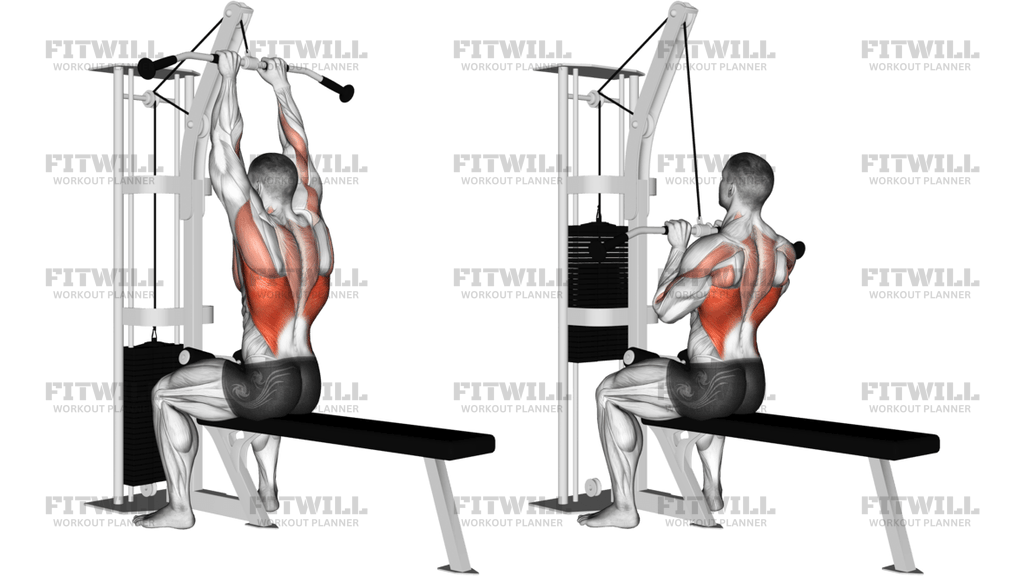
Instructions
- Set the seat so the thigh pads lock your legs in place, then sit facing the cable tower with your feet flat and the close-grip handle hanging overhead.
- Grip the handle with both hands close together, keep your wrists straight, and let your arms reach up in front of you without shrugging your shoulders.
- Brace your ribs down, keep your chest tall, and allow only a small lean back so the pulldown starts from a stable torso.
- Pull your shoulder blades down first, then drive your elbows toward your lower ribs as the handle moves down in front of your face.
- Keep the handle traveling to the upper chest or upper sternum instead of pulling behind the neck.
- Pause for a beat at the bottom while keeping tension on the lats and your neck relaxed.
- Return the handle upward under control until your arms are nearly straight and your lats are lengthened again.
- Repeat for the target reps, breathing out as you pull down and breathing in as the handle rises.
Tips & Tricks
- Set the thigh pad snugly before the first rep; if your hips lift, the weight is too heavy or the pad is too loose.
- Think about pulling the elbows down rather than pulling the handle with your hands.
- Keep the wrists stacked over the forearms so the close grip does not turn into a bent-wrist curl.
- A small lean back is fine, but if your torso keeps swinging, reduce the load and shorten the range slightly.
- Stop the pull when the handle reaches the upper chest; forcing extra depth usually turns into shoulder shrugging.
- Let the arms travel all the way up on the eccentric, but do not relax enough to lose lat tension at the top.
- Keep the shoulders down and away from the ears throughout the rep so the traps do not take over.
- If the front of the shoulders feels pinched, try a slightly lighter load and a smoother descent before changing exercises.
Frequently Asked Questions
What muscle does Cable Close-Grip Front Lat Pulldown target most?
The lats are the main target, with the upper back, biceps, and forearms helping during the pull.
Should I pull the handle to my chest or behind my neck?
Pull it to the upper chest or upper sternum. Pulling behind the neck usually adds unnecessary shoulder stress.
How should my seat and thigh pads be set up?
Set the seat high enough that the pad holds your thighs down without lifting your hips when you start the pull.
How close should my hands be on the handle?
Use the close grip shown in the setup, with the hands near each other but not so tight that your wrists or forearms feel cramped.
Can beginners use this pulldown?
Yes. It is beginner-friendly if the load is light enough to keep the torso still and the handle path controlled.
Why do my shoulders take over during the rep?
Usually the shoulders are shrugging or the load is too heavy. Start by pulling the shoulder blades down before bending the elbows hard.
What if I cannot lower the handle all the way to my chest?
Stop where you can keep your chest up and your shoulders down. A shorter clean range is better than forcing depth.
Is a slight lean back acceptable?
Yes, a small lean back helps keep the path smooth, but the set should still look like a pulldown, not a row.