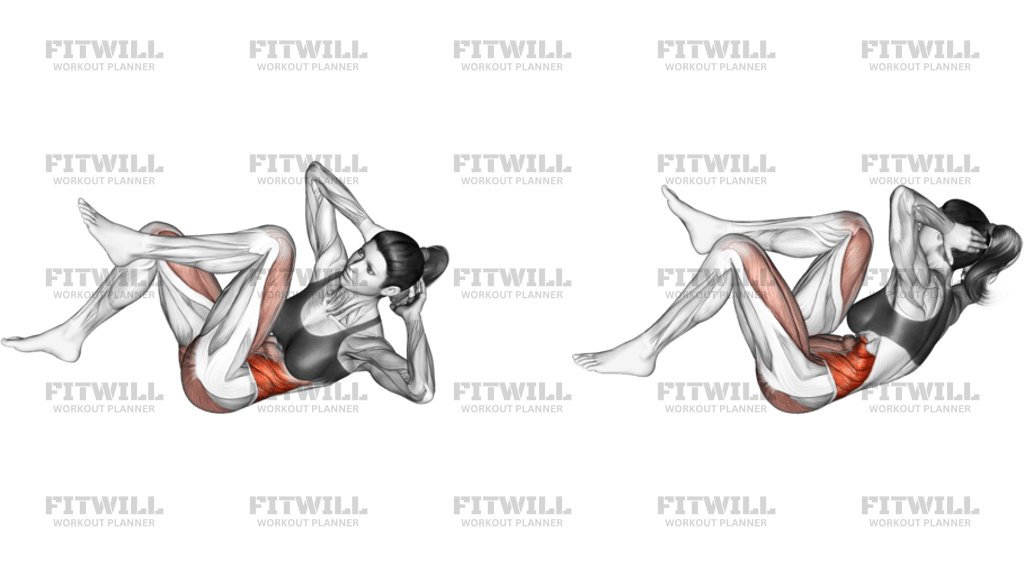
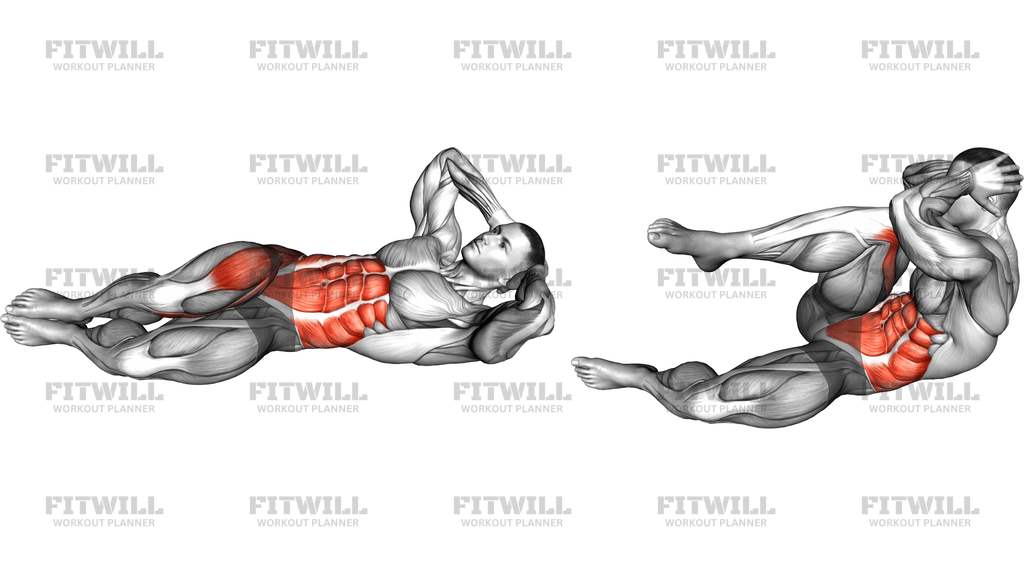
Oblique Crunch Opposite Elbow To Knee
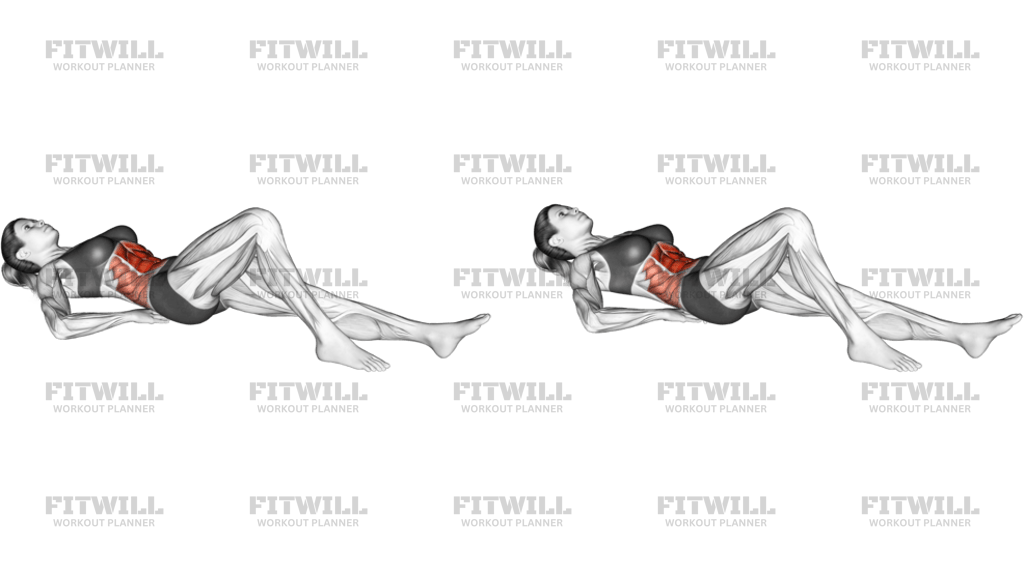
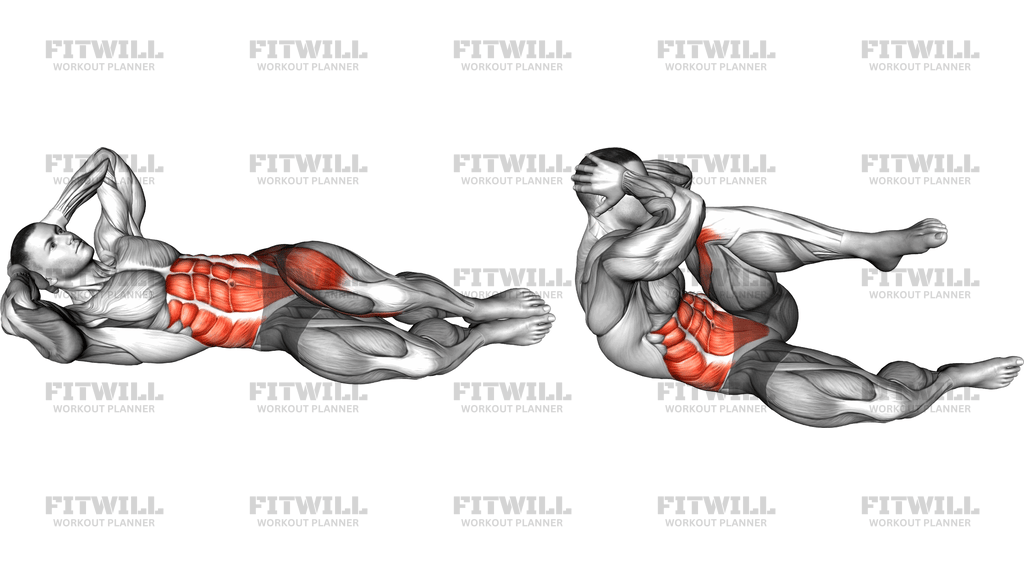
The Oblique Crunch Opposite Elbow To Knee is a bodyweight core exercise performed lying on your back, where you crunch your torso upward and rotate it so one elbow travels across your body toward the opposite knee. Unlike a standard crunch that works the abs in a straight up-and-down path, this version adds trunk rotation, which places the emphasis on the oblique muscles running along the sides of your waist. The hands stay lightly placed behind the head throughout, and the legs remain relaxed on the floor or lift slightly as you twist.
This movement is useful for anyone who wants to train rotation without equipment. That includes lifters looking to balance out heavy squat and deadlift work, people building general core strength at home, and anyone whose daily life involves twisting, turning, or swinging motions. Because the obliques control both rotation and anti-rotation, strengthening them here carries over to nearly every sport and everyday movement that involves turning the torso.
The primary muscles at work are the obliques, with the rectus abdominis assisting the crunch portion and the hip flexors helping stabilize the legs. The exercise combines spinal flexion with rotation, which is precisely the combined action the oblique muscles are designed to produce. When done with control, one side works while the other lengthens under tension, giving both halves of the waist a balanced stimulus as you alternate.
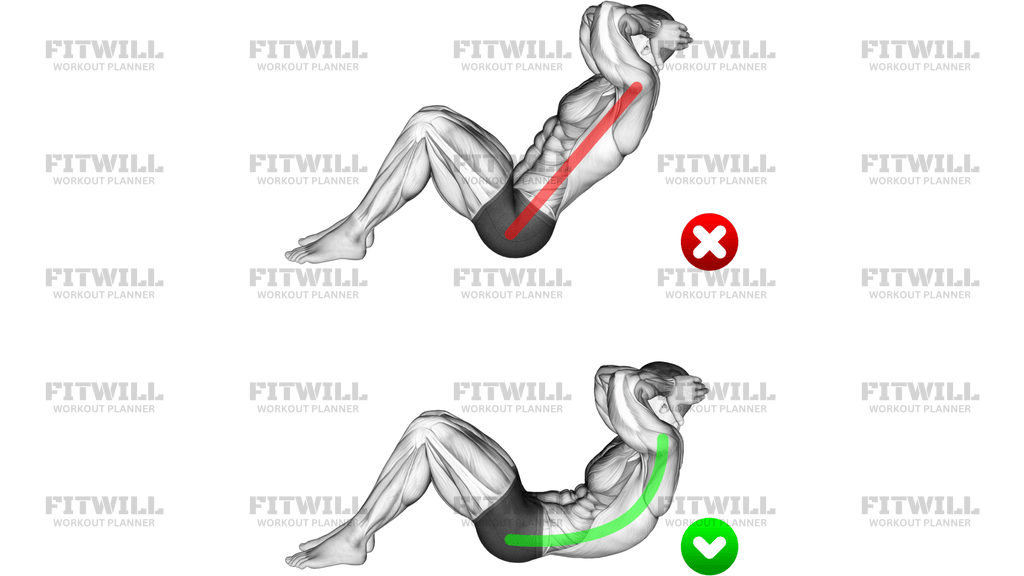
Setup matters more than most people realize. Lying flat with your lower back in contact with the floor and your head supported lightly by the hands creates a stable base. If your lower back arches off the floor or you yank on your neck, the rotation loses its target and strain shifts to the cervical spine. Keep the elbows wide rather than pulling them forward toward your face, and let the ribs drive the twist instead of the arms.
To execute it well, think about shortening the distance between your lower ribs and the opposite hip bone. The elbow is simply a landmark; the actual movement comes from rotating the ribcage while curling the shoulders off the floor. Pause briefly at the top where the elbow nears the opposite knee, then lower your torso back down with control before repeating on the same side or alternating.
In practice, this exercise fits well as a mid-rep or finisher core movement in home workouts, warm-up routines, or circuit training. Start with sets of eight to twelve controlled repetitions per side. If you feel it mostly in your neck or lower back rather than your waist, reduce the range and slow the tempo before adding volume.
[ Workout Log & Planner ]
Put your next workout in Fitwill
Keep your plan and training log ready when you are.


Instructions
- Lie on your back on an exercise mat with your legs extended and resting flat on the floor, or with knees slightly bent if that keeps your lower back comfortable.
- Place your hands lightly behind your head with fingers loose, elbows pointing out wide to the sides, and let your head rest back into your hands rather than pushing forward.
- Draw your shoulders down away from your ears and brace your abdominal wall as if preparing for a light push to the stomach.
- Exhale and curl your shoulders off the floor while rotating your ribcage, driving one elbow across your body toward the opposite knee.
- Keep the elbow wide the whole time; the twist should come from the torso, not from the arm reaching across.
- Pause for a moment at the top when the elbow is as close to the opposite knee as you can get without forcing the range.
- Inhale and lower your torso back down slowly, unrotating first, then setting your shoulders and head back on the mat.
- Repeat on the same side for your target reps, or alternate sides rep by rep, bringing the other elbow toward its opposite knee.
- Breathe out on every crunch upward and in on the way down, never holding your breath during the twist.
- Reset your brace between reps so your lower back returns to the mat before the next crunch begins.
Tips & Tricks
- The most common fault is pulling the head forward with the hands, which turns this into a neck exercise. Rest your fingers on the back of your head and let the torso do all the work.
- If your elbow keeps chasing the knee by reaching with the arm, think about rotating from the ribs instead; the elbow position is a byproduct of the twist, not the cause of it.
- A fast, jerky tempo lets momentum replace rotation. Slow the lowering phase to roughly twice the speed of the crunch to keep the obliques under tension.
- Do not slam your legs or let them flop during the twist; keep them quiet on the floor so the movement stays in the waist.
- If your lower back peels off the mat at the bottom of each rep, bend your knees slightly and plant your feet, which flattens the spine and makes the crunch safer.
- Chasing the elbow all the way to the knee usually collapses the chest forward. Aim the lower ribs and shoulder toward the opposite hip instead; a partial rotation done well beats a forced full twist.
- Alternating sides rep by rep adds a slight rotational reset that many people find smoother on the neck; if one side is tighter, do that side first when performing sets per side.
- Squeezing the waist deliberately at the top for one second will teach you where the obliques should feel the work, which helps prevent the shoulders and arms from dominating.
Frequently Asked Questions
Which muscles does the Oblique Crunch Opposite Elbow To Knee work?
The obliques on the sides of your waist are the primary movers, since they both flex and rotate the spine. The rectus abdominis assists the crunch, and the hip flexors help keep the legs and pelvis steady.
Why bring the opposite elbow to the knee instead of a straight crunch?
Adding rotation to the crunch recruits the obliques, which are responsible for twisting the torso. A straight crunch mainly targets the front of the abs, while this diagonal path emphasizes the waist.
Can beginners do the Oblique Crunch Opposite Elbow To Knee?
Yes, and it is a good beginner-friendly option because it needs no equipment. Beginners should shorten the range, move slowly, and focus on feeling the twist in the waist rather than reaching the elbow all the way to the knee.
Should I alternate sides or complete all reps on one side?
Both approaches work. Alternating keeps the effort even and gives each side a brief rest, while completing reps per side makes it easier to feel and compare left-right differences in control or tightness.
My neck hurts when doing the Oblique Crunch Opposite Elbow To Knee. What should I change?
You are likely pulling your head forward with your hands. Rest your fingers lightly on the back of your head, keep the elbows wide, and imagine holding a small apple under your chin so the neck stays neutral.
How many reps and sets should I do?
Start with two to three sets of eight to twelve controlled repetitions per side. As the movement becomes easy, increase reps before considering added load or a harder variation.
What can I use instead if lying on the floor is uncomfortable?
A standing cross-body crunch, where you lift one knee while drawing the opposite elbow down toward it, trains a similar diagonal pattern without getting on the floor. A stability ball crunch with rotation is another option that supports the lower back.
Should my legs stay on the floor or lift during the twist?
Keeping the legs relaxed on the floor makes the exercise easier and keeps the focus on the waist. Lifting the legs slightly adds hip flexor work and makes the movement harder, so only do that once the basic version is controlled.
Is it safe to do this exercise every day?
Because it uses only your body weight, moderate daily volume is generally fine for most people. Still, treat it like any resistance exercise: allow at least a day of recovery between challenging sessions and stop if you feel sharp pain in the back or neck.