Lying Prone Abdominal Stretch
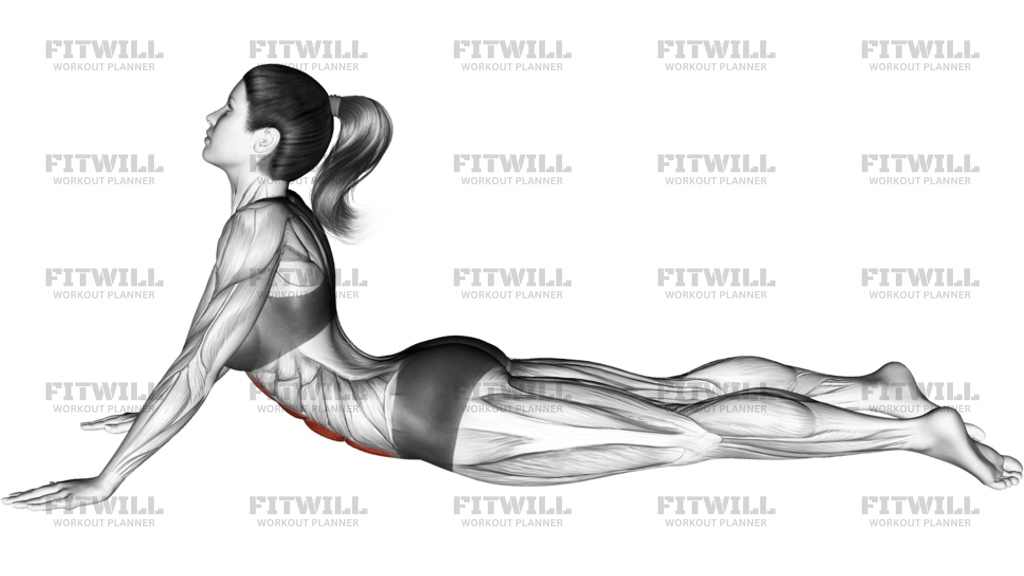
Lying Prone Abdominal Stretch is a floor-based spinal extension stretch that opens the front of the torso while the pelvis stays grounded. In the image, the lifter is lying face down on a mat with the chest lifted and the arms pressing into the floor, which makes this more of a cobra-style abdominal opener than a strength rep. The main training value comes from lengthening the rectus abdominis while also involving the obliques, hip flexors, and deep trunk muscles that resist excess arching.
The setup matters because the position of the hands, hips, and ribs determines whether the stretch feels like a clean abdominal opener or a pinch in the low back. Start prone with the legs long, tops of the feet relaxed on the floor, and the hands planted under or slightly in front of the shoulders. Press the chest upward while keeping the hips heavy, the thighs in contact with the mat, and the shoulders away from the ears.
As you rise, think about creating space through the front of the abdomen and lower ribs instead of throwing the head back or forcing the lumbar spine. A good rep is smooth: inhale as you lift, keep the neck long, and let the elbows extend only as far as you can maintain a comfortable stretch. The front of the hips and the line from the navel to the sternum should open gradually, not abruptly.
This stretch is useful in warm-ups, cooldowns, or recovery blocks when you want to reduce stiffness from prolonged sitting, heavy lifting, or lots of flexion-based core work. It can also be paired with hip flexor opening drills or thoracic mobility work. The goal is not to crank into the deepest backbend available; it is to build a repeatable, comfortable opening through the abdomen and the front of the body.
Stop short of any sharp pinching in the low back, and reduce the height of the chest if the stretch shifts away from the abs and into the spine. Beginners can use a smaller range or stay on the forearms instead of fully straightening the arms. With consistent breathing and controlled setup, the movement becomes a reliable way to restore extension after training or sitting.
Fitwill
Log Workouts, Track Progress & Build Strength.
Achieve more with Fitwill: explore over 9600 exercises with images and videos, access built-in and custom workouts, perfect for both gym and home sessions, and see real results.
Start your journey. Download today!




Instructions
- Lie face down on a mat with your legs long, tops of the feet on the floor, and your palms planted under or slightly in front of your shoulders.
- Keep your hips, thighs, and pelvis heavy on the mat so the stretch starts in the front of the torso instead of lifting the whole body.
- Set your chest low at first, draw your shoulders down away from your ears, and keep the back of your neck long.
- Press through your hands to lift your chest forward and up, letting the elbows extend only as far as you can keep the pelvis grounded.
- Open through the abdomen and lower ribs while keeping the glutes relaxed and the lower back from jamming into a hard arch.
- Hold the top position for a steady breath or two, feeling a controlled stretch across the abs, hip flexors, and front ribs.
- Lower your chest slowly until your torso is back near the floor, keeping the movement smooth rather than dropping out of the stretch.
- Reset your hand position if needed and repeat with the same range on each rep.
Tips & Tricks
- A smaller lift that keeps the hips down is better than a big press-up that turns into a low-back arch.
- If your shoulders creep toward your ears, lower the chest and actively pull the shoulder blades down your back.
- Keep the front of the pelvis on the mat; if it starts to peel up, you have gone past the abdominal stretch and into compensation.
- Think about lengthening from the pubic bone to the sternum instead of throwing the head backward.
- Breathing into the front ribs helps the stretch spread through the abs without forcing the lumbar spine.
- If straight arms feel aggressive, use a sphinx-style version on the forearms and gradually build the range.
- Keep the hands slightly wider than the shoulders if a narrow hand position makes the lower back feel pinched.
- Stop the rep when the stretch is strong but still clean; this exercise should open the torso, not compress it.
Frequently Asked Questions
What does the Lying Prone Abdominal Stretch work most?
It primarily stretches the rectus abdominis, with help from the obliques, hip flexors, and deep trunk muscles.
Should my hips stay on the mat during this stretch?
Yes. Keeping the pelvis and thighs grounded is what makes this an abdominal stretch instead of a full backbend.
Do I need to fully straighten my arms?
No. Straight arms are optional. Use the hand and elbow position that lets you open the torso without pinching the low back.
Why does this movement feel similar to cobra pose?
The body position is similar: face down, chest lifted, and hips anchored. The main difference is the coaching goal of isolating the abdominal stretch and controlling the range.
What should I feel if I am doing it correctly?
You should feel a long stretch through the abs, lower ribs, and front of the hips, not a sharp pinch in the spine.
Can beginners use this exercise?
Yes. Beginners should start with a small lift or a forearm version and only widen the range if it stays comfortable.
When is this stretch most useful?
It works well after lots of sitting, after abdominal work, or as part of a warm-up and cooldown sequence.
What is the safest way to progress it?
Increase the range only if the pelvis stays down and the front of the torso opens without any low-back discomfort.