Assisted Lying Leg Raise With Lateral Throw Down
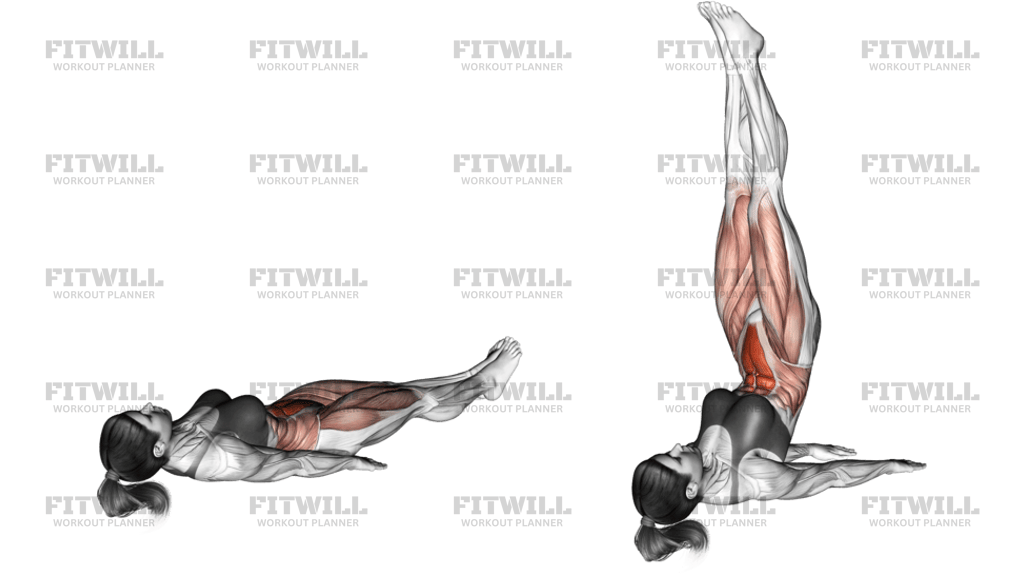
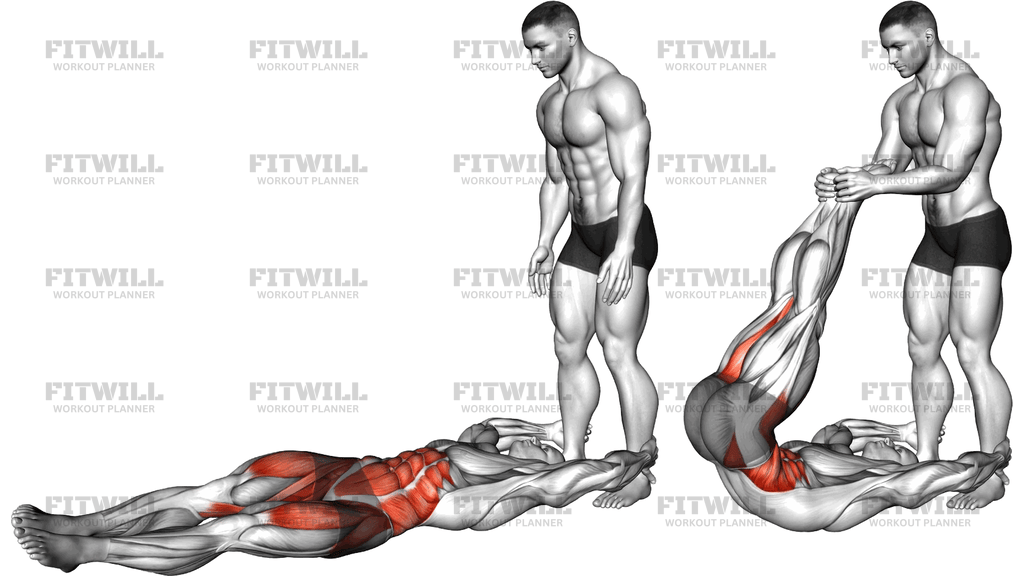
Assisted Lying Leg Raise With Lateral Throw Down is an advanced partner-resisted core exercise performed on your back. You raise your legs toward vertical, then a partner pushes them downward and slightly to one side while you resist the force. The lateral angle makes the abs and obliques work together to control both leg lowering and unwanted rotation.
The primary target is the rectus abdominis, with the obliques and hip flexors assisting. The abs work to keep the lower back from arching as the legs descend, while the obliques help stop the pelvis from twisting too far when the partner throws the legs to the side. This makes the exercise more demanding than a standard lying leg raise and better suited to trained users.
Set up on an exercise mat with your partner standing near your shoulders. Hold your partner's ankles or another stable support so your upper body stays anchored without straining the neck. Raise the legs toward vertical, brace the abs, and keep the lower back controlled before your partner applies any pressure.
The partner should push the legs downward and slightly to one side with firm but predictable force. Resist the throw, lower slowly, and stop before the heels near the floor if your lower back arches or your hips rotate beyond control. Bring the legs back to vertical and repeat, alternating the throw direction when appropriate.
This exercise works well as a challenging core finisher or athletic trunk-control drill after you have mastered regular lying leg raises. Keep reps low to moderate and prioritize clean resistance over dramatic throws. If straight legs are too hard, bend the knees slightly or switch to controlled eccentric leg lowers.
Common mistakes include letting the legs slam down, allowing the pelvis to twist freely, using a partner push that is too aggressive, or holding the breath through the lowering phase. Communicate clearly with your partner and use a force you can resist without pain. The movement should feel like controlled braking through the abs and side waist, not a surprise shove.
[ Workout Log & Planner ]
Put your next workout in Fitwill
Keep your plan and training log ready when you are.


Instructions
- Lie on your back with your legs straight and a partner standing near your shoulders.
- Hold your partner's ankles or a stable support if needed.
- Brace your abs and raise your legs toward vertical.
- Keep your lower back controlled as your legs reach the top.
- Have your partner push your legs downward and slightly to one side.
- Resist the push and lower your legs under control.
- Stop before your lower back arches or your hips twist too far.
- Raise your legs again and repeat, alternating the side of the throw when appropriate.
Tips & Tricks
- Use a gentle throw until your control is clear.
- Keep your ribs down and pelvis steady.
- Do not let your legs slam toward the floor.
- Bend your knees slightly if straight legs are too demanding.
- Exhale as you resist the throw-down.
- Ask your partner to match your strength, not overpower you.
- Alternate the lateral throw direction so both sides of the waist resist the same amount of work.
- Hold your partner's ankles or a stable support lightly; do not pull so hard that your shoulders lift off the mat.
Frequently Asked Questions
What muscles does Assisted Lying Leg Raise With Lateral Throw Down work?
It primarily works the abs and obliques, with the hip flexors helping raise and control the legs.
Is Assisted Lying Leg Raise With Lateral Throw Down a beginner exercise?
No. It is best for people who can already control regular lying leg raises.
How hard should the partner push?
The push should be challenging but controlled, never forceful enough to make you lose position.
Why add the lateral throw?
The side angle makes the obliques work harder to resist rotation and side bending.
What can I do instead?
Use regular lying leg raises, bent-knee raises, or slow eccentric leg lowers.
Where should my partner push during the lateral throw-down?
Your partner should push your legs downward and slightly to one side with steady force. The push should challenge your obliques without twisting your hips out of control.
Should my lower back stay on the floor?
Keep your lower back controlled against the mat as long as possible. Stop the descent higher if your back arches or your ribs flare.
Should I alternate the lateral throw direction?
Yes, alternating sides is usually best so both obliques train evenly. You can also perform all reps to one side first if you are working on a specific side, but keep the volume balanced.